Müllerstrasse: a Circular Transformation
The Müllerstrasse project in Zurich demonstrates how a nondescript 1970s office building can be transformed without demolition. Through structural reuse, material upcycling and innovative technologies, the project drastically reduces emissions and offers a concrete model of circular architecture.
Testo in italiano al seguente link
The Müllerstrasse project began in 2019 with the aim of addressing the outdated infrastructure of an existing office building in Zurich dating from the late 1970s to meet the changing needs of its new tenants. The project required a fundamental modernisation of the building’s structure and envelope.
Comprising three basement levels with a large parking garage and seven upper floors, the building follows a classic structural organisation typology: central cores housing lifts and escape stairs, supported by a framework of reinforced concrete columns, slabs, and parapets. This system represents a generic structural typology that has been utilised for over a century. It is precisely this ubiquity which makes the project well suited to establish general approaches for a more sustainable and conscientious approach to the adaptive reuse of existing structures – a practice that is increasingly essential in contemporary urban development.
The project explores a new approach to the handling of existing buildings. The core idea behind the project, which incorporates a wide range of reuse strategies, is to continue building rather than demolishing and building anew. It demonstrates how an unspectacular office building planned in the late 1970s can be preserved, transformed and reused.
Understanding the Existing
A thorough understanding of the existing building’s structure, the materials used and their current condition is fundamental to identifying their potential for future use.
The original primary structure has a standard lifespan of 60 years according to KBOB assessment tools, meaning it would not reach full amortisation until 2040. To respect this lifecycle, the design prioritises building
on existing fabric rather than opting for replacement. By preserving 96 % of the primary construction – approximately 13 000 m³ of concrete – we achieved a total saving of roughly 3900 t CO2. This ecological impact is equivalent to the carbon sequestration of 3900 trees over an 80-year growth period.
This significant potential for carbon reduction served as the primary incentive to treat the existing fabric as a valuable resource rather than a constraint. However, to translate this ecological ambition into a technically sound reality, the building’s structural integrity had to be comprehensively evaluated and verified in collaboration with the contractors and structural specialists. This involved 3D laser measurements and probing, steel quality assessments and reinforcement scans, earthquake simulations using finite element modelling, carbonation, chloride and potential field measurements, static recalculations of the existing structure alongside a study of archive plans.
Redefining the Facade
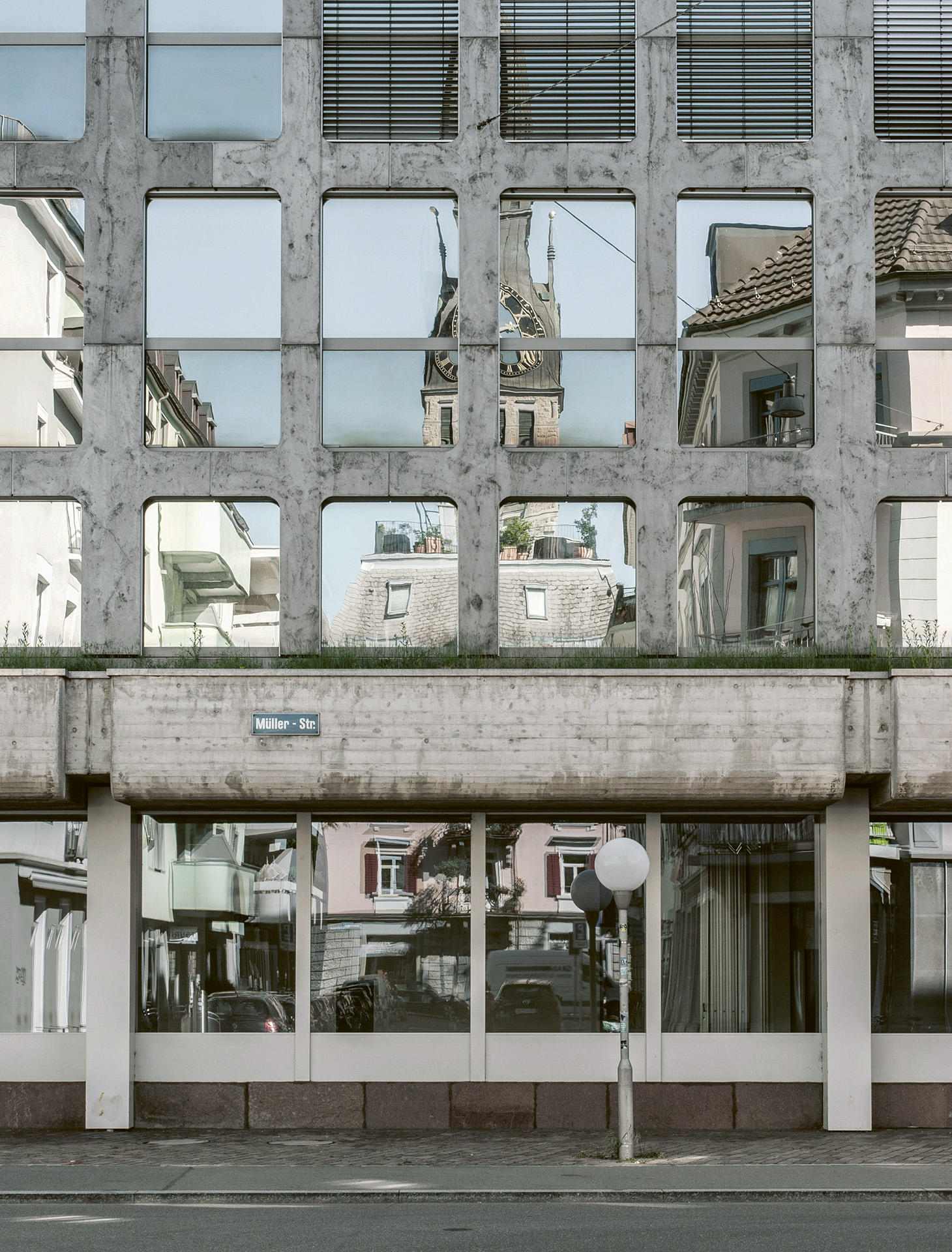
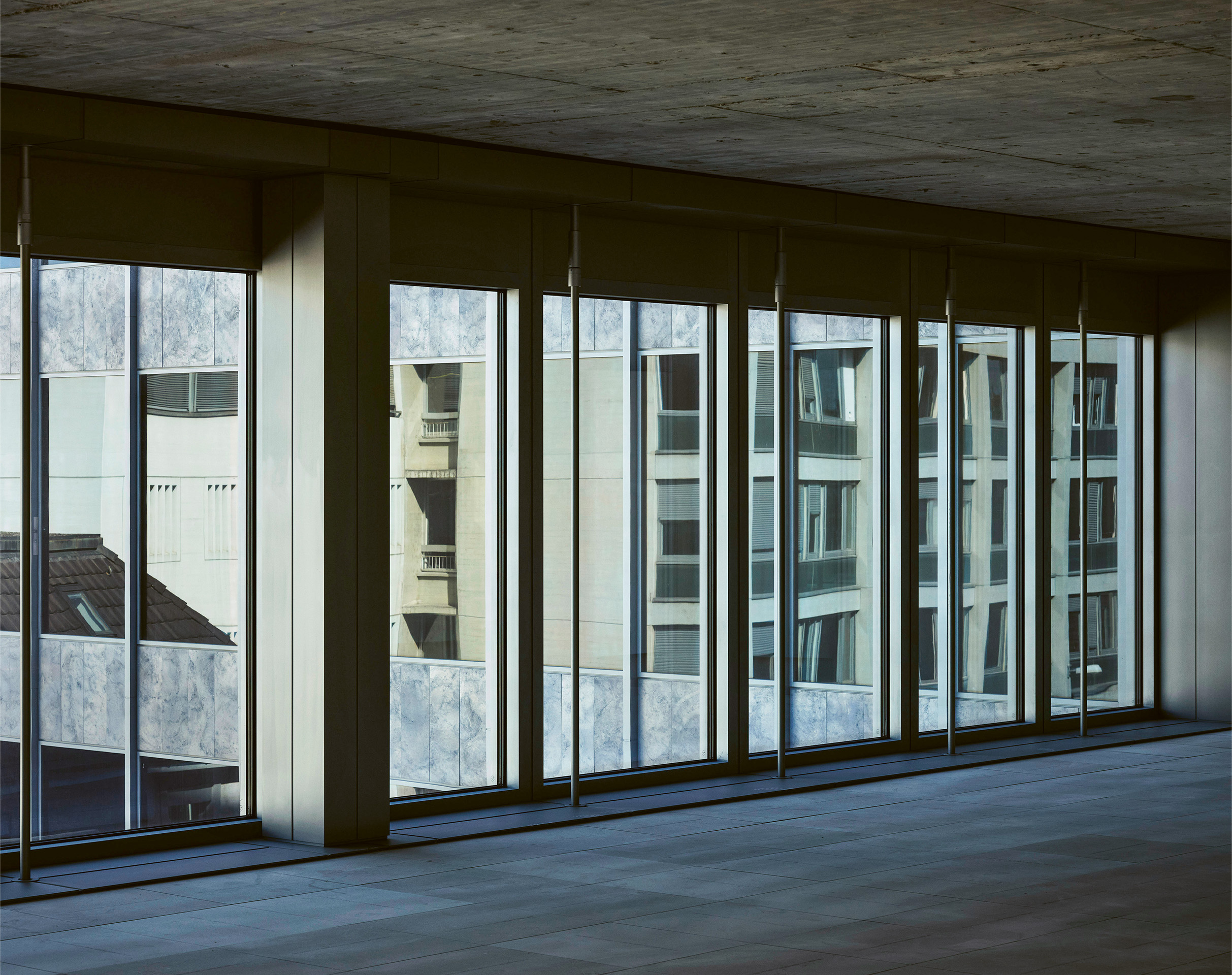
The sizes and proportions of the existing building’s components were determined over forty years ago to meet the specific requirements and standards of the time. The existing facade was characterised by a grid of large cast aluminium claddings and extensive glazing. While the building’s exterior made the impression of openness and transparency, the interior did not reflect this external appearance. The lower third of the glass was obscured by a concrete parapet, which was located behind mirrored spandrel glazing. The interiors did not do justice to the external generosity and openness of the façade. To resolve this aesthetic and functional discrepancy, the new facade was designed in such a way that it establishes a balance between interior and exterior openness.
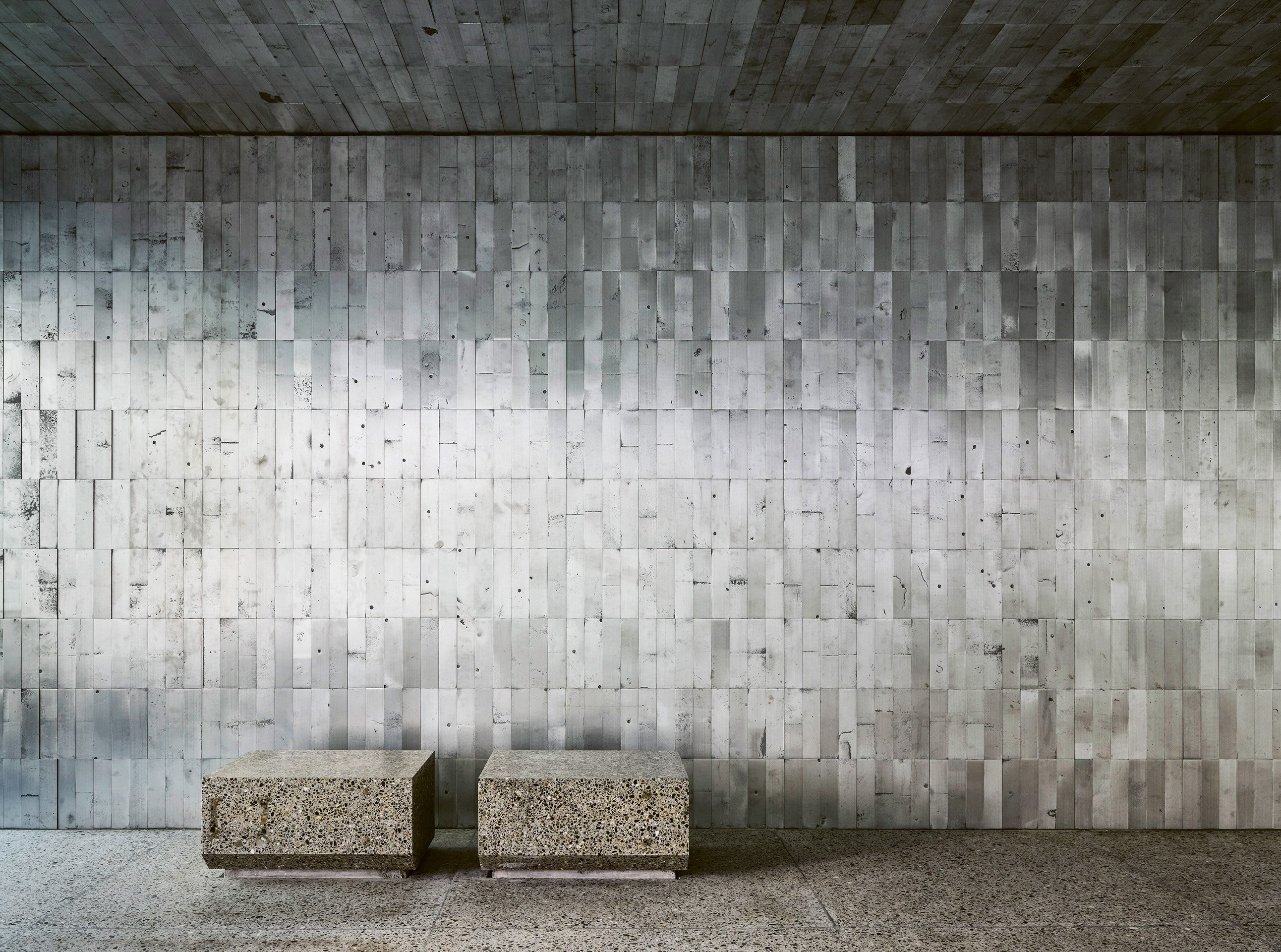
First, the existing building components were dismantled down to the main supporting structure, which was then optimised. The concrete parapets were removed to improve transparency and introduce more openness. Parts of the parapets were repurposed as seating benches. The remaining material was recycled and used again as aggregate for recycled concrete, terrazzo flooring or insulation material. A tension rod system was installed to replace the structural purpose of the concrete parapets and prevent the ceiling edges from deflecting because of their removal. The tension rods were arranged within the grid of the new facade and suspended from a steel beam filled with concrete, which rests between the sixth and seventh upper floors and transfers the loads into the main supporting structure.
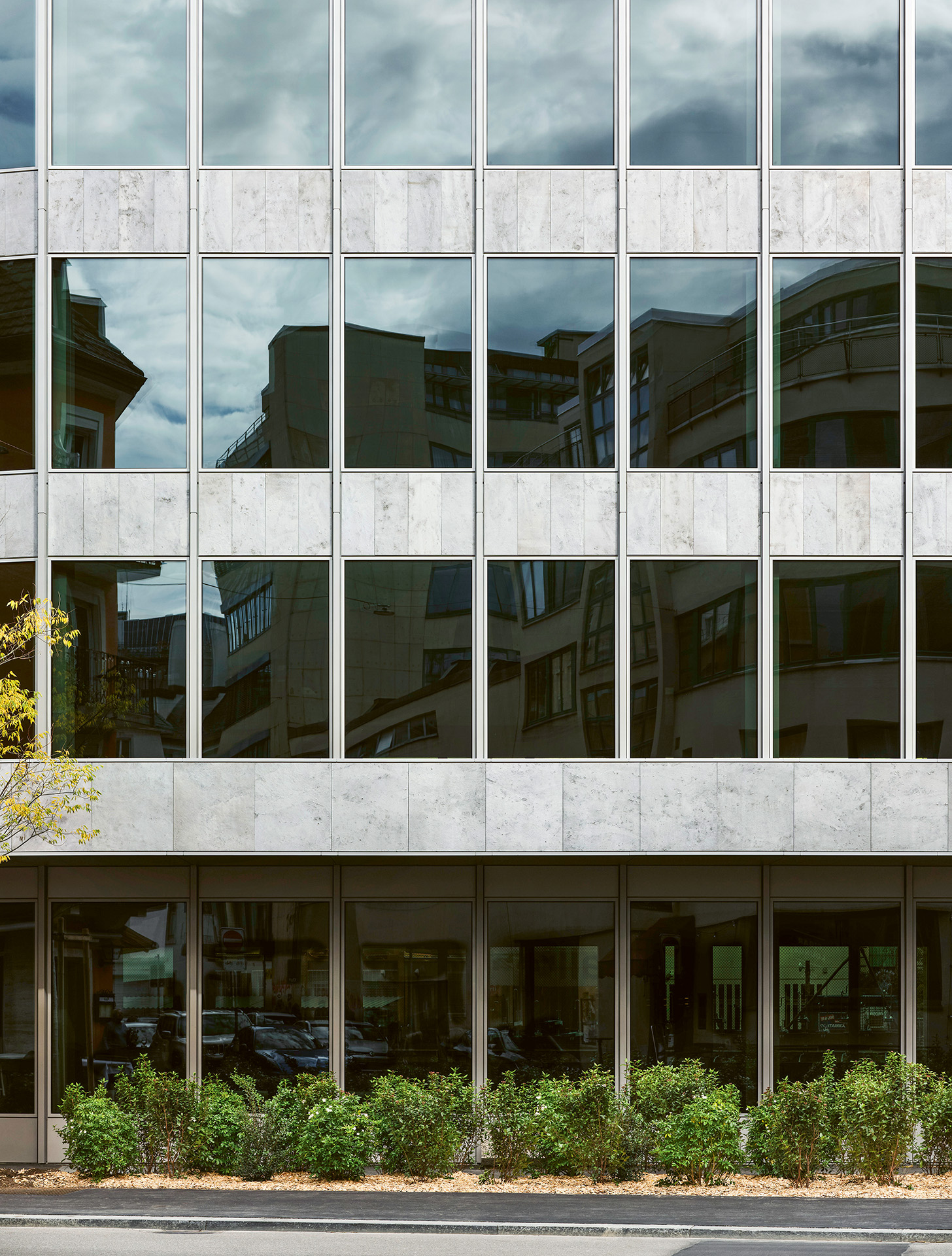
The original supporting structure of the building showed irregularities in its axial dimensions. To achieve an economical and low-maintenance solution nevertheless, a system consisting of facade elements with a limited number of varying widths was developed. This system visually compensated for the deviations in an inconspicuous manner and allowed for the minimisation of the varieties of the element and glass sizes used, which made the manufacturing process more efficient, saving costs and energy. This principle was also applied to the heights of the glazing to ensure a unified aesthetic across the entire building. By strategically dimensioning the base element and the closed facade element above the windows, the design maintains a single, consistent glass height for every floor. Even on the ground and sixth floors, where structural heights vary from the standard levels, these facade components absorb the height differences. This approach allowed for a harmonised facade design that utilises standardised glazing units throughout the project, regardless of the underlying structural irregularities.
The new facade resolves the previous discrepancy between externally perceived spaciousness and the compromised interior effect. A visually open design with dynamically controllable lighting now creates a balanced effect that meets the requirements of modern office use.
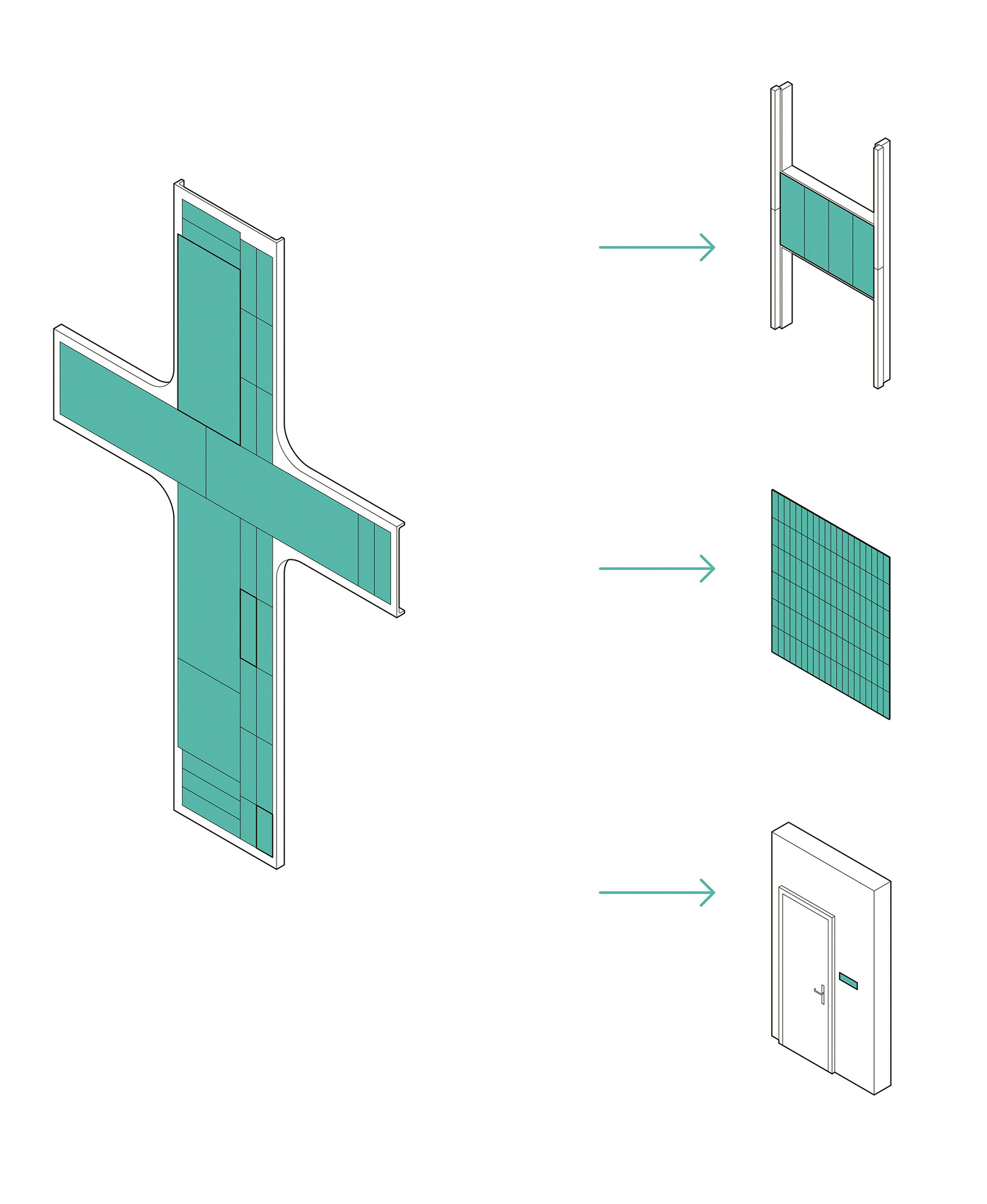
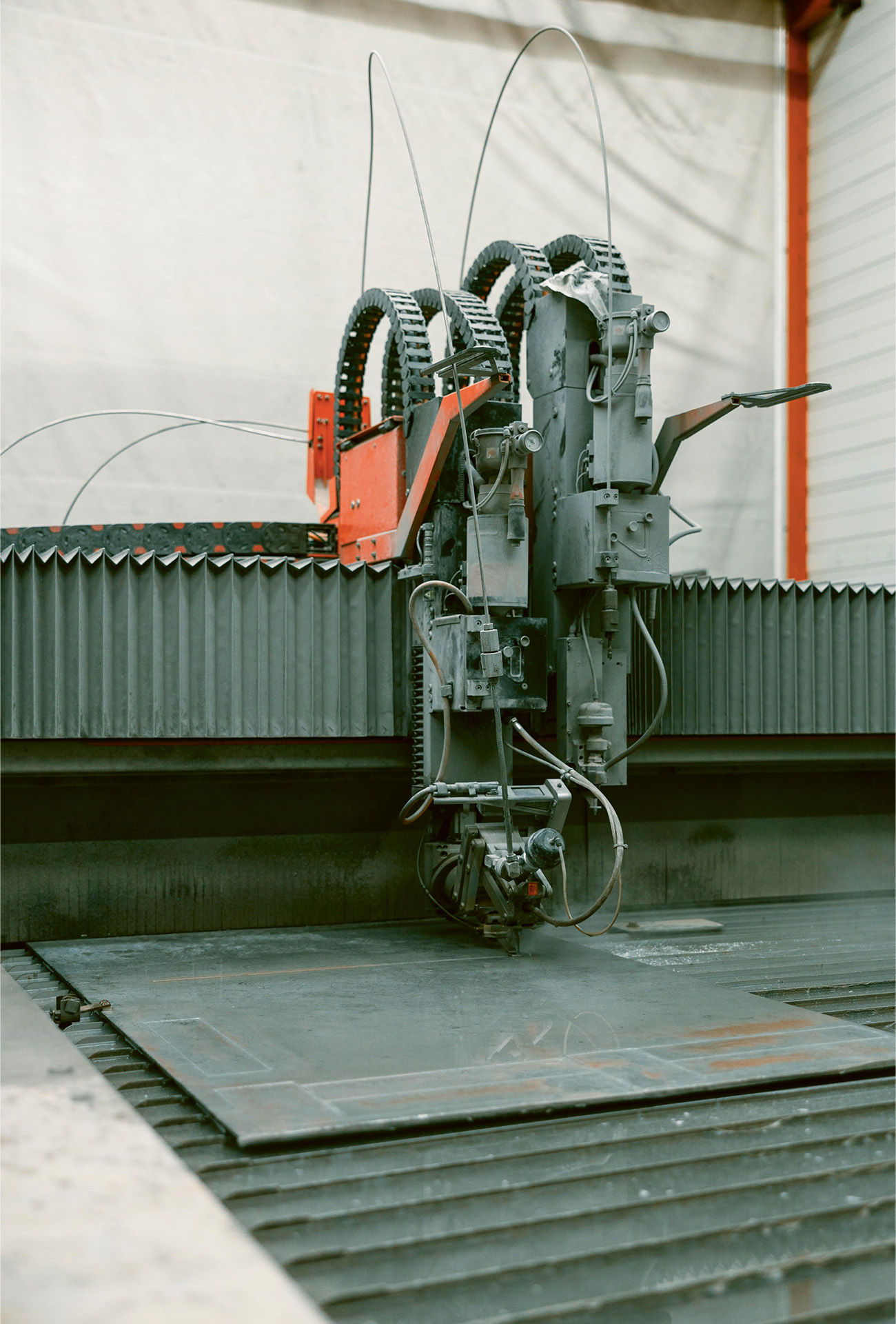
The composition and contamination of the existing cast aluminium made it impossible to reuse them for the production of new profiles. Therefore, they were largely reused directly. After being recut using water jet cutting, the elements were cleaned and installed as cladding for the new façade structure. The cast aluminium panels were subsequently not glued but welded to a supporting structure and hung on the facade. This allows them to be removed more easily in the future, simplifying a potential recycling process. This approach saved all the grey energy that would have been necessary for melting down and reforming the material.
The leftover material from the cutting process was repurposed into wall and ceiling cladding for the two main lobbies on the ground floor. The panels were finely sanded and joined seamlessly. Signage plates for the wayfinding system of the extended basic fit-out were also produced in this way and installed in the staircases, sanitary areas, and elevator lobbies. Any remaining material that could not be used otherwise was melted down and utilised for the aluminium panels on the inner courtyard facade.
The entire facade was fitted with liquid crystal glass that can be controlled dynamically with a heat protection function. The elements can darken within a second but do not restrict the unobstructed outward view, which is essential for well-being in an office environment. The system reacts to even low and diffuse heat input with partial dimming, thus efficiently preventing overheating. The specific ability to adapt to light and heat depending on the season and individual needs significantly, directly, and sustainably reduces overall energy loads, especially for cooling the building. This technology replaces mechanical sun protection systems for this project.
Sustainable Strategies
To effectively reduce the total carbon footprint of the building over its lifetime, specific steps were taken to improve its heat retention and overall energy efficiency. This included focusing on the development and use of innovative, sustainable insulation. In collaboration with swisspor Management AG, insulation material was produced by reusing demolition concrete. The existing concrete parapets retrieved from the building were recycled to manufacture the insulation material. These were crushed and then finely ground before being cold-foamed with the addition of CSA cement and other constituent components. The thermal insulation performance of this cold-foam panel is highly efficient, exhibiting an insulation performance of 0.035 W/mK, making it comparable to conventionally available insulating materials such as mineral wool. The application of this novel high-technology processes was possible through interdisciplinary collaboration. Its realisation also contributed to our ambitions for a circular economy approach for the reuse of concrete.
Inside the building, the project team identified existing reddish artificial stone slabs installed on the floors of the three emergency staircases. During inspections with the client, tenant, and architect, these elements were initially classified as aesthetically non-viable due to their strong association with 1980s design and their perceived outdated reddish-brown colour. However, subsequent analysis revealed that these slabs were installed at over 30 floor levels across the three stairwells. They were used specifically as angled steps that varied geometrically to fit the existing structure, complemented by a continuous stone skirting board made of the same composite. The logistical and cost implications required for removing and replacing them with a new material would have been substantial. Above all, the replacement material would have had to meet the exact functional specifications which the existing slabs already meet. Consequently, a material preservation strategy was implemented: the artificial stone slabs were retained in place, while the surrounding structural components underwent an optical modification. A high-quality smooth filler, painted dark red, was applied to the walls. The aged rubber handrail was replaced with a steel profile, the railings were
coated in a dark red-brown lacquer. The new fire doors were carefully matched in terms of colour and design. This comprehensive intervention, combined with new lighting, has resulted in a completely revitalised and modern aesthetic for the 40-year-old material.
Conclusion
The project follows the team-oriented approach of the owner and tenant, whose shared environmental values have established sustainability as a collaborative creative process. This cooperation has enabled the realisation of a circular project that takes responsibility throughout its entire life cycle. This circular approach fundamentally transformed the interdisciplinary collaboration, moving beyond traditional roles toward a true innovation partnership within the entire project team. Working with structural engineers, façade planner and façade company was no longer about applying standard solutions, but about a shared curiosity to depart from conventional paths. The project team relied on partners who possessed the courage to treat existing fabric as a primary resource rather than a constraint. This required a high level of precision in digital mapping and a willingness to engage in iterative testing for unconventional methods, such as the tension rod system and the upcycling of cast aluminium. Furthermore, the client fully embraced this approach, which proved to be a critical factor for the successful implementation of circular strategies.
The project team’s experience shows that circularity in renovation requires three essentials: a driven team of planners, a committed client, and flexible contractors. If stakeholders are unwilling to share the risks and the
substantial extra workload, circular building ideas cannot become a reality. The project team also identified the need to actively resist the throwaway culture – often incentivised by Switzerland’s high hourly wages – by remaining steadfast in the commitment to salvaging, repairing, and upcycling materials.
Through the combination of innovative technologies, reused materials, and modular construction, a sustainable, functional, and aesthetically demanding solution was realised. The project demonstrates how existing buildings can be made fit for the future through circular approaches and provides an example of an architecture that conserves the environment and resources without compromising quality and innovation.