Between inside and outside
Wespi de Meuron Romeo architetti, Pianifica Ingegneri Consulenti
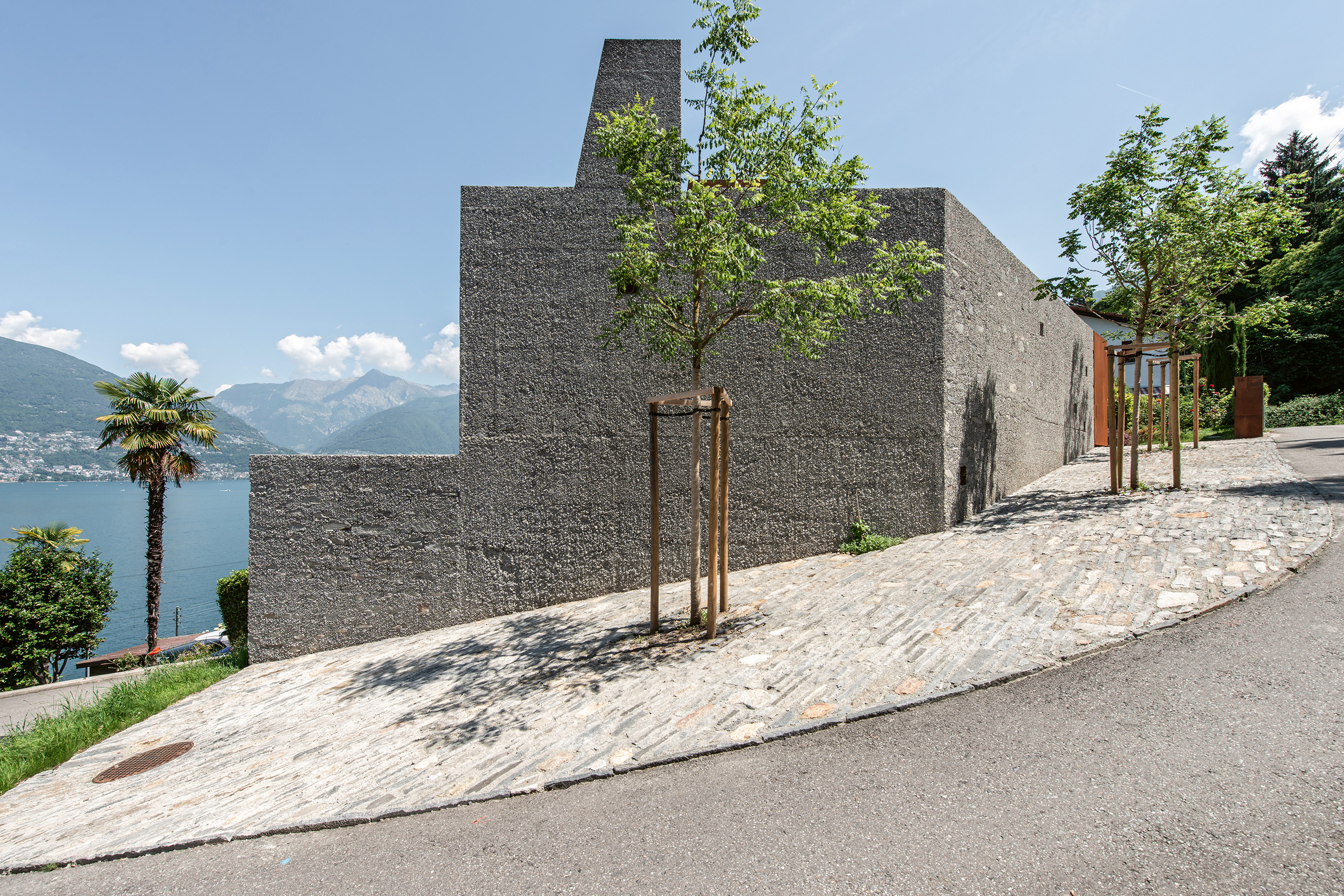
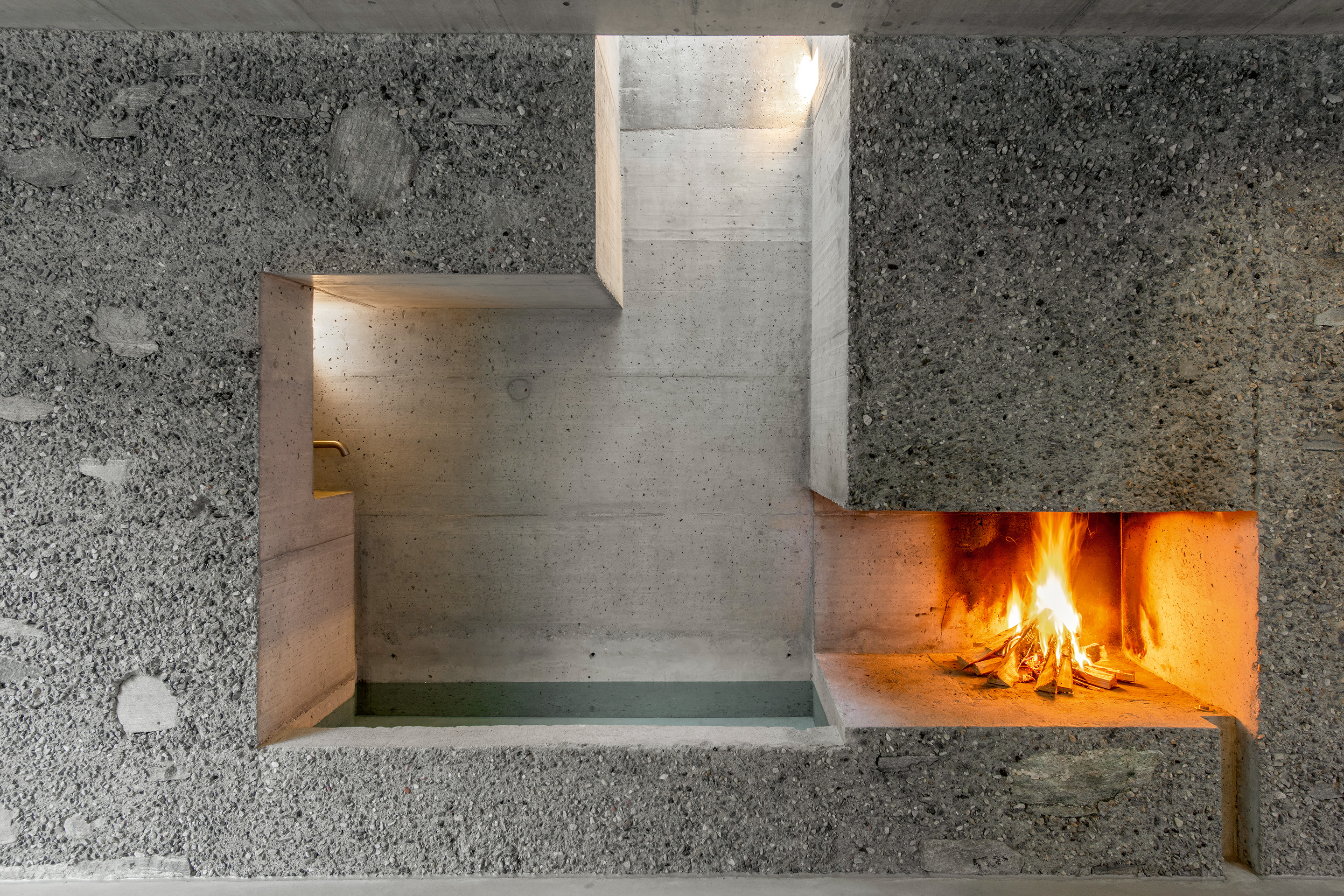
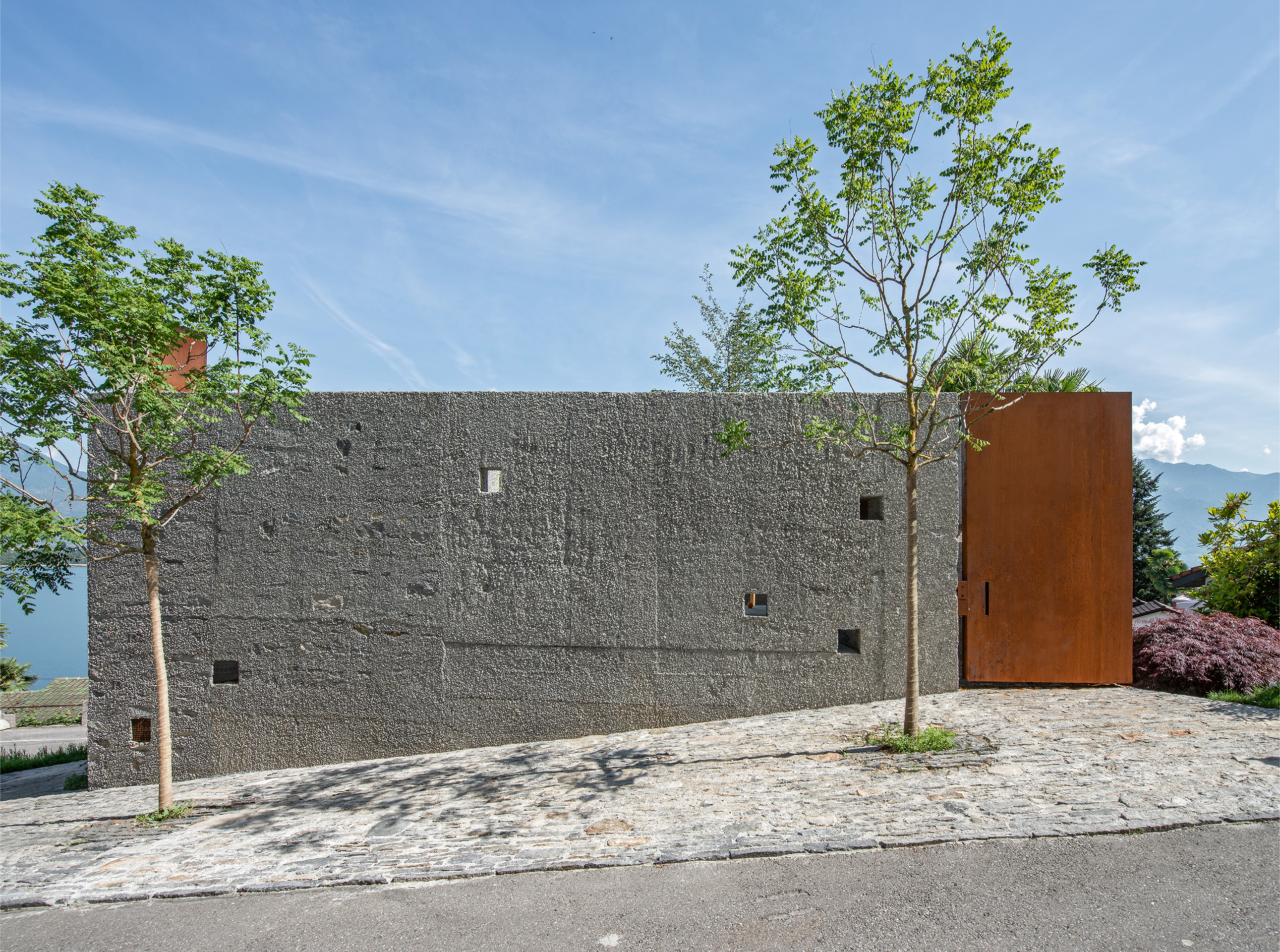
Set into the hillside of San Nazzaro, the house by Wespi de Meuron Romeo rises like an “archaic boulder”. A polygonal concrete volume on three levels, it alternates opaque walls and transparent surfaces to shape light, privacy, and its relationship with the landscap
Testo in italiano a questo link
Casa a San Nazzaro, Gambarogno TI
The project is situated in a low-density area of San Nazzaro, a hamlet of Gambarogno, along a stretch of shoreline between lake and mountain on the southern shore of Lake Maggiore. The site occupies a steep slope close to the railway line and is enveloped by the dramatic lacustrine landscape formed at the confluence of the Maggia and Ticino rivers.
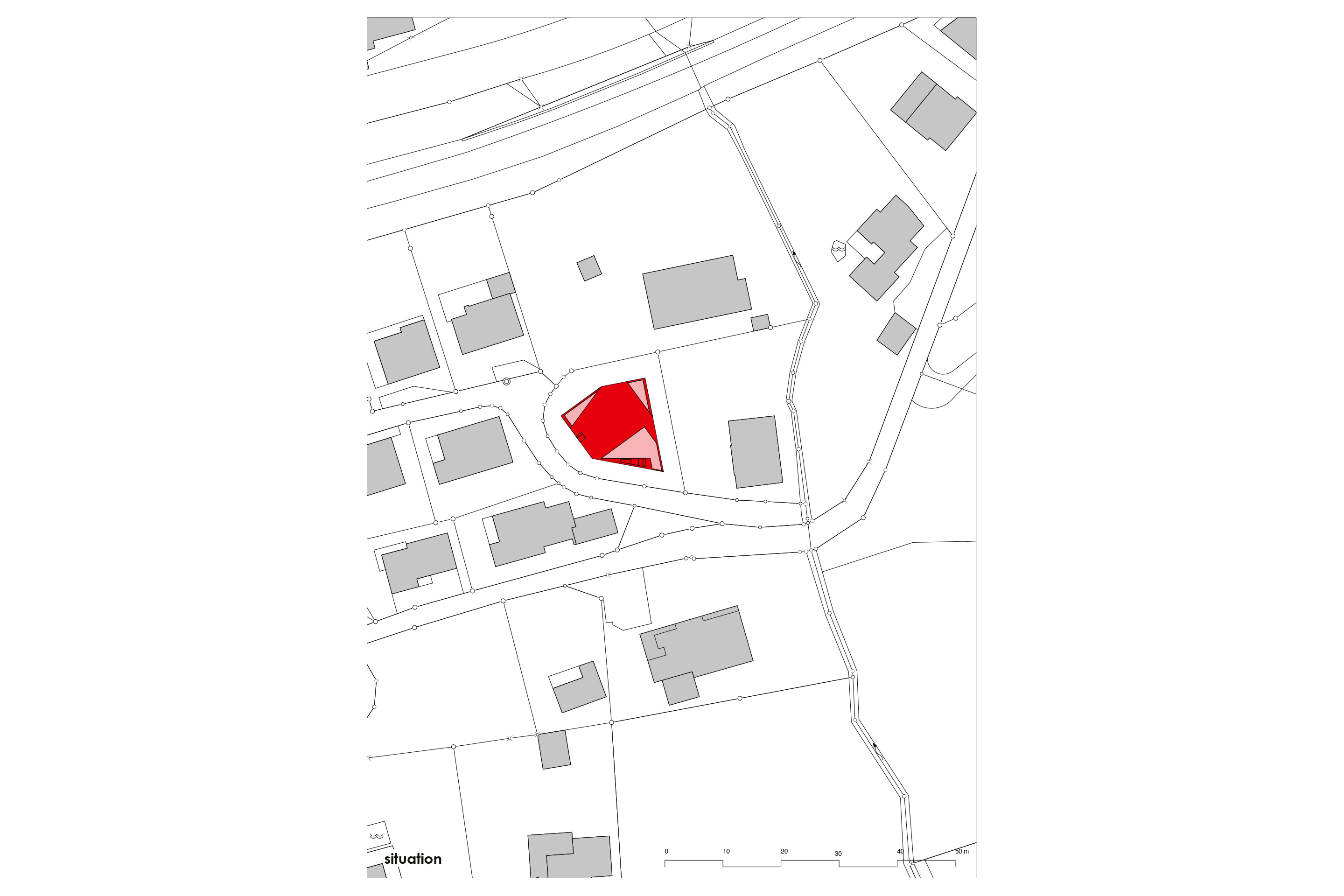
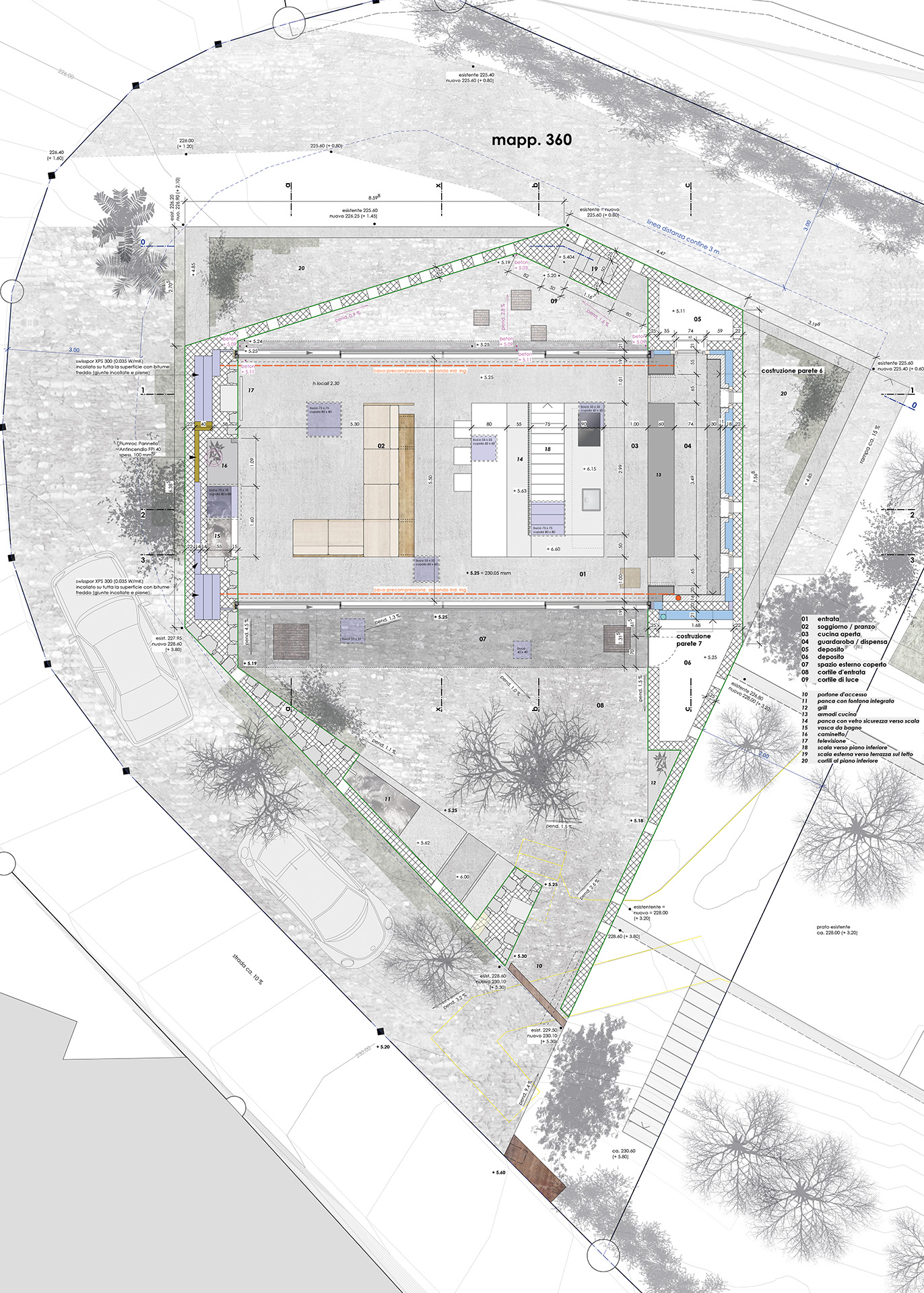
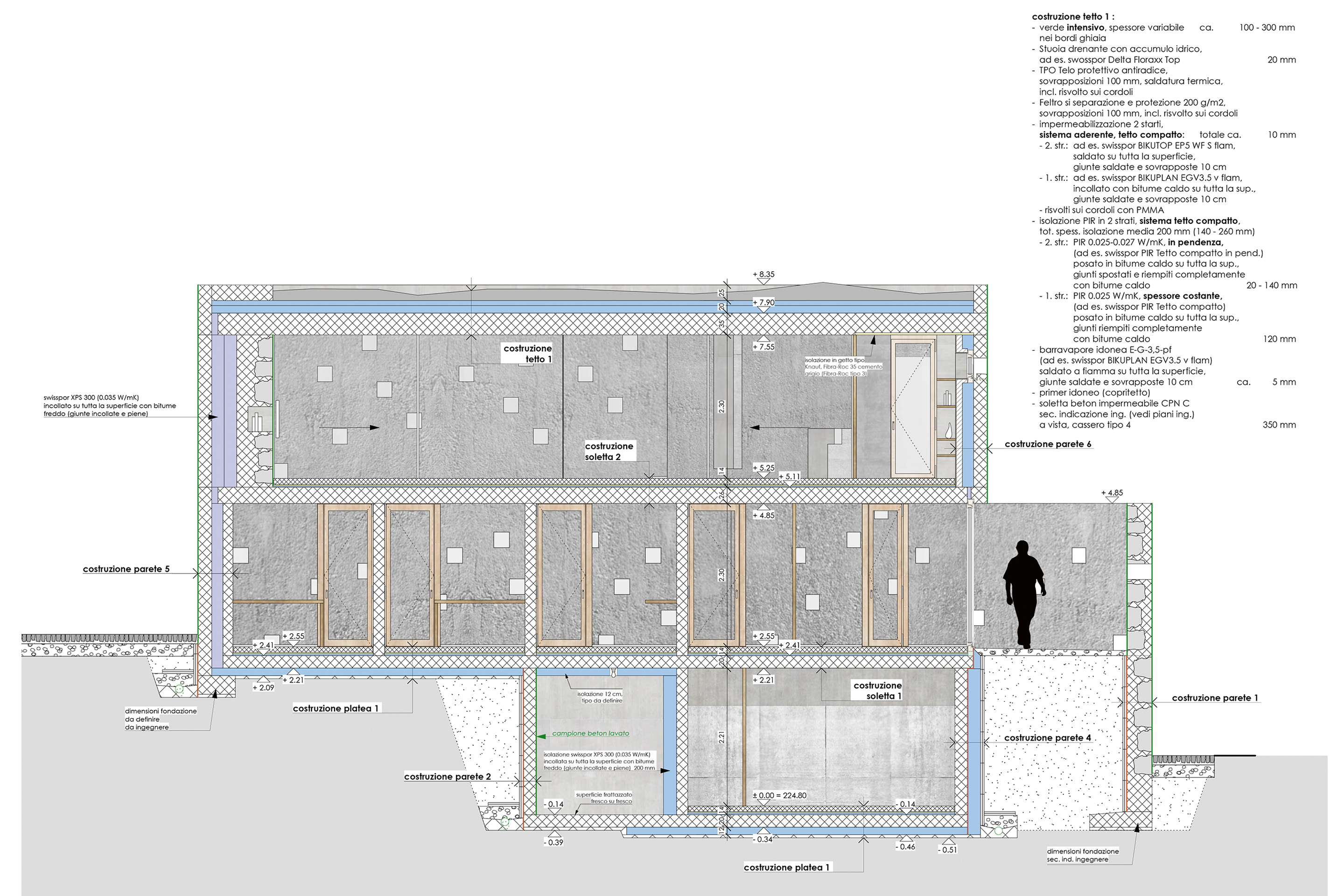
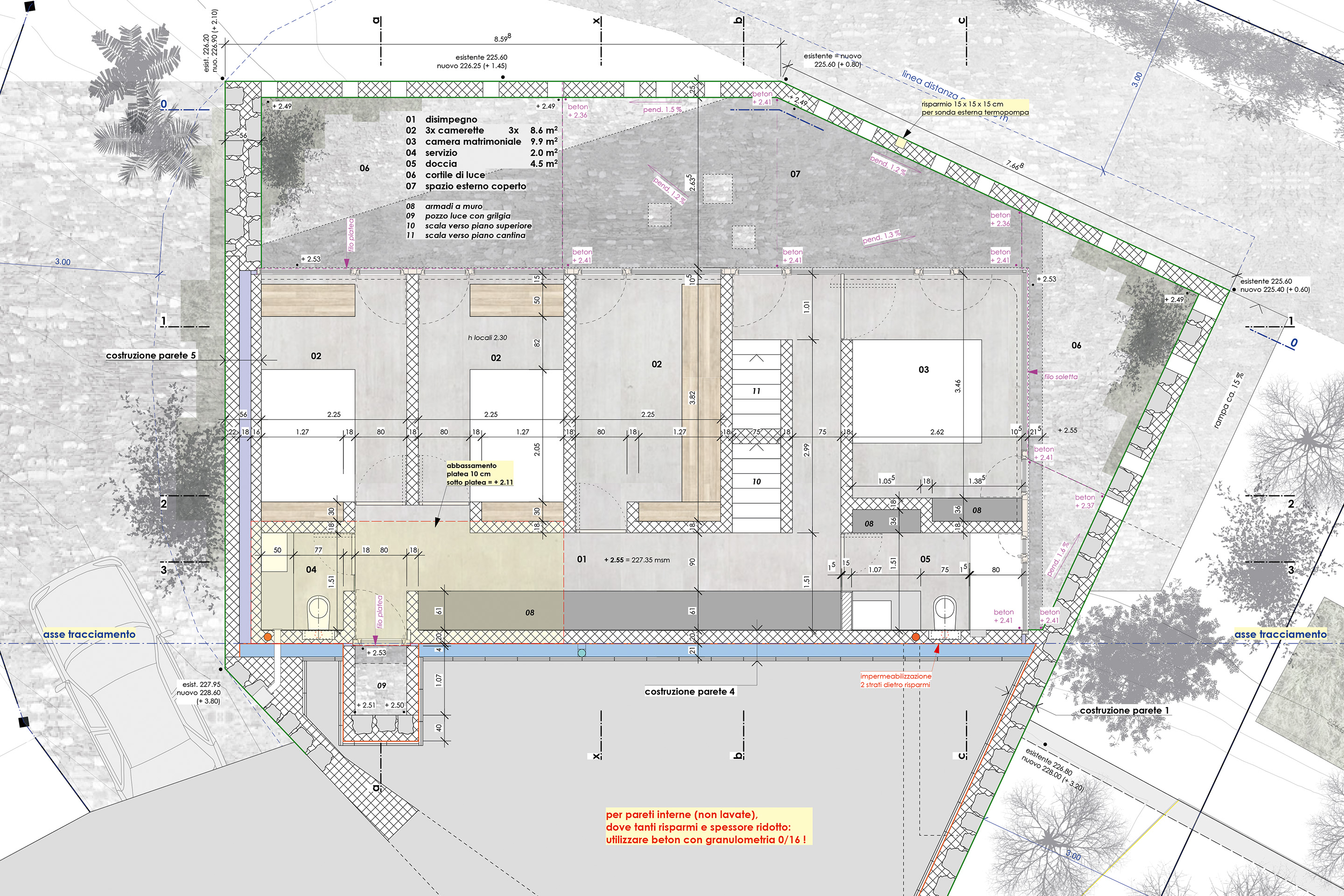
The house’s plan unfolds within two distinct perimeters. The inner one, a regular rectangular shape, encloses the 140 square metres of heated living space. The outer perimeter, tracing the lot’s shape and forming an irregular polygon that coincides with the inhabited volume only on the southwest side, encompasses both the covered areas of the house and the surrounding open spaces.
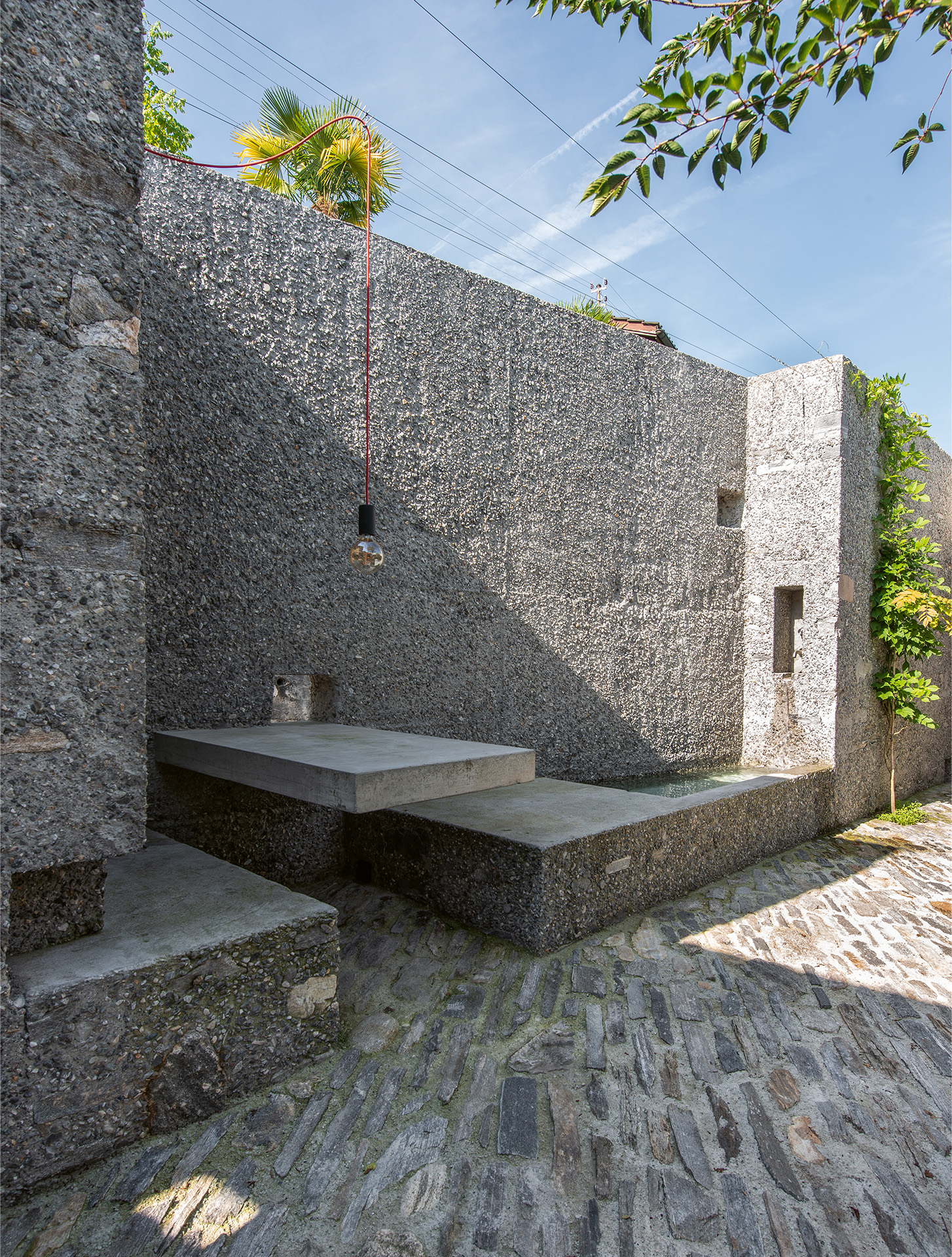
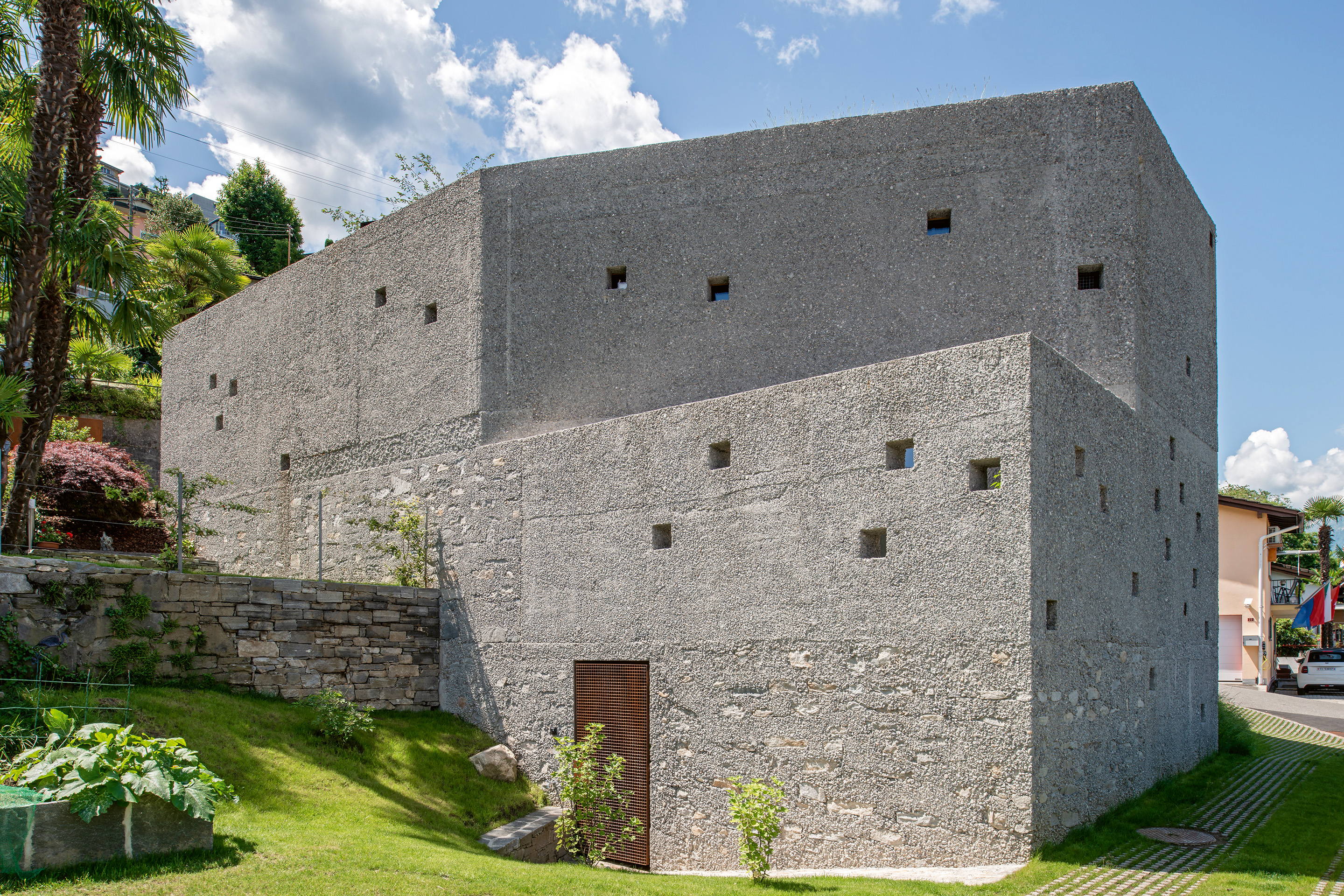
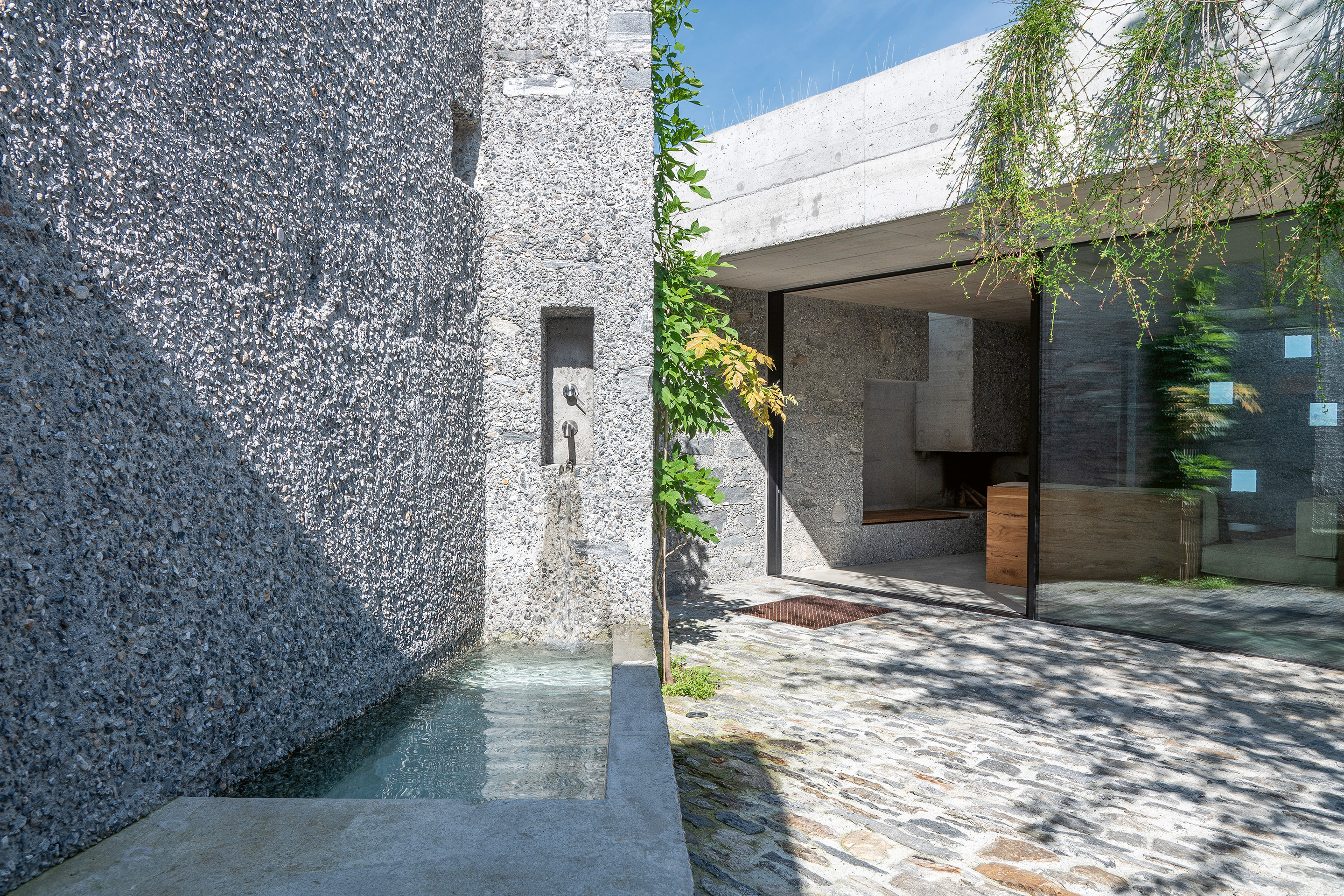
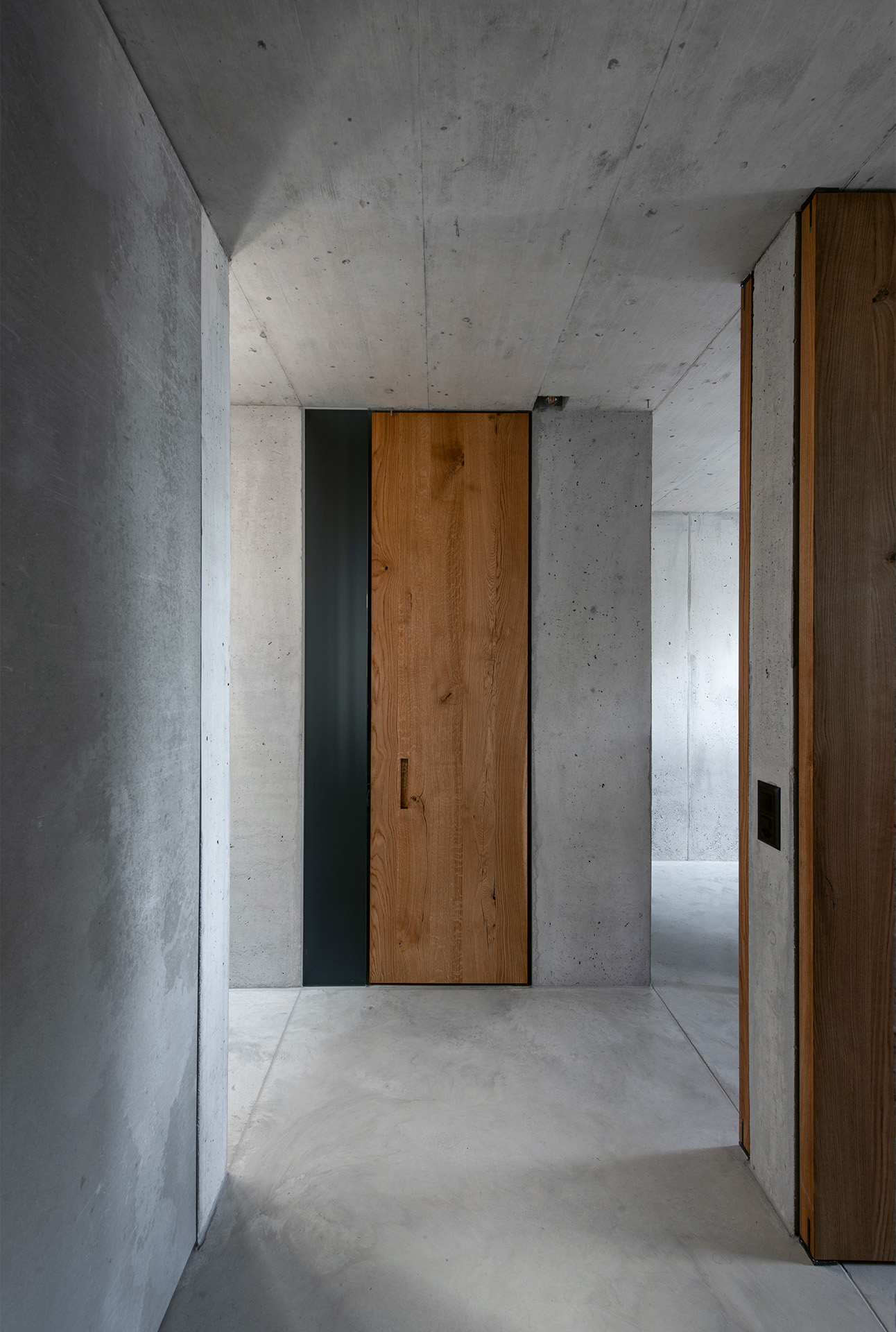
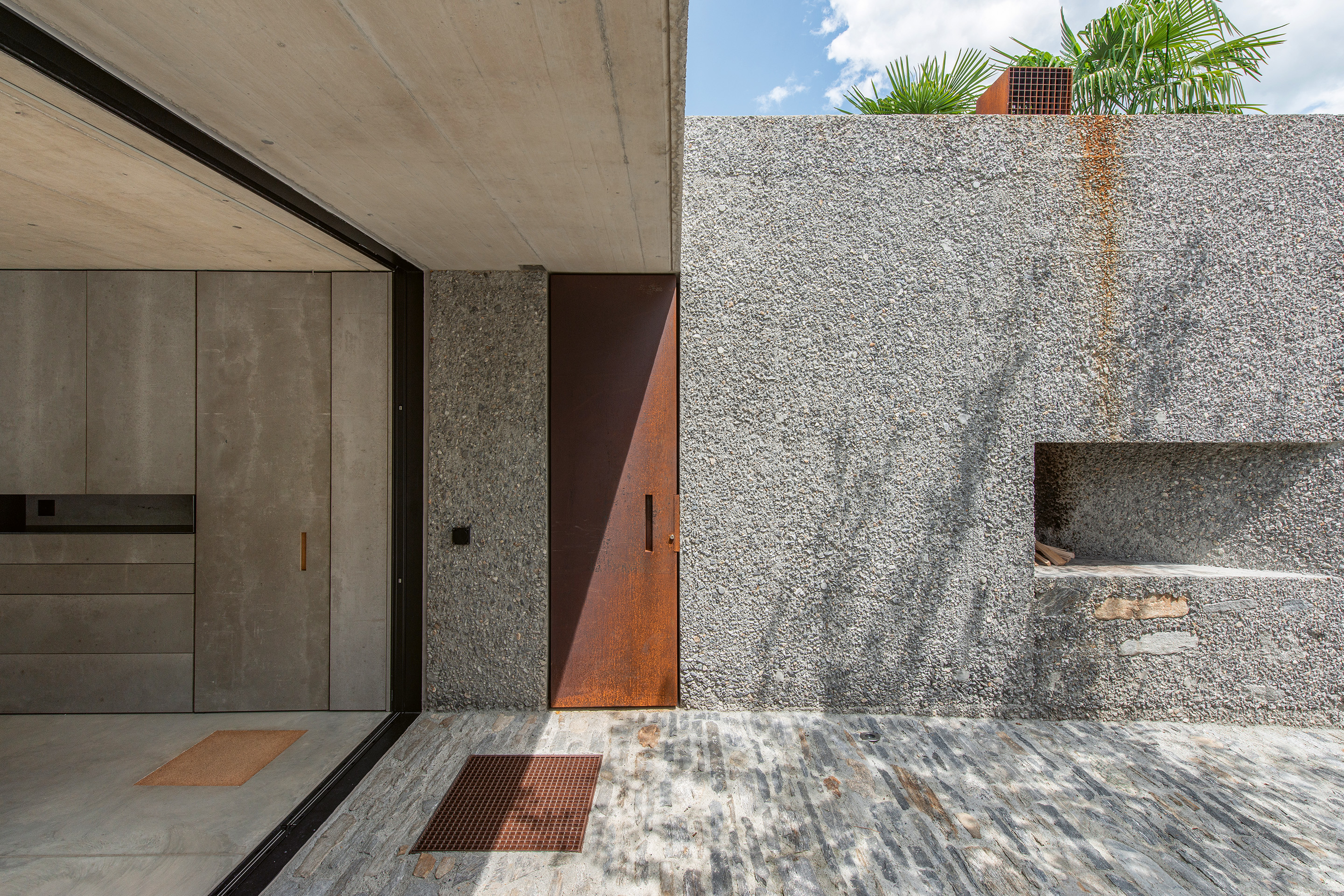
From the exterior, the house harmonizes with the natural landscape framing the building, presenting itself, in the architects’ vision, as an archaic boulder emerging from the ground. This impression is reinforced by a series of deliberate design choices. Formally, the outer perimeter breaks the repetitive regularity that characterizes the other buildings in the hamlet. Materially, the architects opted for a coarse washed-concrete cladding, whose homogeneous surface complements the free-flowing plan devoid of modular filigree. The roof is conceived as a kind of «sixth façade», not merely a protective element against the weather but as a continuation of the compositional and material themes explored across the five vertical faces.
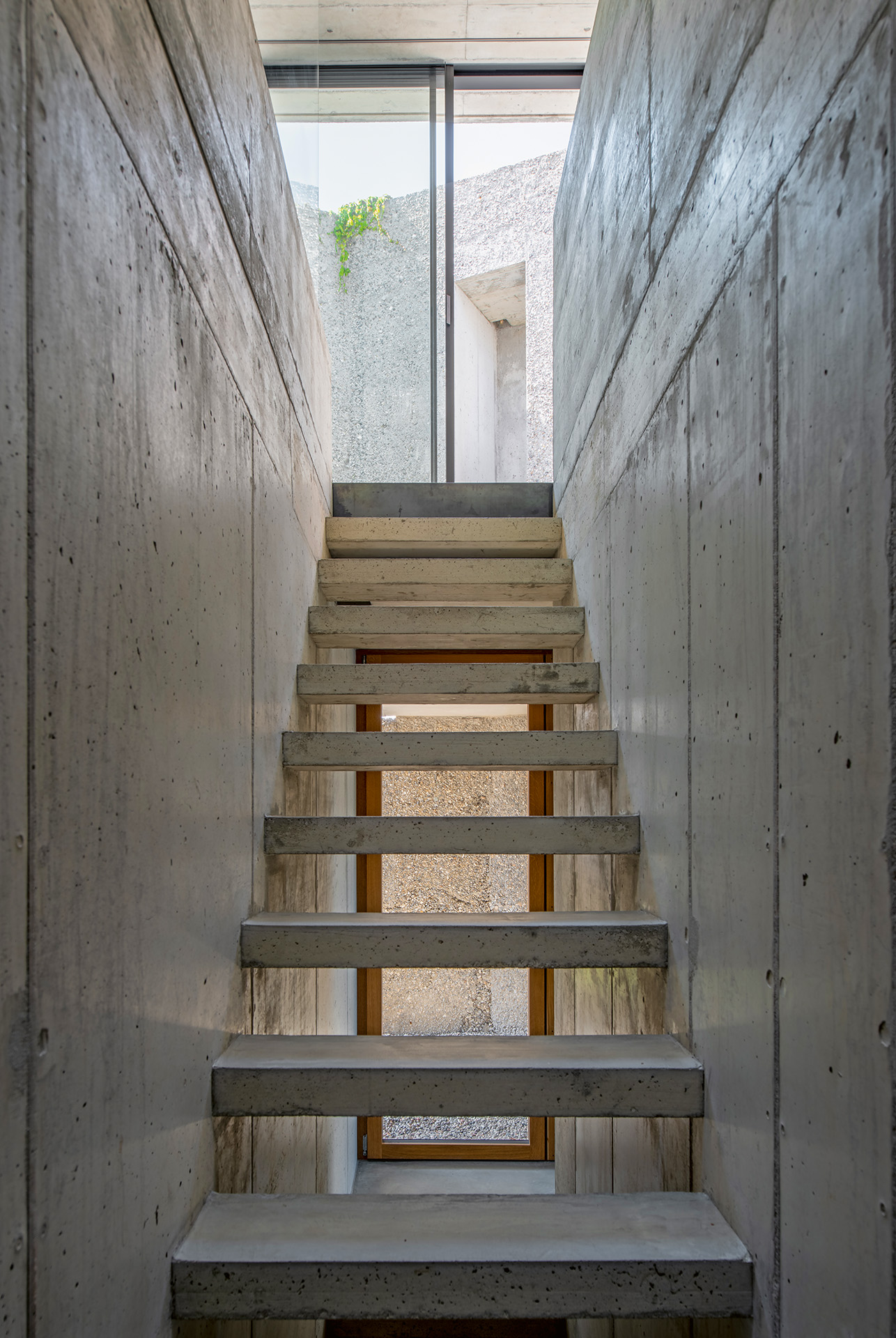
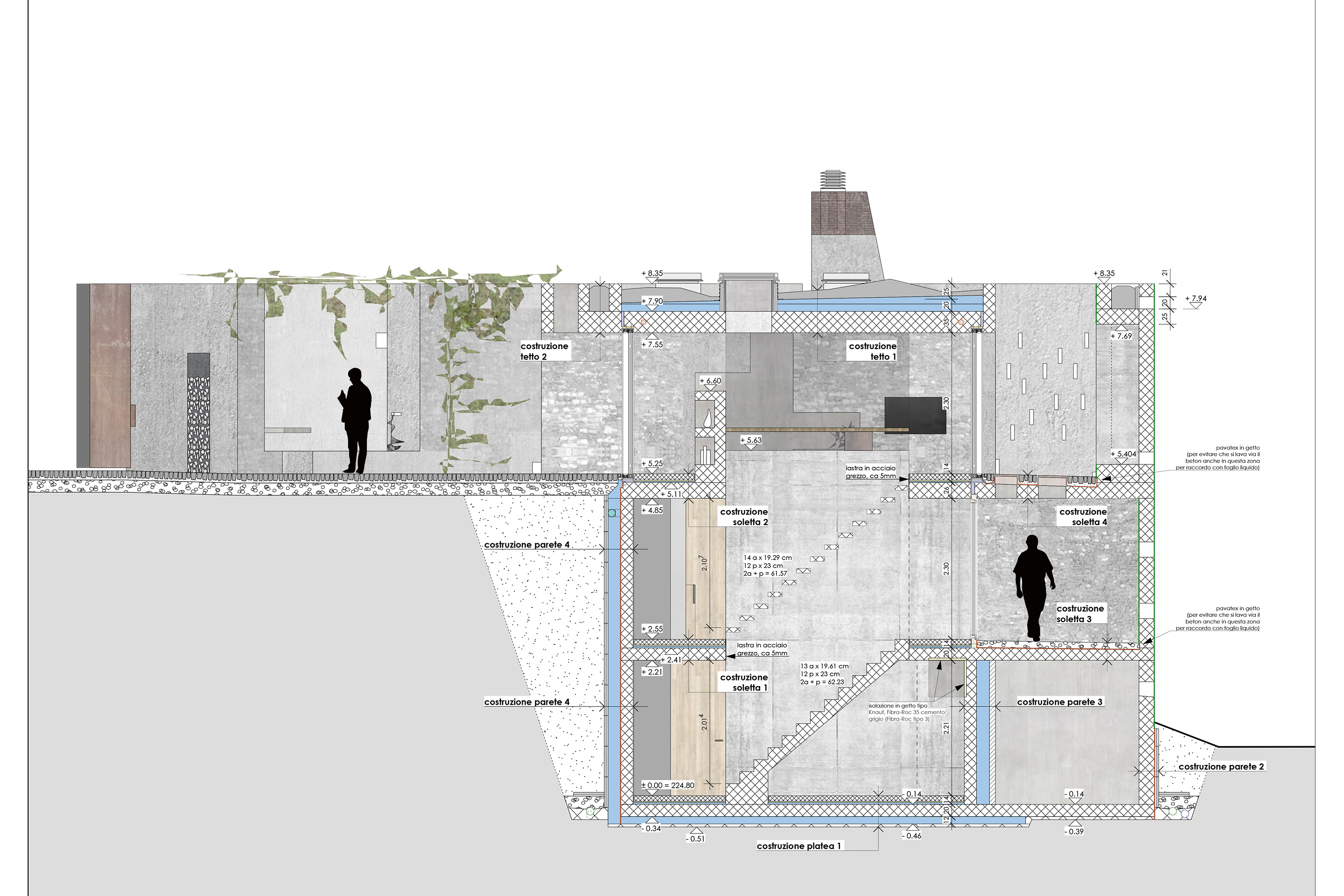
The building, designed for a family of four, develops over three levels. The upper floor accommodates the entrance, the living and dining area, and the open-plan kitchen. The intermediate level hosts four bedrooms, each with an en-suite bathroom. The lower level contains storage and technical rooms, alongside a secondary entrance and garden access.
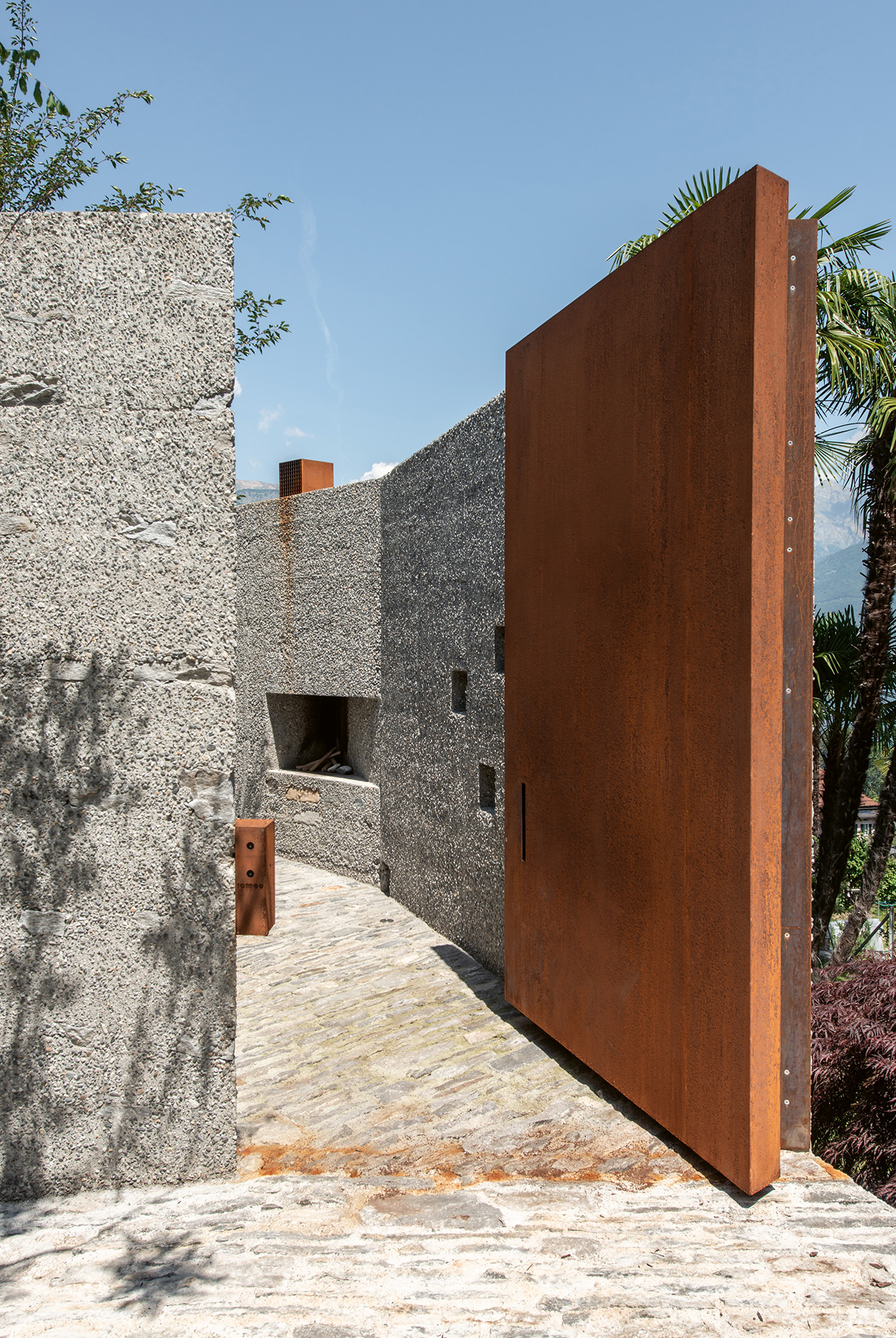
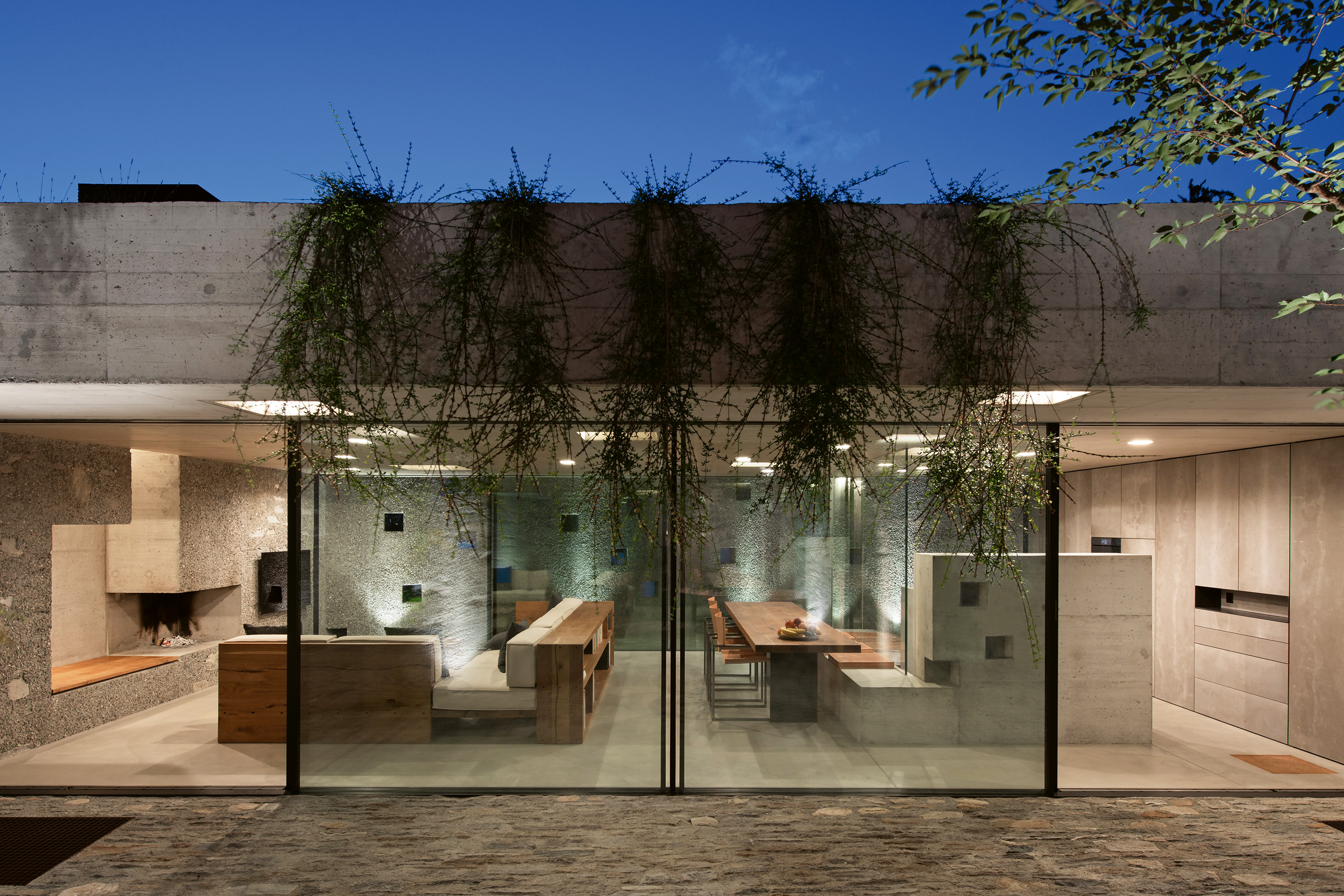
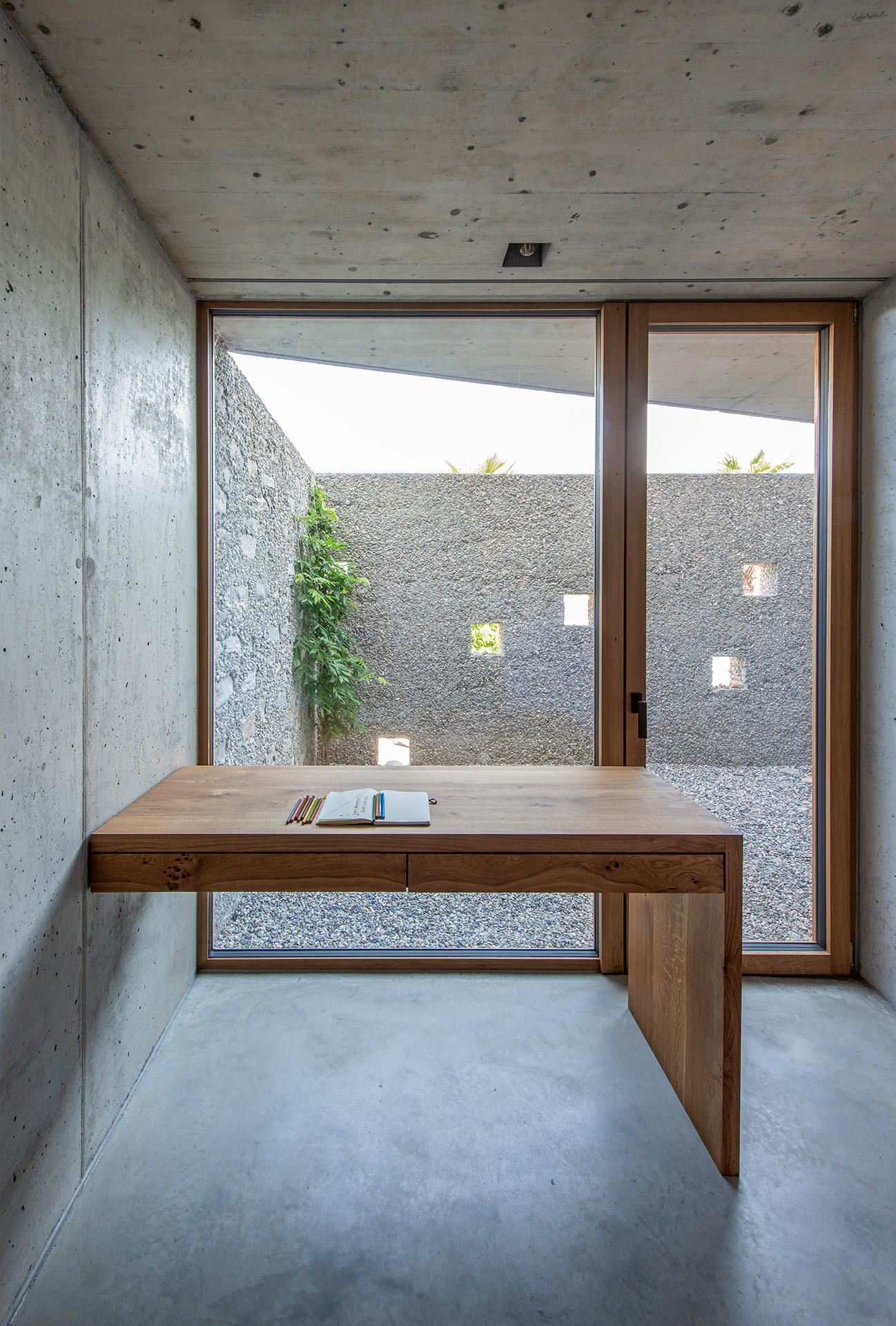
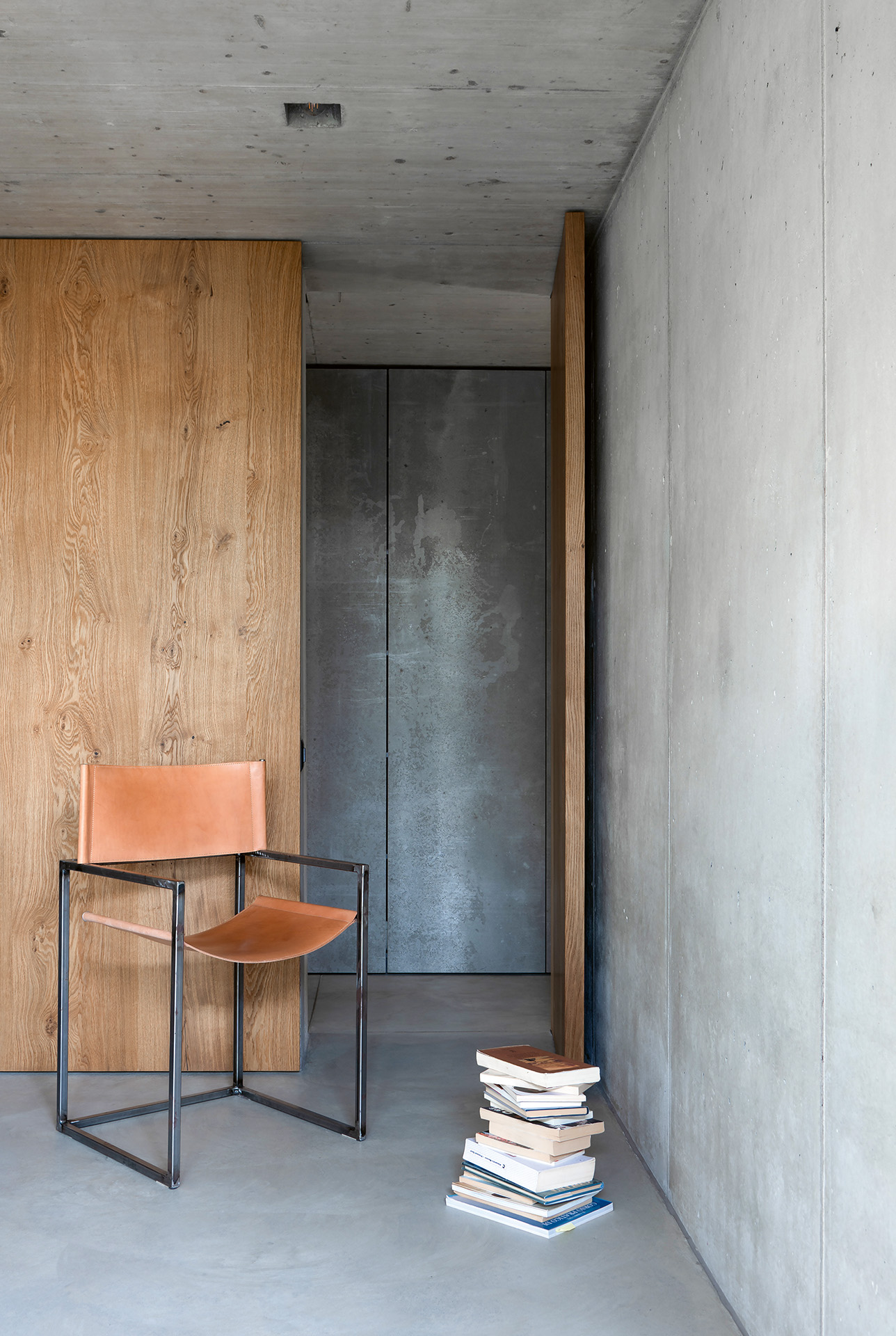
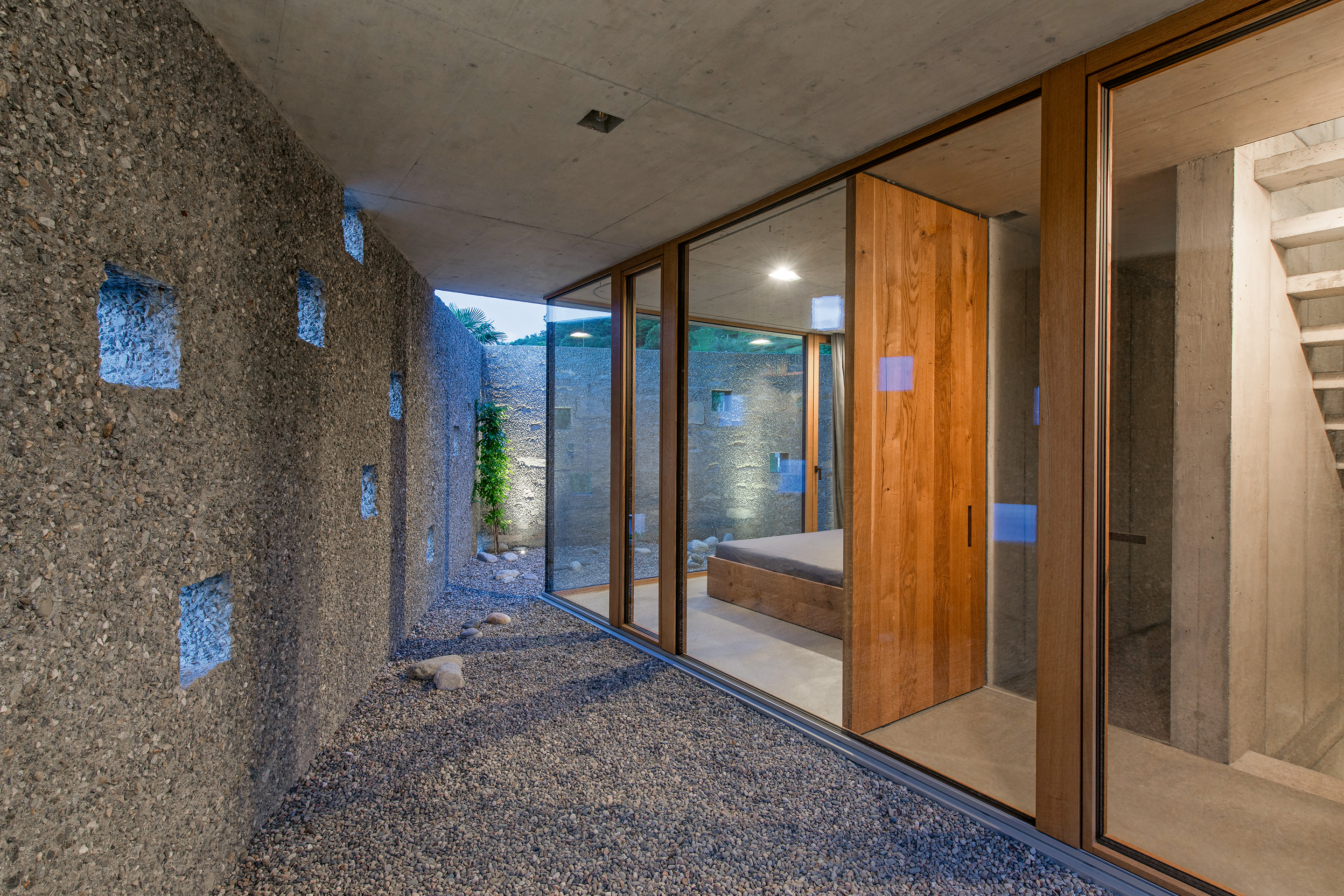
Partitioning is conceived to emphasise the functional specificity of each space. Interiors are designed to exploit the full extent of the volume, with a long corridor on the lower floor and a notably open ground floor plan. Regarding the relationship between private covered and open spaces, the east and west façades are entirely opaque, extending the granular texture of the concrete inward, while the north and south sides are fully glazed, creating a strong axiality toward the square openings to the north and south. Echoing the defensive logic of an ancient castle, the surrounding walls provide physical protection from external views, with punctuated slit windows supplying frontal illumination.
Light plays a central role in defining the character of the primary spaces. It is zenithal and focused in the kitchen, zenithal and planar in the external areas, frontal and pinpointed in the open courtyards, and frontal and planar in the living and sleeping zones.
The house represents a new chapter in Wespi de Meuron Romeo’s extensive exploration of residential architecture, through which the practice has engaged with diverse interventions – from new constructions to transformations of existing buildings – and multiple expressions of urban and natural landscapes. The project at San Nazzaro shares the studio’s consistent focus on experimentation with contemporary materials, the differentiation of natural light according to spatial function and character, and the departure from Euclidean geometry in favour of more complex and evocative configurations.
Distinctive features of this building include its relationship with the context, expressed through a balance between reference to tradition—evident in the use of stone as a material echo of rural architecture—and openness to innovation, manifest in the volumetric composition, the treatment of façades, and the application of concrete. Additionally, the project experiments with spatial separation, contrasting transparent surfaces with perforated wall planes, while in the private outdoor space it negotiates continuity with the house’s core and discontinuity with the surrounding urban fabric.
- Place San Nazzaro, Gambarogno
- Client Ornella + Luca Romeo, San Nazzaro
- Architecture Wespi de Meuron Romeo architetti, Caviano
- Contractor Walzer costruzioni SA, Tegna
- Civil engineering Pianifica Ingegneri Consulenti SA, Locarno
- Building physics IFEC Consulenze SA, Rivera
- Photography Giacomo Albo fotografo, Lecco (I)
- Timeline project-realisation 2018-2021
- Certification or Energy standard Ruen, 2009
- Intervention and building type new construction
- Building category (Ae) single family house 189 m²
- Form factor (Ath/Ae) 2.06
- Heating and hot water 100% geothermal heat pump
- Energy needs for heating SIA380/1:2009 40.8 kWh/m²a
- Special features geocooling through borehole heat exchanger system