The domestic dimension of care
The domestic dimension of care transforms living into an active practice: cohabitation, shared spaces and interdependence support fragility and autonomy, restoring dignity and relationships to residents, from the younger generations to the elderly, within inclusive and participatory cities.
La dimensione domestica della cura, testo in italiano
Taking care (through living)
Caring for others has always been one of the foundations of human society. When asked by a student many years ago what the first indicator of civilisation could be, anthropologist Margaret Mead replied without hesitation: «a broken femur that has been healed».1 These words encapsulate the idea that civilisation is born not from strength, but from care — from the moment someone stopped to help another person recover. In nature, an animal with a broken limb usually does not survive, either becoming prey or being excluded from the group. The healing of a broken bone demonstrates the existence of the kind of social organisation typical of the human species: someone assisted the injured individual, cared for them and protected and fed them during the prolonged recovery period. Therefore, civilisation begins with mutual assistance. Today, it has been widely demonstrated that many other animal species, particularly primates, are capable of intervening in the treatment of fractures and engaging in caregiving practices and mutual support behaviours that have also been observed in interspecies contexts. However, beyond the outdated anthropocentric approach of the above anecdote, it also indirectly highlights how concepts such as independence, physical autonomy, and personal mobility have always been central to our society, which is founded on the valorisation of individual freedoms. These are abilities that tend to diminish physiologically with age.
When addressing the issue of home care, i.e. caring for others within the home, it is worth questioning the persistence of a paradigm that considers care facilities for the elderly – conceived as the most efficient and humane solution – to be the only possible form of housing for when we are no longer able to care for ourselves.
This short text questions the need to treat residential care for the elderly as a separate category, instead suggesting integrated, collective models with shared services and intergenerational support relationships aimed at users who are fully or partially self-sufficient.
Maggie Kuhn,2 by challenging the most widespread prejudices associated with ageing, such as social marginalisation and the perception of reduced professional competence, which often result in the exclusion and stigmatisation of older people (ageism), he has flipped the narrative, emphasising that old age is a period of life characterised by freedom and authenticity. It is a time of self-determination when new ways of living can be explored, as recently described by the writer Erri De Luca as an experimental age.3
Kuhn emphasises that contemporary society tends to overestimate the importance of independence and neglect the opportunity to promote interdependence. This is particularly relevant in a demographic landscape of progressive life extension, where individuals can benefit from relationships based on mutual support, especially during periods of partial or compromised self-sufficiency. As we grow older, competition becomes less important, and collaboration becomes essential, as we build closer ties with people we have never met before.
Just as care requires concrete, proactive action, our way of life can also be viewed as an active, planned practice. Here, the concept of living has evolved beyond mere instinctual behaviour to become «an opus of intelligence and planning typical of humans, without ever detaching itself from its original biological matrix, which it reaffirms in all its highest manifestations».4 In collective housing contexts especially, living together means sharing not only space, but also time, resources, and above all, common vulnerability, whether physical, social, or economic. This mutual dependence contributes to a different way of living, resulting from a commitment to creating a shared sense of well-being. We can say that it is precisely this shared condition of fragility that allows equality to flourish, creating the conditions for cooperation that supports quality of life.5 The mutual interrelation between individuals who share the same spatial context is in fact an essential element of the living experience, as already highlighted by Gaston Bachelard in his study on the imagination of domestic space, where he emphasised the importance of subjective experience in defining the meaning and «essence of the notion of home»6 in «every truly inhabited space».7
From this perspective, care takes on an ontological significance, becoming an intrinsic and constitutive element of the very concept of living, an integral part of the definition of inhabited space, understood not only as a physical construction but also as a relational and interdependent system. Living therefore means actively engaging with space, taking care of oneself and others through a constant relationship with the physical environment and the community of which one is a part.
The necessary evolution of collective housing
The ageing population is one of the most significant demographic phenomena of the 21st century, particularly marked in Western countries (Europe, North America) and in countries that are politically and economically similar, such as Australia, South Korea and Japan. The progressive increase in the proportion of people over 65 in the total population is leading to profound social, economic, cultural and territorial changes. The old-age dependency ratio,8 which stood at 25.9% in Europe in 2001 and reached 34.8% in 2020, is estimated to reach 56.7% in 2050, translating into a ratio of one worker for every person of retirement age.9
However, despite this momentous change, the supply of housing in the form of collective residences remains anchored to outdated typological and functional models. The nuclear family continues to be taken as the reference housing unit, even though single-person households now represent the majority in metropolitan areas. At the same time, a significant proportion of the elderly population still lives in dwellings essentially similar to those of the early 20th century, with few technological or functional upgrades. Overall, the collective building stock continues to be based on regulations, performance standards and spatial models inherited from the functionalist lexicon that are becoming ever less responsive to contemporary housing needs.
This misalignment results in a rigid, undiversified supply, prompting design research to focus on open, flexible, and adaptable solutions that can accommodate new forms of cohabitation and the needs of vulnerable individuals without being exclusively designed for this purpose. For example, this has led to a shift away from the traditional concept of «housing for the elderly» towards residential models that promote cohabitation and the sharing of spaces, services and activities.
In recent years, numerous experiments in developing alternative housing solutions have attempted to break away from the logic of the dominant property market. In these new approaches, vulnerable residents are not viewed as «special» individuals, but as paradigms of a new way of living that can include people who are vulnerable in various ways. These individuals are typically alone, have low to medium incomes and are often elderly. They live in housing that does not suit their needs.
These models aim to address social isolation while relieving the welfare system of non-specialised daily care tasks. In many cases, as in Switzerland and Germany, these initiatives start with the formation of intentional communities. These communities are based on public meetings where future residents collectively define the rules of cohabitation, the configuration of spaces, and the shared management of facilities.
However, it should be emphasised that fragility is not exclusive to the elderly; it affects all age groups, including young people, precarious workers, the unemployed, separated parents, and adults who are forced to return to live in their parents’ home for economic or social reasons.
Two opposite fragilities
Although the challenges associated with ageing (such as pressure on the healthcare system, unsustainable social security, isolation, and social exclusion) are real and complex, it is important to remember that a high average age is not a weakness of our society. Rather, it is a positive indicator of collective well-being. If human feelings could be objectively measured, life expectancy would be one of the most effective tools for assessing the quality of life (and happiness) in a country.10 In this sense, the increasing longevity of European populations should be viewed as a positive outcome of effective welfare systems, a healthy environment, an efficient healthcare network, and the availability of essential goods and services such as water and food. Furthermore, the concept of the city on which our European urban culture is based has historically been geared towards ensuring participation and inclusion for all, including the most vulnerable. The organisation of public spaces, housing quality, mobility and accessibility are fundamental tools of spatial justice that contribute substantially to collective well-being. To paraphrase Amartya Sen, development is freedom; it is not just about building places, but also about empowering people.11
From this perspective, life expectancy can also be seen as a key to understanding global migration flows: population movements from the South to the North of the world are largely driven by the search for better living conditions, greater security and access to more developed public services. As numerous studies,12 highlight, persistent territorial inequalities in terms of income and opportunities are one of the main structural factors underlying these dynamics.
Alongside the ageing population – which is remaining active and independent for longer and longer periods – there is another often underestimated phenomenon: the growing difficulty young people face in becoming independent in terms of housing. This fragile situation is evident throughout Europe, highlighted by the increase in the NEET population13 (young people aged between 15 and 34 who are not in education, employment or training), accentuated by gender inequalities and regional imbalances: in Switzerland, for example, the NEET rate is 8%, lower than the EU average (11%), but in the canton of Ticino it is more than double that (17%).14
In Italy, this issue has become particularly acute: the number of NEETs has grown from 2 million (22.1%) in 2010 to over 3 million in 2020, with the highest rates among women and in the south of the country15. This trend is accompanied by the phenomenon of so-called boomerang kids, who are young adults that return to live with their parents after having experienced independent living. Sociologist Katherine Newman has described this model as the «accordion family»,16 which expands and contracts to accommodate adult children, especially in contexts affected by economic crises. According to recent data, about two-thirds of young Italians between the ages of 18 and 34 continue to live in their family home, compared to a European average of 49.6%,17 while over 44% of people over 65 live alone in homes with more than five rooms.18 This housing imbalance highlights the opportunity, and the need, to develop models of intergenerational cohabitation, including through simple solutions that do not involve major structural interventions. Intergenerational living can therefore offer a concrete response to these two fragile conditions – opposite but complementary – that increasingly characterise industrialised societies, particularly in Europe.
A paradigm shift
When designing a domestic space for vulnerable residents, it is essential to take a radical new approach to collective living. This involves moving beyond standardised, resistant models and embracing more complex, flexible solutions that reflect the diversity of the lives lived there. In this sense, intergenerational housing represents a paradigm shift rather than an alternative typology: it is a space that integrates different types of fragility — linked to age, physical condition, economic circumstances or social situation — into an architectural structure that enhances cohabitation. Rather than viewing complexity as an obstacle, it is recognised as a design resource, resulting in configurations that promote continuity between indoor and outdoor spaces, openness to the urban environment, and the creation of multiple access points and relationships.19
The domestic dimension of care is manifested through a change in mentality, such as viewing housing as a social and relational space, and through housing structures with specific characteristics. Housing, particularly in contexts where residents are vulnerable, must never encourage segregation or isolation. The first prerequisite is therefore that such housing is located in an urbanised area that is connected to everyday life.
Although not specifically designed for vulnerable people, the Kalkbreite cooperative in Zurich (Müller Sigrist Architekten, 2014) is a prime example of integrated urban regeneration, combining cooperative living with the activation of the surrounding urban fabric. Designed as social infrastructure with high urban permeability, the building features multiple access points, usable roofs, and a hanging courtyard built above a tram depot. The volumetric articulation and functional mix encourage interaction between the private and collective spheres, creating a flexible, hybrid and replicable residential typology. This project is an advanced model, not only because of its location, but also because it integrates housing, commercial spaces and public services, creating a new focal point for the neighbourhood. A similar approach can be seen on a smaller scale in the new intergenerational neighbourhood of Parco San Rocco in Coldrerio (cf. pp. 66-71), where the construction of a home for the elderly, a municipal multipurpose centre with spaces for young people, events and school activities, and a residence for self-sufficient elderly people provides an opportunity to create a new community hub based on social inclusion and intergenerational solidarity. The project has become a meeting place for the community, connecting the area with the nearby primary school and the rest of the village.
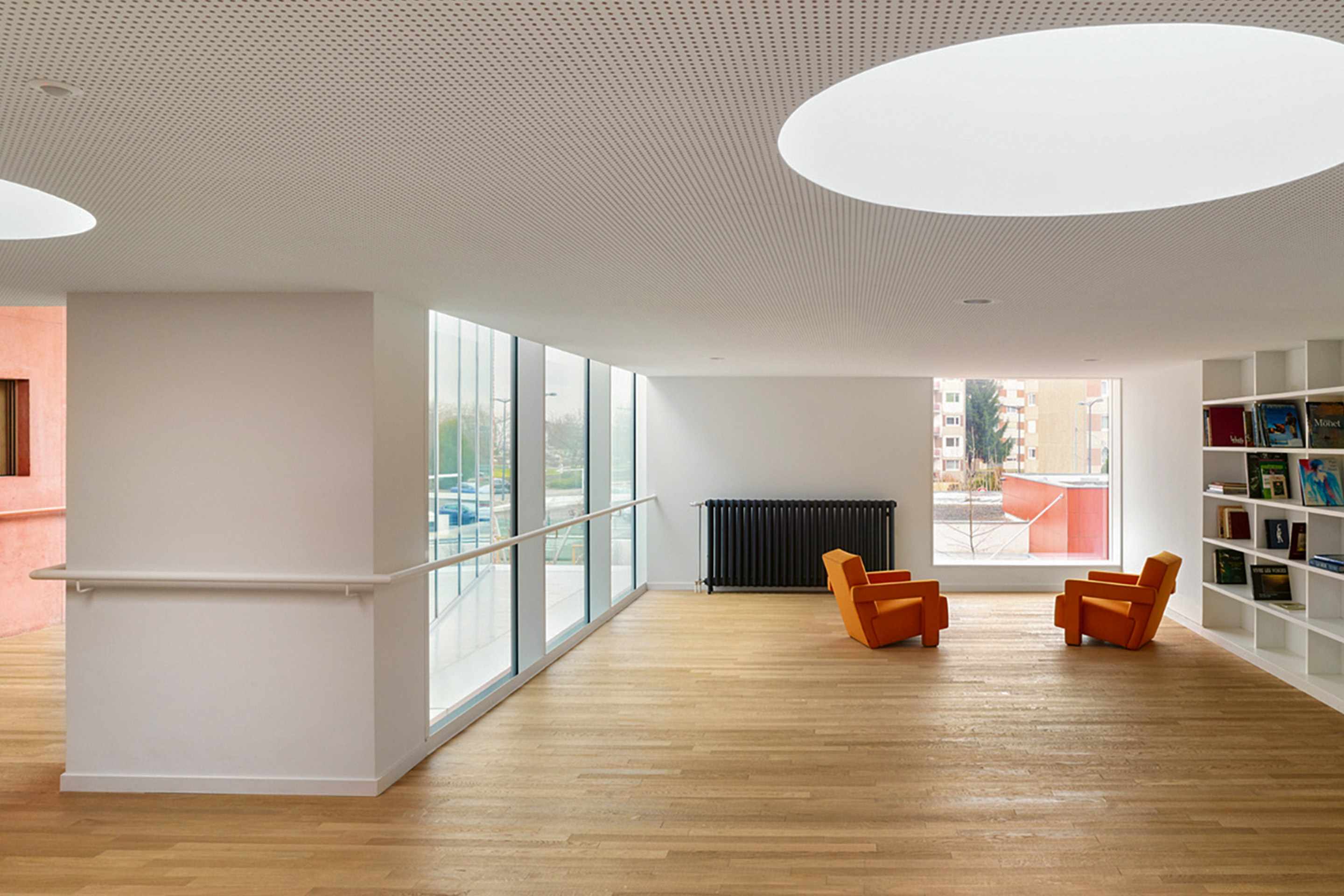
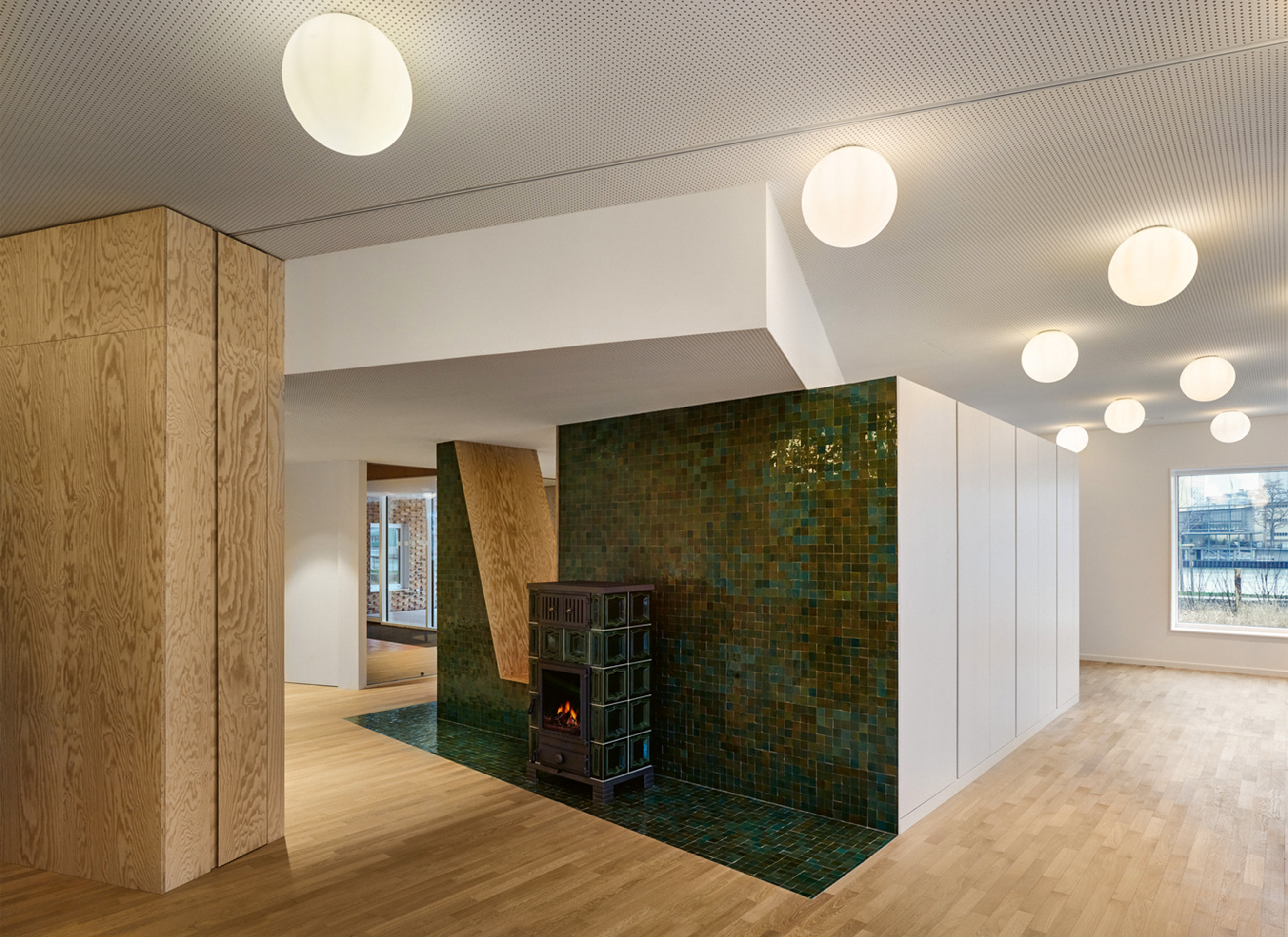
A second important requirement for integrated and inclusive collective housing is to avoid the hotel effect and the hospital effect, favouring a domestic character,20 that makes residents feel at home. This can be achieved by allowing residents to modify the interior of their homes and by transforming distribution spaces into shared environments that residents can personalise with furniture, seating, and other items. While retaining their function as passageways, these spaces become more familiar and domestic in scale, providing opportunities for residents to meet and socialise. The presence of intermediate zones and more confined areas, which enable people to occupy the communal spaces without necessarily being in close proximity to one another, is also a significant feature, as exemplified by the Logements pour Personnes Âgées in Huningue, France (fig. 1-2).
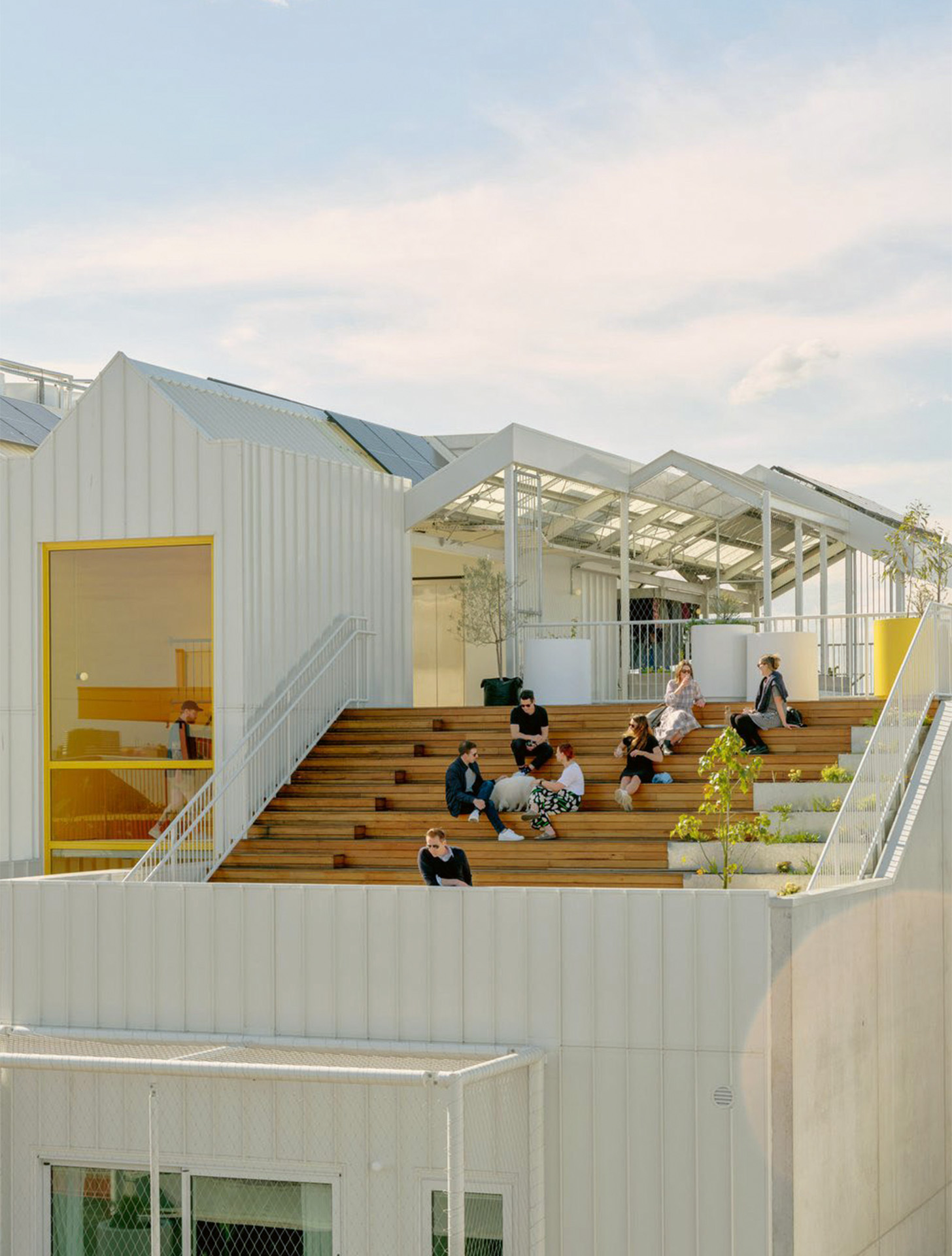
The Sunny ParkLife (fig. 3). apartment building in Melbourne, Australia, was developed and built by a cooperative of architects. In response to an Australian property market dominated by commercial and speculative logic, the cooperative chose to offer affordable housing. Their aim was to strengthen the sense of community at neighbourhood level, implement environmental and social sustainability principles, and recognise the rights of Aboriginal peoples, who have historical ties to the land. The building comprises thirty-seven dwellings, two commercial units, and a series of carefully designed communal spaces, including a unique open-air theatre space on the roof. This was made possible by adapting the building regulations.
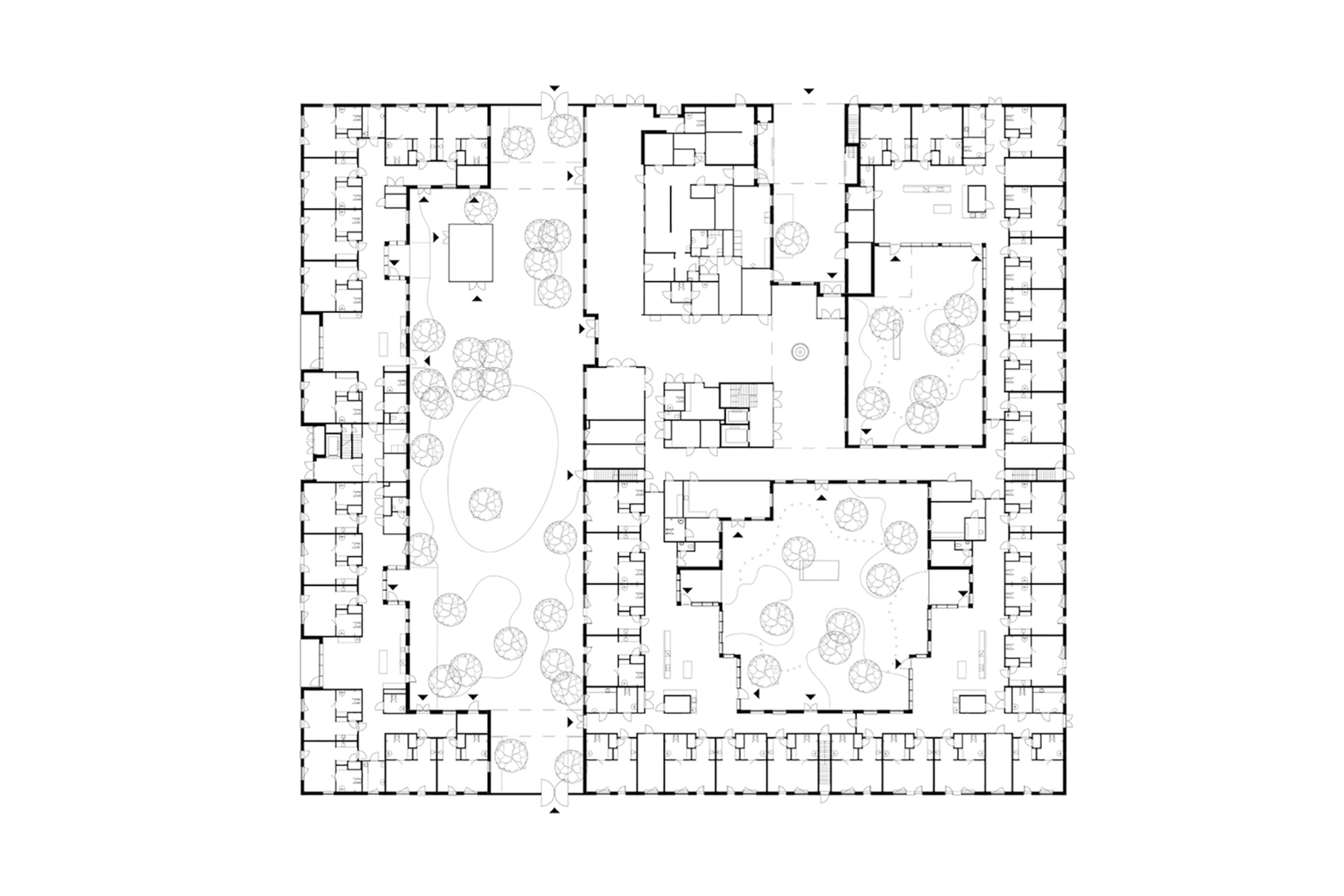
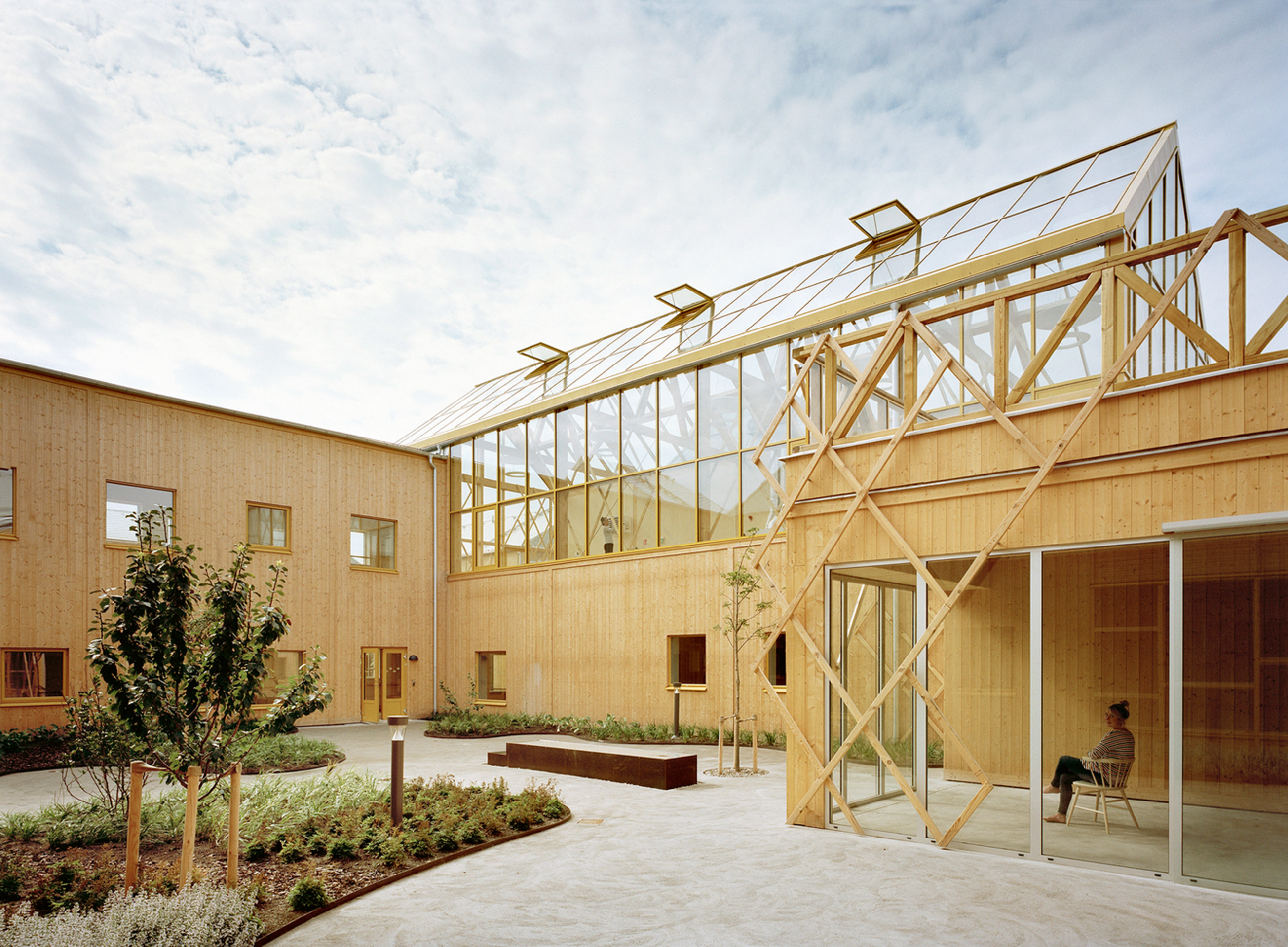
Other fundamental elements of this new concept of home, which is also understood as a collective space, include the protection of individuality and privacy, the possibility of choice and freedom, even in situations of cognitive vulnerability (such as dementia), and the construction of true shared domesticity. Here, living is not only a function, but also a relationship. The aim is to protect the inhabitant (the patient, in cases of complete non-self-sufficiency) without ever isolating them. In this sense, work on threshold spaces — understood as areas of exchange and deliberate indeterminacy — is crucial. For instance, in a secure environment, it is crucial to enable residents to roam freely. At the nursing home The Gardens in Örebro, Sweden (fig. 4-5), the layout revolves around a series of open green courtyards that are closely integrated with the interior spaces and connected by a large atrium/winter garden. This continuous, permeable configuration enables residents to move freely between indoor and outdoor spaces, as well as intermediate areas, thereby promoting autonomy and encouraging socialising with family and friends. A similar approach is evident in the recent Department of psychiatry CHUV in Cery-Prilly near Lausanne, designed by C/C/L Casiraghi Colombo Leuzinger architects (cf. pp. 30-35): the spaces outside the guest rooms are continuous and fluid, with a clear distinction between them but no physical separation.
In this perspective, the home is increasingly configured as a social space, a place of co-presence and interaction that, rather than containing fragility, recognises and welcomes it as part of everyday life. As highlighted by George Vaillant, coordinator of a famous longitudinal study conducted by Harvard University on active ageing, «the key to healthy ageing is relationships, relationships, relationships».21 Evidence gathered over more than 80 years of research confirms that the quality of interpersonal relationships is one of the main predictors of well-being, health and longevity. In this sense, designing for fragility means above all creating conditions of proximity, exchange and mutual support.
The domestic dimension of care then takes shape through collective housing that is not limited to withstanding the shocks of life – as the concept of resilience would suggest – but actively reacts, transforming itself, according to the logic of anti-fragility,22 into a form of housing that grows and strengthens precisely in the face of vulnerability and through forms of mutual support between individuals. It is in this direction that intergenerational living can be configured not only as a response to contemporary social emergencies, but above all as a design horizon for the cities of the future.
Notes
1 G. Lasco, Did Margaret Mead Think a Healed Femur was the Earliest Sign of Civilization?, available online
2 M.E. Kuhn (1905-1995) was an American activist and founder of the Gray Panthers movement.
3 Cfr. E. De Luca e I. de la Fressange, L’età sperimentale, Feltrinelli, Milano 2024. See also the movie L’età sperimentale, avaiable on RaiPlay (M. Zingaretti 2024, Italia 26 min), https://www.raiplay.it/programmi/letasperimentale | I would like to thank the authors for the drawings published here to accompany the text.
4 M. Vitta, Dell’abitare. Corpi spazi oggetti immagini, Einaudi, Torino 2008, p. 9.
5 Cfr. R. Sennett, La cultura del nuovo capitalismo, Il Mulino, Bologna 2012.
6 G. Bachelard, La poetica dello spazio, Dedalo, Bari 1975, p. 33.
7 Ibidem.
8 Ratio of people of working age (20-64) to people over 65.
9 Credits Eurostat.
10 According to the WHO ranking, both Switzerland and Italy are among the five countries in the world with the highest life expectancy: Italy ranks fifth with approximately 83 years, while Switzerland ranks second (approximately 84 years), behind only Japan (85).
11 Cfr. A. Sen, Lo sviluppo è libertà. Perché non c’è crescita senza democrazia, Mondadori, Milano 2001.
12 See, for example T. Piketty, Le Capital au XXIe siècle, Éditions du Seuil, Paris 2013.
13 Acronym for Not in Education, Employment or Training.
14 https://www3.ti.ch/DFE/DR/USTAT/allegati/articolo/2623dss_2019-2_3.pdf
15 Credits Eurostat, 2020.
16 K. Newman, The Accordion Family: boomerang kids, anxious parents, and the private toll of global competition, Beacon Press, Boston 2012.
17 Annual Report ISTAT 2025.
18 Credits Housing Europe, 2021.
19 On this topic, see also Archi 5/2024 Forme di qualità urbana.
20 Just like in Maggie’s Houses (https://www.maggies.org/).
21 The Harvard Grant Study (Study of Adult Development) is one of the most well-known longitudinal studies, ongoing since 1938 and following hundreds of participants for over eighty years, with Vaillant at the helm from 1972 to 2004.
22 Cfr. N.N. Taleb, Antifragile. Prosperare nel disordine, Feltrinelli, Milano 2012.