UHPFRC enables innovative structural designs
Since its first application in Switzerland, at the La Morge bridge in 2004, Ultra-High Performance Fiber-Reinforced Cementitious Composites (UHPFRC) have opened up new design avenues in structural engineering and architecture.
Testo in italiano al seguente link
In the family of cementitious materials, UHPFRC is not simply a stronger concrete but a new material with specific construction constraints and design opportunities, calling for an adjusted design philosophy. UHPFRC combines high mechanical properties with exceptional durability, making it a remarkable material for infrastructure projects. These material properties enable the design of very thin cross–sections, similar to steel structures, with the formal flexibility of concrete. This material – for which the technical leaflet SIA 2052 was published in 2016 – creates opportunities for architects and engineers to re-imagine forms, and develop unique structural designs with significant durability capabilities and potential for both low-carbon and low-cost solutions. The article highlights recent structural design innovations made possible by UHPFRC’s unique properties, among more than 450 applications in Switzerland.
UHPFRC: the recipe
UHPFRC is a cementitious material made of cement (about 700 kg/m3), sand (maximum grain size of 1 mm), silica fume, water (water-binder ratio between 0.15 and 0.20), admixture, and a large amount of short and slender steel fibres (> 3 vol. %, 250–300 kg/m3). It has a characteristic compressive strength up to 180 MPa. Tensile strain hardening is characterized by a characteristic strength of up to 12 MPa and strain hardening up to a deformation of 2 ‰. The elastic modulus is about 45 GPa. The material is expected to remain crack-free until a tensile deformation of 1 ‰, and its uncracked water permeability is about 50 to 100 times smaller than that of uncracked concrete, providing enhanced material durability and protecting embedded steel reinforcement.
A new design philosophy
For the same volume, UHPFRC is significantly more expensive than conventional concrete (up to 10 times) due to its high steel-fiber and cement contents. Similarly, the carbon emissions needed to produce a kilogram of UHPFRC are roughly six times higher than those for conventional concrete. Therefore, UHPFRC designs require careful optimization of material quantities. A common rule of thumb suggests that a UHPFRC element should be about three times lighter than a comparable reinforced concrete element to be considered an efficient use of UHPFRC mechanical properties. For instance, UHPFRC design often adopts ribbed rather than massive elements (fig. 4), echoing early reinforced-concrete construction methods.
Prefabricating light and durable bridges
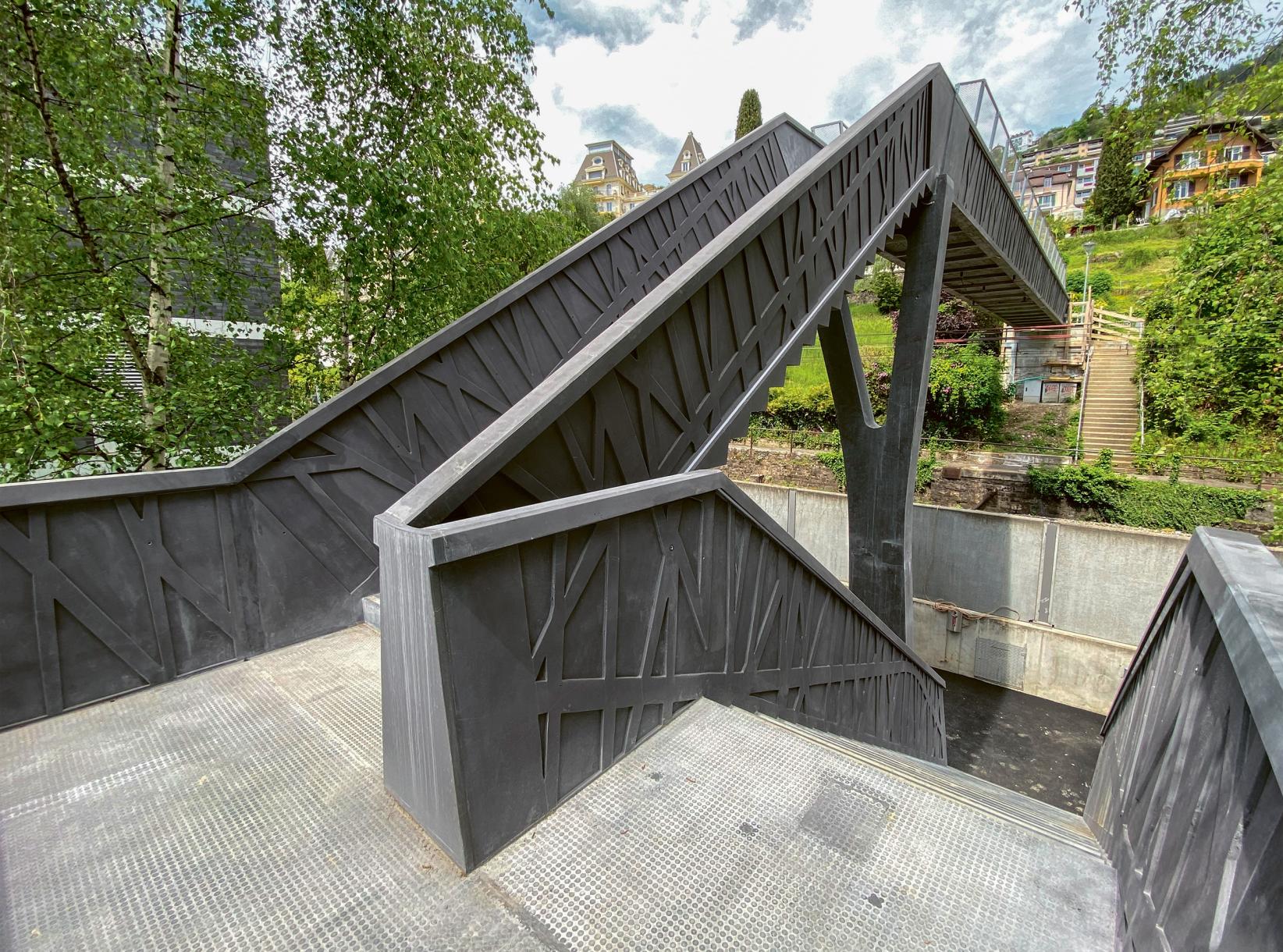
UHPFRC’s high strength-to-weight ratio facilitates the prefabrication of long structural elements as they remain light and thus transportable. The Chaumény Footbridge (fig. 2) was built from trough-girder UHPFRC segments post-tensioned together. The structure was designed in 2021 by C-Design and is located in Montreux.1 The main span (22.5 m) is made of a single segment (22 t) and was installed over one night, limiting railway disturbance underneath. The 9-m cantilever staircase was prepared in three precast segments that were assembled on site, making a remarkable structure with unique aesthetics. Each cast segment was demolded the day after casting and cured in a plastic foil for five days before being transported to the site. Girder webs feature an original thin relief that integrates the prestressing thickening within organic patterns.
Slender designs
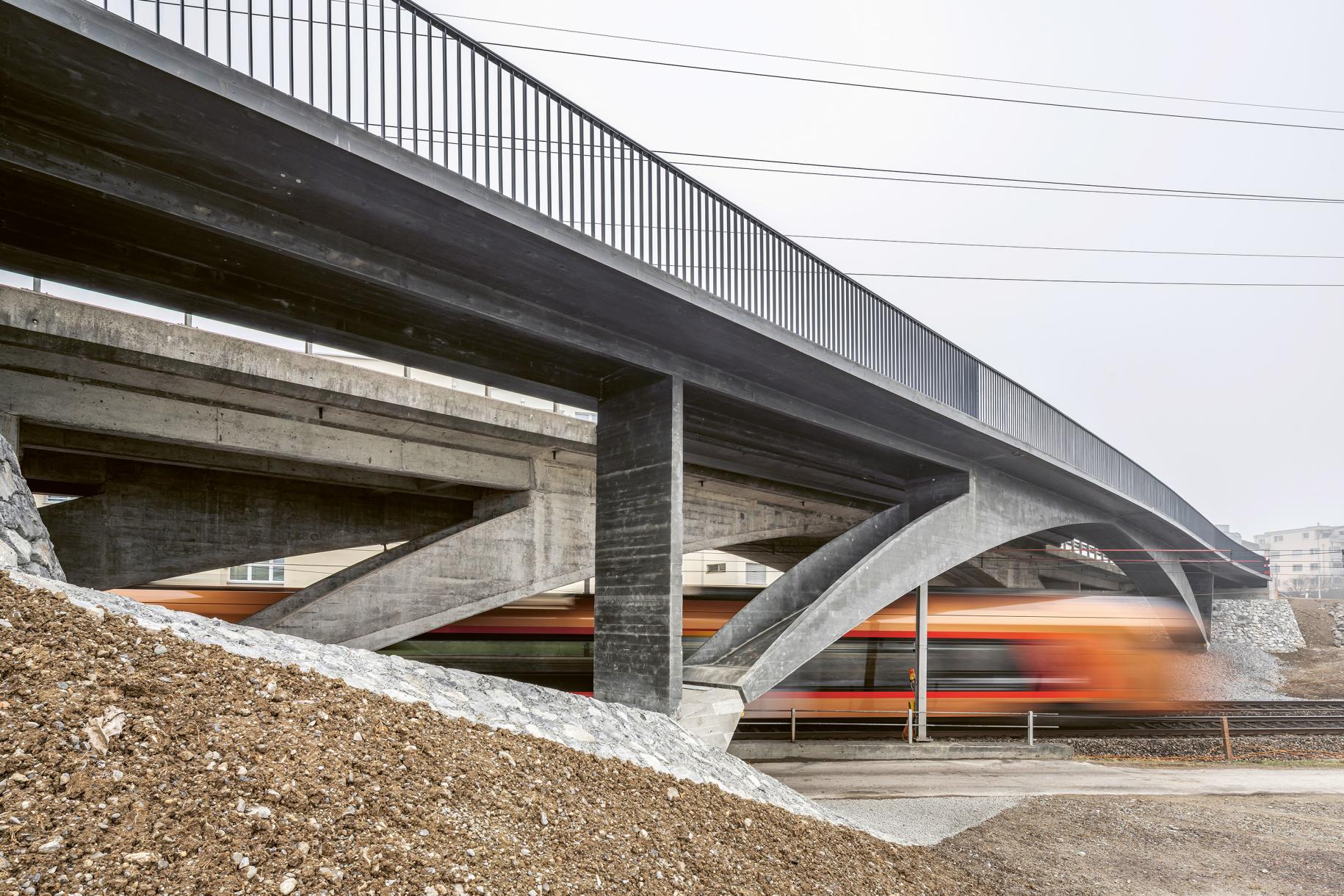
The UHPFRC Hirschen footbridge (fig. 1) is a slender arch bridge design in UHPFRC.2 Built by Conzett Bronzini and partners in 2025 in Altendorf (SZ), the structure is located next to two twin arch bridges designed by Robert Maillart in 1940. The new footbridge has a span of 40 m for a length of 60 m and a usable width of 3 m. The arch section is designed as a U-shaped profile with a variable height. Due to the challenges of construction (railway underneath and loose soil conditions), the UHPFRC design was chosen over a conventional reinforced concrete design, thanks to its UHPFRC mechanical properties. The arch design was significantly slimmer than conventional ones, allowing for the prefabrication of the main elements and aesthetic coherence with the existing bridges. It also significantly reduces the weight on the foundation, which is highly beneficial in this settlement-prone area. The static system (three-hinge arch) mimics the heritage system by Maillart but uses today’s most performant cementitious material.
Efficient Composite Structures
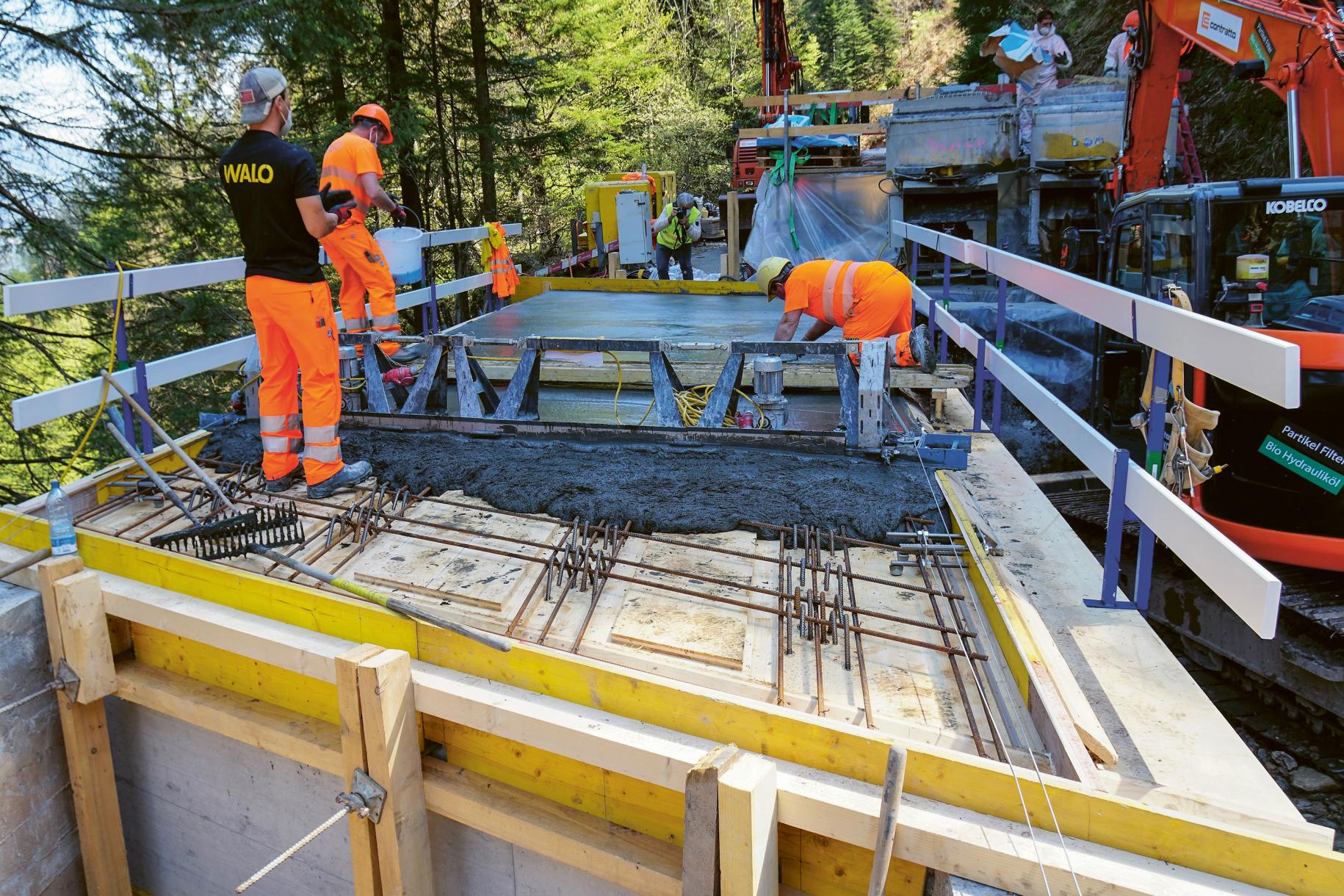
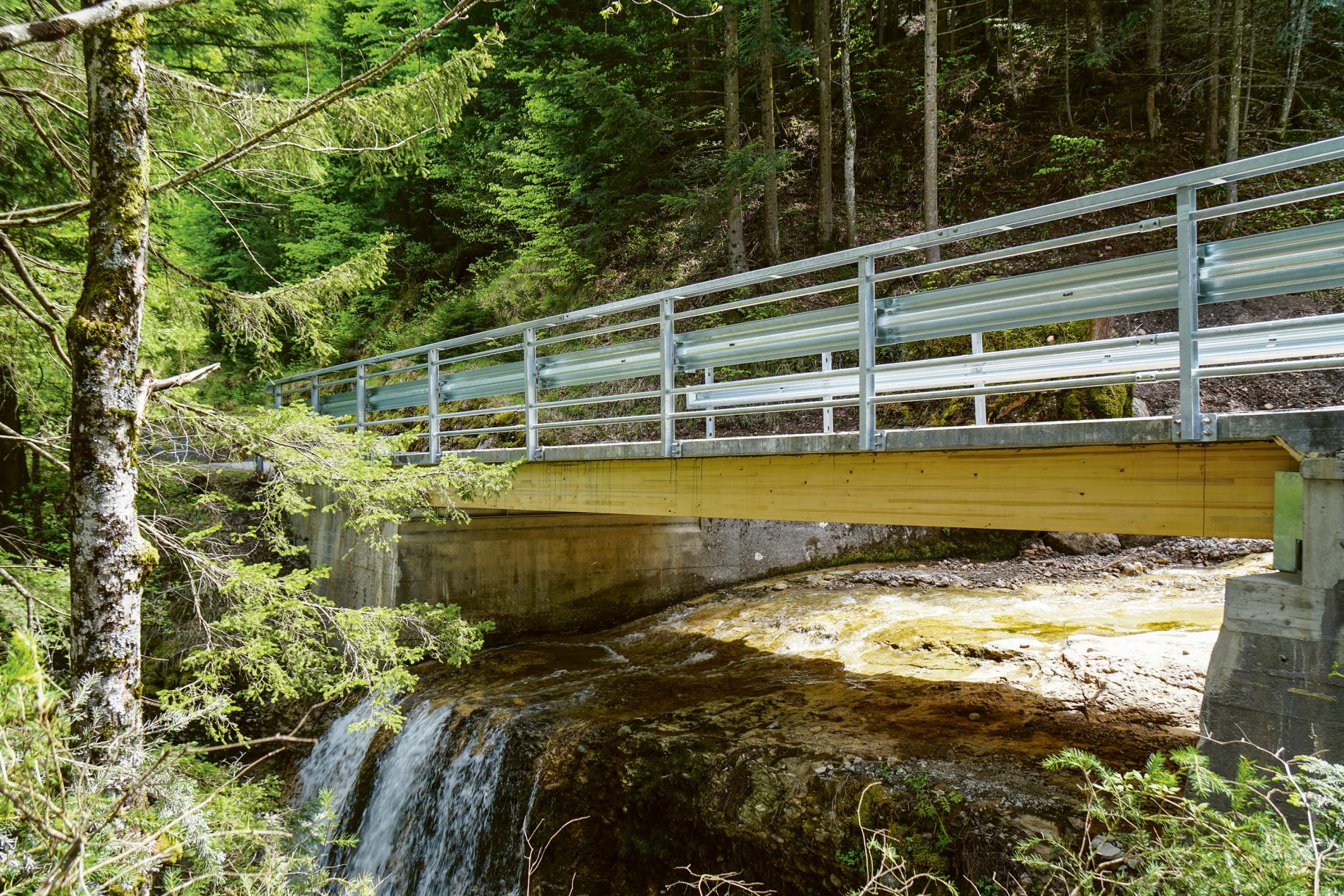
UHPFRC can be combined with other materials to form composite structures that leverage the strengths of each material. A prime example is the Fruttli Bridge (fig. 6-7) – the first timber-UHPFRC composite road bridge. The composite bridge was designed in 2020 by Ingenieurbüro Edgar Kälin AG and is situated near Rigi mountain.3 In this 10.4 m span structure, four glulam timber beams (local wood) are connected to a thin UHPFRC deck slab with a varying thickness between 9 and 14 cm. The full connection between the UHPFRC slab and the timber girders is made through mechanical steel connectors. UHPFRC waterproofing slab ensures that the timber remains protected against weathering, making the structure highly durable. Timber (environmentally friendly, light) and UHPFRC (light, protective) have thus complementary properties. This design has approximately one-third of the self-weight of a conventional concrete design and a 43 % reduction in environmental impact.4 The Fruttli Bridge was erected in one week, showcasing rapid construction due to the fast UHPFRC setting, making the project 39 % cheaper as a temporary structure was avoided.
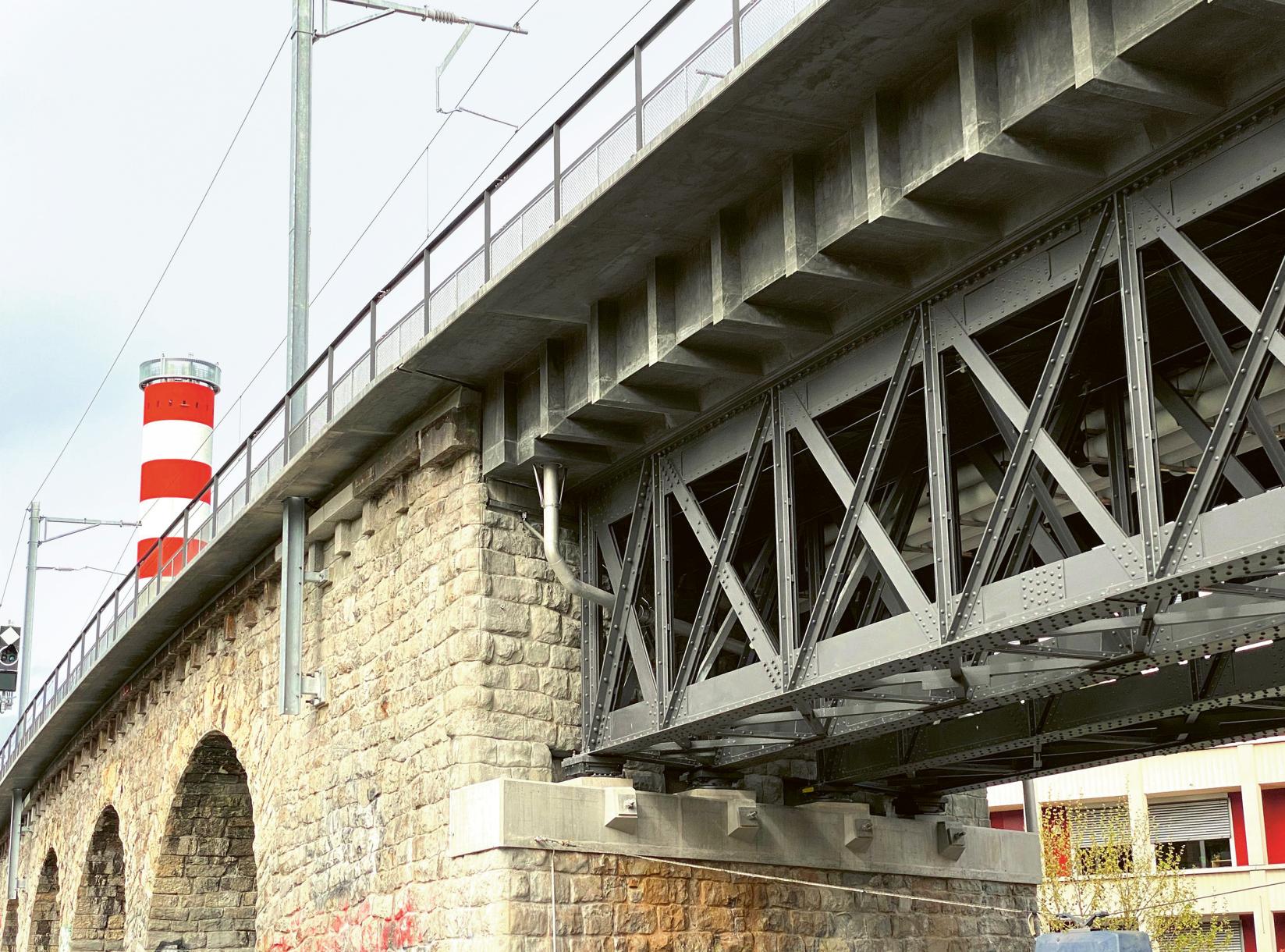
UHPFRC is also offering an alternative to steel bridge reinforced-concrete decks. In Zurich, the historic Wipkingen Viaduct (fig. 3), built in 1896, was rehabilitated in 2024 using UHPFRC.5 The viaduct had riveted steel trusses up to 22 m. These spans had a deteriorated massive concrete ballast deck, which was replaced by a new ribbed UHPFRC one. The new UHPFRC deck is significantly lighter and has increased structural stiffness, as well as durability. UHPFRC deck segments were prefabricated and connected on-site to the riveted steel truss. The new reduced deck weight means the existing steel trusses can carry an additional live load, meeting current traffic requirements. The Wipkingen project demonstrates a general principle for existing steel bridge upgrading: replacing heavy and deteriorated RC decks with UHPFRC ones can extend lifespan and increase load capacity and durability.
Building Applications
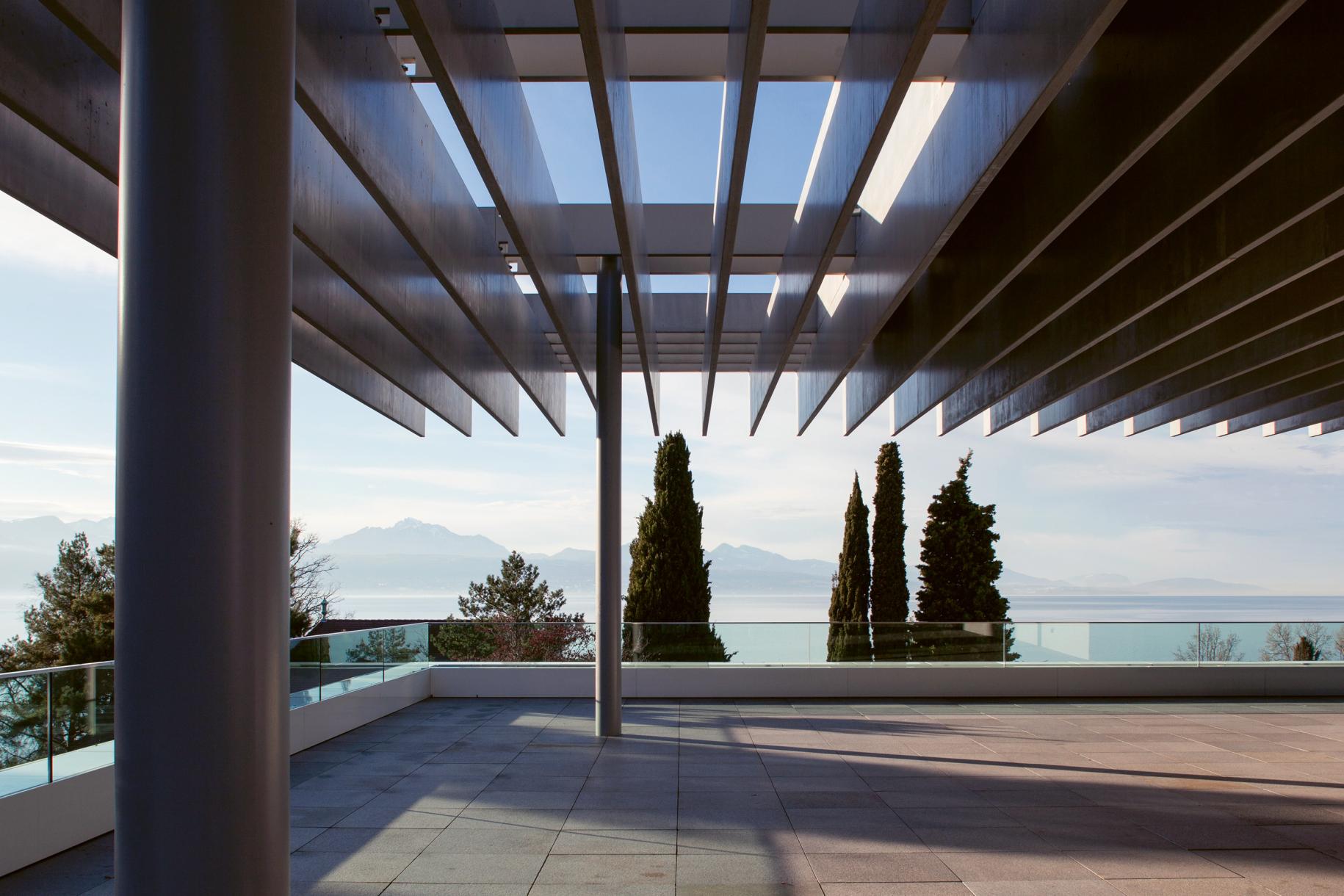
UHPFRC’s advantages are also notable in architectural components, allowing for lightweight, thin, and detailed building elements.6 One notable example is the vertical extension of the Olympic Museum in Lausanne (VD) in 2013 by MFIC and Brauen Wälchli Architectes (fig. 5). The museum’s new 71 × 21 m roof is constructed with a network of slender UHPFRC beams (length of 18 to 21 m, depth of 1 m, width of 8 to 10 cm), forming a large-span canopy with minimal thickness. Prefabricated and prestressed UHPFRC rib elements create an open grid structure, spanning up to 9 m. The lightweight, durable UHPFRC elements made this additional floor possible with minimal additional weight on existing walls, columns, and foundations. Thanks to its high mechanical performance, UHPFRC intervention enables fast, economical, and minimally invasive strengthening of existing structures, thereby reducing construction cost and time of unavailability of the building for use.
It is only the beginning
Beyond its well-known use for strengthening existing structures,7 UHPFRC is also leading a new wave of structural innovation. Its unique combination of strength, ductility, and durability enables UHPFRC designs to surpass the limitations of traditional materials, allowing for longer spans, thinner cross-sections, and innovative composite systems. This article introduced multiple examples of innovative UHPFRC structural designs. Nonetheless, we believe that it is just the beginning, and many novel structural designs will emerge in the next few years.
Innovation itself is not sufficient for justifying structural designs but must also be economically and environmentally efficient. The economic and environmental viability of UHPFRC depends not only on reducing material
use but also on harnessing benefits such as lightweight construction, prefabrication, longer spans, efficient composite designs, and lower maintenance costs. To ensure the project’s sustainability, it is essential that cost and environmental impact assessments are conducted at the project level and over full life cycles, as UHPFRC modifies design, construction speeds and maintenance operations.
Notes
1 Géhin, Dominique, Eugen Brühwiler, Numa Bertola, and Laurent Widmer. 2022. «Design and Construction of the Chaumény Footbridge in Posttensioned UHPFRC.» IABSE Symposium Prague 2022, no. CONF: 285–92. https://doi.org/10.2749/prague.2022.0285.
2 Hegner-van Rooden, Clementine. 2025. «Dritter Bogen in UHFB Neubau Fussgängerbrücke Hirschen, Altendorf, espazium.» June 26. https://www.espazium.ch/de/aktuelles/neubau-bruecke-altendorf-uhfb-maillart-conzett-bronzini.
3 Kälin, Edgar, and Peter Rogenmoser. 2021. «Fruttli- and Rigiaa-Bridge, Timber-UHPC Composite Structure, 4.» ICTB.
4 Bertola, Numa, Célia Küpfer, Edgar Kälin, and Eugen Brühwiler. 2021. «Assessment of the Environmental Impacts of Bridge Designs Involving UHPFRC.» Sustainability 13 (22): 22. https://doi.org/10.3390/su132212399.
5 Brühwiler, Eugen. 2025. «About the Process of Technology Transfer from Research to Engineering Practice.» Structure and Infrastructure Engineering, 21:11-12, 1872-1882, https://doi.org/10.1080/15732479.2025.2524808.
6 Bertola, Numa, Célia Küpfer, Philippe Schiltz, and Eugen Brühwiler. 2024. «UHPFRC for the Preservation, Strengthening, and Transformation of Existing Buidlings.» UHPFRC 2024. https://orbilu.uni.lu/handle/10993/64819.
7 Bertola, Numa, Philippe Schiltz, Emmanuel Denarié, and Eugen Brühwiler. 2021. «A Review of the Use of UHPFRC in Bridge Rehabilitation and New Construction in Switzerland.» Frontiers in Built Environment 7: 155. https://doi.org/10.3389/fbuil.2021.769686.