Turning in Circles ... and Loving It!
How can the construction sector reach net zero without slowing down innovation? For Holcim (Schweiz) AG, the answer lies in circularity: recycled materials, low-carbon binders, and new structural solutions that drastically reduce resource consumption and CO₂ emissions. A transformation that requires collaboration across the entire value chain, from design to reuse.
Testo in italiano al seguente link
The construction sector faces an urgent need to reinvent itself. With climate change, resource scarcity, and circularity challenges at the forefront, Holcim (Schweiz) AG demonstrates how innovation, collaboration, and system thinking can redefine building materials and construction practices for a net-zero future.
The future of construction will be circular – or it will not exist at all. Switzerland’s construction industry literally moves mountains: seventy million tonnes of material are extracted and processed every year – and roughly the same amount becomes waste.1 Concrete alone dominates the product stream, making it our greatest challenge and our greatest opportunity.
Climate change and resource scarcity have pushed the sector to its limits. Cement and concrete account for around 5 % of Switzerland’s CO2 emissions, while the country’s total circularity metric remains below 7 %.2 These numbers define the task ahead: reducing CO2 emissions by 50 percent by 2030 and reaching net-zero by 2050 – without slowing the pace of construction or innovation.
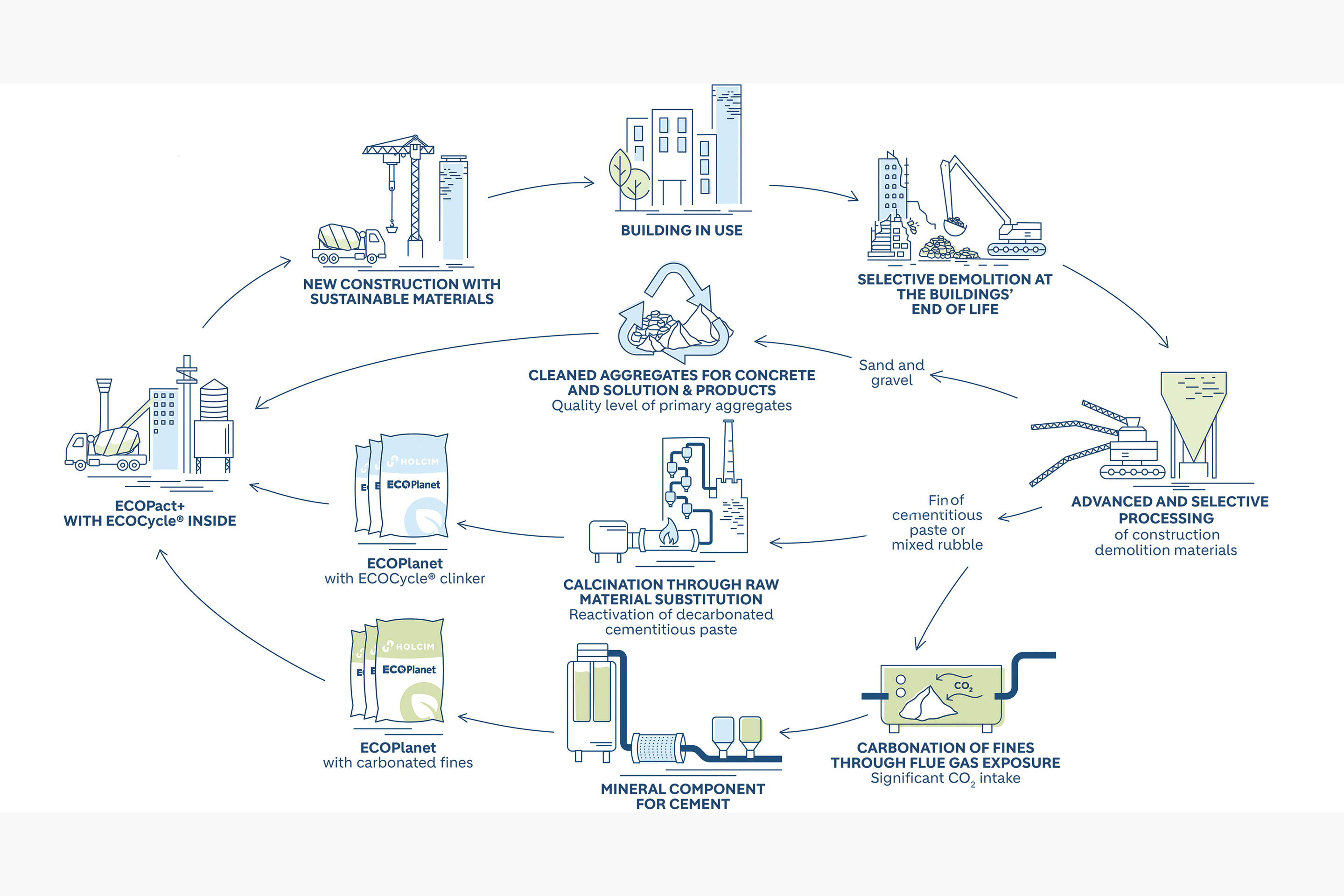
At Holcim (Schweiz), we have learned that circularity is not an isolated activity but a system that must span the entire value chain – from the waste treatment plant to the design of the building, and finally the disassembly of components after use and the recovery of materials into the production cycle. Today we already process around 4.8 million tonnes of waste materials each year at Holcim (Schweiz) – ranging from alternative raw materials and fuels to recycled aggregates – and deliver about nine million tonnes of construction materials back to the market. Each tonne is a step toward closing the loop.
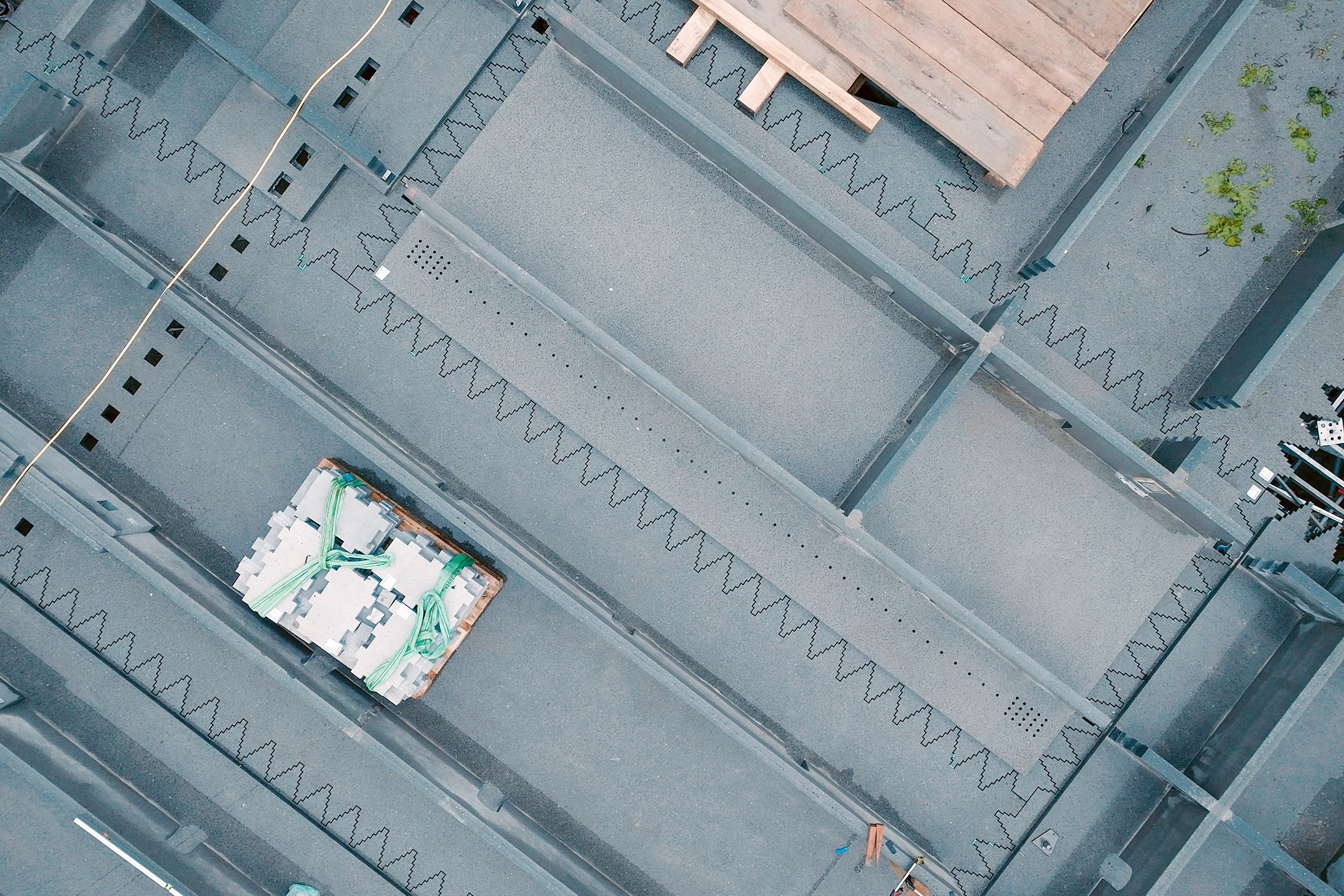
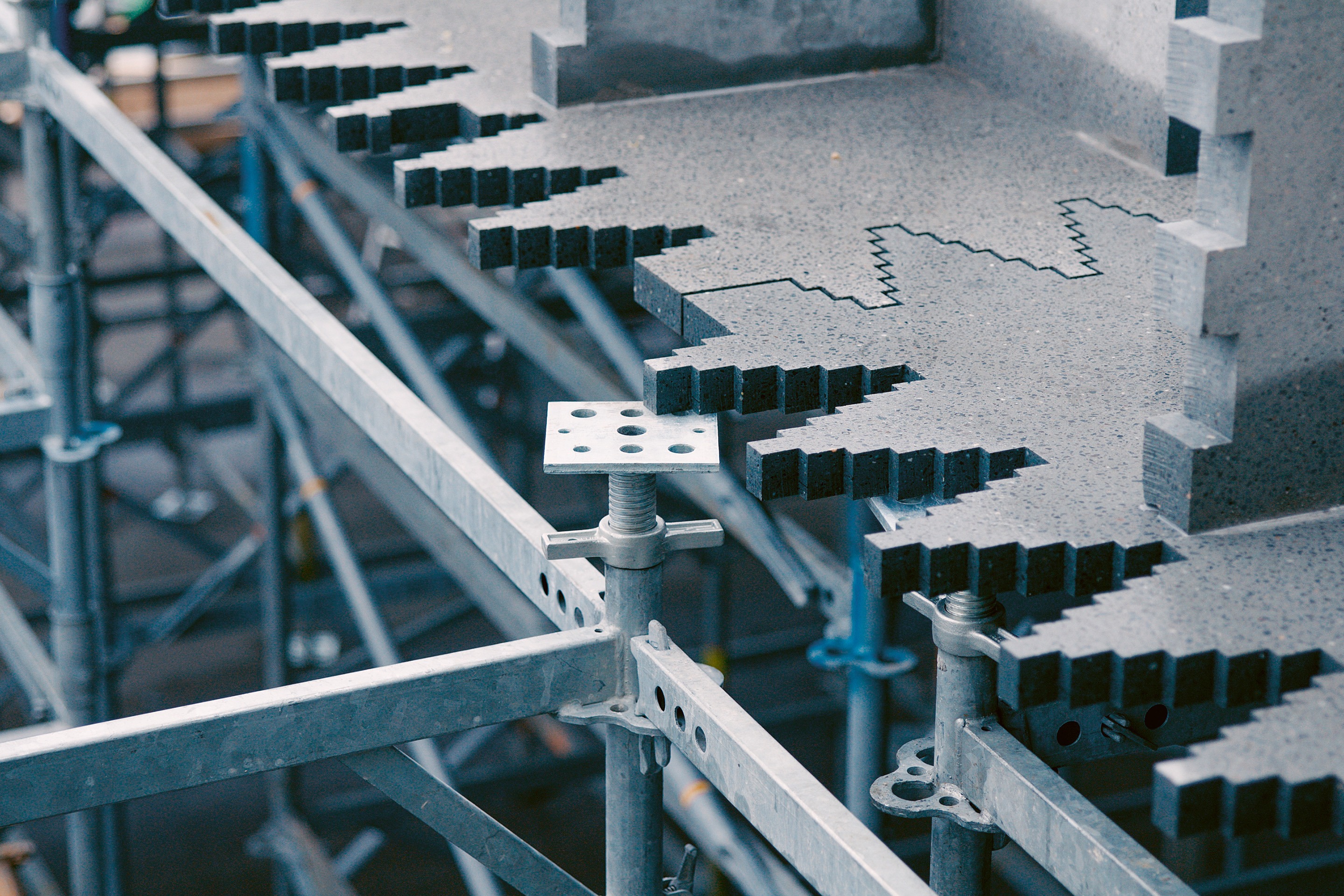
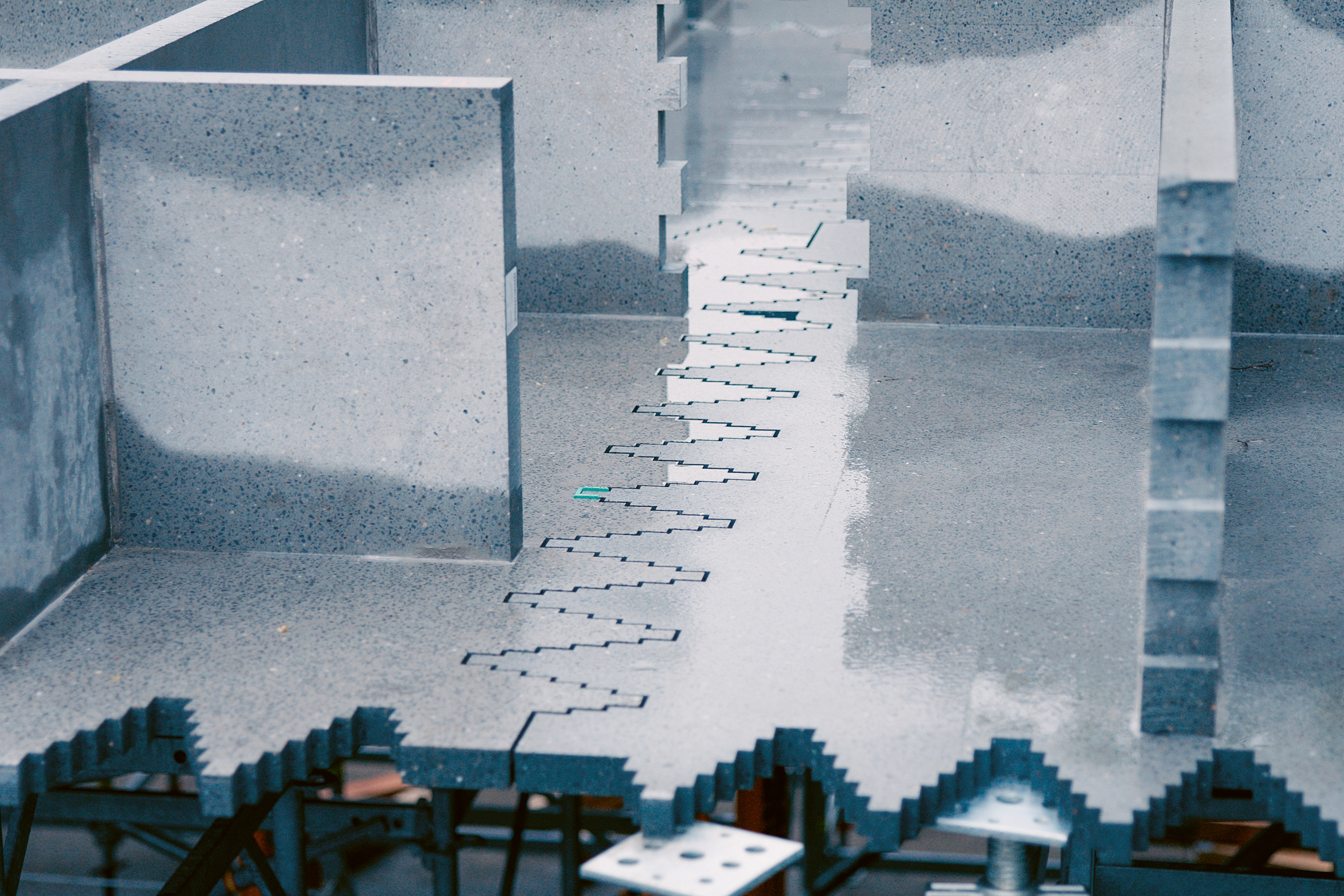
But technical progress at the plant is only the beginning. The next frontier lies beyond the factory gate – in how materials are used, designed, and valued. The embodied carbon of concrete depends not only on its composition, but also on whether architects and engineers exploit its full structural potential. As Prof. Dr. Walter Kaufmann of the Swiss Federal Institute of Technology in Zurich (ETHZ) observed, «up to seventy-five percent of concrete in floor slabs is structurally not necessary». This insight points to a powerful alliance between smart materials and smart design. Emerging systems such as the Rippmann Floor System at Swiss Federal Laboratories for Materials Science and Technology (EMPA) NEST’s HiLo research unit demonstrate that non-reinforced, low-strength vaulted floors can cut material use by 50–70 % and CO2 footprint by 70–85 % – without sacrificing performance.3 Likewise, Carbon Prestressed Concrete (CPC), showcased in Winterthur’s Innovationslabor Grüze, achieves up to 75 % material savings and halves the embodied carbon compared to standard construction; combined with its modular design and the possibility to re-use CPC elements it is opening up entirely new design and business models such as material rental.4
Only through collaboration along the entire value chain will we yield lasting success. Holcim therefore works hand in hand with partners across the ecosystem – from innovative start-ups like CPC AG and Vaulted AG, to established construction and engineering companies, and to leading academic institutions such as the École Polytechnique Fédérale de Lausanne (EPFL), ETHZ and the Swiss Federal Laboratories for Materials Science and Technology (EMPA). Together, these collaborations connect industrial performance with architectural creativity, making circularity both scalable and inspiring.
Holcim’s contribution to these innovations extends from low-carbon binders such as ECOPlanet and the ECOPact product family to collaborations that unite startups, universities, family businesses, and international corporations. Circularity becomes tangible when industrial performance meets architectural and engineering curiosity – when cement chemistry and structural design start to speak a common language.
The construction industry’s transformation will require not only new products, but new partnerships, mindsets, and metrics. Our success will no longer be measured only in tonnes sold, but in tonnes reused, emissions avoided, and lifecycles extended. Turning in circles is not a sign of being lost; it is a sign of having found the path that leads back to the beginning – again and again, with less waste and more wisdom.
Notes
- «MatCH – Material- and energy resources and associated environmental impacts in Switzerland» EMPA, St. Gallen, https://www.empa.ch/web/s506/care-project-match
- «I.e. the circularity metric as defined for all good consumed in Switzerland by the Circularity Gap Report Switzerland», Version 1.0 (2023),
https://www.circularity-gap.world/switzerland- Bhooshan, Shajay, Alessandro Dell’Endice, Ranaudo, Francesco, Tom Van Mele, & Philippe Block. «Unreinforced concrete masonry for circular construction», Springer nature, Vol. 3, 7, (2024) https://brg.ethz.ch/publications/214; https://brg.ethz.ch/publications/260
- Lutz, Rebecca, Josef Kurath, Christian Lowiner, & Michèle Bühler. «Entwicklung eines hochbelastbaren, korrosionsfreien Verbindungssystems für tragende Bauten in CPC», Ernst & Sohn GmbH, Berlin; Modulor 4 (2024) «Architektur und Innovation» https://cpcag.ch/wp-content/uploads/SD-best0624_CPC_sec.pdf, 12-15