

Where are we and where are we going?
The State of Sustainability in Swiss Civil Engineering
Construction and infrastructure have a decisive impact on climate, resources, and soil. In Switzerland, sustainability requires integrating environmental, economic, and social dimensions with other factors, adopting an integrated design approach to ensure truly sustainable buildings and infrastructure throughout their entire life cycle.
Testo in italiano al seguente link
It’s hardly news that Switzerland’s buildings and infrastructure – as in many other industrialized nations – are key contributors to greenhouse-gas emissions, the consumption of natural resources, and the use of land. Expectations regarding climate neutrality, resource efficiency and limits on land sealing are rising, and they must be fully integrated by clients and met by designers with a comprehensive approach to all relevant aspects. Against this backdrop, we examine the state of sustainability in Swiss building and infrastructure practice, seeking to assess how robust today’s «pillars» of sustainability truly are, and what will be required in the near future to secure, over the long term, a sound foundation for both the natural and the built environment.
Load-testing the pillars of sustainability
The term «sustainability» has become ubiquitous.
Yet its meaning shifts depending on professional background and level of familiarity, and its dimensions are rarely considered in a balanced way across the entire life cycle of a project – from commissioning and design to execution and operation. The result is unstable interpretations and misunderstandings that often fail to align with the actual criteria of sustainability.
Standard SIA 112/1 defines three fundamental pillars of sustainability: society, economy and environment. Like any supporting structure, however, they cannot be analysed independently of one another. Sustainability can stand only if we understand and manage the mutual relationships between these three components. In the traditional model, the weight of the pillars is assumed to be equivalent. This implicitly presumes that ecological resources can be substituted with economic ones. But can a society truly thrive without a functioning environment? Or should we rather assume, in our projects, that safeguarding ecological resources is an indispensable prerequisite for economic and social stability? This perspective – known as «strong sustainability» – recognizes that an intact environment is the essential basis for economic and social well-being, and demands careful attention to the interactions between the three dimensions. Only at their intersection, and in proper balance, can truly sustainable development emerge.
Understanding and integrating these interrelationships from the outset requires solid project organization and communication. In this sense, a fourth column can transform the wobbly three-legged stool into a stable chair: interdisciplinary collaboration. At present, preliminary studies and project competitions do not systematically require the early involvement of structural engineers, let alone specialists from other disciplines. This can lead to additional costs and higher CO₂ emissions, for example when options for structural optimization or for the refurbishment of existing works are not considered. Yet resource optimization is essential for steering a project, from its earliest phases, toward a sustainable – or even regenerative – trajectory.
Every line drawn is a resource. Only by involving all disciplines and evaluating the most appropriate options for strong sustainability can we «sit comfortably on the chair» of the future. But a robust regenerative infrastructure that makes this path less arduous is still lacking.1
First element – the 5R Pyramid
A guiding principle for any project can be the 5R Pyramid: Rethink – Reduce – Reuse – Repair – Recycle. Its application allows a systematic prioritization of resource-saving actions in the construction sector. It encourages a shift in design culture, reduces material and energy consumption, extends the service life of components through reuse and repair, and ensures that residual resources are recycled to a high standard at the end of the life cycle. In doing so, the 5R Pyramid supports the implementation of a consistent circular economy and reduces environmental impacts across all project phases. Wherever possible, existing structures should be retained or reinforced; demolition should be considered only as a last resort. In cases of densification or transformation, resources must be selected carefully, with function and durability at the centre.
Concrete – a powerful temptation
As an extremely versatile material, concrete is widely used in the construction industry In Switzerland, more than 30 m³ are consumed every minute. In addition to sand, gravel, water and sometimes recycled aggregate, the main source of emissions in concrete is cement. Annual cement consumption in Switzerland averages 522 kg per capita.
Numerous research projects are under way to decarbonize concrete production, and several Swiss companies are investing in alternative binders and low-CO₂ mixes – such as the start-up Oxara, born from an ETHZ spin-off. For projects involving concrete, the 5C Pyramid is proposed: Clinker – Cement – Concrete – Construction – (Re-)Carbonation. It identifies the main levers for reducing the footprint of cement and concrete:
- reducing fossil fuels in clinker production;
- reducing clinker content in cement;
- reducing cement content in concrete;
- reducing the volume of concrete used;
- increasing carbonation (natural or induced).
This «5C» approach is crucial, as cement accounts for a substantial portion of the sector’s emissions. Yet, much like sweets, concrete is hard to resist: as Paracelsus wrote in the sixteenth century, «the dose makes the poison».
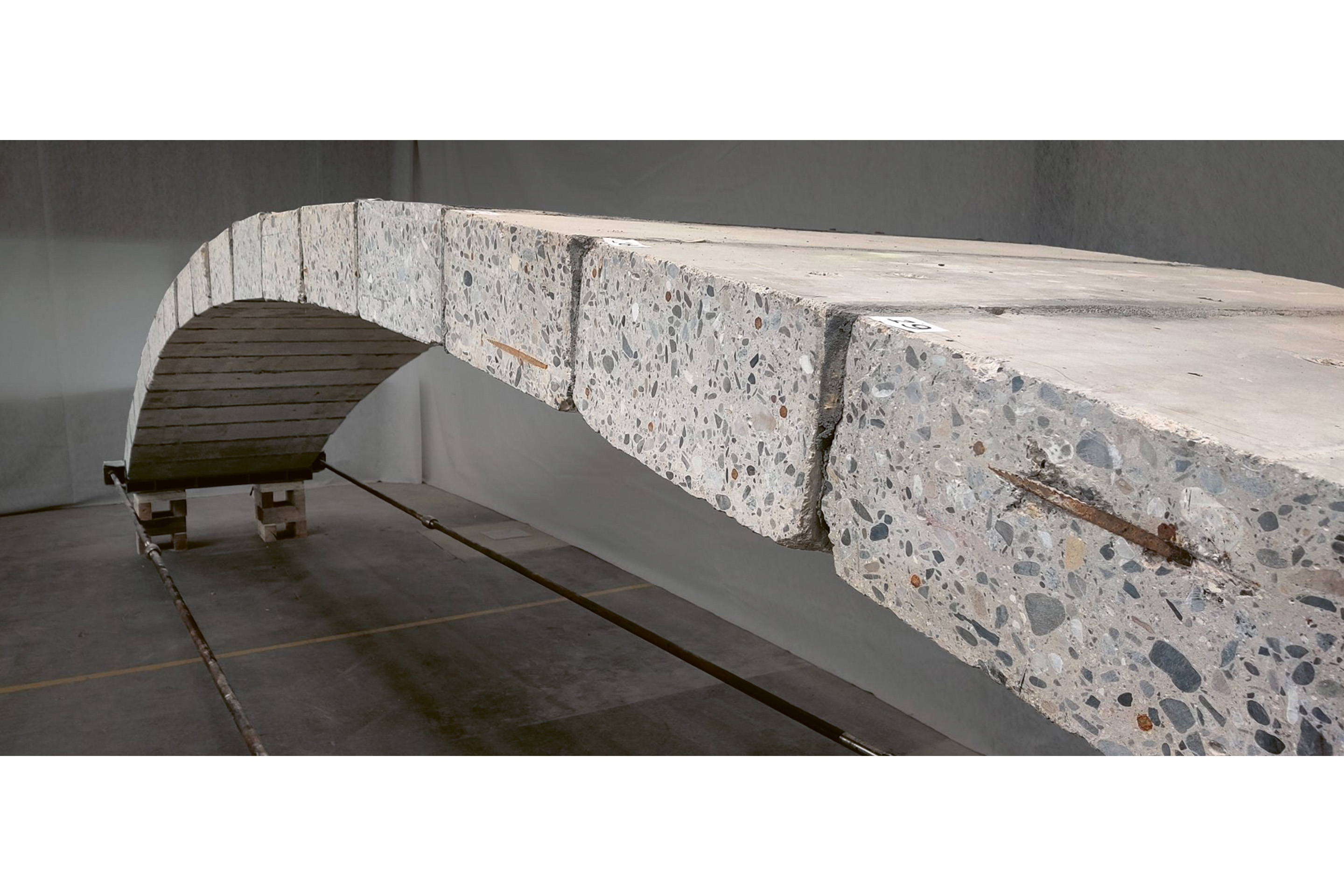
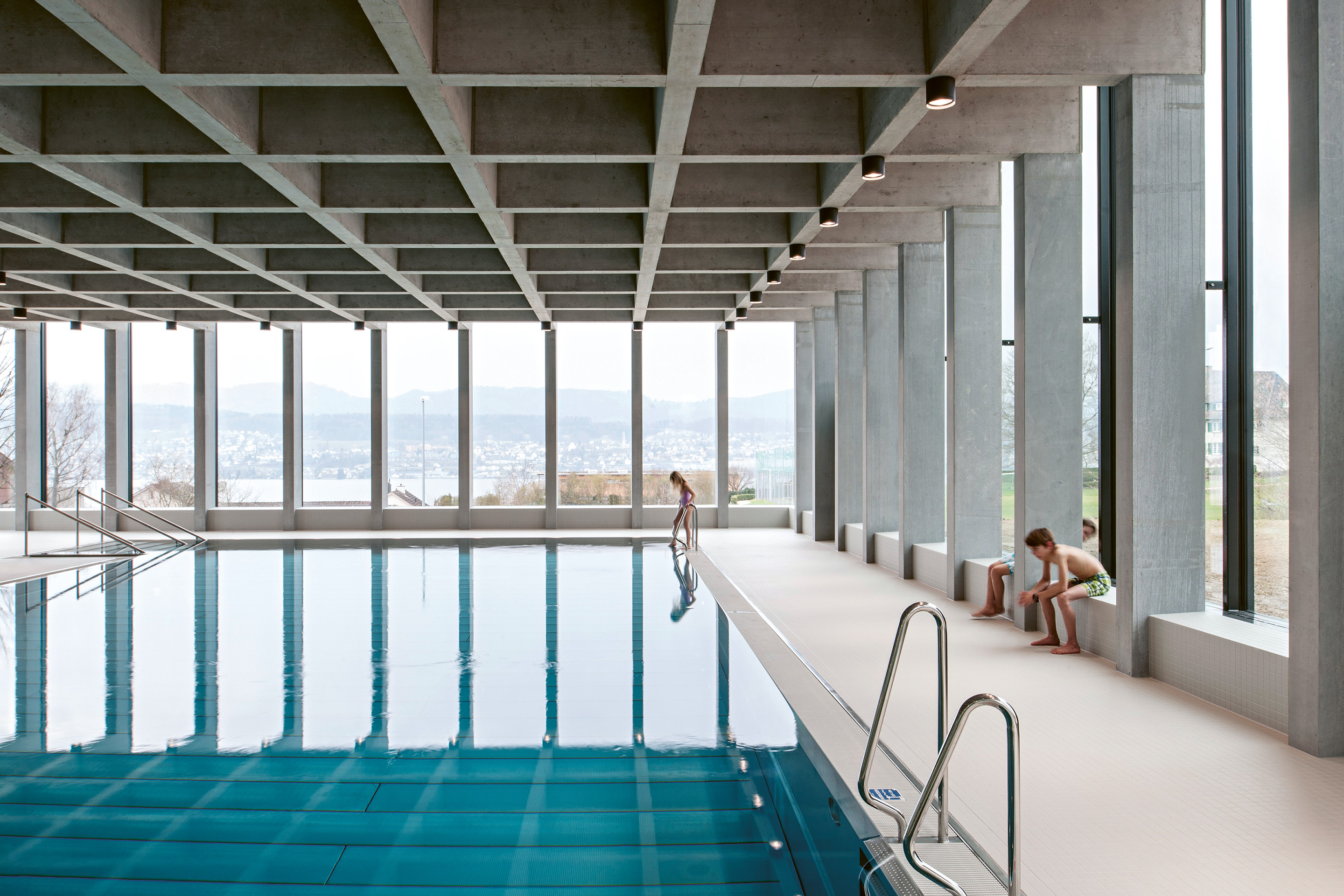
We cannot eliminate concrete entirely, but we can use it only where it is genuinely irreplaceable, relying elsewhere on low-emission materials or reused components. In recent decades, solid reinforced-concrete slabs have almost completely displaced more efficient solutions – such as ribbed or coffered slabs, also in alternative materials – which today survive only in particular cases. Relying on a single solution is unsustainable in the long term: only the technical expertise of designers can determine the most suitable alternative for each project, based on context, material properties, spans, and construction methods.
Soil – the ground we build on
Roughly one quarter of Switzerland’s total greenhouse-gas emissions originates from the building sector. But emissions are not the only issue: soil impacts matter as well. Depending on how it is managed, soil can act as a carbon sink or a carbon source. Humus-rich soils can store more CO₂ than they release. Yet in Switzerland, about seven football fields – around 5 hectares – are sealed every day. According to the Federal Office for the Environment (FOEN), it takes on average 100 years to form one centimetre of soil. Reducing soil consumption and exploring long-term regeneration methods for this resource – recognizing its ecological and structural value – is therefore essential.
Rethinking professions
Following the tradition of universal scientists, architects and engineers throughout history, thinking beyond disciplinary boundaries is necessary. Collaboration and knowledge exchange – both academically and professionally – are more critical than ever for developing genuinely sustainable design approaches. Reuse of components and structural strengthening require advanced specialist expertise to assess the suitability of existing elements and provide clients with reliable recommendations. Yet Switzerland lacks, at both national and cantonal levels, competence centres and agile solutions to promote reuse; expert assessments are therefore essential to compensate for the lack of formal guarantees.
Beyond a material passport, a structural passport is needed to make the reuse of existing buildings – particularly from the 1960s – much easier whenever original structural verifications are still available. It is also necessary to recover the ability to design restrained structures, avoiding oversizing and excessive use of composite materials, and to plan from the outset for disassembly and repairability (the principle of «system separation»). This requires more meticulous coordination among trades, but yields significant resource savings over the entire life cycle of a building.
Maintenance and upgrading: achieving more with less
Switzerland has a highly dense built environment. The replacement value of national technical infrastructure alone is estimated at around 1,000 billion francs, with corresponding emission impacts.2 Maintenance and renewal of this infrastructure constitute a major challenge for the state, industry and society. Sustainable infrastructure depends on coordinated action in maintenance, renewal and innovation. Extending service life, conserving resources and deploying new technologies are essential to ensure that «more» also means «better». Targeted maintenance strategies, materially efficient construction and digital monitoring systems help reduce environmental impacts and advance the federal goal of climate neutrality by 2040.3
Upgrading instead of replacing
Structural upgrades can match or exceed the performance of full replacement while significantly reducing consumption and emissions. The National Society of French Railways (SNCF) for instance, developed a programme applying thin layers of ultra-high-performance fibre-reinforced concrete (UHPFRC) to riveted steel bridges, extending their service life and lowering environmental and economic impacts compared with a new structure.4
Innovation through research
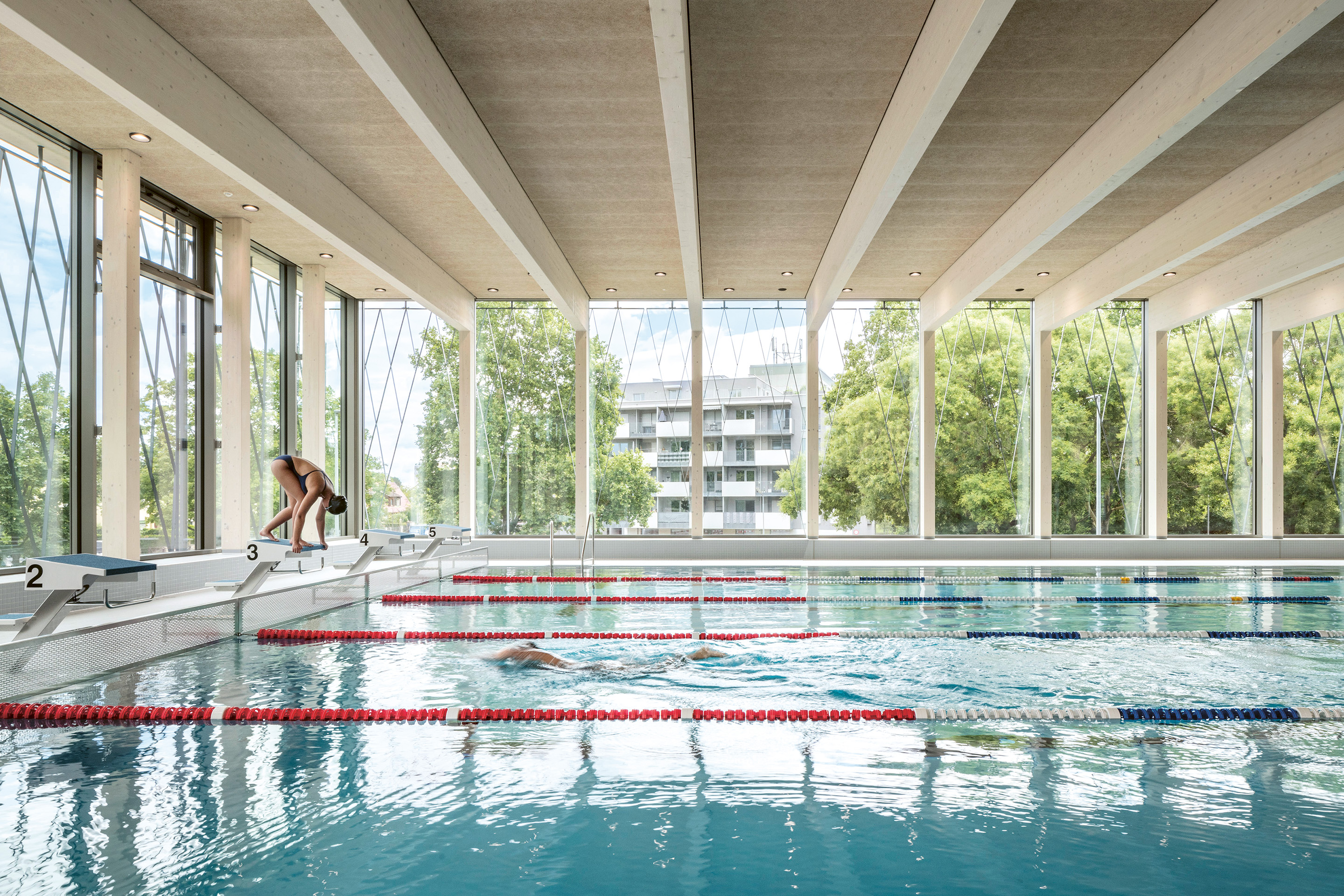
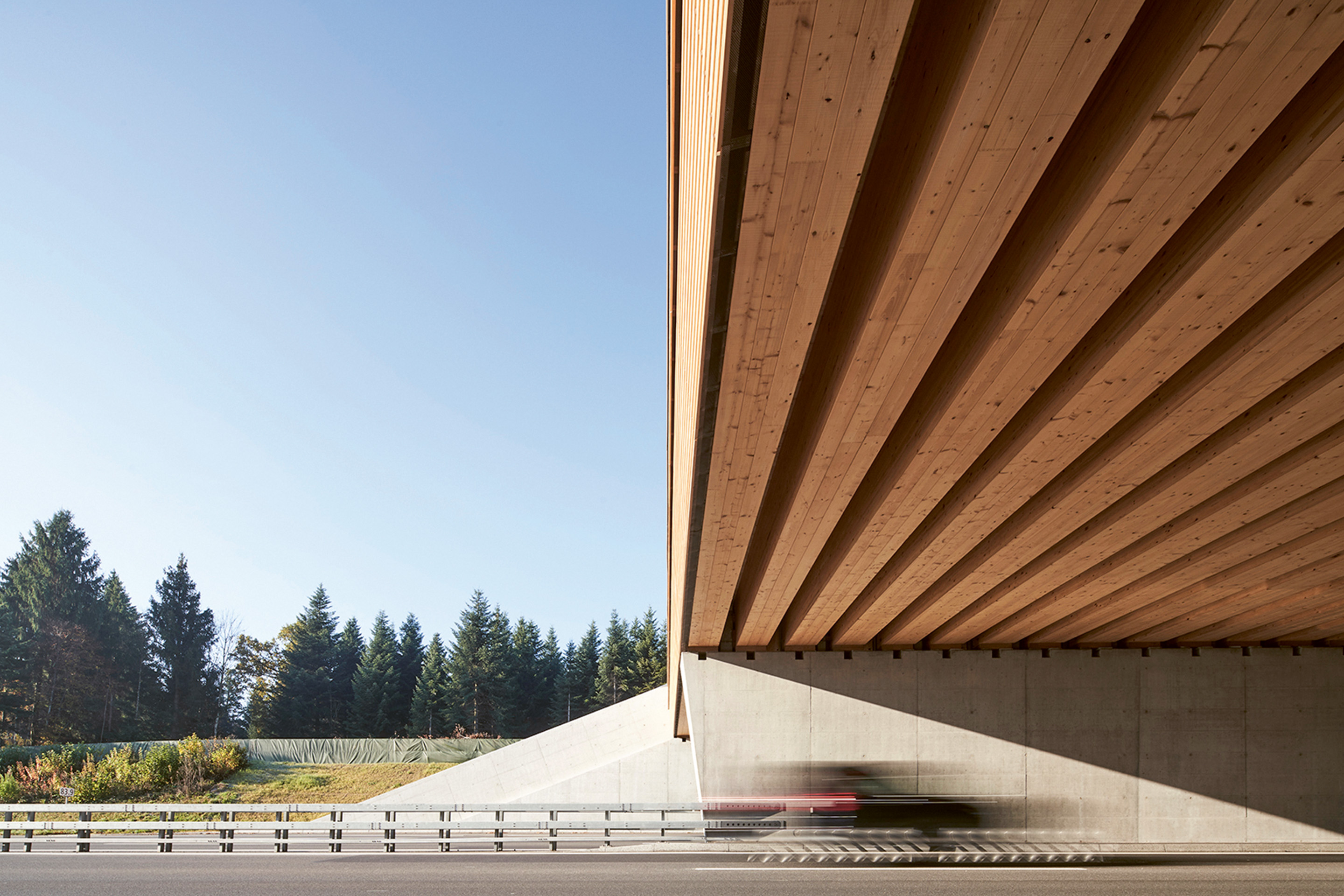
Achieving climate-neutral infrastructure requires technological advances and scientific strategies in materials. Concrete remains dominant, but studies commissioned by the Swiss Federal Roads Office (ASTRA) and FOEN and conducted by Berner Fachhochschule (BFH) show that in applications such as wildlife crossings, noise barriers or secondary bridges, timber elements can reduce greenhouse-gas emissions by 5 to 75 per cent compared with reinforced-concrete solutions of equivalent durability.5
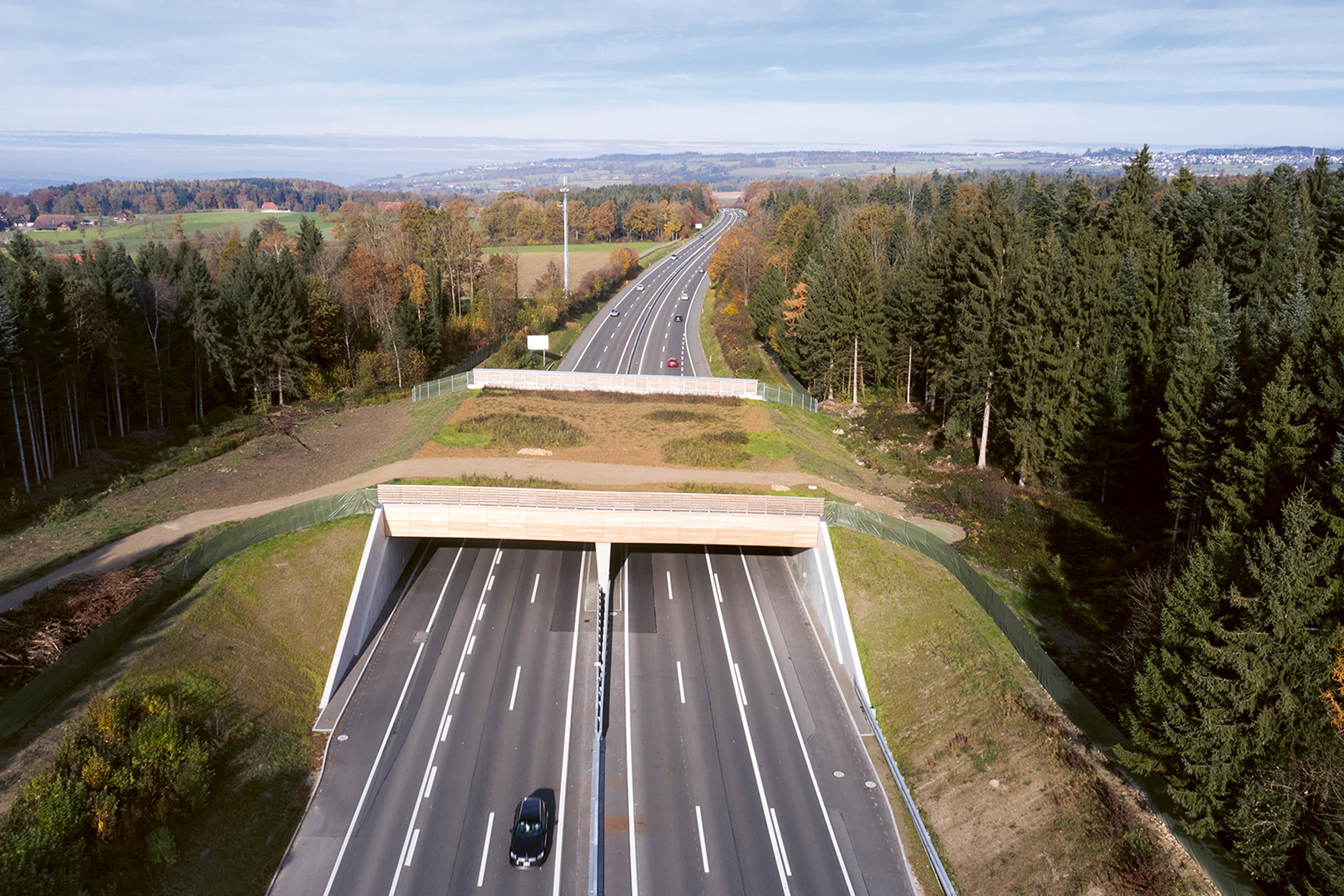
An example is the Neuenkirch wildlife crossing, built in a hybrid timber-concrete structure that fully meets static and durability requirements while reducing the carbon intensity of materials.6 At the same time, the Swiss Federal Laboratories for Materials Science and Technology (EMPA) is conducting research on low-emission binders and circular materials, contributing – together with BFH – to improving material efficiency and reducing the environmental impact of Switzerland’s construction sector.7 The findings confirm that emission reductions depend primarily on the targeted use of alternative materials – where they are technically most appropriate – rather than their blanket substitution.
Education
Meeting national climate targets requires not only technological innovation but also structured knowledge transfer between research and practice. Engineers must be trained with an approach that integrates structural design, life-cycle assessment, resource management and environmental evaluation. In this spirit, the two federal institutes of technology (ETHZ and EPFL) offer the practice-oriented Certificate of Advanced Studies (CAS) ETH in Infrastructure Construction Management.8
Stable funding for research and education is also essential to maintain innovative capacity and disseminate low-emission solutions across Switzerland. This is the aim of the initiative launched by bauenschweiz together with major infrastructure associations (suisse.ing, SIA, Swissrail, VöV, Infra Suisse and the Swiss Water Management Association), which seeks to secure long-term financial resources and synergies between industry, academia and politics.
Outlook and conclusion
Achieving climate neutrality in building and infrastructure requires a profound transformation in how we design, build and maintain. Scientific advances in low-emission materials, combined with systematic maintenance strategies and appropriate training, can gradually reduce the environmental footprint of Swiss infrastructure. Yet full decarbonization of cement production – even with CCS technologies – remains challenging due to high NOx concentrations in flue gases.9
The role of designers is being reshaped: sustainability demands new cross-cutting competencies, the so-called future skills — interdisciplinary communication, an ability to innovate and openness to change. Only integrated, holistic planning can ensure that buildings and infrastructure remain environmentally sustainable, economically efficient and socially beneficial throughout their life cycle, in harmony with their context. Early and informed involvement of specialists is the key to a truly sustainable construction sector.
Notes
1 Regenerative infrastructure refers to an integrated system of built, natural, and digital structures designed not merely to preserve ecological and social systems but to actively regenerate them. Such infrastructure supports closed material and energy cycles, enhances resilience to ecological and economic change, and produces long-term net-positive effects for the environment, society, and the eco-
nomy by restoring natural resources, fostering social participation, and enabling value-preserving economic circuits.
2 Transport, power, water, and communication networks; wastewater and waste-management systems; protective structures; power plants; etc.
3 KIG, Art. 10.
4 Bertola, «Sustainable Rehabilitation», 1-13.
5 Chabrelie, «Potenziale von Holz».
6 Neue Holzbau AG, «Montage».
7 Empa, «Advanced Structural Materials».
8 ETHZ, «CAS in Infrastructure».
9 One of the main challenges of CCS technology in cement production is that nitrogen oxides (NOx) react with the capture solvent during CO2 separation. NOx occurs at relatively high
concentrations in the flue gas of a cement plant, and when it reacts with the capture solvent—often organic amine solutions—it can form unwanted by-products such as nitrosamines. These compounds may be harmful to human health and can degrade the capture solvent.
References
– Bertola, Numa, Philippe Schlitz, Emmanuel Denarié, & Eugen Brühwiler, Sustainable Rehabilitation of Metallic Railway Bridges by Application of UHPFRC Overlays, in «Frontiers in Built Environment», 2021, n. 7 https://www.frontiersin.org/journals/built-environment/articles/10.3389/fbuil.2021.769686/full.
– Chabrelie, Aude, Heiko Thömen, Potenziale von Holz im Infrastrukturbau – Endbericht For-schungsauftrag TP3, Bundesamt für Strassen (ASTRA) / Bundesamt für Umwelt (BAFU), Bern 2023.
Online References
– «Klima- und Innovationsgesetz», Admin, Bern 2023 https://www.admin.ch/gov/de/start/dokumentation/abstimmungen/20230618/klimagesetz.html.
– «Montage Wildtierüberführung Neuenkirch», Neue Holzbau AG, Alpnach 2023 https://neueholzbau.ch/montage-wildtierueberfuehrung-neuenkirch
– «Advanced Structural Materials – Low Carbon Binders and Circular Construction Materials», Empa, Dübendorf 2023 https://www.empa.ch/web/s303/advanced-structural-materials
– «CAS ETH in Infrastructure Construction Management», ETH, Zurich 2024 https://sce.ethz.ch/en/programmes-and-courses/search-current-courses/cas/cas-eth-infrastrukturbau.html
– «I nuovi materiali “aumentati” generati dal legno», Espazium, 2023 https://www.espazium.ch/it/attualita/i-nuovi-materiali-aumentati-generati-dal-legno
– «Umwelt Schweiz 2022 – Bericht des Bundesrates», BAFU, Bern 2022 https://www.bafu.admin.ch/bafu/de/home/dokumentation/umweltbericht/umweltbericht-2022.html
– «Nachhaltiges Bauen - Hochbau - Verständigungsnorm zu SIA 112» SIA https://www.ecobau.ch/resources/uploads/Publikationen/SIA112-1_2017_d.pdf
https://shop.sia.ch/normenwerk/architekt/112-1_2017_i/D/Product
– «Factsheetdurabilite 4», Api Swiss https://api.swiss-academies.ch/site/assets/files/100233/hep_factsheetdurabilite4.pdf
– «What is regenerative infrastructure?» Demos Helsinki https://demoshelsinki.fi/what-is-regenerative-infrastructure/
– «Weniger ist mehr» Beton Suisse https://betonsuisse.ch/Inspiration/Weniger-ist-mehr/
– «Jahresberichte» Cem Suisse https://www.cemsuisse.ch/jahresberichte/
– «Concrete» ETHZ https://concrete.ethz.ch/blog/umweltfreundliche-betonbauten/
– «Thema Boden» BAFU https://www.bafu.admin.ch/bafu/de/home/themen/boden/inkuerze.html