

Perspectives on infrastructure transition
A comparison between institutions, companies, and independent networks to understand how structural sustainability is becoming an operational issue in Switzerland. From public planning to construction sites to the reuse of materials, the round table investigates the tools, limitations, and responsibilities of the ecological transition in infrastructure.
Testo in italiano al seguente link
Within the framework of espazium quaderni’s issue dedicated to structural sustainability, the editorial team convened a roundtable to investigate how institutions, companies and independent actors are interpreting and managing the ecological transition in Switzerland’s structural and infrastructural construction sector. Applied to the built environment, sustainability is no longer an abstract concept or a purely ethical ambition, but an operational issue that cuts across the entire supply chain: from federal and cantonal strategies to site management, from public procurement briefs to processes for the reuse of structural materials.
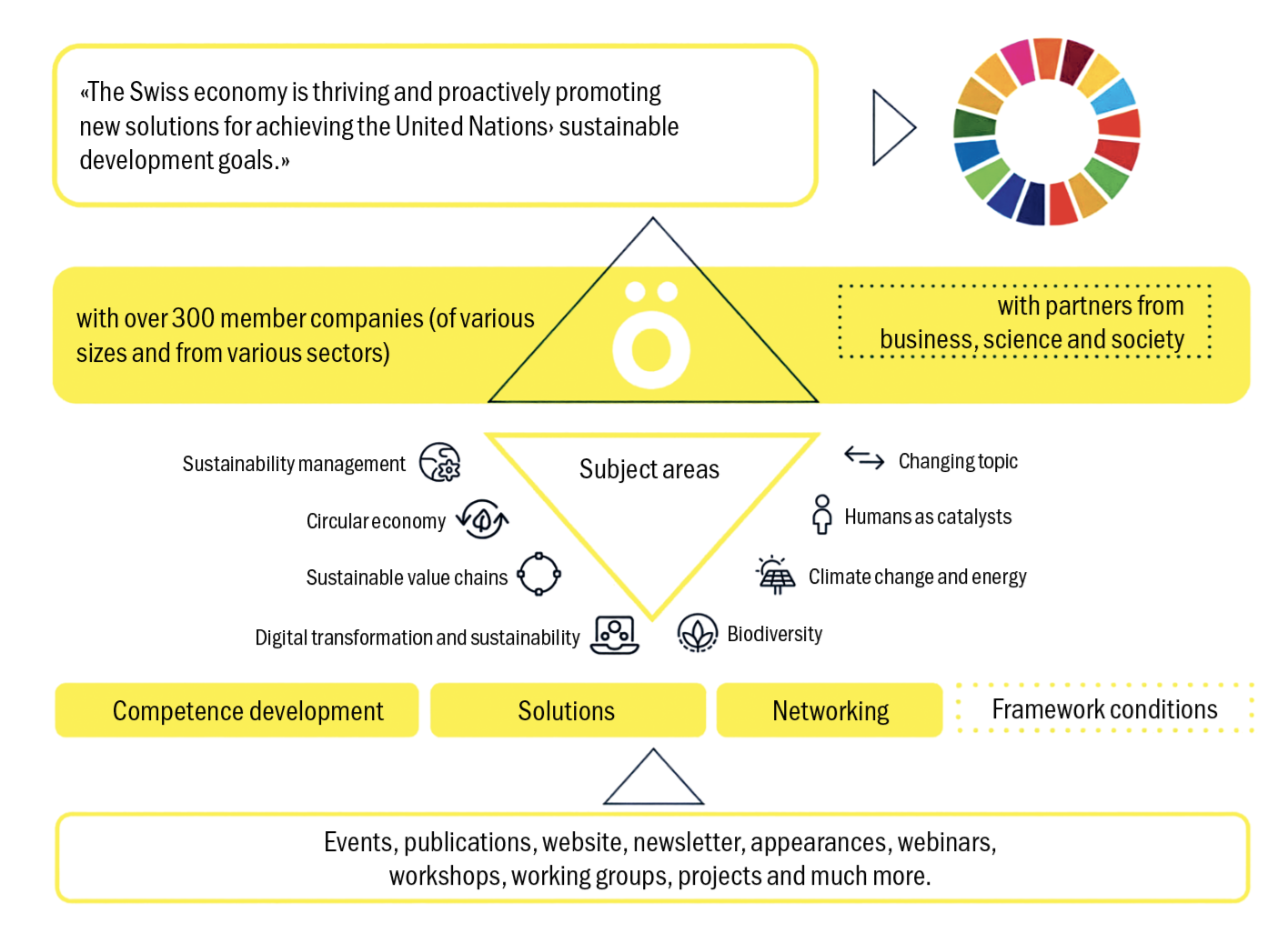
The initiative is rooted in the awareness that the ecological transition requires ongoing dialogue between different forms of knowledge and responsibility. Public institutions, such as the Federal Roads Office (ASTRA) or cantonal departments for spatial development, are called upon to translate federal goals of climate neutrality and emissions reduction into concrete regulatory and managerial tools: guidelines, Life Cycle Assessment (LCA) assessment procedures, monitoring systems and life-cycle-based tendering criteria. Construction and infrastructure management companies, in turn, must reinterpret these directives by transforming them into productive and organisational processes, integrating innovation, quality and sustainability within economic models still largely driven by initial cost logic. Alongside these actors, a decisive role is played by professional associations and independent networks, such as the Schweizerische Vereinigung für ökologisch bewusste Unternehmensführung (öbu), which operate as cultural catalysts: entities capable of connecting administrations, designers and companies, fostering the circulation of knowledge, the definition of shared metrics and the promotion of measurable sustainability practices. This plurality of perspectives reflects a complex yet dynamic reality. In Switzerland, where construction quality has long been high, the challenge is not only to build less, but to build differently: extending the service life of existing structures, reducing material footprints and coordinating policies, techniques and professional cultures around shared goals.
The roundtable thus emerged as a space for intersectoral exchange: an opportunity to understand how each actor, through its own tools, is addressing the broader transformation of building practices, towards a sustainability that is not only environmental, but also technical, economic and institutional. Participants included Alberto Cerri (AC), Valentina Kumpusch (VK), Diego Rodoni (DR) and Leonardo Garaguso (LG). Moderators: Valeria Gozzi (VG) and Claudio Martani (CM).
VG: Today, the term «sustainability» is ubiquitous, yet its operational meaning varies greatly depending on the context. From your experience, what does «sustainability of structures and infrastructure» concretely entail?
AC: To me, sustainability primarily means acknowledging the global limits imposed by nature. Discussing recycling or efficiency alone is insufficient: in the hierarchy of the «R’s», the first should be refuse – that is, knowing when to say no to unnecessary projects. I think, for instance, of the Spada Bridge: hundreds of tons of steel employed for minimal use. Courage is required to admit that not everything technically possible is also sustainable. This represents a profound cultural shift, touching on the responsibility of engineers and architects to evaluate the genuine necessity of what is built. Alongside this cultural aspect, a true culture of measurement is still lacking. Everyone speaks of sustainability, yet few quantify it objectively. Environmental indicators – expressed in terms of CO₂ emissions or embodied energy per ton of material or per square metre of structure – should become a technical standard, on par with unit cost or construction time. Only what is measured can be managed and improved: sustainability must not remain a declared value; it must become an operational design parameter.
DR: I share this principle, yet in the public sector the notion of «necessity» must be negotiated with the community. Infrastructure addresses complex territorial and social needs, and sustainability must reconcile public utility, environmental impact, and maintenance costs. In the Cantone Ticino, we are, for example, working to integrate slow mobility and reduce the territorial fragmentation caused by major infrastructure. The real leap, in my view, will be moving from a project-oriented logic to a system-oriented one, where each structure is assessed not as an isolated object but as part of a broader network of ecological and territorial relationships.
VK: At ASTRA, we interpret sustainability through a life-cycle lens. Every infrastructure must demonstrate that it maintains, over time, a balance between costs, safety, and environmental impact. It is not enough to build well: it must be managed sustainably. For this reason, we are introducing LCA methodologies even for linear works – roads, tunnels, viaducts – which present higher evaluative complexity than buildings. The goal is to integrate environmental criteria into decision-making processes from the earliest design stages.
LG: From the perspective of companies, sustainability is beginning to enter technical specifications steadily, yet often in a prescriptive manner. A more performance-based approach, focused on measurable outcomes rather than mere prescriptions, is required. We must move from purely quantitative criteria to qualitative ones that reward innovation. Some companies are already experimenting with low-emission materials, machinery, and site processes, but formal recognition of these practices in tender scoring is still lacking.
CM: One of the critical challenges is the tension between environmental objectives and economic constraints. How do you balance sustainability and feasibility?
VK: Through multi-criteria evaluation systems incorporating environmental, social, and financial indicators – the three pillars of sustainability, indeed. ASTRA is effectively updating its guidelines to weigh these factors differently: we can no longer consider only immediate costs but must also account for impacts on biodiversity, health, and landscape. In some cases, we select more expensive solutions because we estimate they generate higher environmental value.
LG: Within companies, the principal obstacle remains economic margins. Many sustainable solutions are not yet competitive if only initial construction costs are considered. This is a structural limitation of the procurement system, which often continues to privilege bid price over life-cycle quality. Compensation mechanisms and evaluation criteria integrating Life Cycle Costing (LCC) are therefore needed, rewarding solutions that are more durable and less impactful over time. In some swiss cantons, scoring models are being tested that assign increasing weight to environmental parameters, in line with the 2025 energy regulations and federal directives supporting the energy transition.
In recent years, even at the technical and regulatory level, the Confederation has begun to establish reference values and targets for the infrastructure sector, as proposed by the Federal Office for the Environment (BAFU) – UmTech study on the environmental accounting of major public works. These instruments provide performance indicators that allow projects and materials to be compared in terms of emissions, resource consumption, and service life, introducing a principle of comparability that had so far been absent. At the legal level, Article 35j of the Environmental Protection Act (LPAmb) also establishes an obligation for the Confederation and the Cantons to direct their public investments toward sustainable products and services, thereby creating a legal framework that reinforces coherence between environmental policies and construction practices. This evolution demonstrates that economic and environmental sustainability are no longer separate domains: the value of infrastructure is increasingly measured by its ability to endure, adapt, and reduce maintenance costs over time. It is on this basis that companies can finally compete not only on price but on the overall quality of construction.
DR: Public procurement is a central challenge of the transition. As long as procedures continue to favor the lowest bid, sustainability remains theoretical. Our administration is working to introduce evaluation criteria that reward not only price but also environmental quality and durability of works, based on recognized certifications and verifiable performance indicators. Yet, a uniform federal reference system is still lacking, capable of ensuring consistency across cantons and sectors. Only through a common methodological base will it be possible to compare results transparently and guide public decisions toward genuinely sustainable models.
AC: This need for uniformity must be complemented by economic transparency. Too often, sustainability costs are perceived as an additional burden, without considering savings from more efficient maintenance or the reuse of secondary materials. A complete life-cycle analysis demonstrates that sustainable projects are, in most cases, also the most economically rational. This is compounded by an often-overlooked factor: the costs of the ongoing climate crisis. Extreme events, such as those in Valle Maggia or the central Alps, show that the absence of preventive strategies carries a high price, both for public finances and infrastructure safety. Incorporating this perspective into evaluation models means acknowledging that the real cost is not construction but inaction.
VG: Let us discuss concrete examples. Which practices or projects represent a true paradigm shift for you?
AC: A significant example is the project Développement d’un prototype novateur pour le réemploi structurel du béton armé,1 developed in Lausanne by Itten Brechbühl in collaboration with the EPFL and various industrial partners. The project experiments with the structural reuse of concrete elements from demolitions, testing the possibility of pre-stressing and reusing prefabricated blocks and components in new constructions. This work tangibly demonstrates that existing structural mass can be reinterpreted as a resource, not as waste. It is a pioneering approach that translates the principles of urban mining into design practice, opening new technical and regulatory perspectives for the entire sector. Structural reuse, however, requires a set of competencies still uncommon: recovery logistics, material mechanical characterization, certification of suitability, and traceability of components. Here, engineering is no longer merely a construction tool but a technology of regeneration, capable of restoring value to what the construction system still considers waste.
LG: A noteworthy experience is the Hardwald project in Bülach,2 where an environmental assessment system was introduced across the entire construction process. The winning contractor did not secure the contract for the lowest price but for the highest overall environmental score, defined according to measurable and verifiable indicators. Monthly monitoring covers environmental impact points (UBP), water consumption, material recycling rates, and machinery energy efficiency. Using our proprietary tool ECO₂nstruct, developed to standardize the calculation of emissions from construction activities, it is also possible to quantify the CO₂ impact of an infrastructure project. This approach changes the construction paradigm: sustainability becomes a production goal, not just a design principle. Construction site management itself transforms into an environmental lever, directly influencing emission reduction and overall project performance.
DR: In Ticino, we promote a pragmatic sustainability approach, based on reusing existing structures and components. For instance, we have recovered and reinstalled metal walkways and steel elements from other sites, significantly reducing construction time and resource consumption. Simultaneously, we are testing warm asphalt, which reduces energy demand by approximately 30% compared to traditional asphalt. These are simple yet highly effective measures, applicable across the canton’s infrastructure portfolio. The challenge is demonstrating that even minor technical actions can yield measurable impacts on emissions and maintenance costs.
VK: Within ASTRA projects, sustainability is increasingly integrated into construction and maintenance processes. We systematically reuse tunnel excavation materials, transforming them into aggregates for new road segments or retaining structures, reducing transportation and primary resource consumption. Simultaneously, we are advancing pilot low-emission concrete projects, developed with the Swiss Federal Laboratories for Materials Science and Technology (EMPA) and EPFL, where wood fibres are added to the base mix and clinker replaced with alternative products. This technology reduces clinker quantity and captures part of the CO₂ emitted during production. We are also implementing wooden wildlife passages and low-impact prefabricated structures, demonstrating that infrastructure sustainability can be addressed in a holistic manner, encompassing biodiversity, logistics, and materials.
AC: All of this shows that innovation is not solely technological but also cultural and systemic. It requires accepting solutions that are not perfect but sufficiently good – able to respond to technical, environmental, and economic needs in a balanced way. In this light, standardization and modular design can also be interpreted as forms of sustainability: reducing unnecessary complexity, limiting waste, lowering maintenance costs, and facilitating reuse. The culture of sustainable design should aim not for exceptionality but for repeatable quality.
CM: What about designers’ role? How prepared are they today to integrate structural sustainability principles?
VK: Swiss designers possess solid skills but must constantly update them. Digital tools such as Building Information Modeling (BIM) with integrated LCA modules now allow quantification of environmental impacts in preliminary project stages. However, not all clients yet require this level of analysis: in many cases, demand for sustainability remains optional rather than systemic.
AC: To change this, a genuine systemic transformation is needed. As long as design mandates are remunerated solely according to construction costs, dedicating time and resources to sustainable solutions is difficult. The value of the design process itself, not merely the finished work, must be recognized: innovation emerges in the early stages when materials, geometries, and maintenance strategies are defined, not on-site.
DR: From the public perspective, one of the main challenges is the lack of interdisciplinary skills. Infrastructure sustainability is not solely an engineering matter: it requires territorial, economic, and environmental knowledge. We are therefore training professionals capable of integrating these areas, so every project can be assessed on coherent technical and environmental bases. It is a cultural as well as organizational evolution.
LG: Companies can make a decisive contribution, but more open and collaborative design is needed. Often, we are involved too late, when major decisions are already made. In complex projects, early involvement of the supply chain allows optimization of materials, timeline, and maintenance, yielding tangible efficiency and durability benefits. In this sense, the SIA 2065 – Planen und Bauen in Projektallianzen3 represents a fundamental reference, proposing collaboration models that overcome the traditional separation between designers, contractors, and clients, fostering genuine sharing of expertise and responsibility. Widespread adoption of tools like SIA 2065 and integrated BIM would align technical, economic, and environmental objectives, reducing phase conflicts and ensuring greater transparency throughout the project lifecycle.
AC: Another obstacle is regulatory fragmentation. Each canton, agency, or client has its own instruments and criteria, generating heterogeneity that slows the adoption of common strategies.
VK: True. However, the Confederation is working to define unified infrastructure sustainability standards, akin to those existing for buildings with NNBS4 and Minergie5 systems. The goal is to create a common platform for evaluating public works according to coherent, comparable, and scientifically grounded environmental criteria.
DR: A common base is certainly necessary but must allow cantons some flexibility. Switzerland’s territorial and climatic diversity requires adaptable norms: the same guidelines cannot apply uniformly to an Alpine tunnel, a lowland bridge, or an urban drainage network. Harmony between federal standards and regional specifics is essential for a truly effective system.
VG: How does dialogue between research, institutions, and companies function today? Are there effective collaboration platforms?
VK: Positive experiences exist, though still fragmented. Together with Infra-Suisse and the federal polytechnics, we have initiated several research projects on recycled materials and predictive maintenance techniques for infrastructure. Results are promising, yet technology transfer to practice remains slow. Permanent structures are needed to translate scientific data into practical protocols and operational guidelines.
LG: Agreed. The construction industry can be a true experimentation laboratory, but a more flexible regulatory framework is needed to test, validate, and certify new materials rapidly. Bureaucracy is often a bottleneck: approval procedures, differing by canton, slow innovation. A supra-cantonal regulatory system harmonizing technical standards, while ensuring safety and competitiveness, would be essential. Greater public information and inter-institutional coordination would make the process more transparent and accessible.
AC: Bureaucracy is complex. The main issue is not regulation itself but the lack of shared tools. Initiatives like the one we are pursuing with öbu, creating a database of dismountable and reusable construction components, represent a concrete step toward a structural circular economy. The goal is to build regional platforms facilitating the encounter between those demolishing and those designing, making reuse systemic rather than an isolated or experimental gesture.
DR: At the cantonal level, progress is being made in the same direction. We collaborate with SUPSI on various research projects to integrate recycled materials and low-impact solutions into public infrastructure. This ongoing work shows how sustainability is increasingly a matter of shared competence. Yet, we are only at the beginning: time, training, and greater synergy between research, administration, and industry are needed to consolidate this transition.
CM: Looking ahead, what are the priorities, and who should lead this transition?
DR: The first priority is cultural. The logic of initial cost must be overcome, adopting a life-cycle perspective. Public administrations must take a guiding role, setting an example by introducing evaluation criteria that reward durability, maintainability, and resilience. Mandatory LCA analysis for all public works beyond a certain economic threshold would represent a concrete step toward systemic transformation. Only by recognizing the value of longevity and planned maintenance can we reduce environmental impacts and optimize public resources over the long term.
AC: The second priority concerns the economics of sustainability. It is essential to introduce a policy for real environmental costs, where a ton of CO₂ has a price corresponding to the actual damage it produces. Assigning economic value to emissions is not only a fiscal measure but a way to stimulate the innovation market toward low-emission solutions and regenerative materials. Concurrently, a structural reuse supply chain must be built, supported by tax incentives and dedicated logistics infrastructure. Only then can the reuse of components and materials become widespread, generating both economic and environmental value simultaneously.
VK: Technically, a profound update of design and calculation standards is needed. We still design according to paradigms and safety margins formulated in the 1980s, often leading to unnecessary oversizing. Optimizing material use does not mean reducing safety but adapting design criteria to current knowledge and available digital tools. At the same time, existing standards such as NNBS and Minergie must be extended to infrastructure, adapted to functional and structural specifics, so that sustainability is not confined to buildings but becomes integral to civil engineering works.
LG: Finally, the organizational priority. The ecological transition must be coordinated from the top but nourished from the bottom. Companies are already investing in clean technologies and more efficient production processes; what they need is regulatory stability, coherent tender criteria, and measurable objectives. Climate neutrality is not achieved through slogans but through shared operational rules. Rewarding innovation and emission reduction, rather than price alone, is essential for real transformation. Structural sustainability will only be credible when its measurement is embedded in contracts, specifications, and remuneration models.