

A Bank, an Open Structure
celoria Architects | Fürst Laffranchi Bauingenieure | Gattoni Piazza
A bank that opens to the city: in Savosa, the project by celoria Architects with Fürst Laffranchi and Bauingenieure Gattoni Piazza transforms the institution into a permeable public space. Between urban regeneration, transparency, and sustainability, the building redefines the relationship between architecture and community.
Testo in italiano al seguente link
Banca Raiffeisen Colline del Ceresio, Lugano-Savosa TI
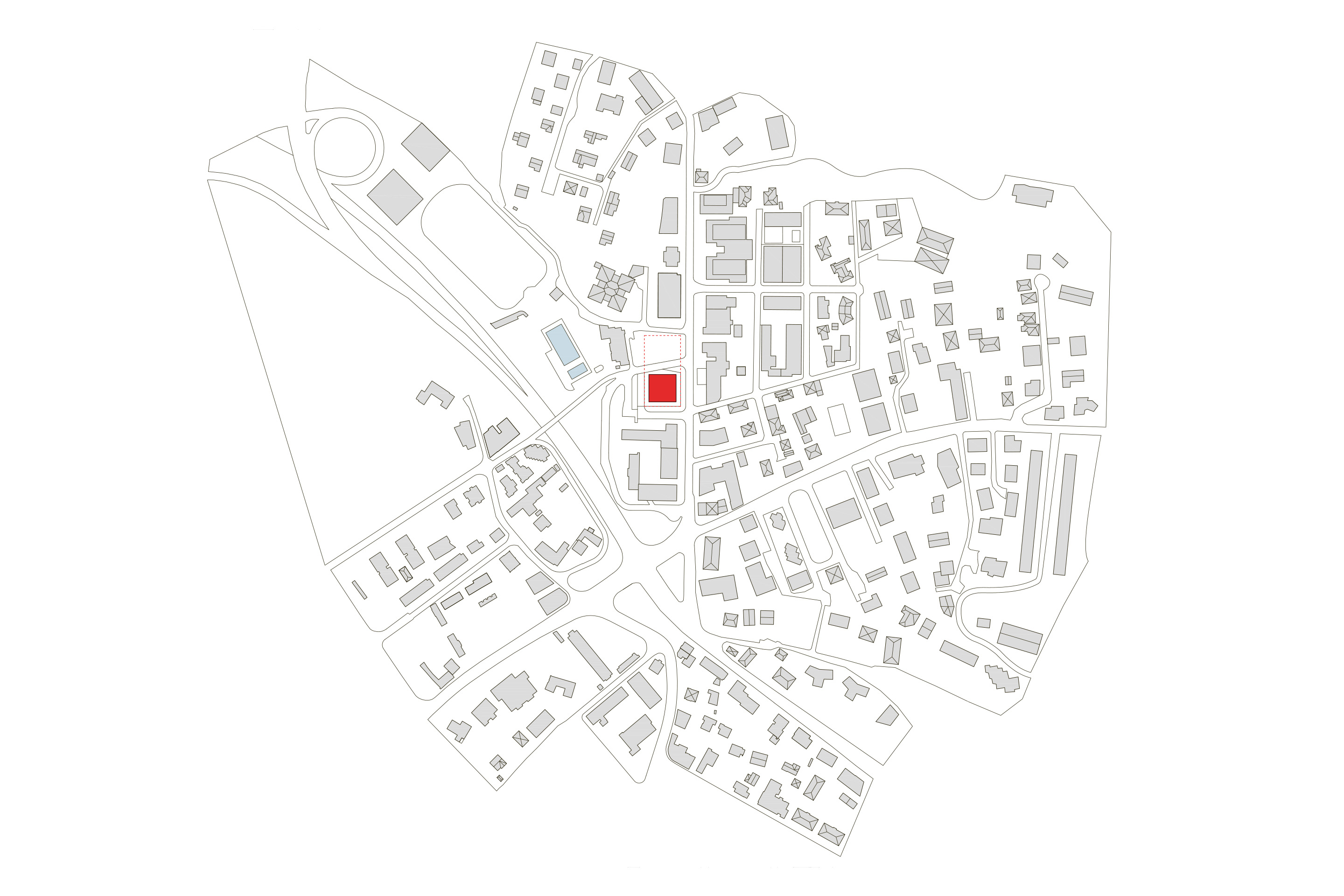
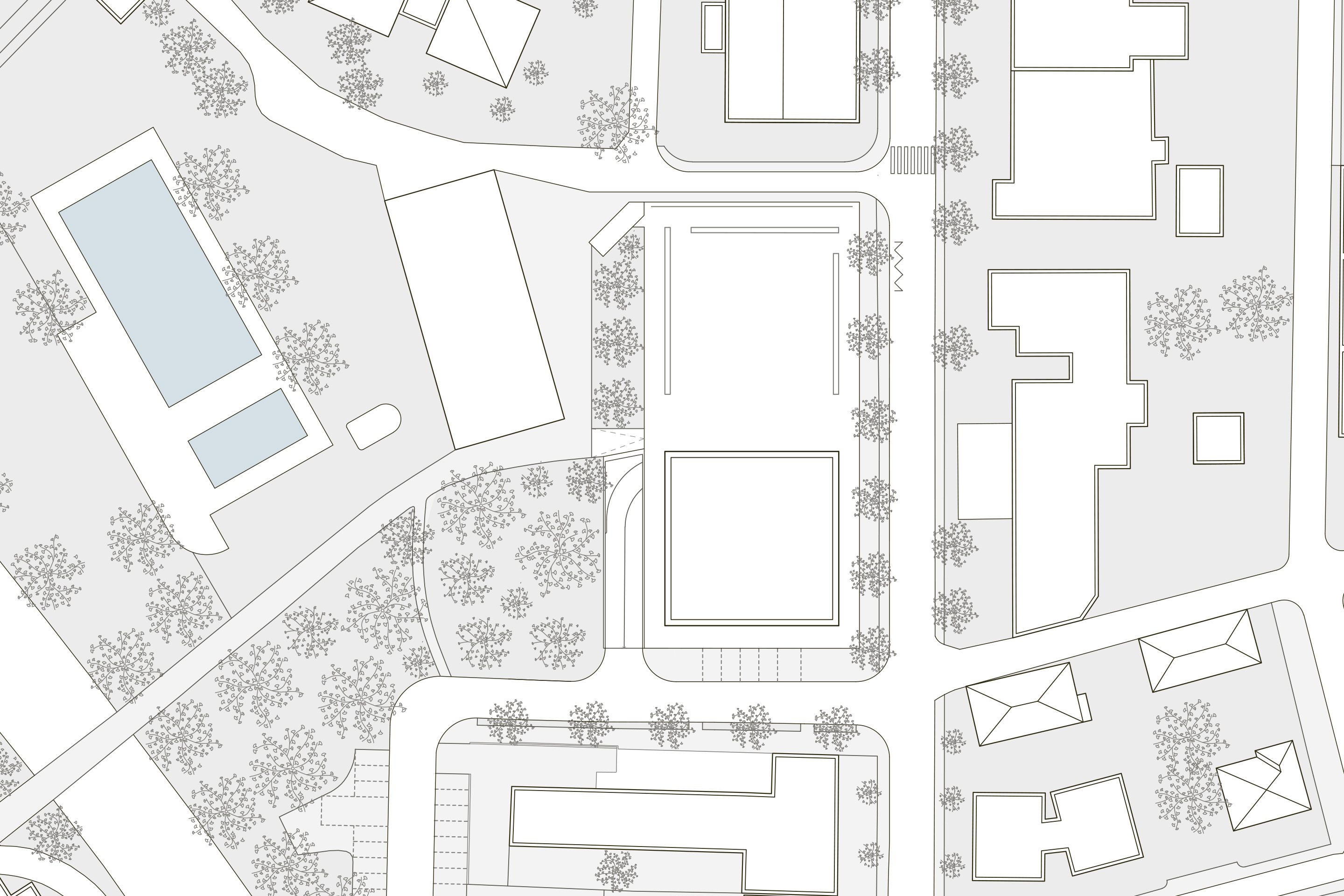
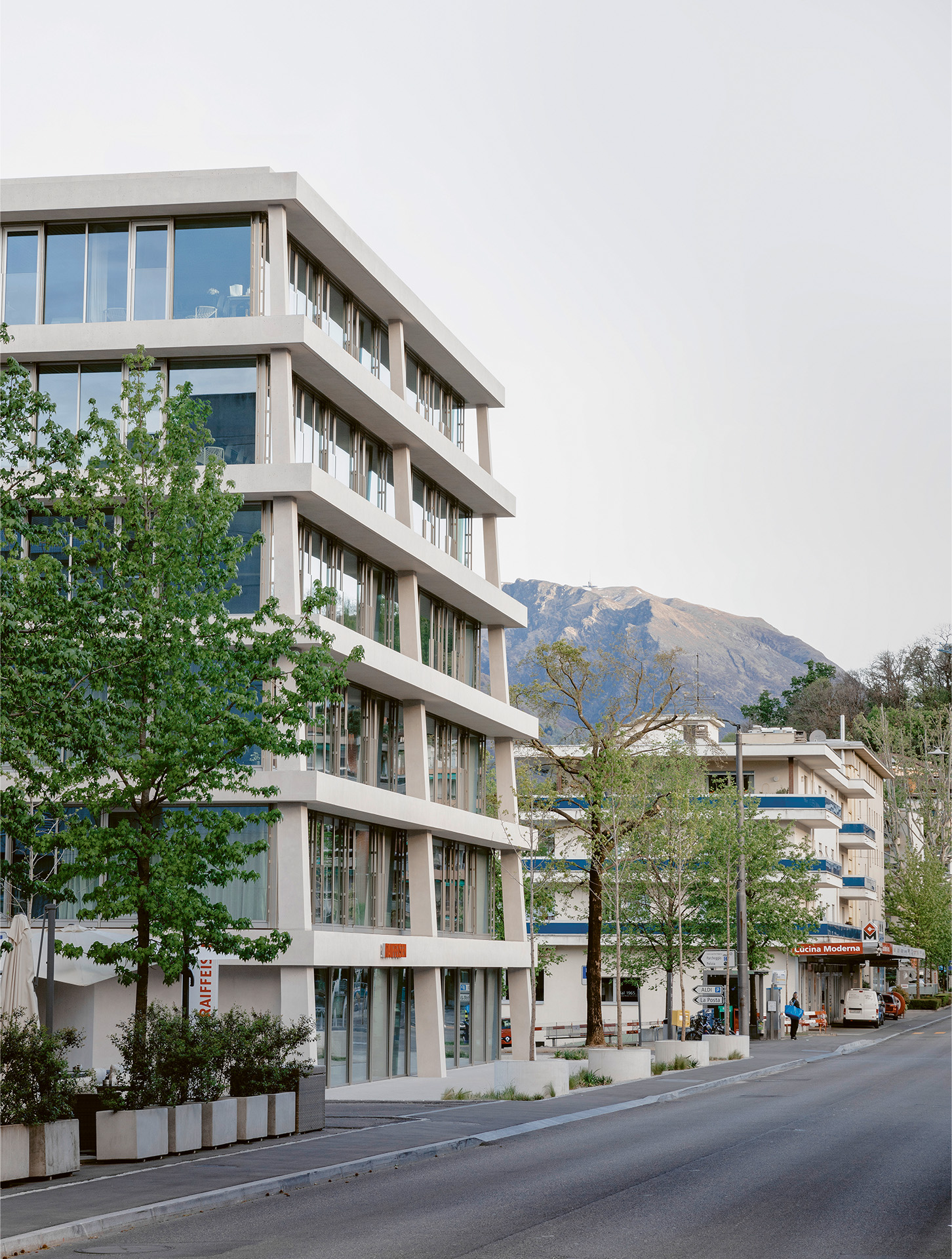
The project of the Banca Raiffeisen Colline del Ceresio headquarters in Savosa is based on a new interpretation of the banking model: from a closed, self-contained place to a shared, transparent space open to the community, following principles of social and environmental responsibility. The building forms part of a broader urban regeneration project and constitutes its first foundational element. From this framework derives the redefinition of traffic flows and public spaces which, upon completion of the entire intervention, will allow the northern area of the building to be returned to pedestrian use, through the creation of a new public space at the scale of the village.
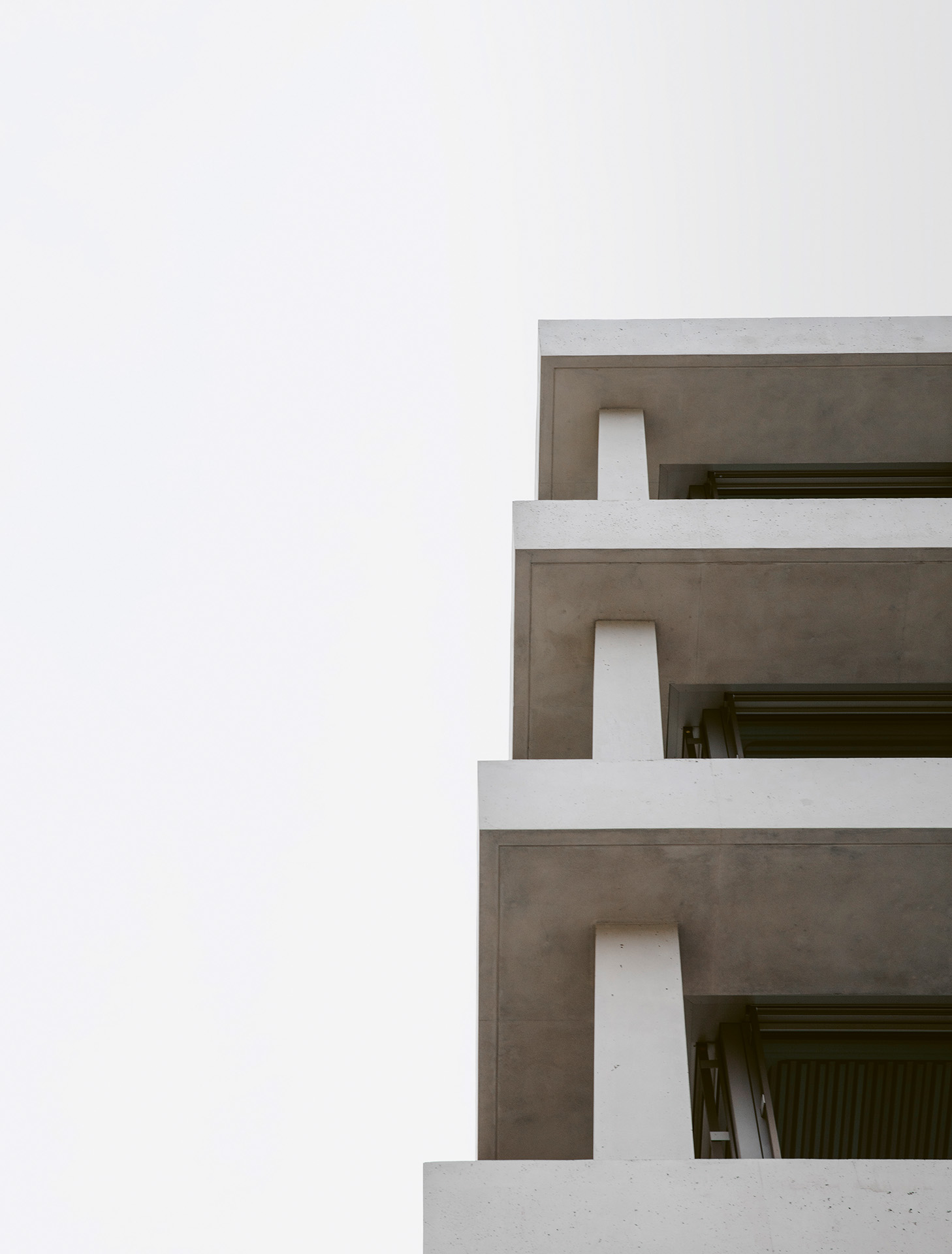
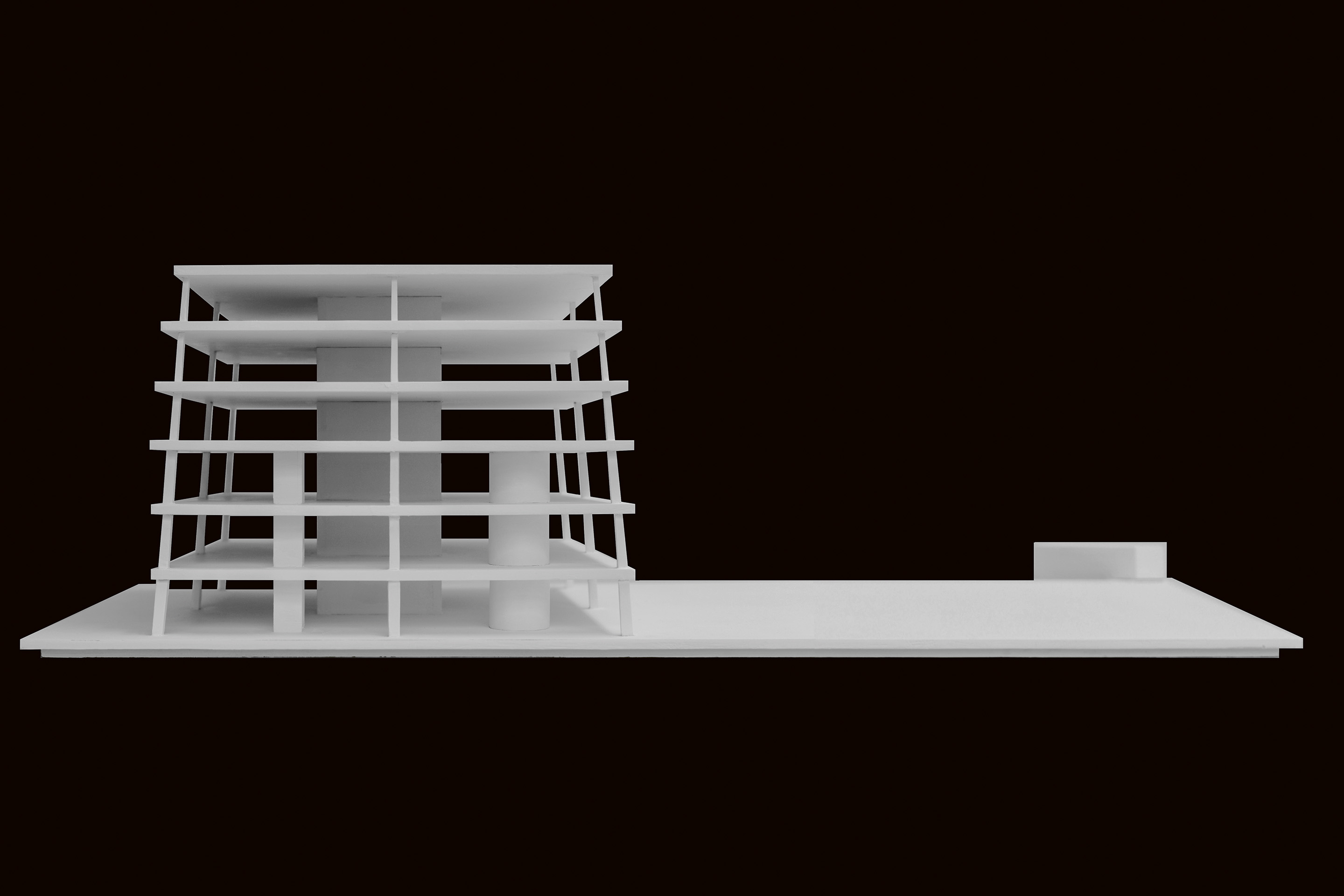
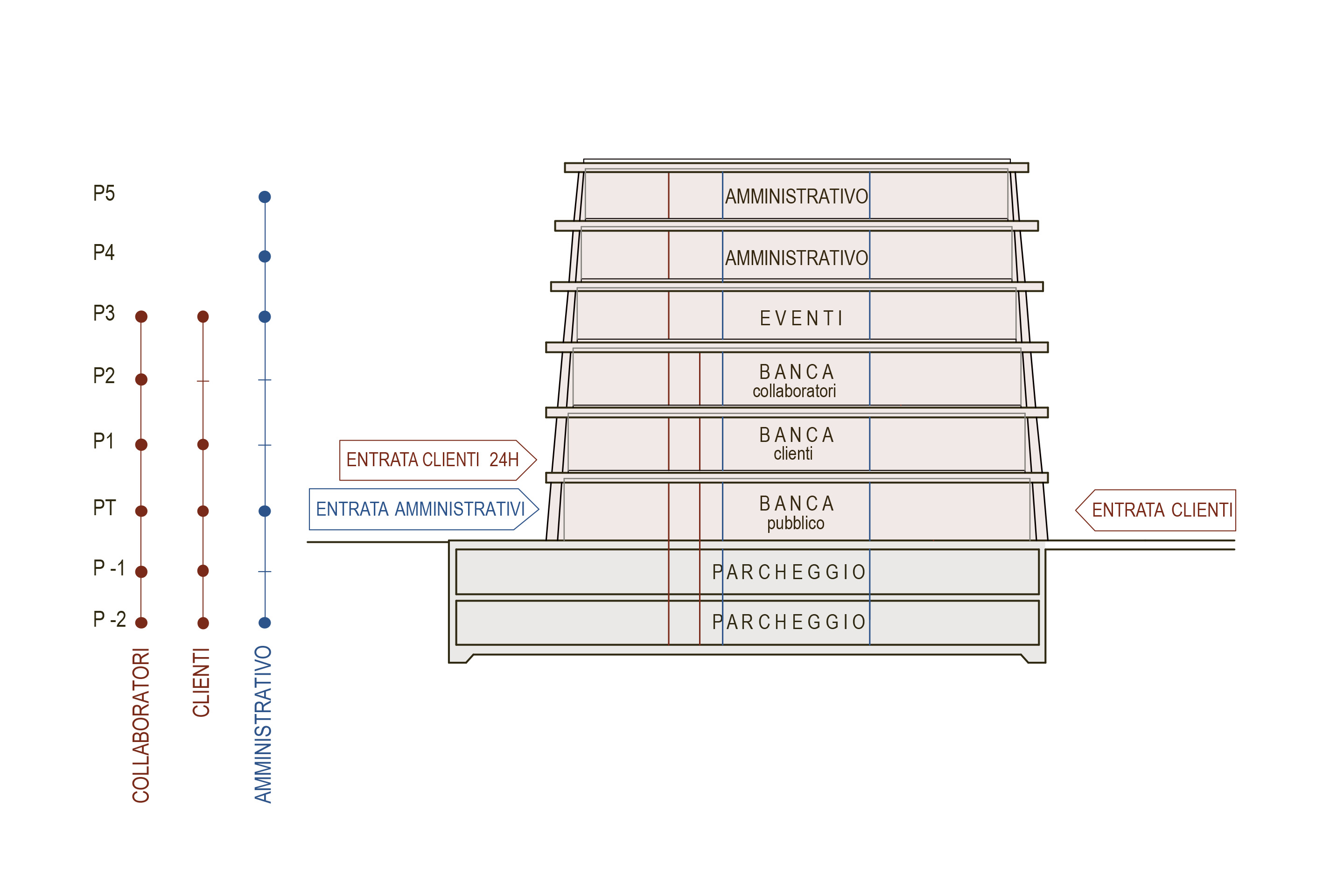
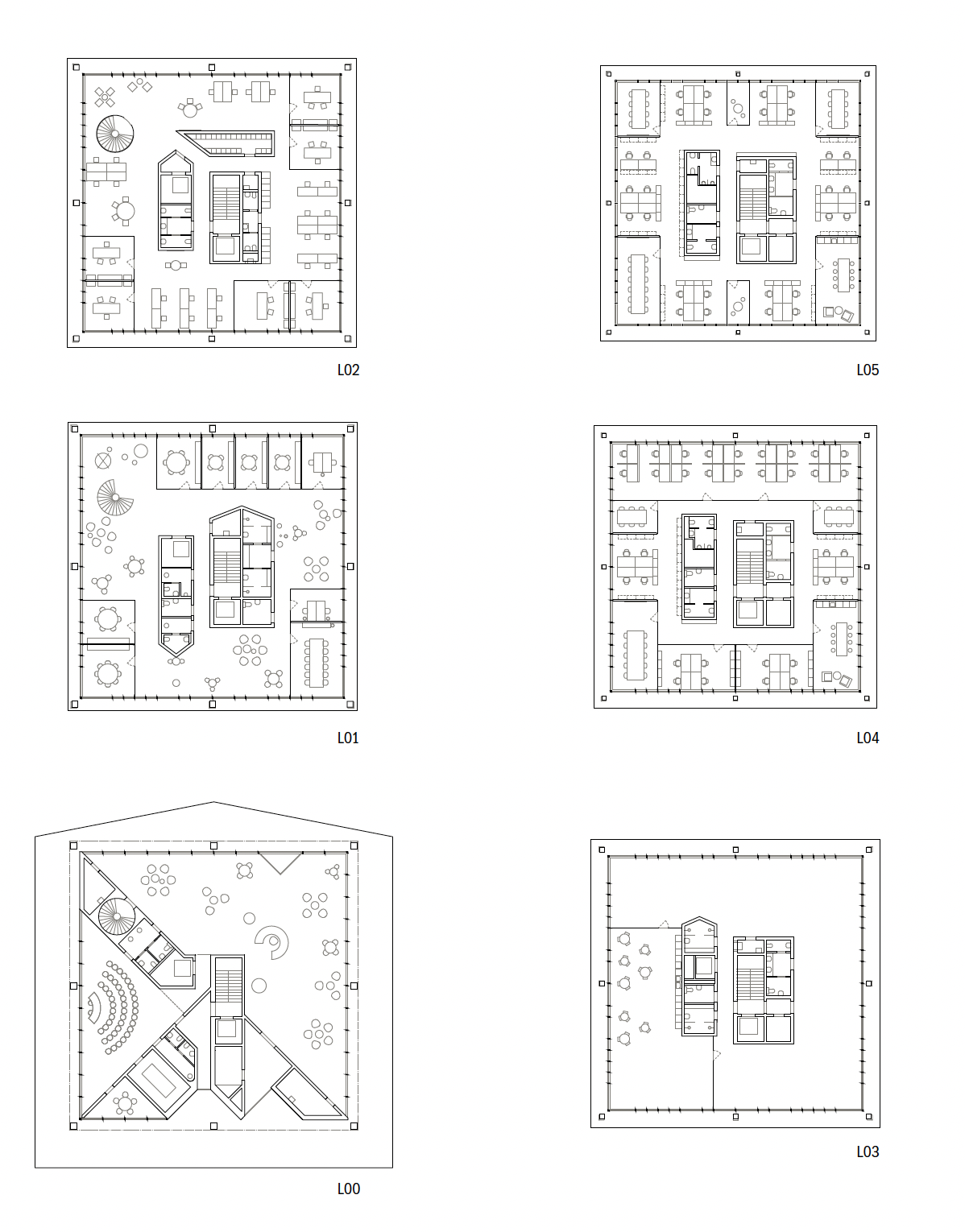
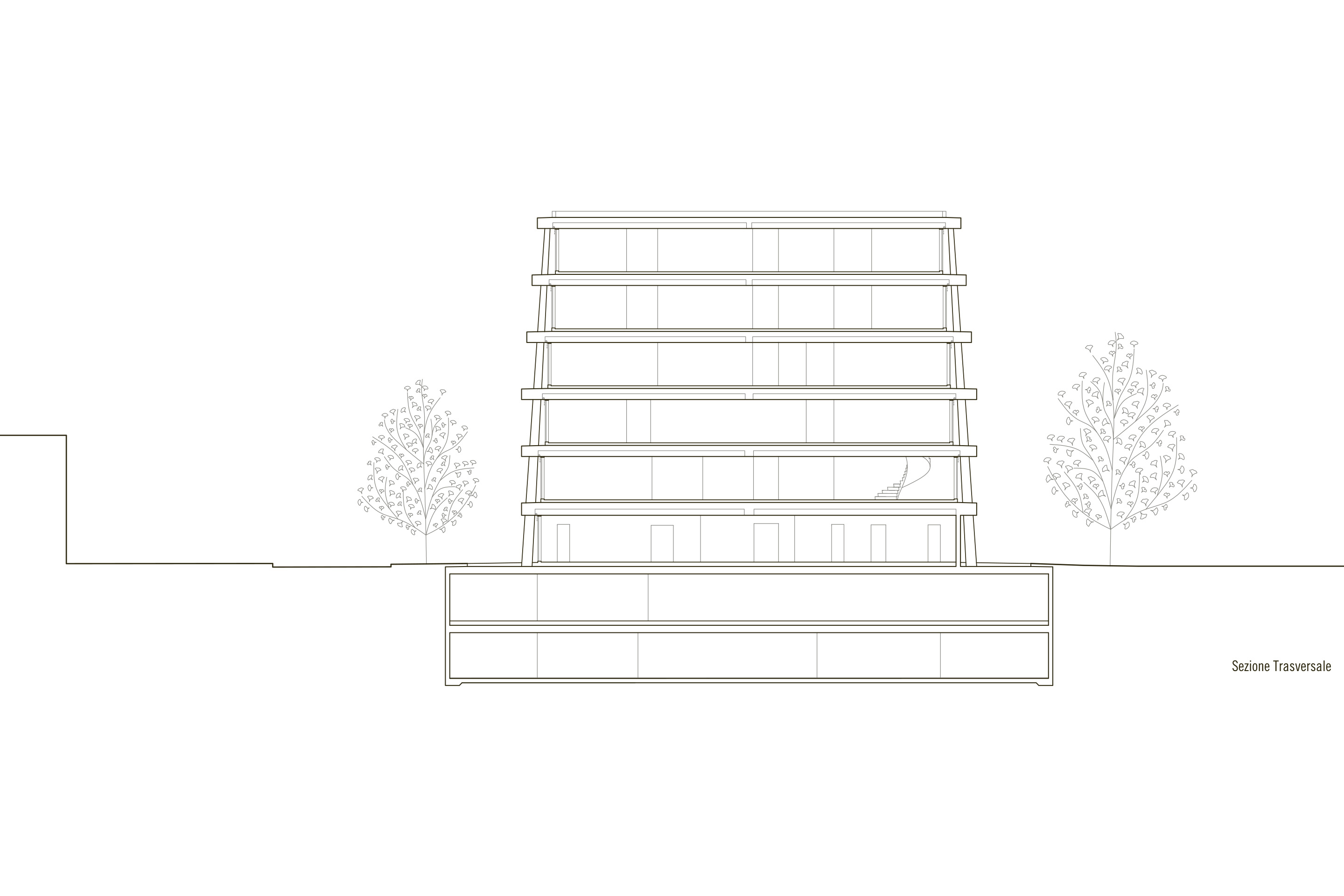
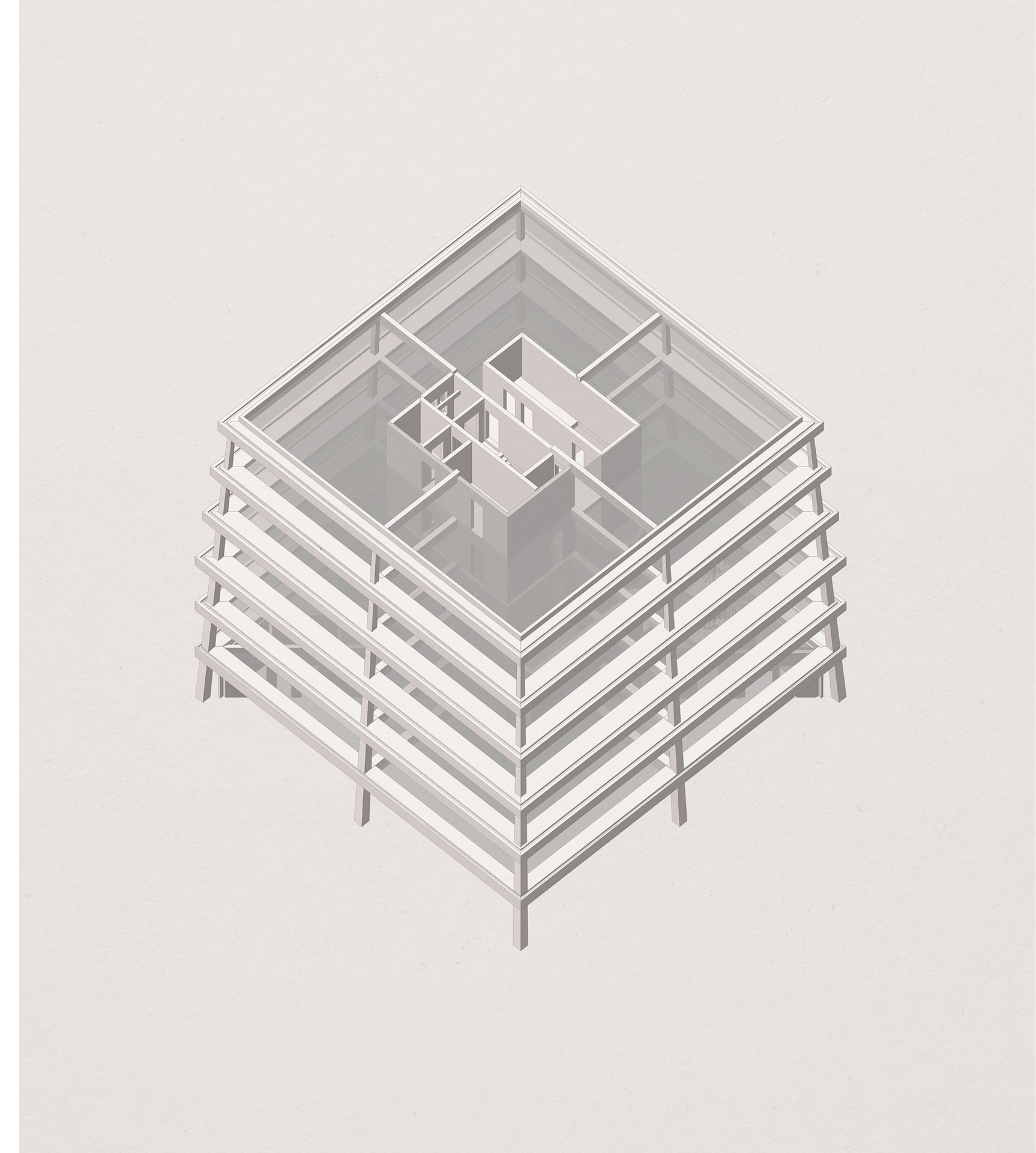
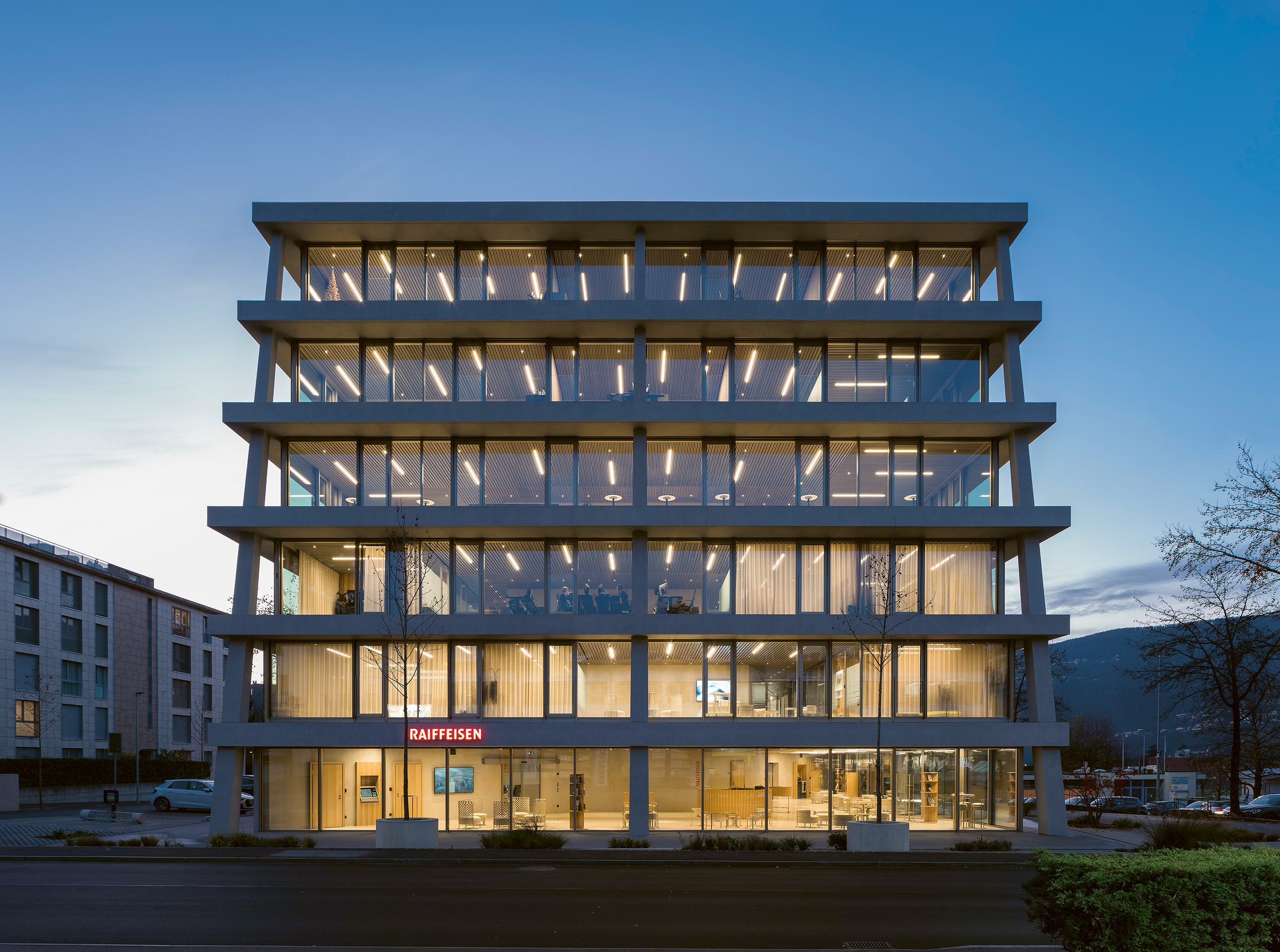
The building, square in plan, stands on a platform that establishes a new public ground and engages the surrounding context. The horizontal structural system in reinforced concrete comprises prestressed perimeter beams and four internal prestressed beams set along the square’s axes of symmetry. The resulting bays accommodate lightweight flat slabs. Inclined reinforced concrete columns are inserted at the corners and at the intersections of the beams. The cores fulfil both load-bearing and stabilising roles. The truncated pyramidal profile reinforces the building’s vertical thrust, further accentuated by the absence of a defined crown. The floor plates are organised around a central service and circulation core and enclosed by a transparent envelope. At ground level, this envelope forms a permeable threshold between inside and out, strengthening accessibility and continuity between interior space, the public realm and the landscape.
Constructed in reinforced concrete, glass, and steel, the building is the result of an invited competition launched by Banca Raiffeisen, which established both a design challenge and a clear guideline for adherence to the highest Swiss sustainability standards. A pioneer in the adoption of the SNBS standard for its buildings, the Savosa headquarters also achieved this certification as the first administrative building in the Canton of Ticino. To meet certification requirements, the project addressed all aspects of sustainability: social, economic, and environmental. These elements are expressed in the quality of the architectural proposal, its integration within the context, and accessibility via slow mobility and public transport, extending to the careful use of materials, spatial flexibility, and analysis of the building’s full life-cycle cost and its components.
Regarding environmental criteria, the project pursued Minergie P Eco certification, fully integrated within the broader SNBS framework. Within Minergie P, building envelope insulation, management of solar gains, and energy production from renewable sources for heating, cooling, and electricity were addressed. The Eco certification, instead, required
reducing material quantities and carefully selecting the materials used in construction. All decisions were made by balancing aesthetic and architectural quality with performance.
The building’s layout and its positioning in the context are fundamental not only to the quality of territorial integration but also to sustainability. The SNBS standard considers it across all areas and multiple certification topics. The site presents positive features but also limitations that made achieving certification challenging: the building occupies nearly the entire plot, limiting opportunities to integrate
external spaces and biodiversity interventions. Nevertheless, it is part of a broader urban redevelopment plan, where it plays a decisive role in the future development of the area. Additionally, it is easily accessible via public transport and promotes alternative mobility through electric vehicle charging stations and bicycle spaces for both employees and external users.
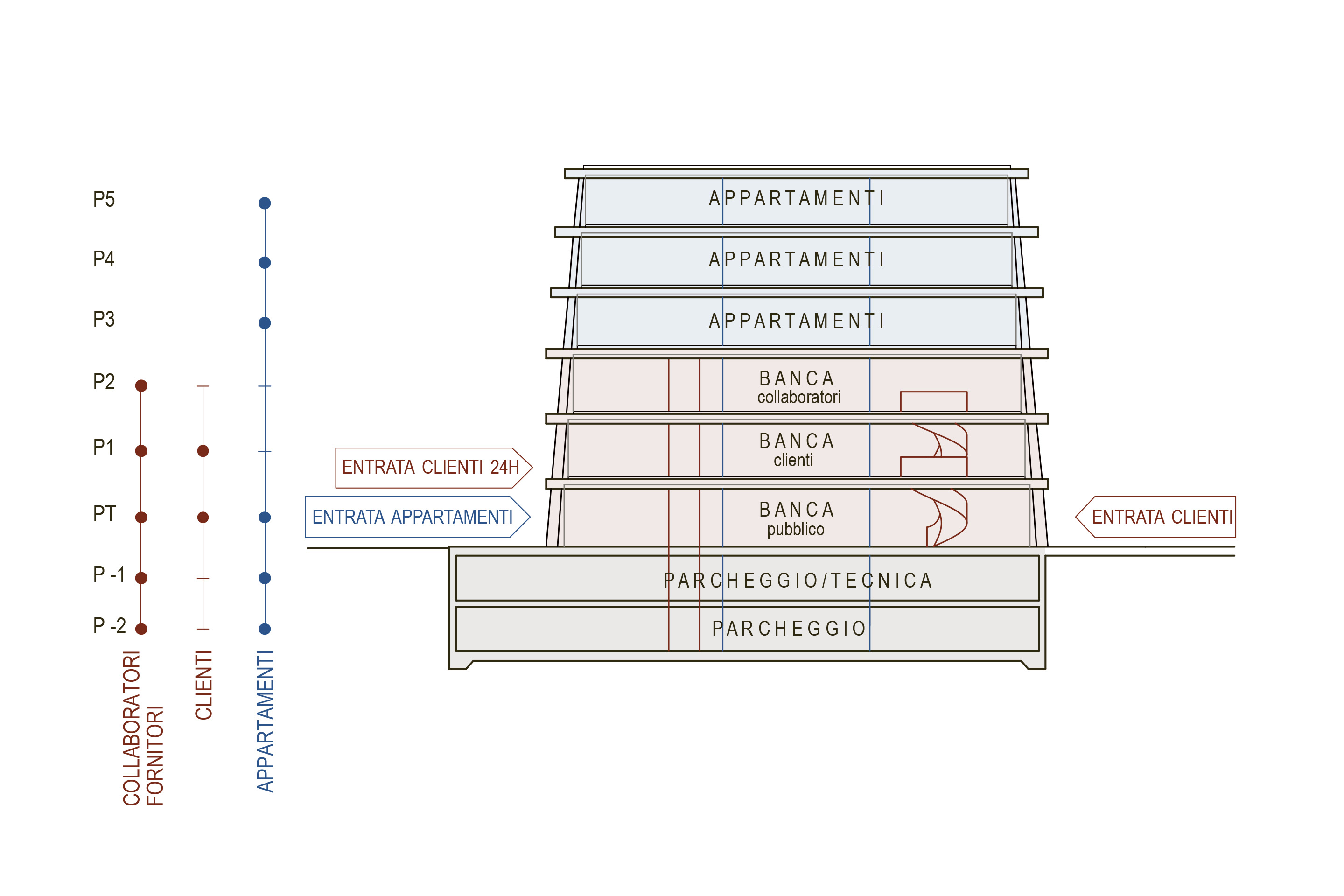
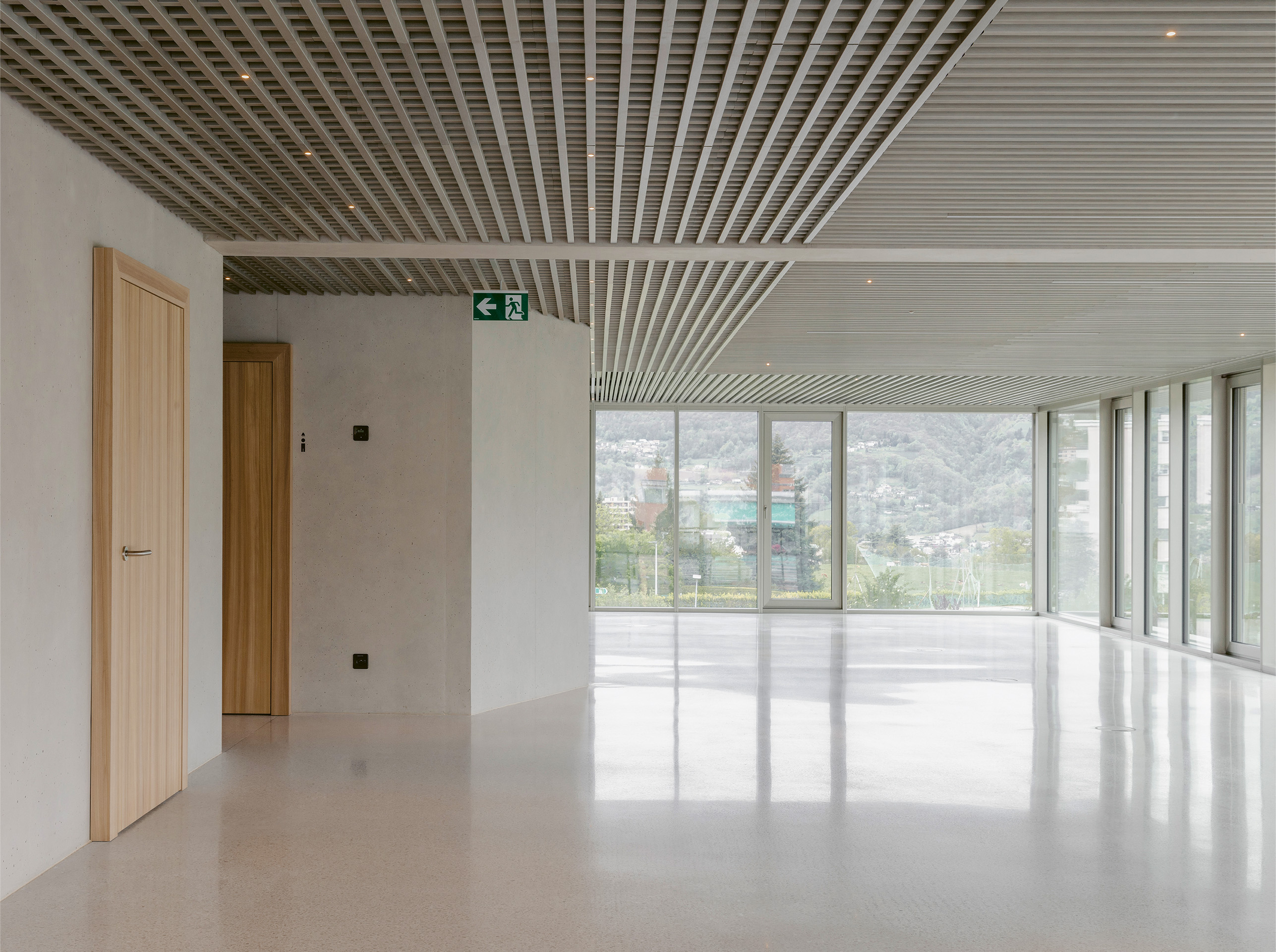
The principle underlying the interior spaces, coordinated with the new banking concept, is based on usage flexibility and various levels of accessibility for external users, thanks to rooms of different sizes with multiple functions and the possibility of rental for events, meetings, or assemblies, ensuring genuine openness toward the community.
From a construction standpoint, the reduction of
embodied energy in the building structure was achieved by optimizing the structural concept and reducing the amount of reinforced concrete, while employing recycled concrete in proportions exceeding Minergie Eco requirements. The quality and healthiness of the workspaces depend on
choices regarding the envelope and internal materials. The
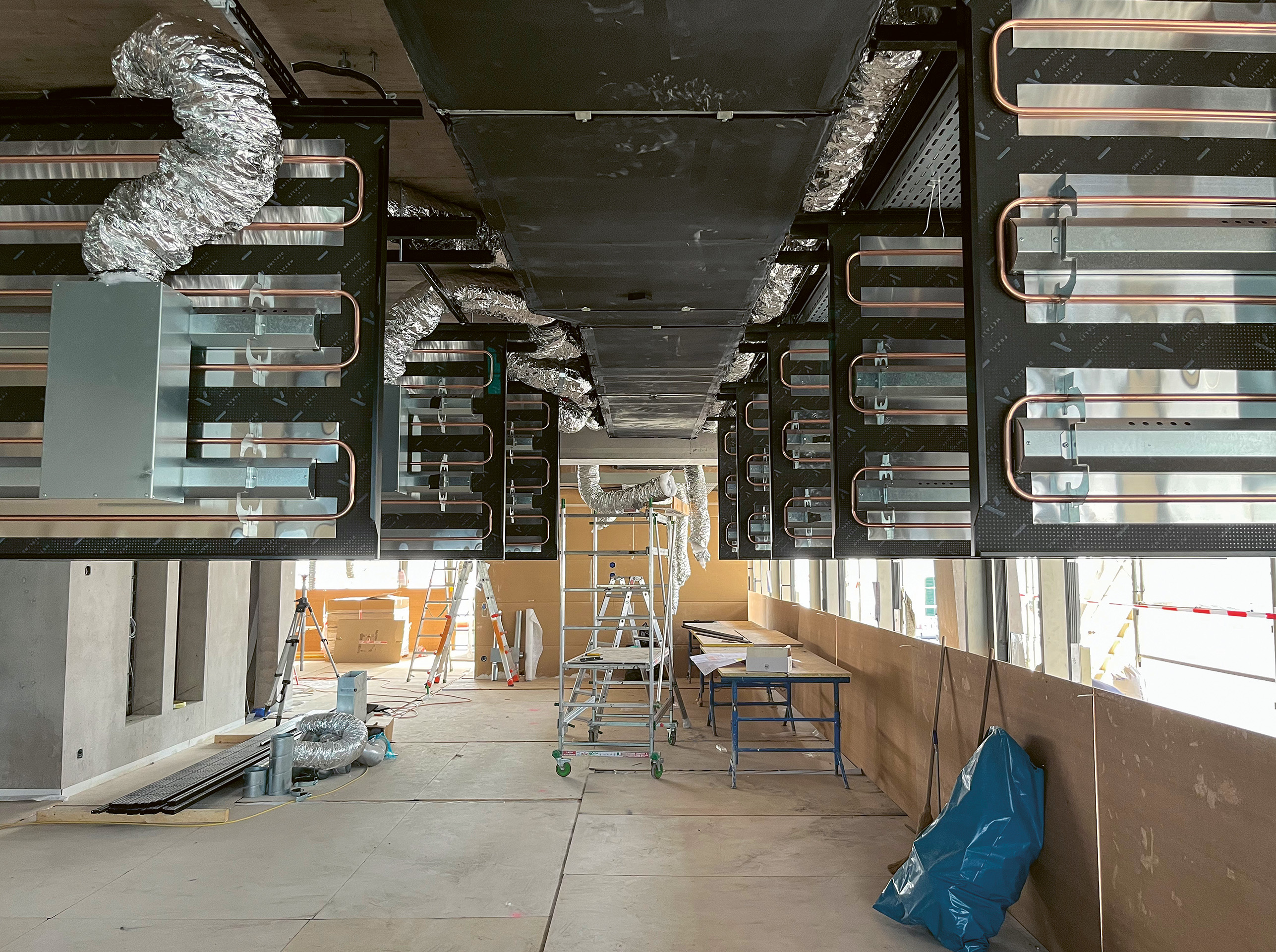
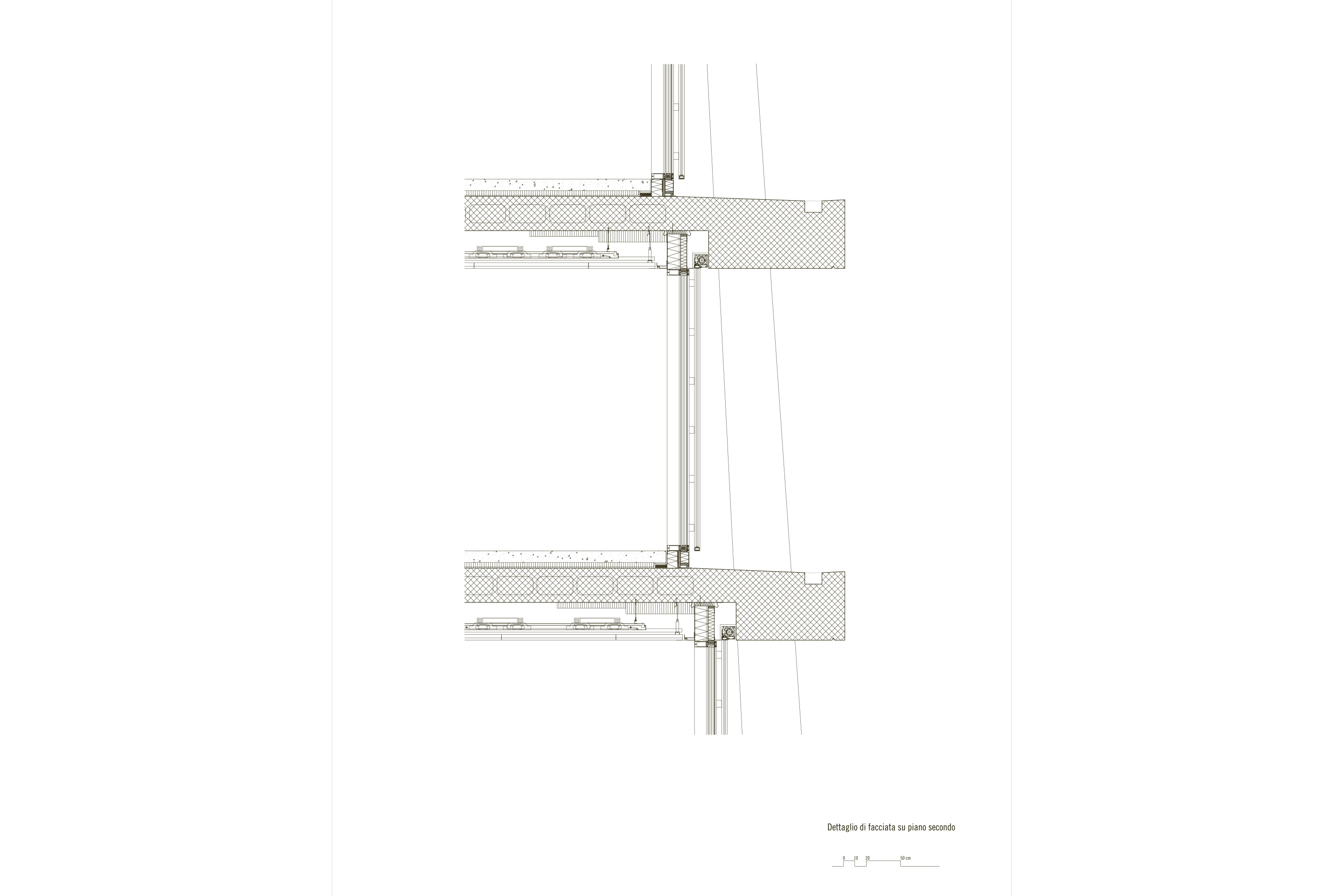
fully glazed facade modulates energy, light, and sound through fixed sunshades, external screens, and internal blinds. The ceiling integrates all building services and regulates acoustics, while the exposed floor and central concrete core masses control temperature peaks thanks to thermal mass. Finally, air quality measurements certified compliance with VOCs, radon, and formaldehyde limits set by Minergie Eco standards.
Finally, maximum functional flexibility and the possibility of future reconfigurations are ensured by the chosen layout, with a load-bearing structure independent of interior spaces, a dry-assembled envelope that can be dismantled, and fully accessible, maintainable, and replaceable building systems without invasive interventions. All these features contribute to extending the building’s lifespan and reducing life-cycle costs, enabling effective management and planned renewal cycles.
- Place Savosa
- Client Banca Raiffeisen Colline del Ceresio
- Architecture celoria Architects, Balerna
- team work M. Franzi, P. Tutone, N.C. Dias
- Consultant to the client Antonino Accardo, Raiffeisen Svizzera, Lugano-Savosa
- Direzione lavori Studio di architettura Berta & Associati SA, St. Antonino
- Civil engineering Fürst Laffranchi Bauingenieure GmbH, Wolfwil
- HVAC system project Tecno Progetti SA, Camorino
- Electric systems project P&P studio elettrotecnico Sagl, Chiasso
- Building physics and acoustics Gattoni Piazza Sagl, Origlio
- Photovoltaics Greenkey Sagl, Pregassona
- Lighting design Spinelli SA, Massagno
- geology Ing. Pedrozzi & Associati SA, Lugano
- Photography Giorgio Marafioti, Agno; René Lamb Fotodesign GmbH, Radolfzell (D); celoria Architects, Balerna
- Timeline project 2018-2020 realisation 2020-2023
- Energy planning CSD Ingegneri SA, Lugano
- Energy certification and standard Minergie P-Eco TI-012_P-ECO, SNBS Gold n. 268
- Intervention and building type new construction
- Heating geothermal probes heat pump
- Hot water air-water heat pump
- Electricity impianto fotovoltaico | photovoltaic system
- Special features geothermal free cooling (possible cooling of supply air), rainwater recovery for the toilet flushing system