

Sustainable design paradigms
Sustainability in structural works is determined by initial choices: design, static layout, and geometry influence environmental, economic, and social impacts throughout the entire life cycle. Using Swiss and European case studies, the text analyzes how conceptual design, prefabrication, and reuse can transform engineering, highlighting regulatory and cultural limitations that still remain.
Testo in italiano al seguente link
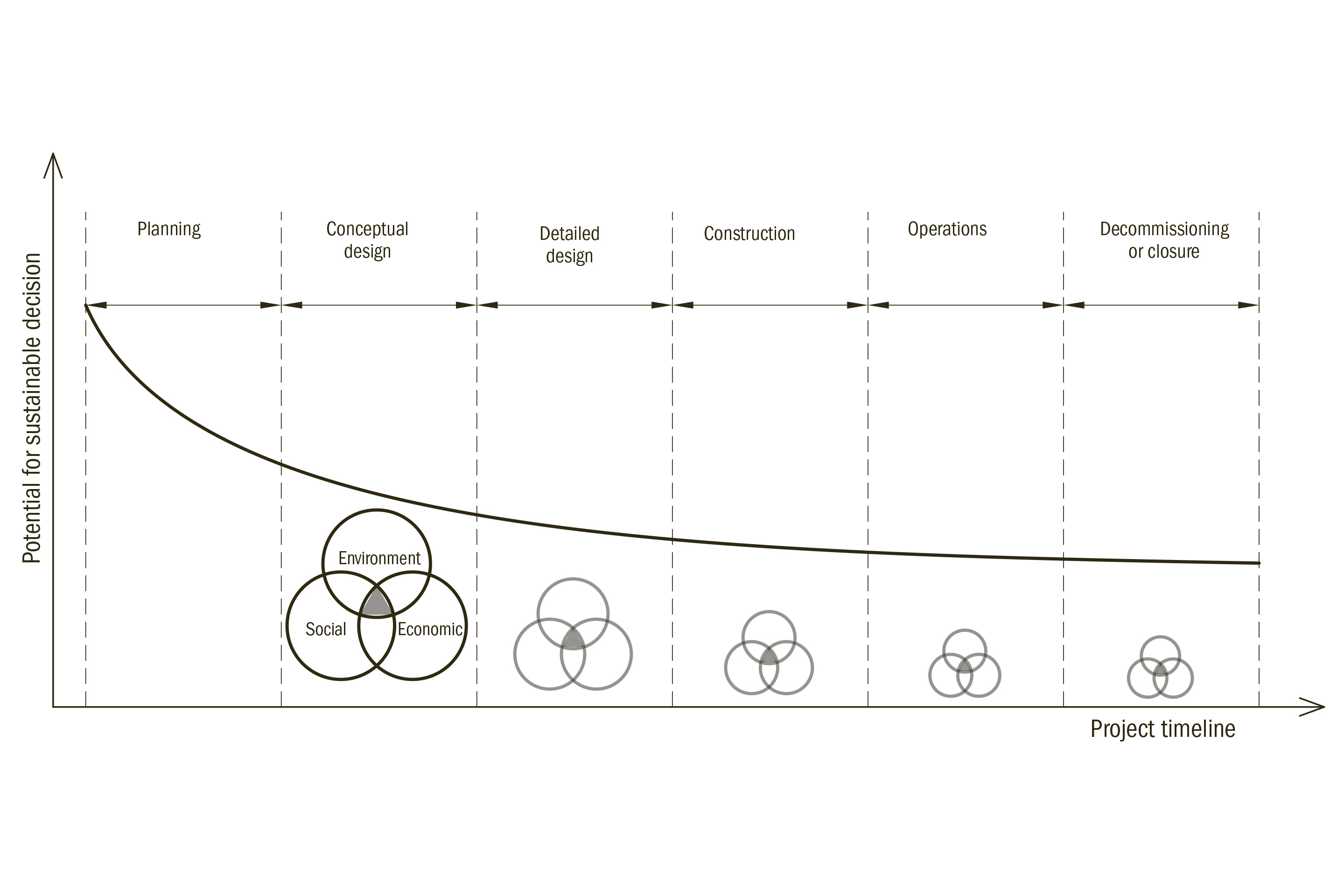
The sustainability of structural works is frequently examined through the lens of materials or construction processes. Within structural engineering, however, the environmental, economic, and social impacts of an intervention are predominantly determined by its preliminary design – namely, the ensemble of decisions formulated during the initial conceptual phase. It is at this stage that the structural scheme, essential geometry, load-transfer strategies, the nature and quantity of materials, inspectability conditions, anticipated durability, and potential for adaptability are defined.1
Literature in the fields of Life Cycle Assessment (LCA) and Life Cycle Sustainability Assessment (LCSA) indicates that these early decisions influence between 70 % and 90 % of the impacts generated throughout the entire life cycle of a civil engineering work.2 Choices made during this phase not only determine the configuration of the structural system but also guide future trajectories of maintenance, transformation, decommissioning, and, where feasible, reuse. Consequently, sustainability should not be regarded as a set of downstream measures but as an emergent property of the quality of initial design decisions.
Interpreting sustainability as a direct outcome of early-phase decisions necessitates a systemic perspective: the structural design, like other layers of design (architectural, MEP, landscape, etc.), is an evolving organism – interacting with its context and embedding costs and benefits across multi-decadal temporal scales. Therefore, the conceptual phase represents the point of maximal leverage to reduce material footprints, optimize resource utilization, enhance system robustness, and embed strategies for durability, inspectability, replaceability, and adaptability from the outset.
A preliminary yet central aspect of evaluating the sustainability of any intervention consists in determining whether the construction of a new structure is truly necessary. Literature on the 9R hierarchy («refuse, rethink, reduce, re-use, repair, refurbish, remanufacture, repurpose, recycle») identifies the principle of avoiding or minimizing new construction as the most effective means of containing environmental and economic impacts.3 As discussed in other contributions in this issue, verifying the necessity of a project thus constitutes the first methodological filter in sustainable design.
Where analysis demonstrates that new infrastructure is indispensable, it becomes evident that an approach grounded in early structural configuration decisions constitutes the primary determinant of sustainability performance. In greenfield projects, the absence of pre-existing morphological or material constraints enables the direct integration of environmental, economic, and social objectives into the definition of the structural scheme, base geometry, and durability strategies from the conceptual phase.4
This imposes an implicit professional obligation – to allocate time, expertise, and analytical tools in the initial stages of the process, with the understanding that these decisions will influence not only structural efficiency but also future scenarios of maintenance, adaptability, transformation, and, where possible, reuse. Literature on design-for-sustainability and design-for-disassembly confirms that life-cycle impact trajectories are largely determined by these early-phase choices.5
In Switzerland, several recent interventions illustrate an evolution in sustainability-oriented design practices. The Eppenberg railway tunnel, spanning 4 km, represents a significant case – the alignment definition and excavation planning enabled over 90 % of the excavated material to be reused on-site, drastically reducing external transport and associated emissions. This exemplifies how decisions taken during the preliminary phase – in this case, geometry and route optimization – influence life-cycle impacts.
A similar rationale is observed in the Albula II tunnel project on the Rhaetian Railway network. The choice to follow a geologically favorable alignment minimized excavation volumes and simplified material management, while construction-site logistics were configured to mitigate environmental impacts in sensitive Alpine valleys. In this instance, it is evident that strategies defined during the conceptual phase – including alignment, access points, and excavation material management – substantially determine the project’s sustainability, corroborating findings from LCA/LCSA literature.
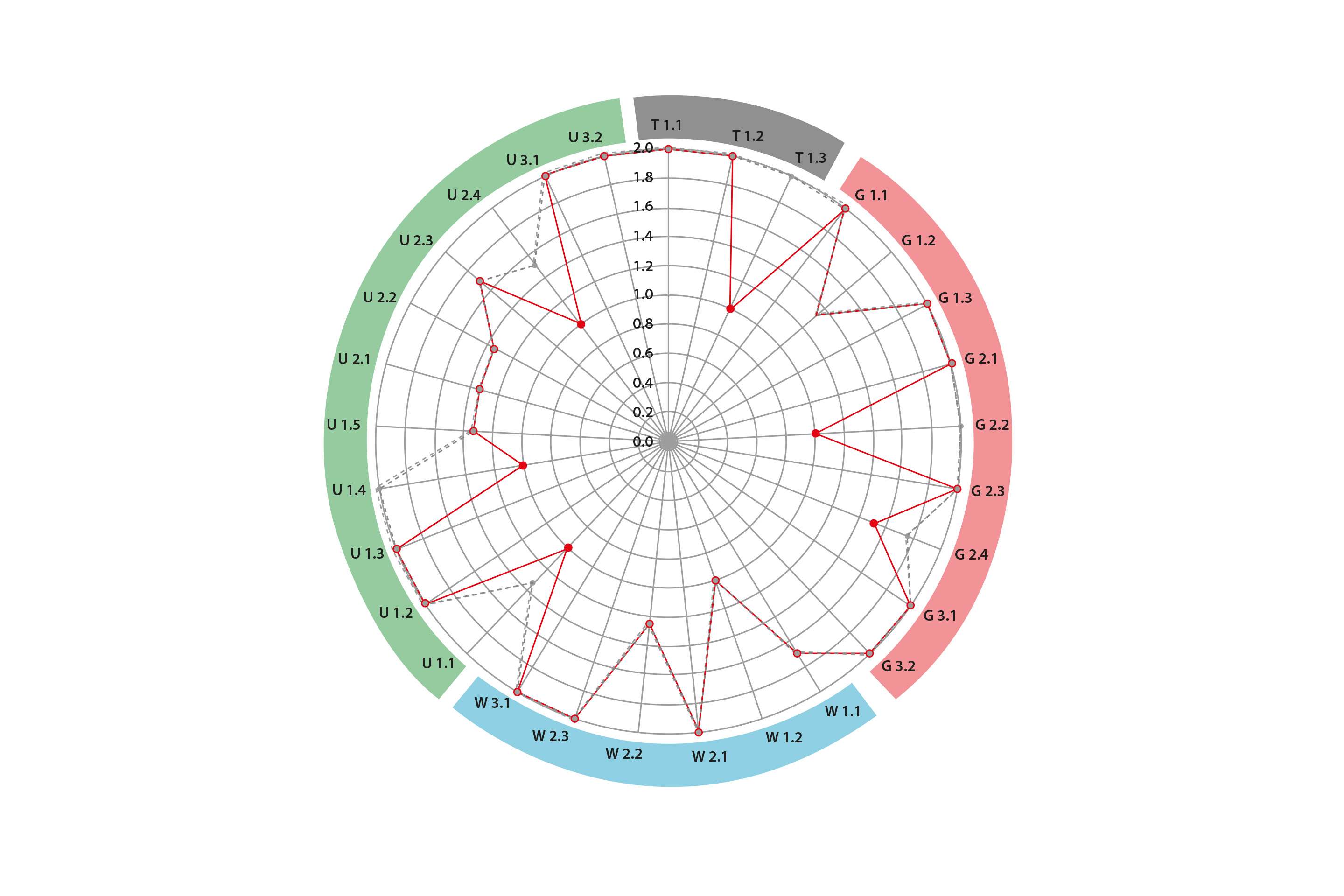
Another example of a structured approach to sustainability is the eastern bypass H18 in La Chaux-de-Fonds (fig. 2), included among reference cases within the SNBS Infrastructure framework. This inclusion highlights the applicability of this standard to civil engineering: initially developed exclusively for buildings, the SNBS system’s subsequent extension to infrastructure formalized a coherent set of environmental, social, and procedural criteria calibrated to civil works. This development represents a significant methodological advancement, allowing sustainability assessment to be integrated from the preliminary design phases, ensuring transparency and comparability of performance, and providing a structured framework for life-cycle-
oriented design.
Although these interventions signify substantial progress in material management and construction-site logistics, they remain aligned with an essentially linear design paradigm – in which impact mitigation derives predominantly from operational optimization rather than systemic reformulation of the structural system. A methodological discontinuity is instead observed in more recent projects, where sustainability principles are integrated directly within the conceptual phase, guiding from inception the structural configuration, material selection, and assembly strategies.
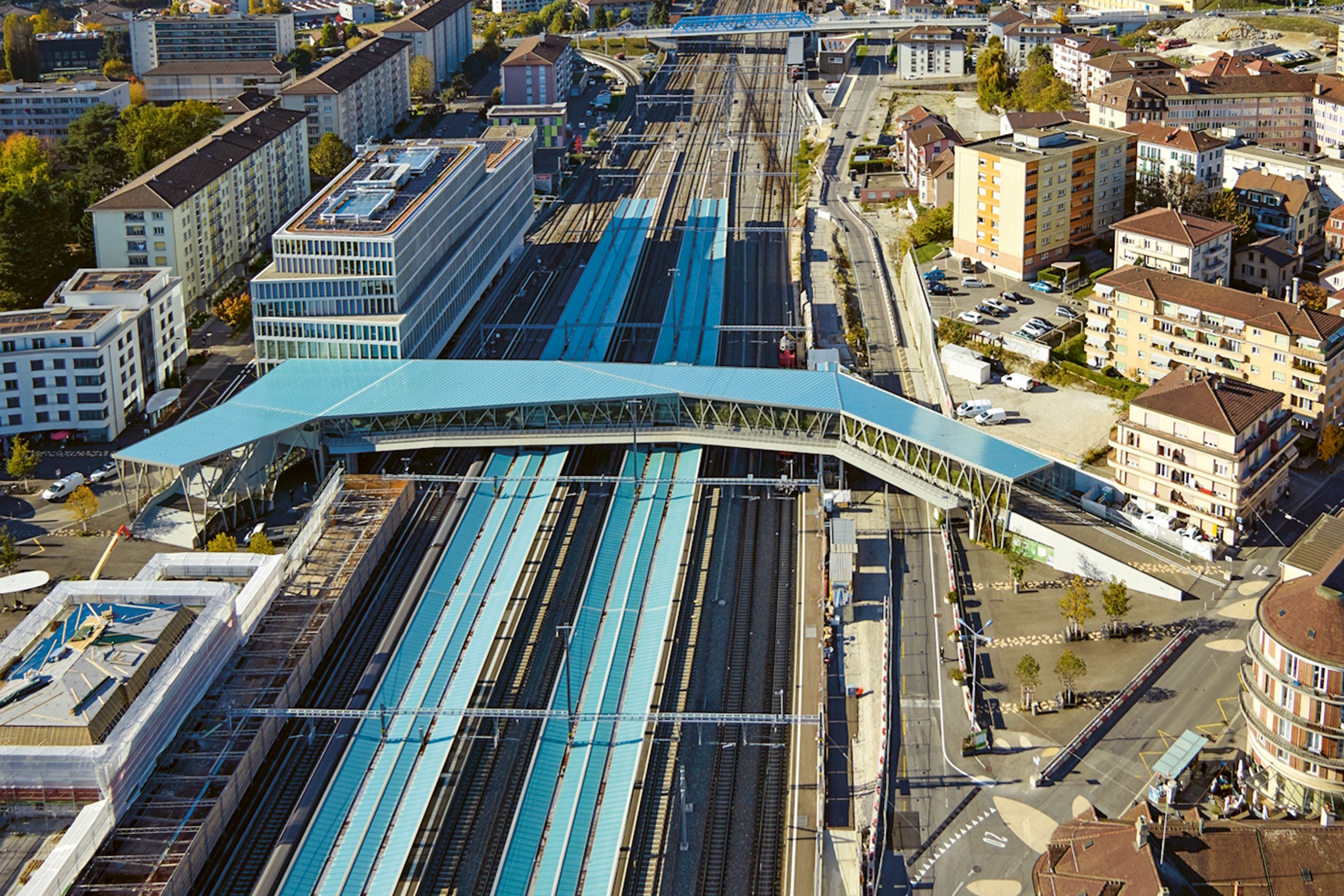
The Green Ribbon urban bridge in Renens (fig. 3) constitutes one of the most advanced examples in which conceptual design decisively influenced the sustainability performance of a structural work. From the preliminary phase, the project was driven by the principle of minimizing material quantities and maximizing structural efficiency – treating lightness, prefabrication, and reversibility not as secondary objectives but as constraints shaping the structural configuration. The choice of a fully prefabricated modular steel structure, assembled dry without in-situ casting, derives directly from these initial decisions – disassembly, rapid assembly, reduced material usage, and enhanced inspectability are not outcomes of subsequent optimizations but direct consequences of the adopted design paradigm. The structural scheme – calibrated to maximize the stiffness-to-weight ratio – significantly reduced structural mass, lowering both steel demand and foundation loads.
It is, in fact, a continuous, folded spatial lattice system, where global stability, response to lateral loads, and thermal expansions are governed entirely by the geometry itself, eliminating the need for additional bracing or complex structural joints. The lateral lattice beams feature slender, Y-shaped compression struts that enhance buckling performance and allow for smaller sections compared with conventional solutions. Optimising the flow of forces and member sizes has enabled a reduction of approximately 20% in the steel mass.
The Passerelle de Cigarières in Yverdon-les-Bains (cfr. fig. 1, p. 13) demonstrates that sustainability principles can be effectively embedded at the structural conception stage. The bridge is fabricated from XCarb steel – with high recycled content and industrial processes powered by renewable energy, achieving a significant reduction in steel production – related emissions. Fully prefabricated and dry-assembled, this approach limits site impact and ensures high-quality control. The Environmental Product Declaration (EPD) of the material indicates a carbon footprint on the order of 0.9–1.2 of 1.2 tCO₂eq/t, highlighting its contribution to overall environmental performance. In this case, sustainability results from the combined effect of material selection and the structural configuration defined during the preliminary phase. The structural scheme was optimized to achieve light and efficient sections, reduce the number of components, and enable rapid assembly, consistent with prefabrication principles. The environmental performance of the work thus stems from a conceptual design oriented toward efficiency, reinforced by the adoption of low-embodied-emission materials. This case also underscores the growing role of material research in renewing the structural engineering repertoire. In addition to recycled steels, technologies enabling more sustainable reinterpretation of traditionally high-impact materials, such as concrete, have been developed. Among these, Carbon Prestressed Concrete (CPC) has been applied in ultra-thin prefabricated slabs and small experimental pedestrian bridges – where slenderness, reduced self-weight, and enhanced durability have significantly decreased material use. These developments should not be regarded as direct alternatives to steel solutions but as exemplars of a rapidly evolving technological landscape, expanding design possibilities and enabling sustainability criteria to be embedded from the conceptual phase.
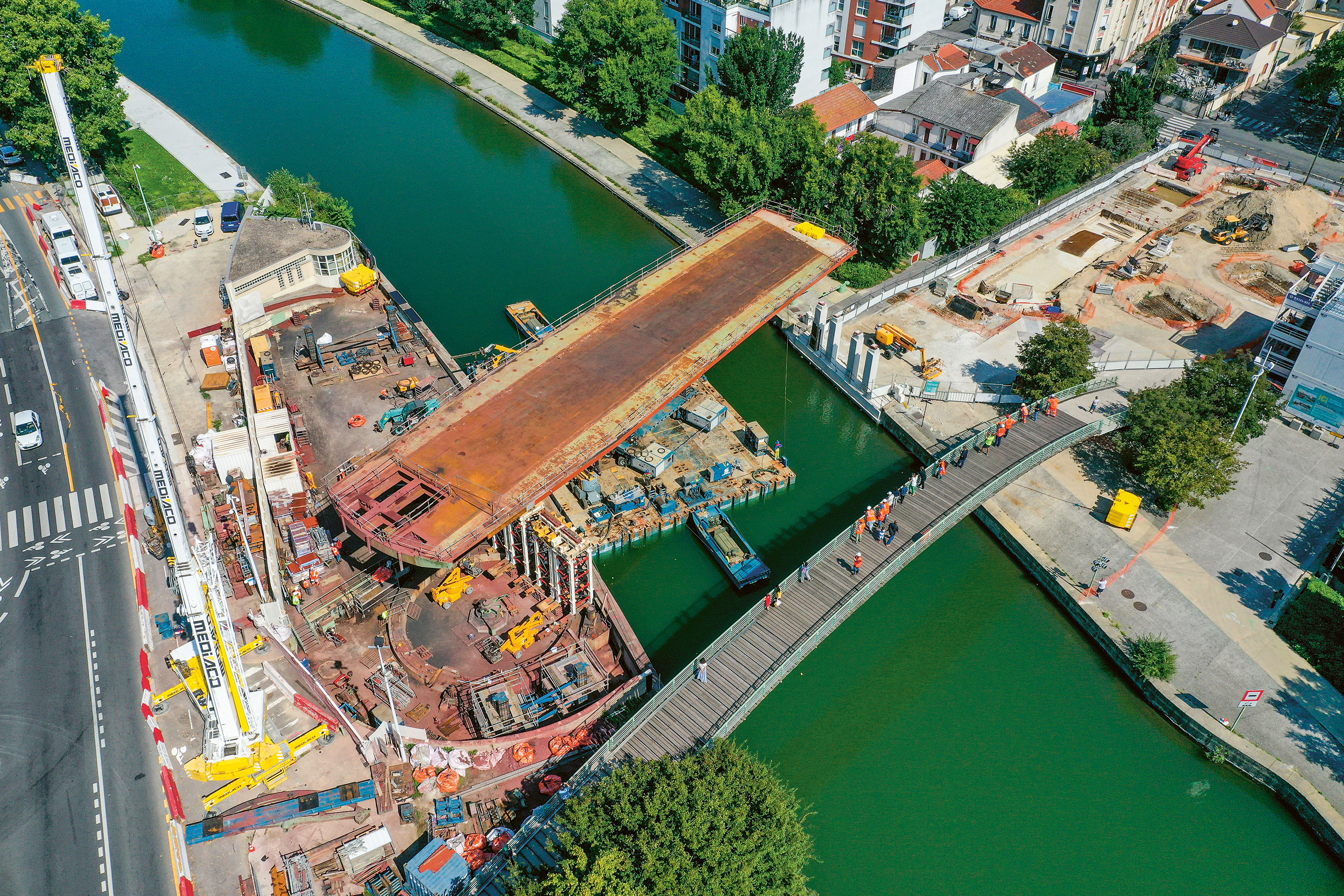
Nonetheless, in the Swiss context, systematic integration of structural reuse in new infrastructure design remains absent. Established circular economy practices are more prevalent in the building sector – where interventions involving the reuse of recovered structural elements (beams, columns, slabs, prefabricated panels, or metallic components) have multiplied in recent years, with varying degrees of transformation and adaptation, as discussed in other contributions in this issue. In contrast, infrastructures such as bridges, walkways, and hydraulic works rarely adopt disassembly, adaptability, or regeneration strategies – and even less frequently implement new infrastructure using structural elements sourced from selective dismantling or prior use cycles. This absence is particularly significant when compared with international experiences demonstrating full technical, environmental, and economic feasibility. Among the most notable examples in Europe, the Tan House Footbridge project exemplifies the reduction of environmental impact through the use of reclaimed materials. The pedestrian bridge was built using steel that had been previously produced but never used on site—industrial surplus: prefabricated, certified materials ready for deployment but not yet incorporated into any other structure. This strategy significantly reduces embodied energy and associated emissions compared with an equivalent design using new steel. The project illustrates how second-life materials can be rigorously assessed and certified through established LCA methodologies, offering a replicable model for future infrastructure projects. An even more radical approach characterizes the Olympic pedestrian bridges of Paris 2024 (fig. 4) – entirely constructed from existing on-site structural elements, with no new production. This strategy, relying on the availability and reinterpretation of existing material assets, achieved an almost zero-emission footprint and constitutes an advanced example of full-reuse-oriented design.
These cases illustrate that, within Europe, infrastructure projects based on reuse are increasingly widespread – indicating a transition toward construction models more aligned with circular economy principles. In Switzerland, the adoption of such practices remains marginal, particularly within public works. This gap reflects not only operational challenges but also regulatory, institutional, and cultural barriers that limit the integration of structural reuse into design processes. The causes are not exclusively technical – the current regulatory framework, including SIA standards, does not provide explicit guidance or codified procedures for the use of reused structural components. Additionally, insurance models tend to exclude or restrict liability coverage for non-new elements, even when appropriately verified and certified. Furthermore, professional fee calculation systems, often based on volumetric or quantitative metrics, rarely incentivize circular design models – which require additional time for preliminary analyses, material inventories, suitability assessments, and interdisciplinary coordination. From an educational perspective, the situation is similar – structured courses on LCSA, EPDs, S-ROI (Social Return on Investment), or social assessment of works are largely absent from core civil engineering curricula, and concepts such as Baukultur, use value, adaptability, or disassemblability are often marginal and seldom translated into operational competencies for future designers. Another factor concerns client culture, public and private alike – which tends to regard sustainability as an acceptable constraint only when it produces immediate economic returns or direct reputational advantages. The absence of evaluative tools, as in tenders and procurement procedures, prevents recognition and reward for solutions generating collective, long-term benefits – such as reduced future impacts, extended service life, and valorization of existing material assets.
Nevertheless, the analyzed cases demonstrate that sustainable, measurable, and life-cycle-oriented structural design is technically feasible today. For it to become standard practice rather than an exception, systemic evolution is required – updating the regulatory framework, adapting insurance models, reforming contractual instruments, recognizing the value of the project from its initial stages, and training engineers capable of operating according to a complex, intertemporal logic. Only in this manner can the sector reliably integrate reuse, durability, and adaptability as standard components of structural design.
Notes
1 Gozzi, «Integrating Sustainability Indicators».
2 Frangopol, «Bridge Life-Cycle»; Milic´, «Life cycle assessment of the sustainability»; Romo, «Conceptual Design of Bridges».
3 Reike, «The Circular Economy».
4 Navarro, «Life cycle sustainability assessment»; Zabalza Bribián, «Life Cycle Assessment».
5 Akinade, «Design for Deconstruction»; Vicente, «Design for Sustainability Tools».
References
– Akinade, Olugbenga O., Lukumon O. Oyedele, Saheed O. Ajayi, et al. «Design for Deconstruction (DfD): Critical Success Factors for Diverting End-of-Life Waste from Landfills». Waste Management 60 (2017): 3-13 https://doi.org/10.1016/j.wasman.2016.08.017.
– Frangopol, Dan M., You Dong, & Samantha Sabatino. «Bridge Life-Cycle Performance and Cost: Analysis, Prediction, Optimisation and Decision-Making». Structure and Infrastructure Engineering 13 (10), (2017): 1239–57. https://doi.org/10.1080/15732479.2016.1267772.
– Gozzi, Valeria, & Leidy Guante Henriquez. «Integrating Sustainability Indicators in Conceptual Design of Footbridges: A Decision-Support Framework for Environmental, Economic, and Structural Performance». Sustainability 17 (10), (2025): 4562. https://doi.org/10.3390/su17104562.
– Milic´, Ivana, & Jelena Bleiziffer. «Life cycle assessment of the sustainability of bridges: methodology, literature review and knowledge gaps». Frontiers in Built Environment 10 (2024): 1410798. https://doi.org/10.3389/fbuil.2024.1410798.
– Navarro, Ignacio Javier, Vicent Penadés-Plà, David Martínez-Muñoz, Rasmus Rempling, & Víctor Yepes. «Life cycle sustainability assessment for multi-criteria decision making in bridge design: a review». Journal of civil engineering and management 26 (7), (2020): 690–704. https://doi.org/10.3846/jcem.2020.13599.
– Reike, Denise, Walter J.V. Vermeulen, & Sjors Witjes. «The Circular Economy: New or Refurbished as CE 3.0? — Exploring Controversies in the Conceptualization of the Circular Economy through a Focus on History and Resource Value Retention Options». Resources, Conservation and Recycling 135 (2018): 246–64. https://doi.org/10.1016/j.resconrec.2017.08.027.
– Romo, José. «Conceptual Design of Bridges and Sustainability». (2019) 415–24. https://doi.org/10.2749/guimaraes.2019.0415.
– Vicente, José, & David Camocho. «Design for Sustainability Tools: Definition and Criteria towards Practical Use». Journal of Cleaner Production 479 (2024): 144041. https://doi.org/10.1016/j.jclepro.2024.144041.
– Zabalza Bribián, Ignacio, Antonio Valero Capilla, & Alfonso Aranda Usón. «Life Cycle Assessment of Building Materials: Comparative Analysis of Energy and Environmental Impacts and Evaluation of the Eco-Efficiency Improvement Potential». Building and Environment 46 (5), (2011): 1133–40. https://doi.org/10.1016/j.buildenv.2010.12.002.