

Adaptive metamorphosis
bartke pedrazzini architetti | De Giorgi & Partners Ingegneri Consulenti
Testo in italiano al seguente link
Ca’ del Tero, Casa Cortile, Minusio TI
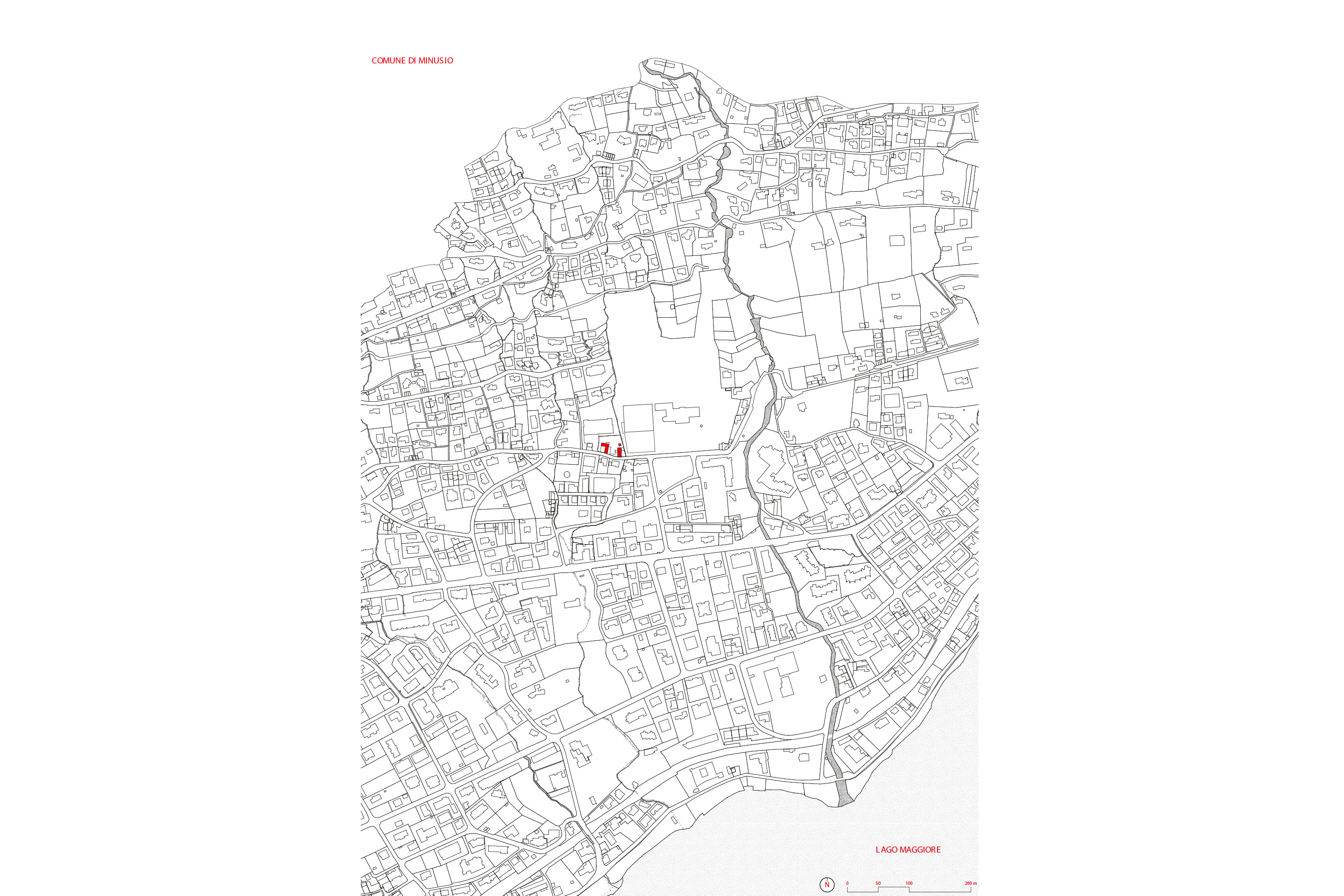
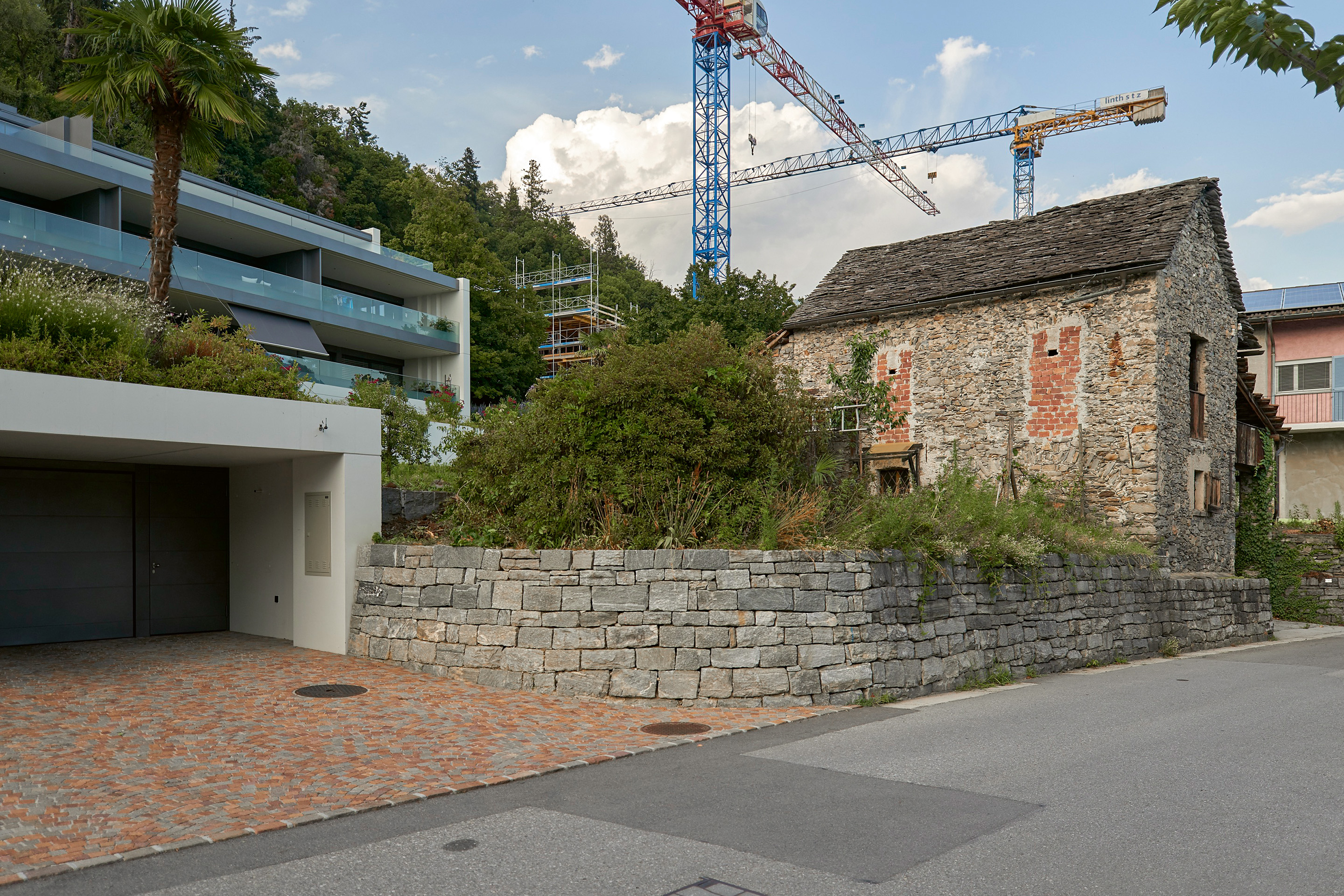
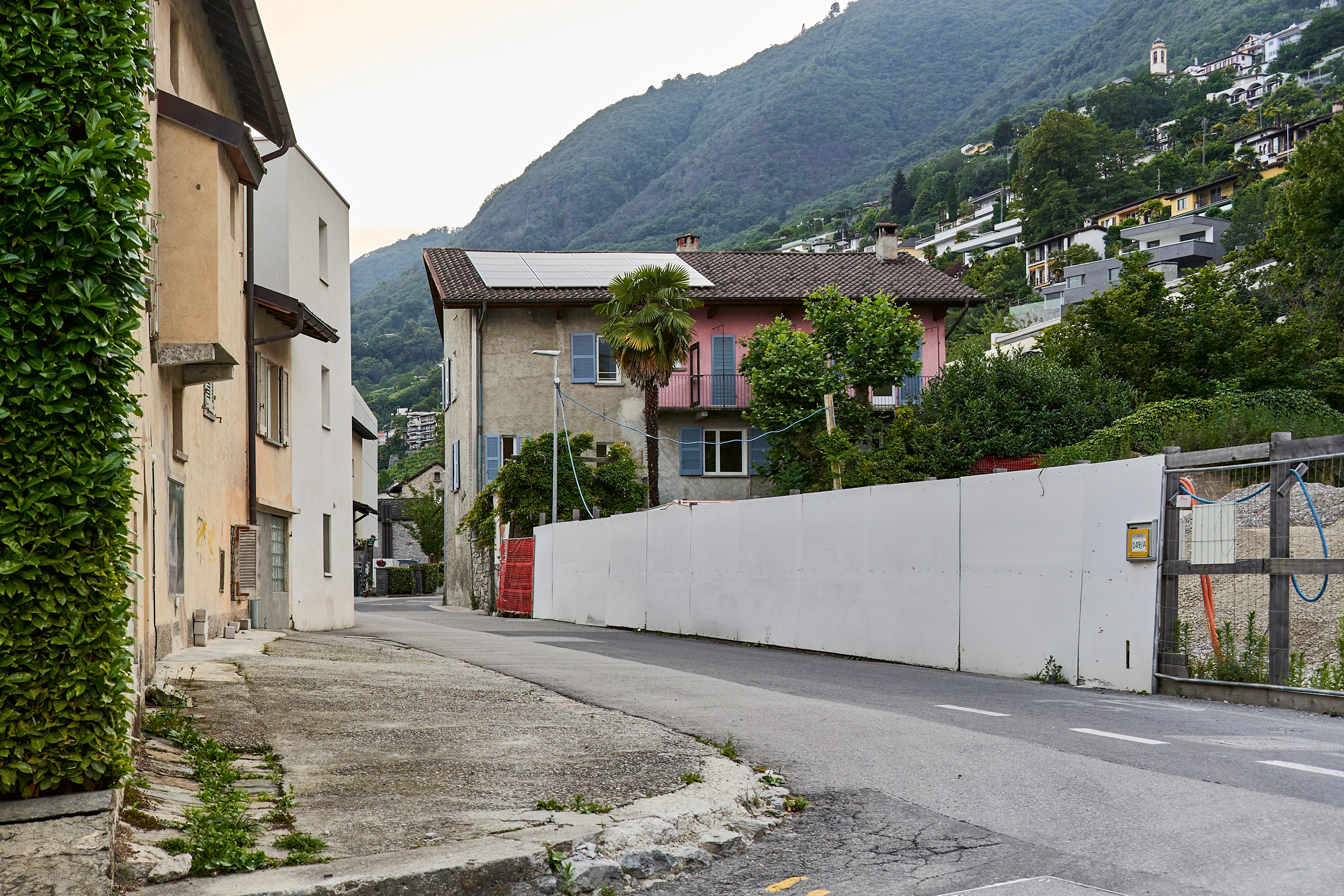
The intervention occupies a plot adjacent to a small stream in Minusio. As in other parts of Ticino, the surrounding area has in recent decades seen the disappearance of defining elements such as stone houses and vineyards, replaced by a heterogeneous and disordered fabric of condominiums, single-family homes, and garages.
Observing this situation, the architects conceived the two buildings as «repair devices», combining a search for relationships with the urban and natural landscape with the demands of contemporary living.
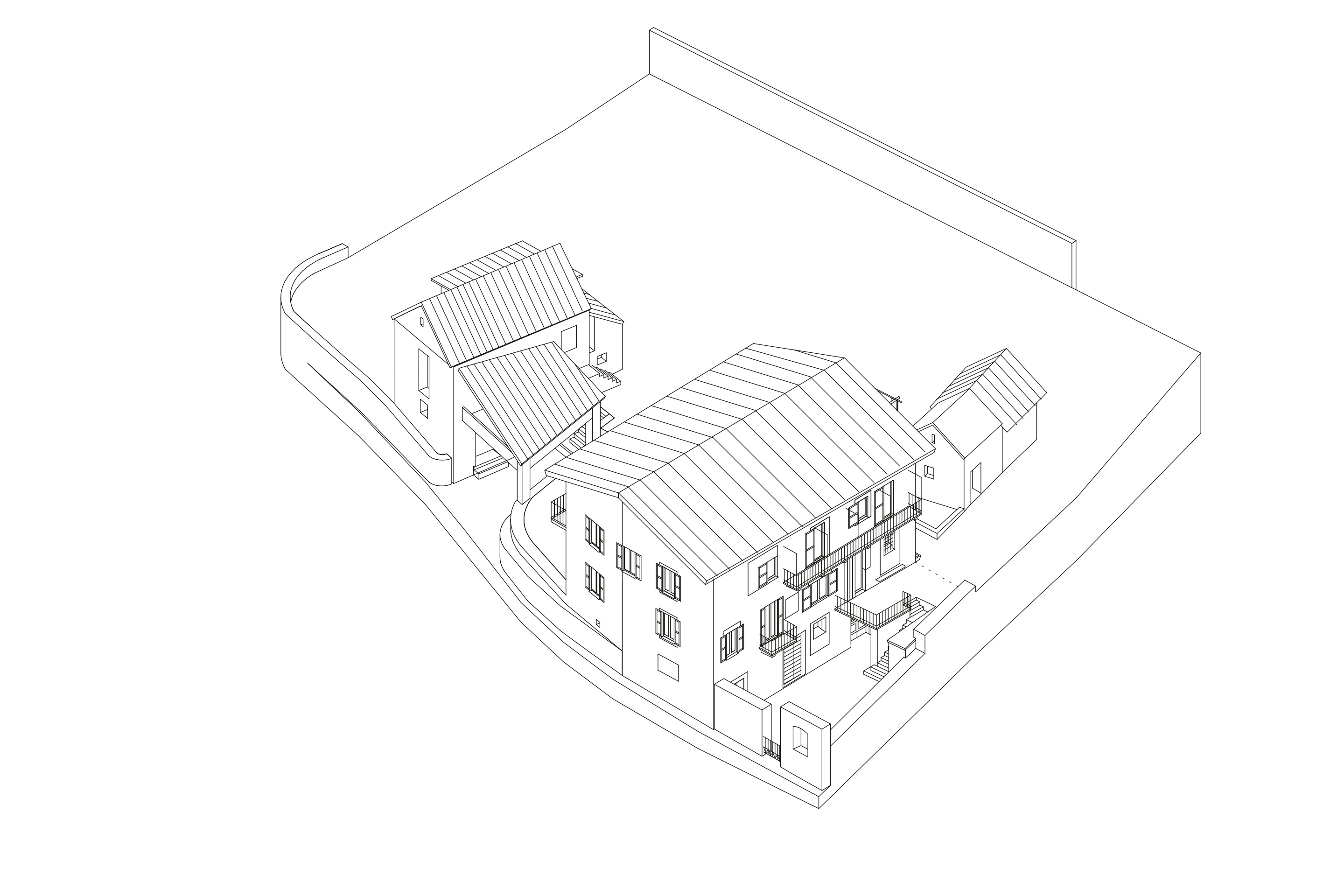
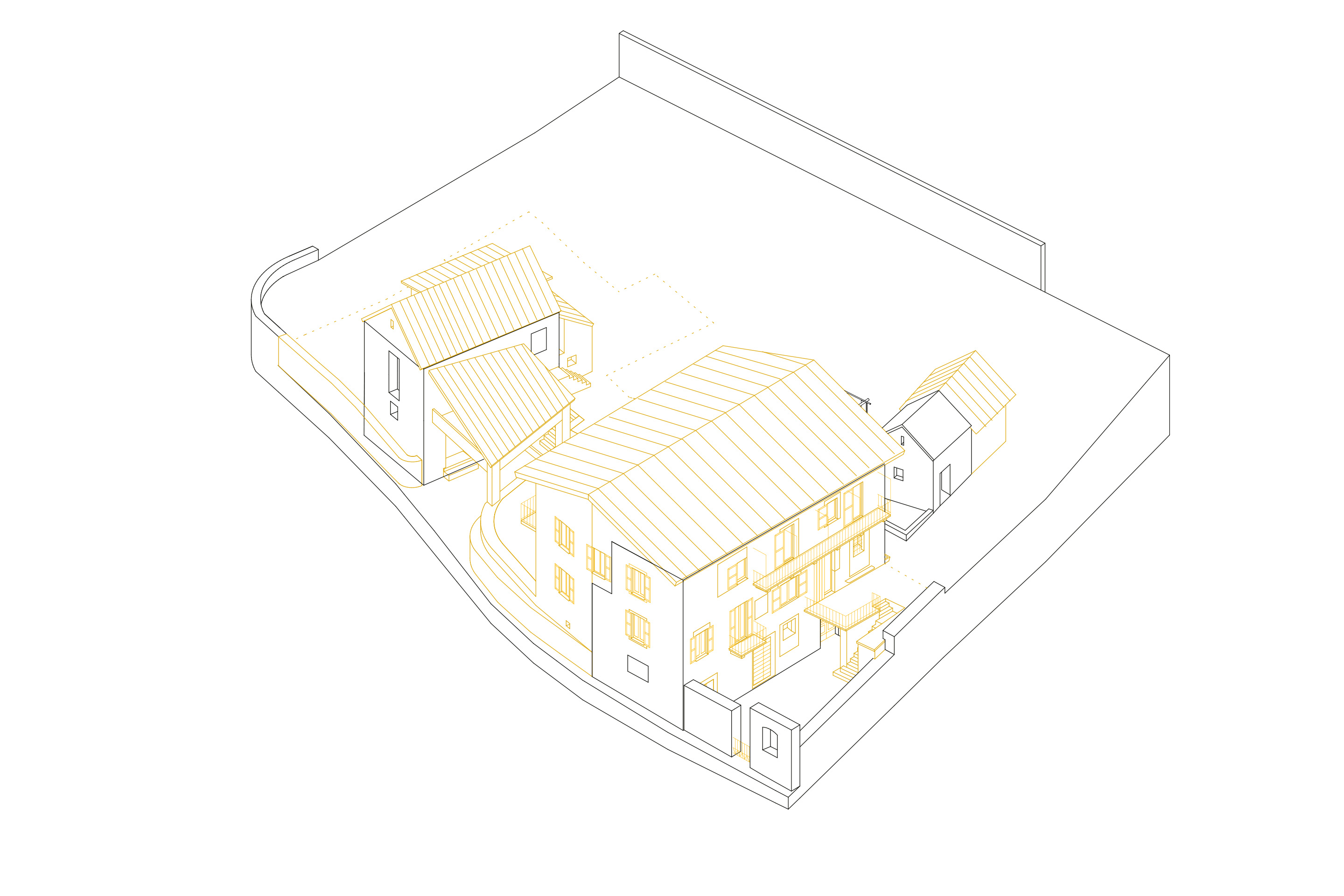
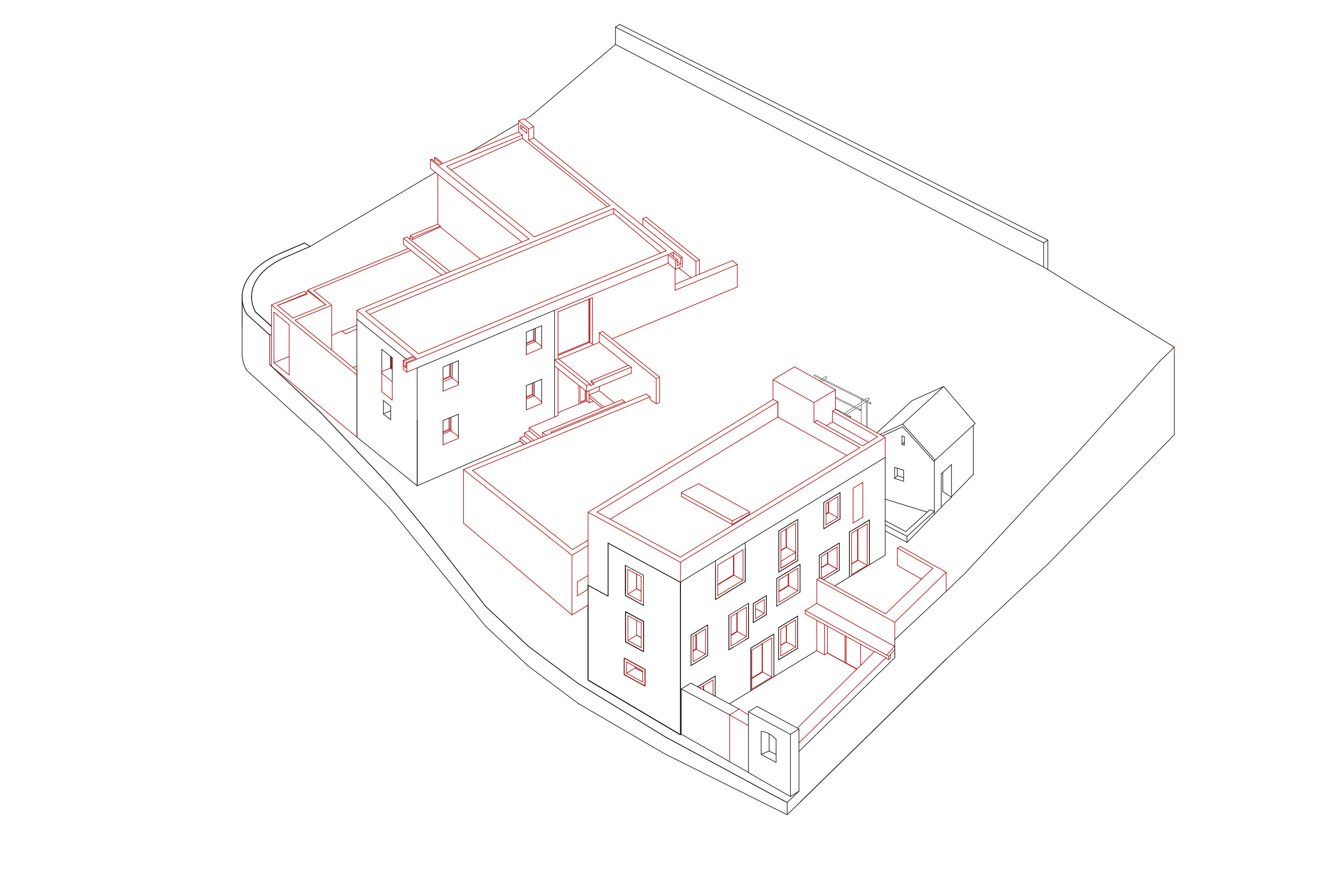
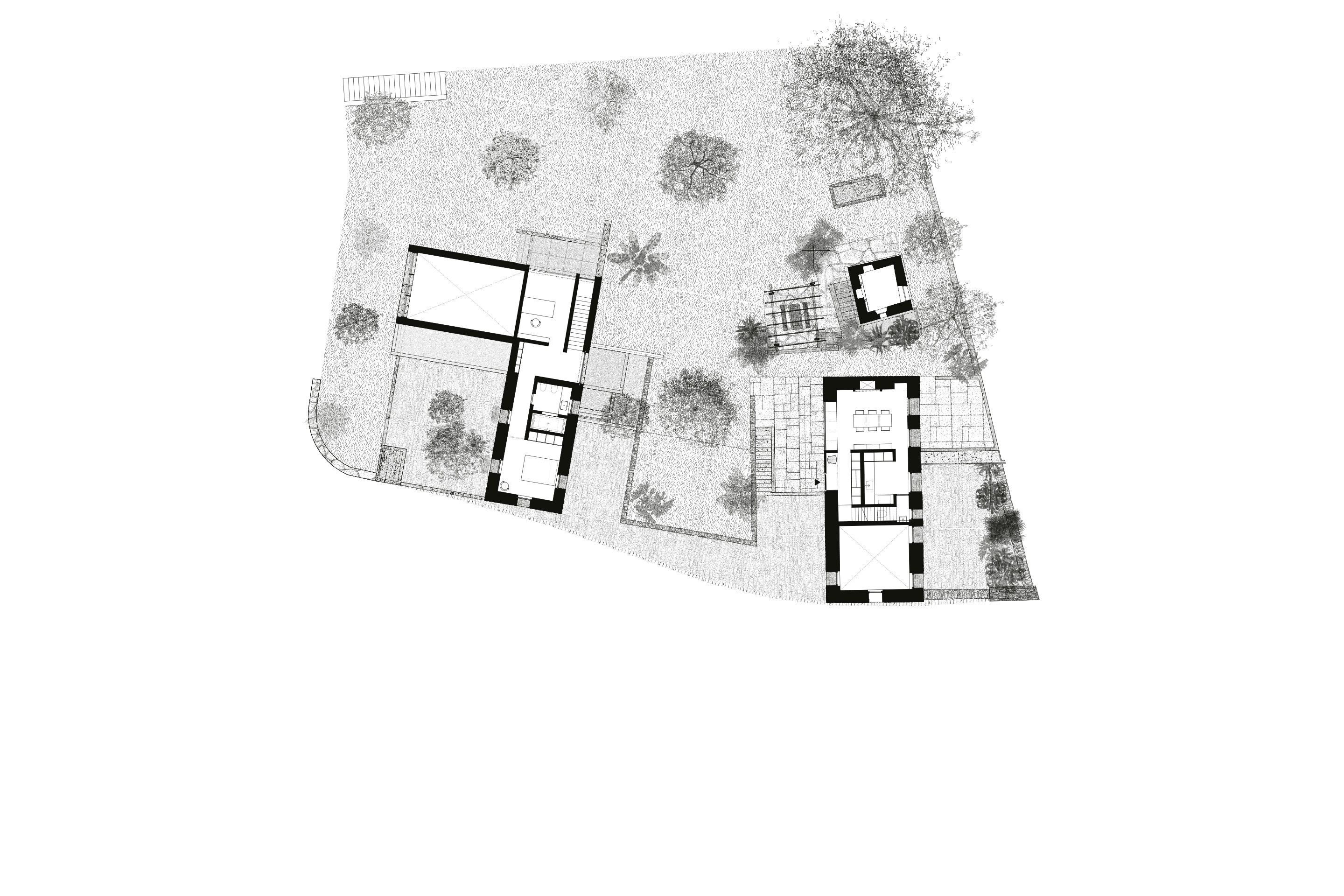
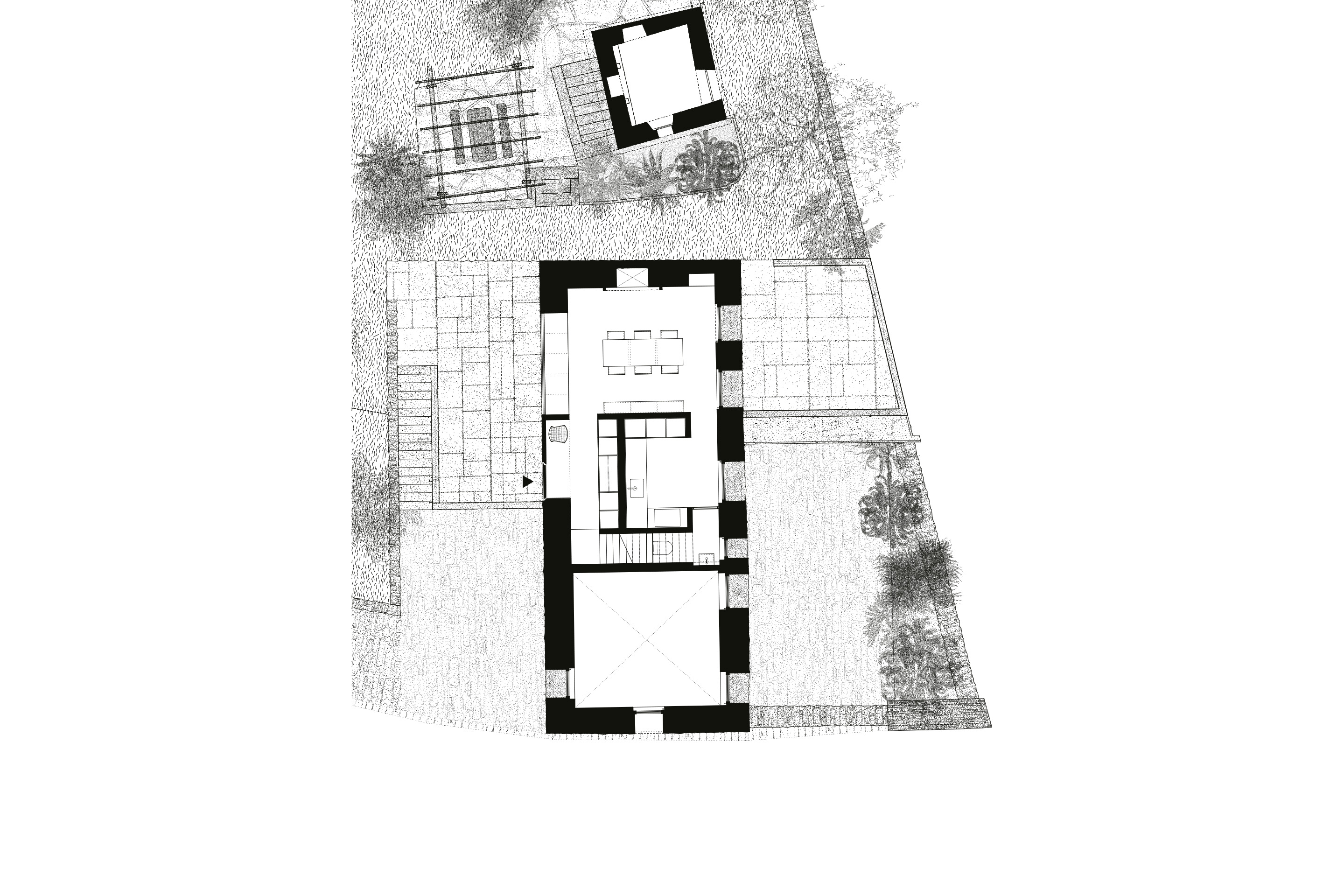
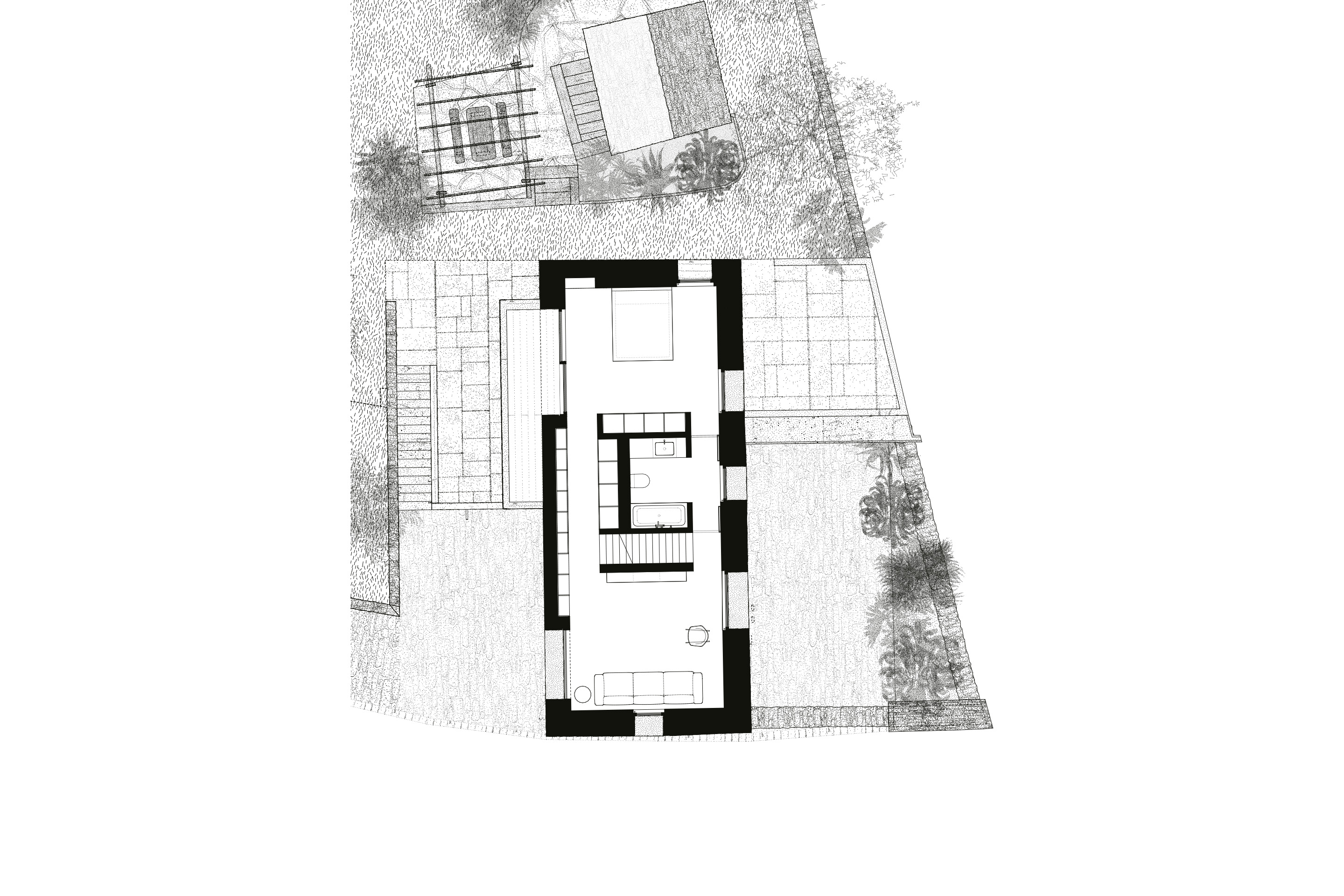
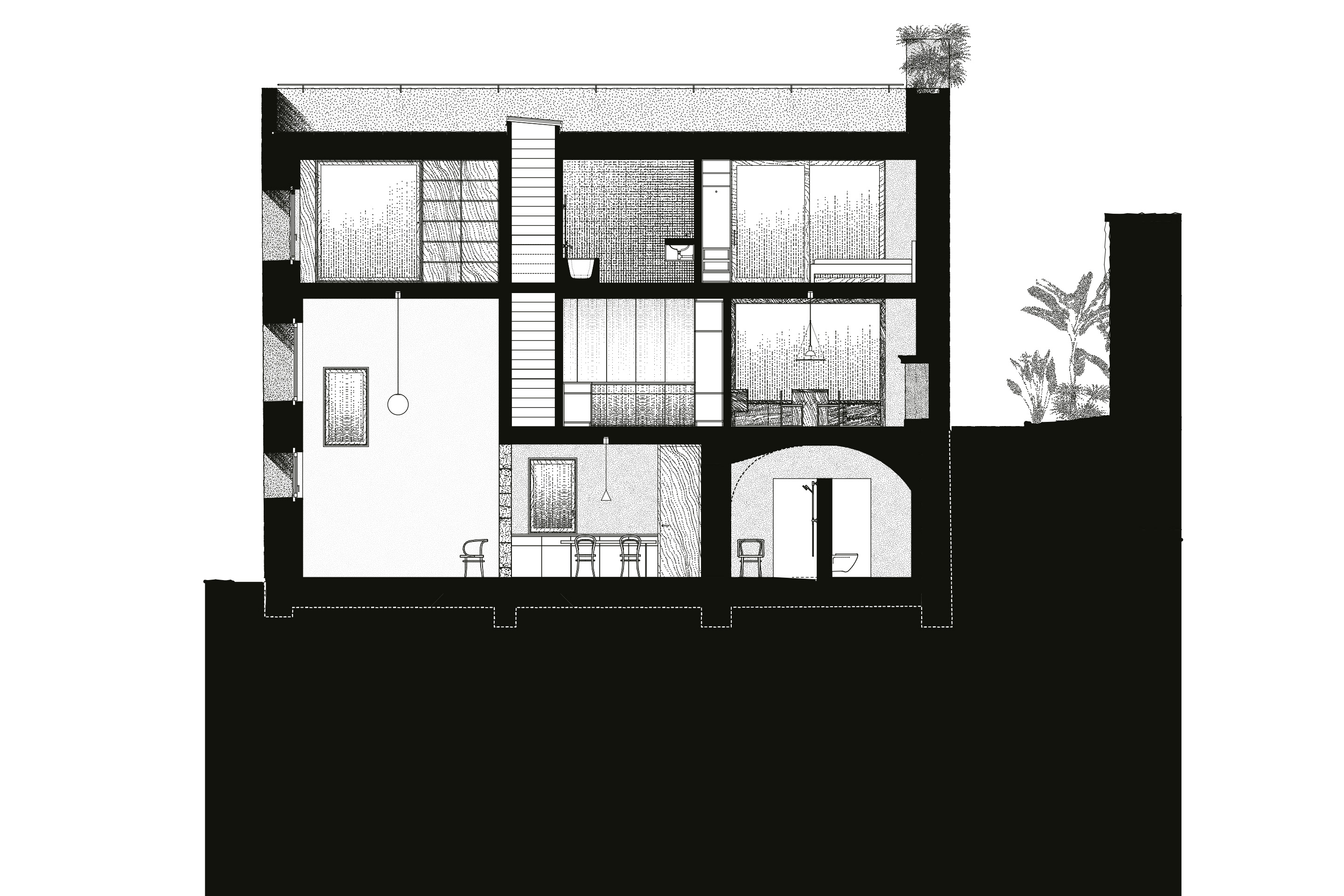
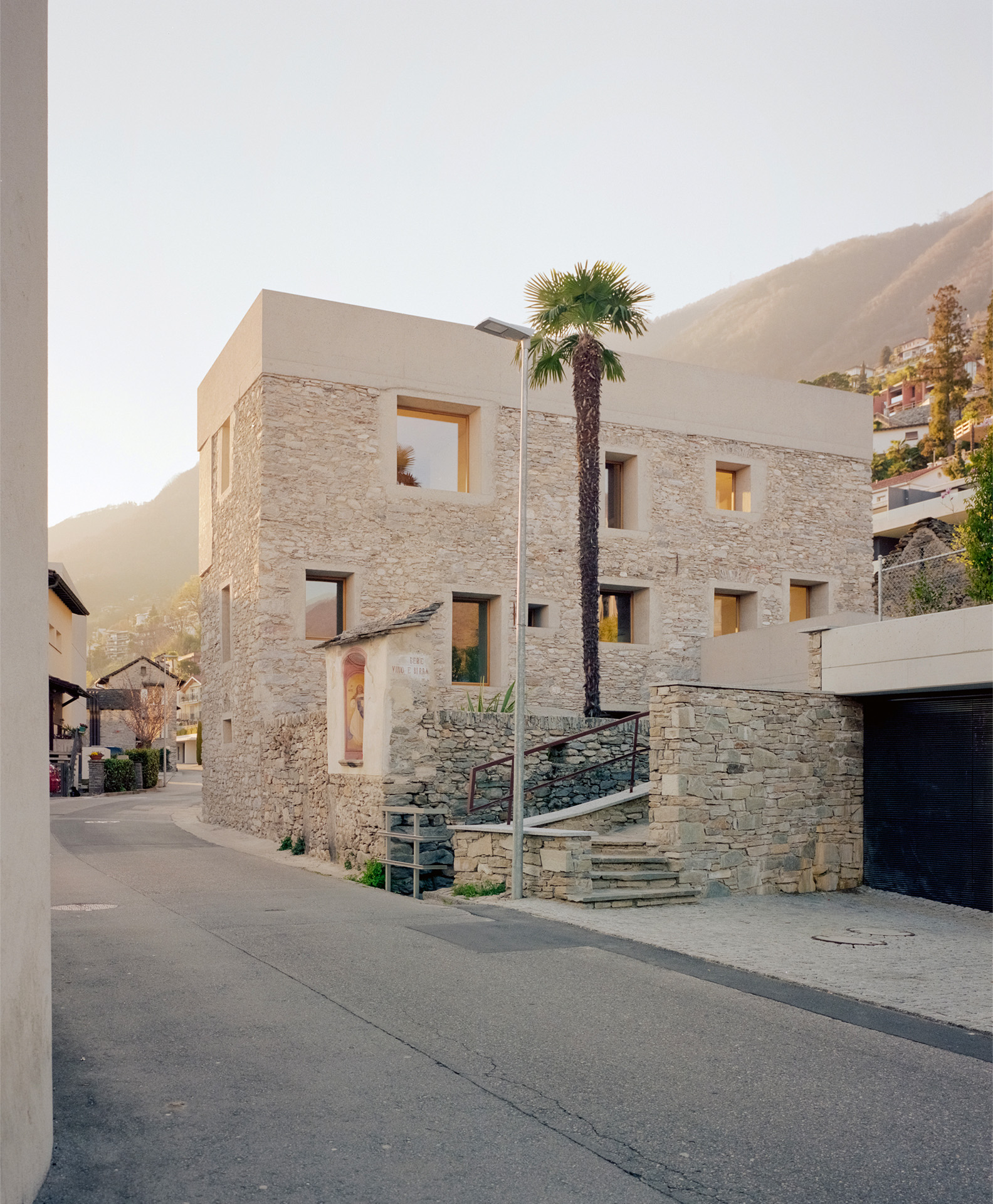
The first intervention involved the demolition and partial renovation of the structure on the eastern side of the plot, which had accumulated multiple additions and extensions since the 1950s, compromising its legibility. The demolition, which removed these superfluous elements and reduced the building’s volume, restored a unified configuration. The house, now named Ca’ del Tero, contains a ground-floor apartment with living areas in the central block and a bedroom with an additional bathroom in the lateral wings, while the first and second floors accommodate a two-level apartment, with the lower level for living spaces and the upper level for the sleeping areas and the living room.
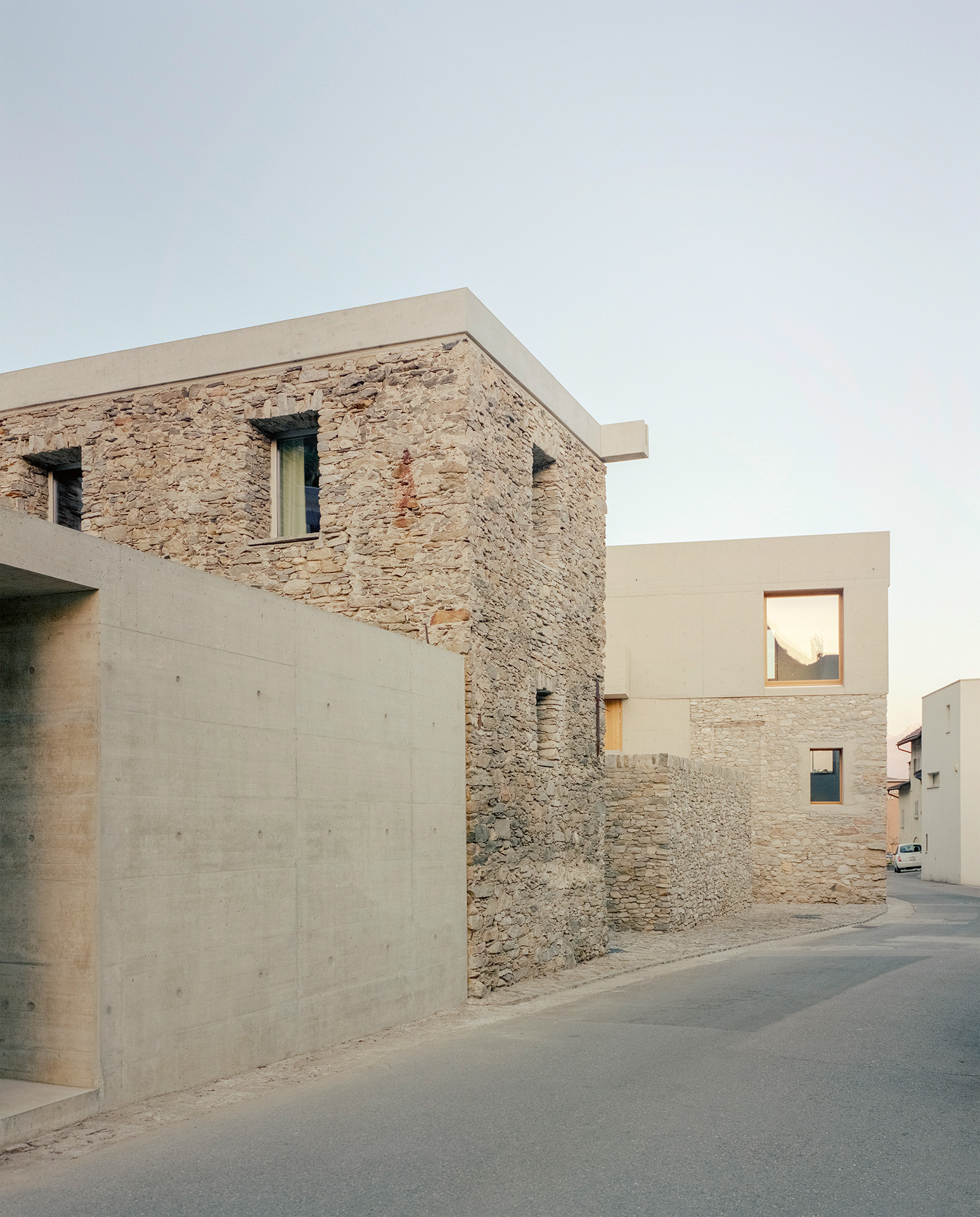
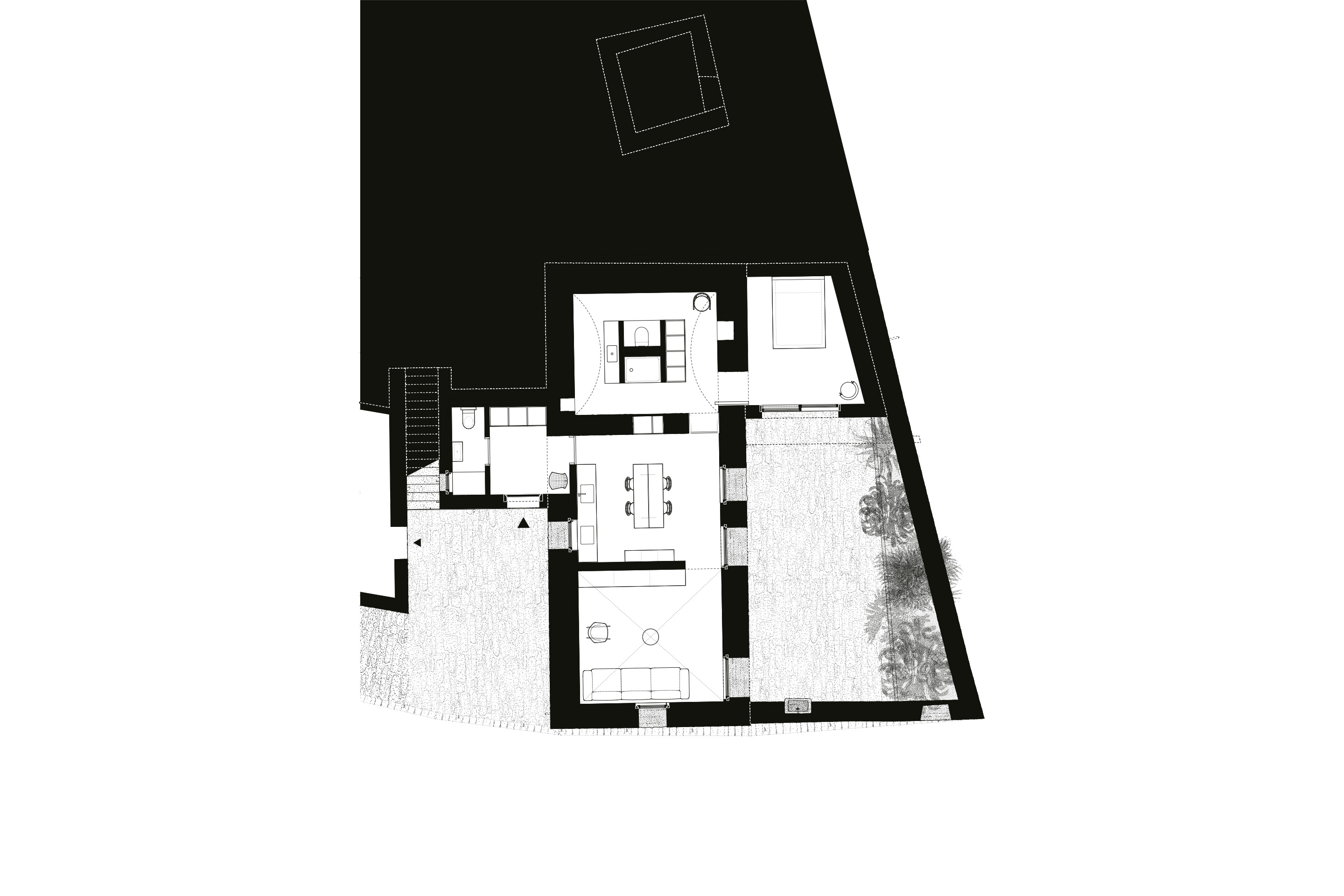
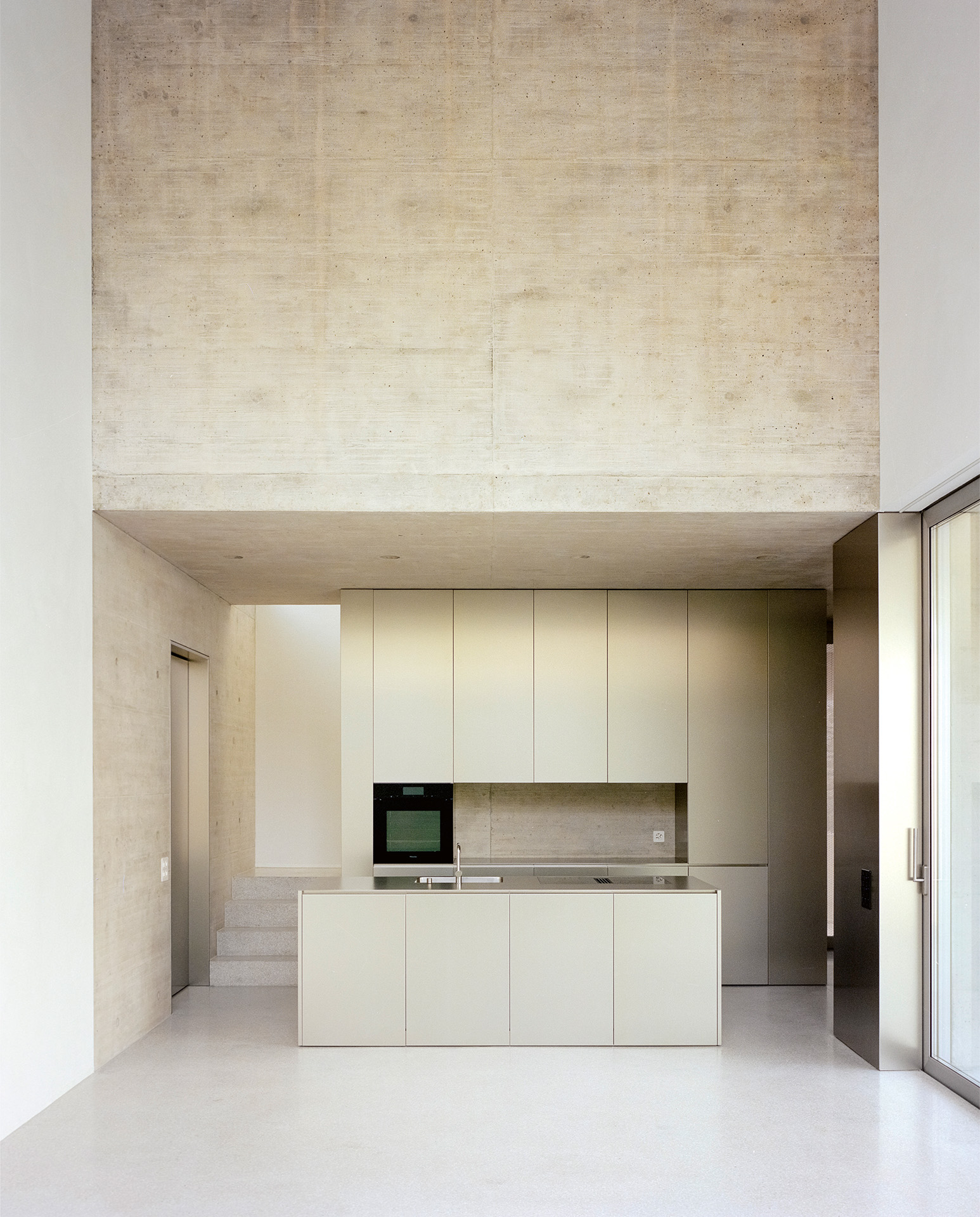
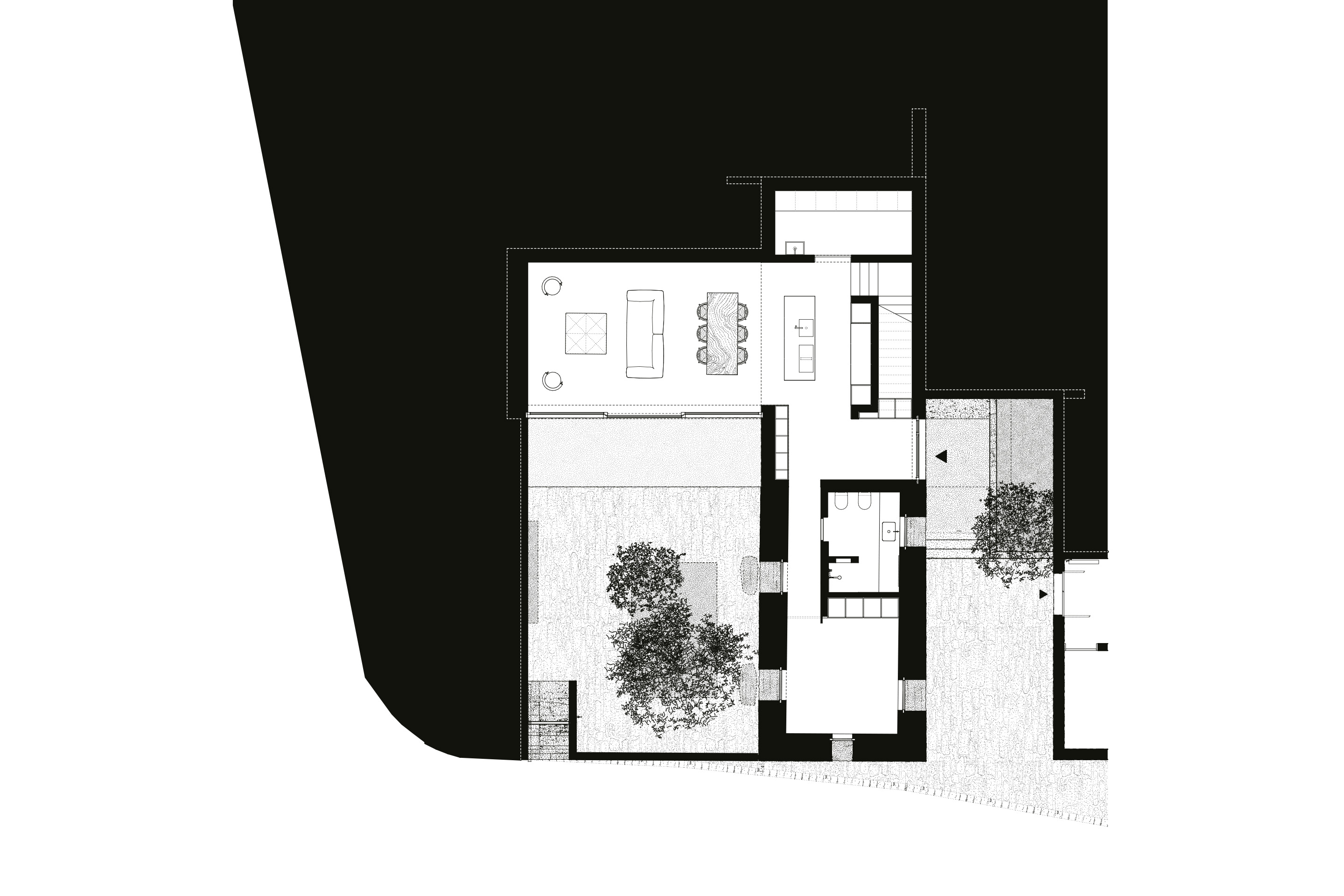
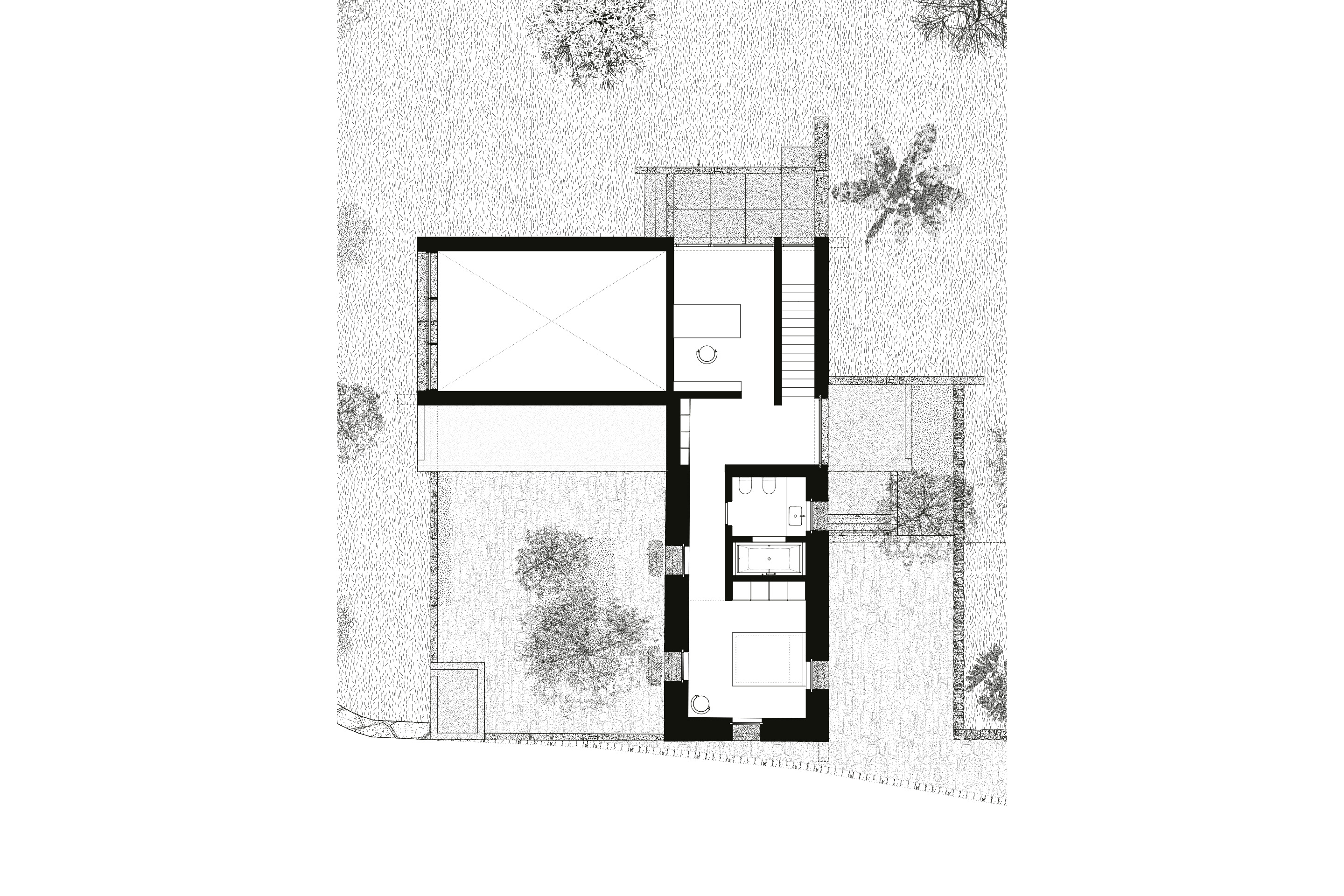
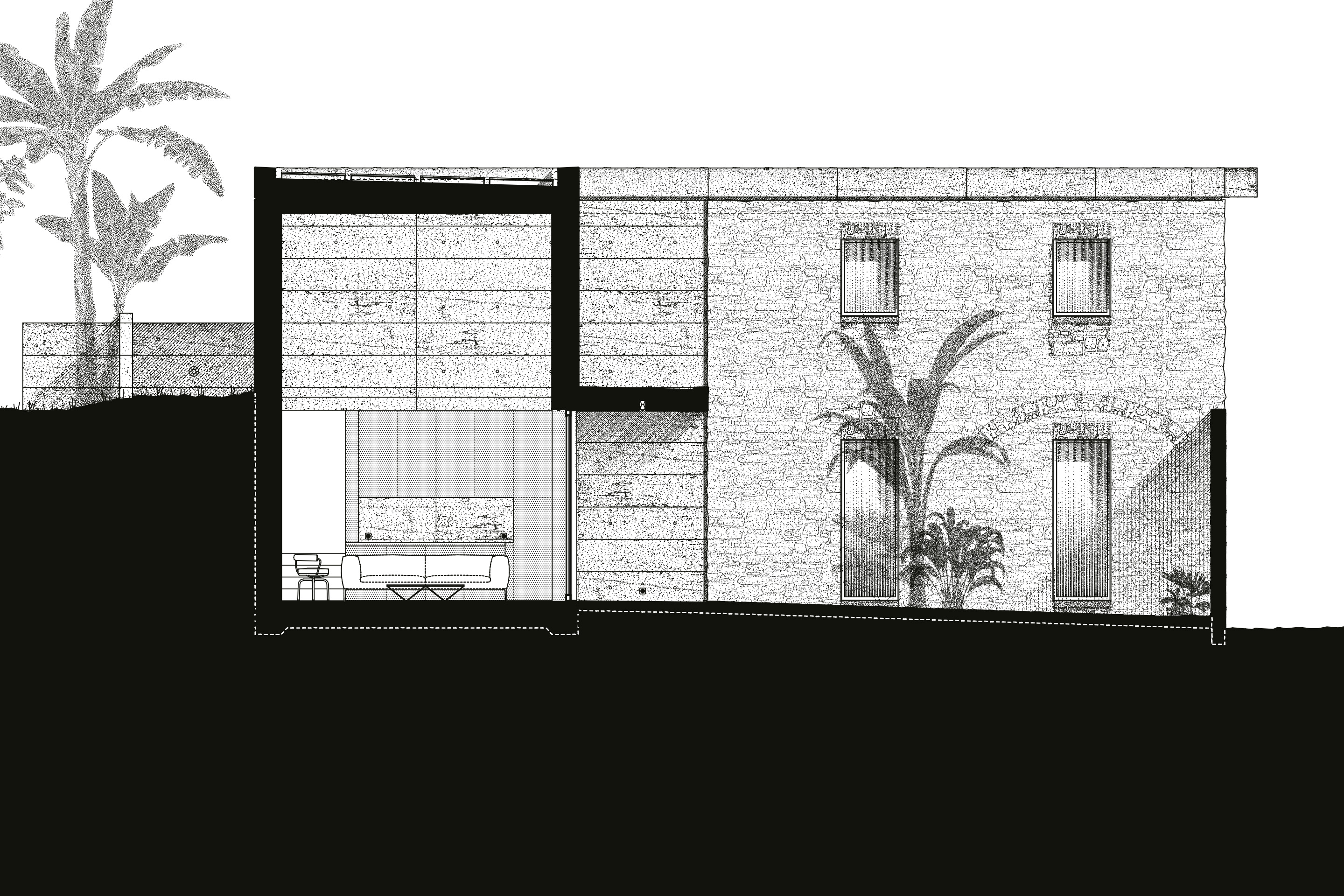
The second intervention addresses an abandoned rural building over a century old, adjacent to the first house, transformed through the addition of a new concrete structure attached to the existing fabric. This building accommodates the double-height living and dining area, the kitchen, the services, the atrium, and study/bedroom on the ground floor, with a study, bedroom, and bathrooms on the first floor.
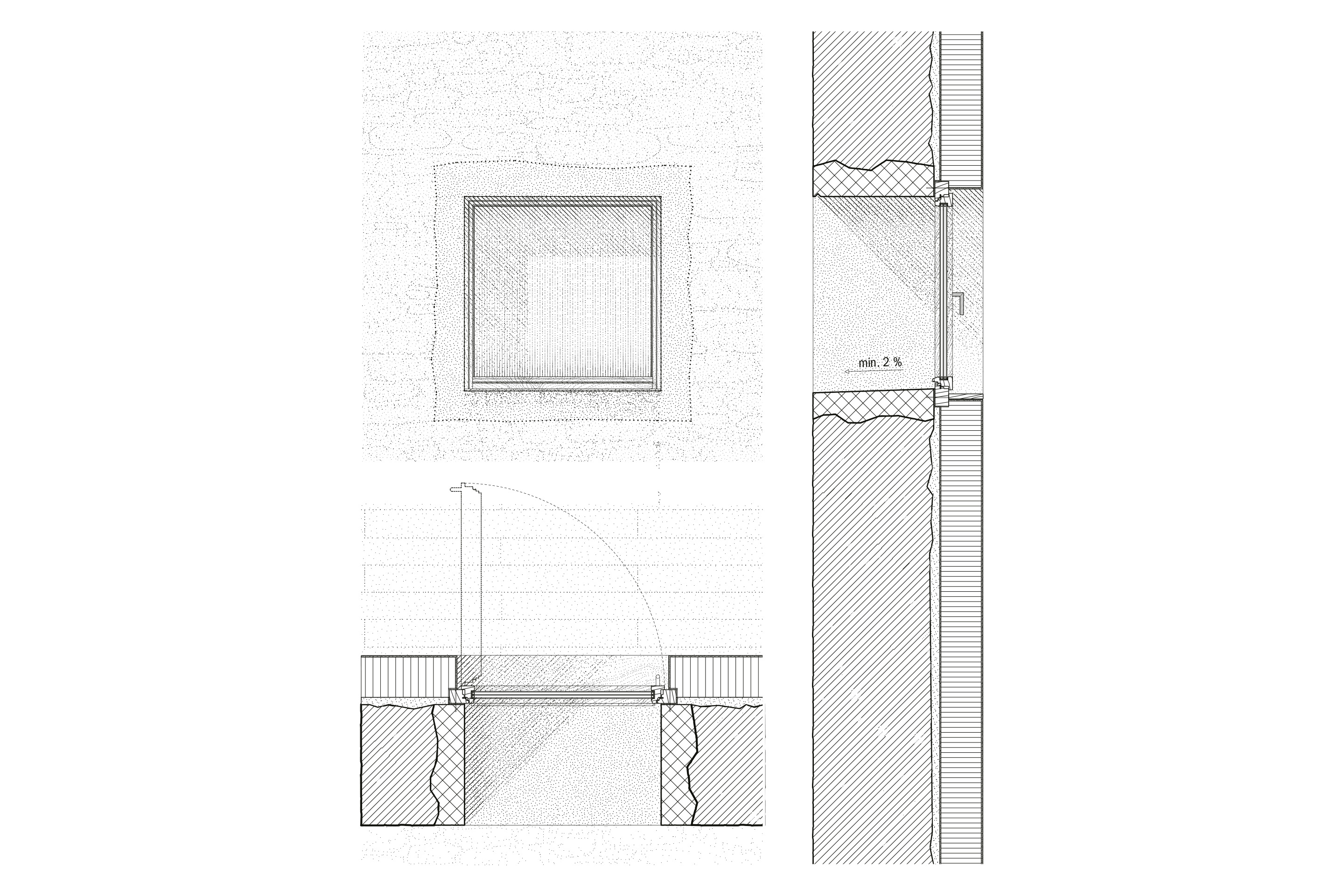
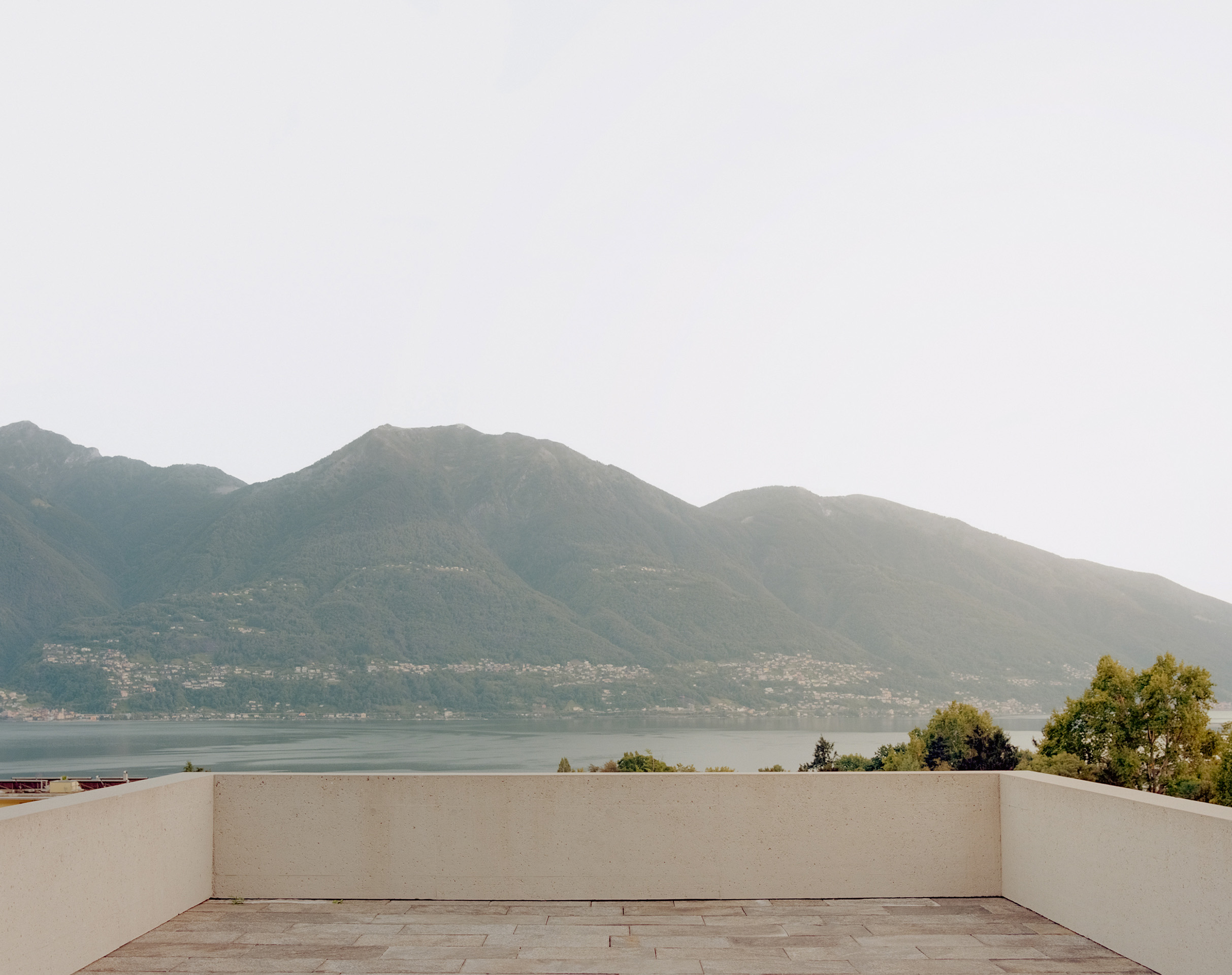
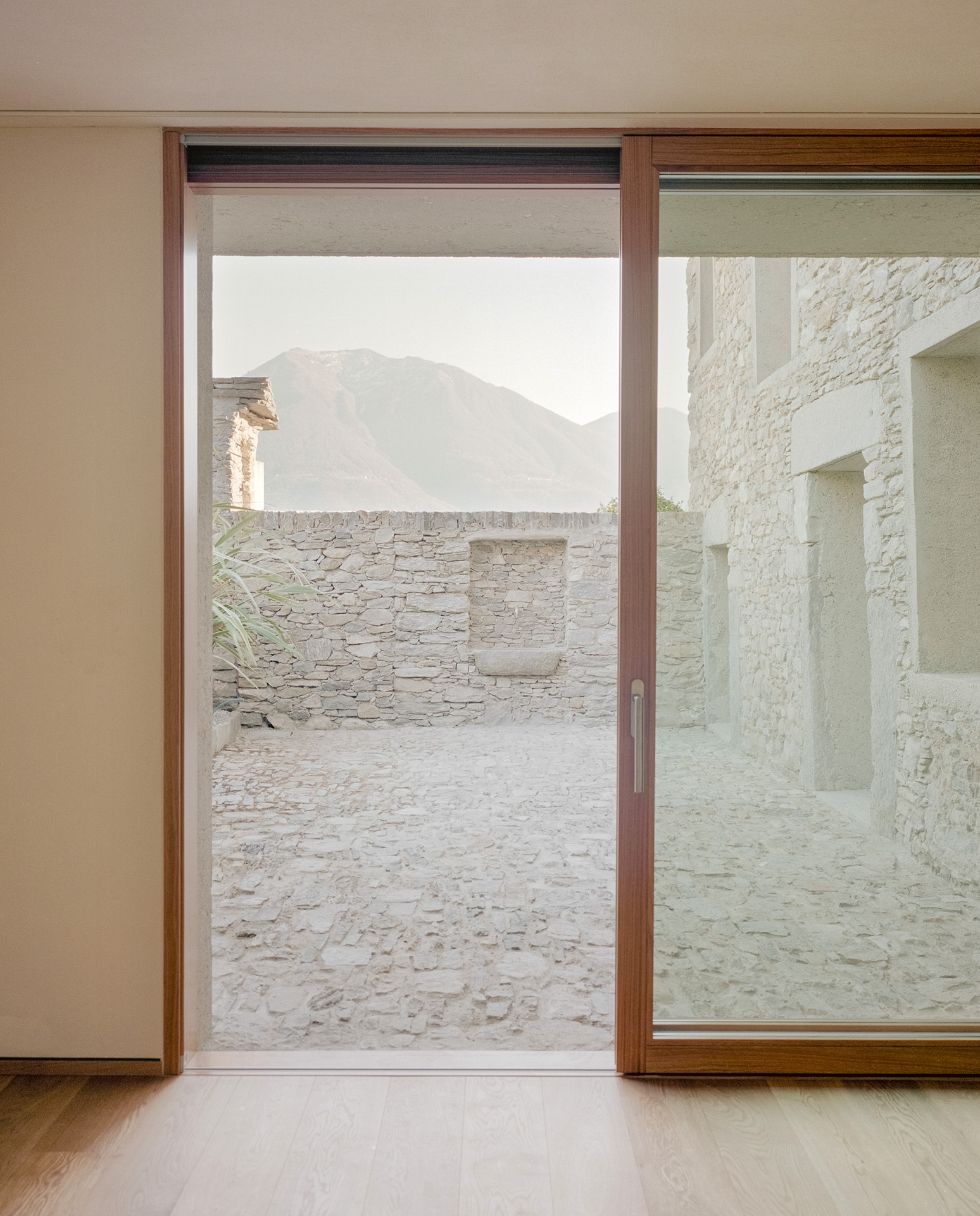
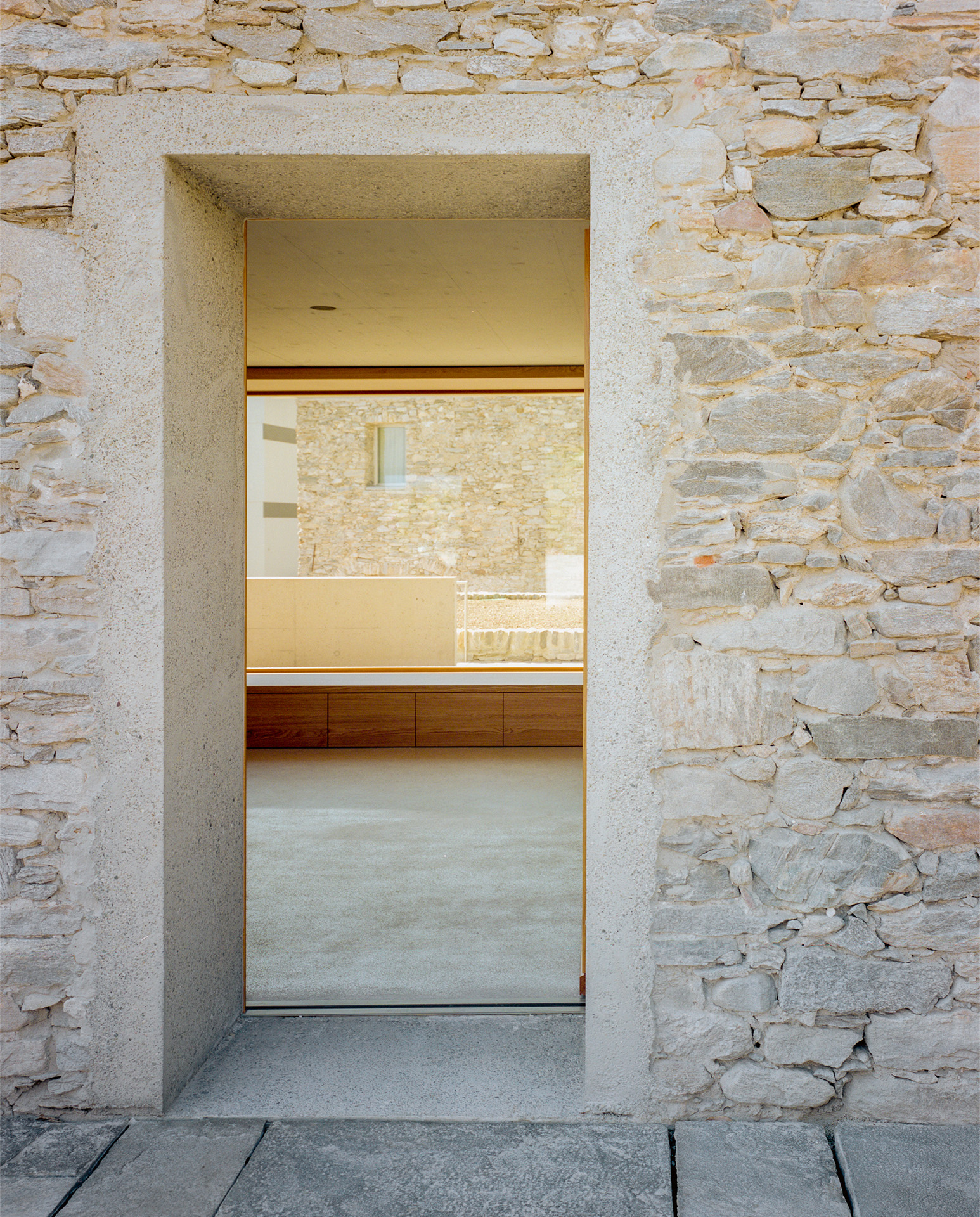
The internal changes are reflected in the façades. For the Ca’ del Tero, the arrangement of the openings – kept in their original positions – unfolds across stone surfaces brought back to light through the removal of plaster. Casa Cortile extends these material choices, yet adopts a more uniform system of vertical openings. In both cases, the pitched roofs are replaced by flat ones, defined by a prominent exposed-concrete cornice.
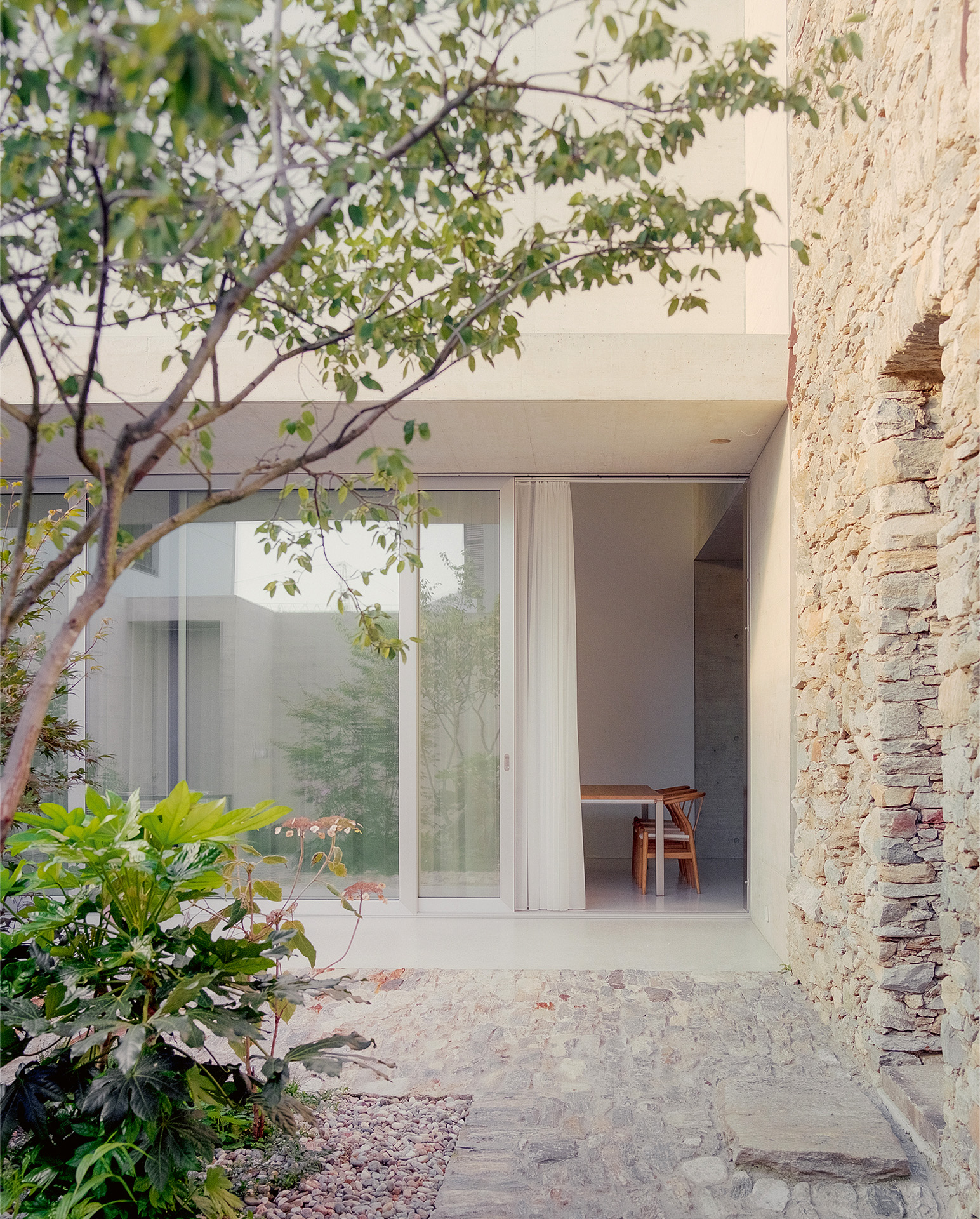
The intervention also reconfigures the open spaces. Previously, unplanned green areas – limited to the plot’s perimeter – intervened chaotically between the buildings. The new ground design establishes a renewed relationship with the street and between the buildings, introducing more rational geometries and extending the stone-and-concrete material palette of the façades to street level. Within this new complex, bounded by the L-shaped footprint of the two buildings and the concrete walls shielding it from external view, lie two open courtyards adjacent to the houses.
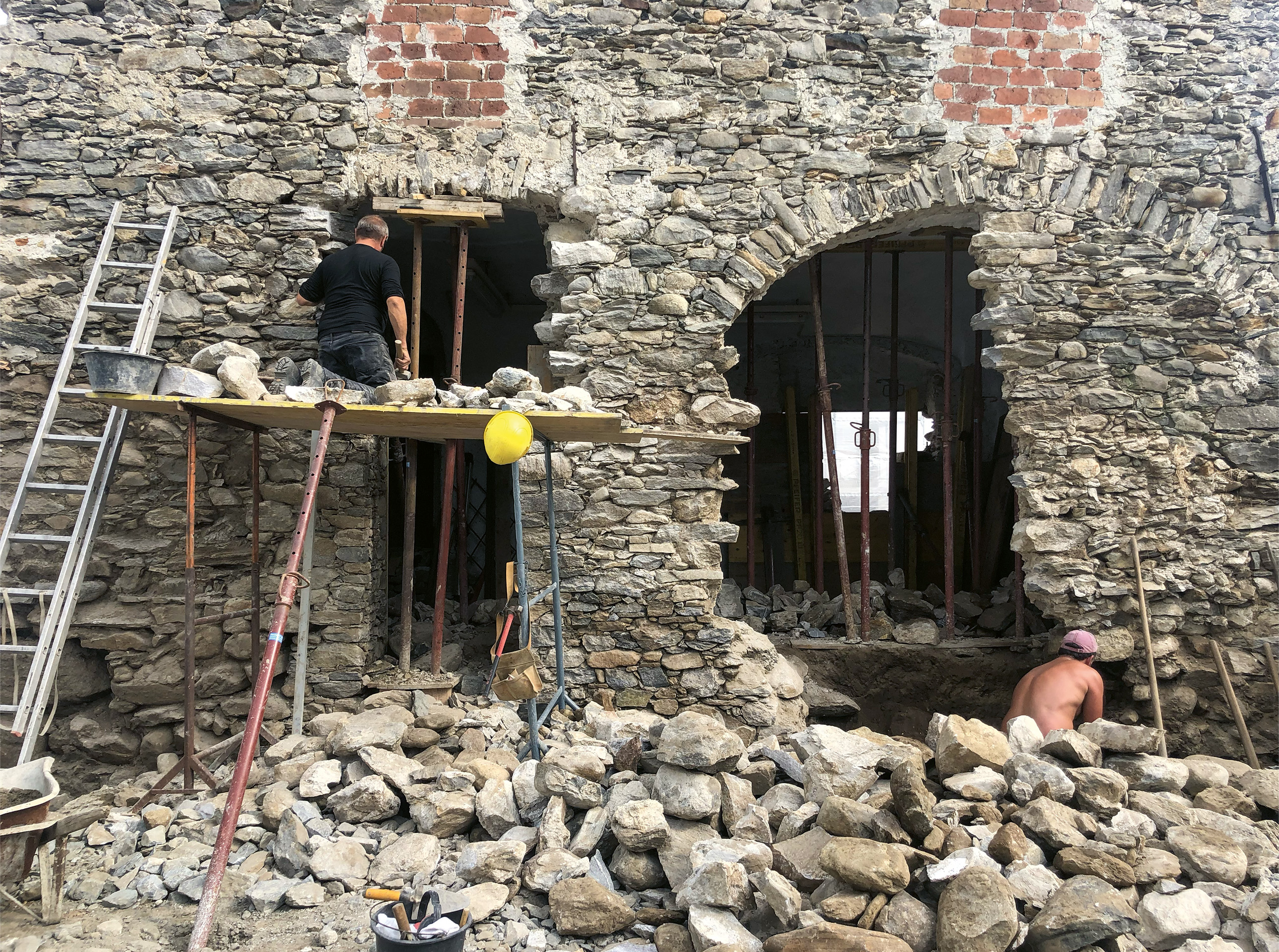
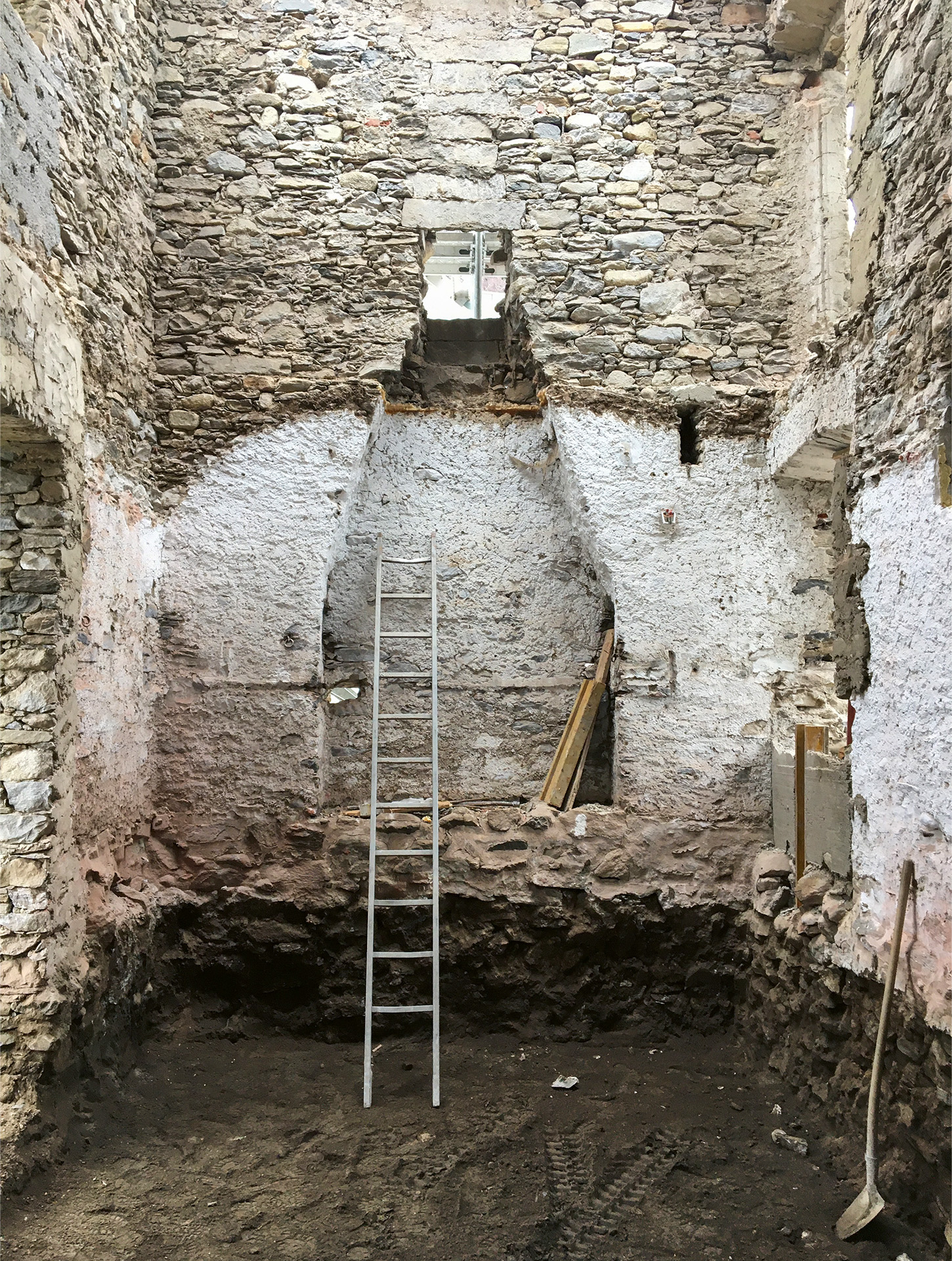
In terms of construction, all demolition debris was first collected at the rear of the plot, then sorted according to actual usability, and finally reused in subsequent phases of the intervention. From this perspective, the use of stone – a locally abundant material that can be repeatedly reused without loss of quality – is entirely deliberate.
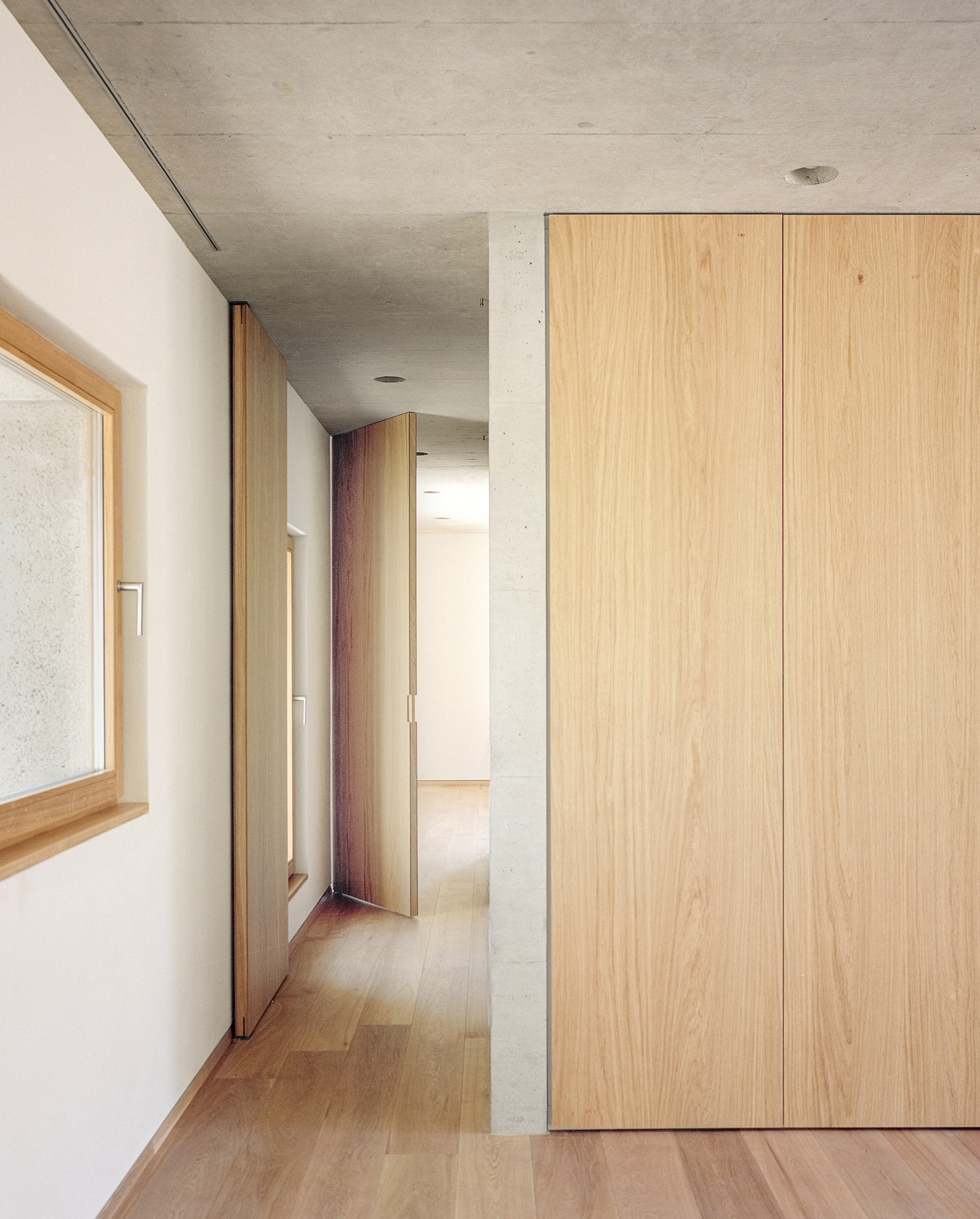
Bartke Pedrazzini’s approach aims to enhance the lost identity of the historic landscape through typological experimentation with living spaces and constructive exploration of stone and exposed concrete. This innovative method is evident in the design of spatial relationships: creating double-height voids to characterize interior spaces, extending transparent surfaces to improve natural lighting, and defining open but physically separate outdoor areas that maintain a distance from the fractured context from which the project seeks to differentiate itself.
The intervention presents a distinct approach to the single-family house, making light, material, and space fundamental ingredients in redefining domestic comfort. It also proposes a more radical understanding of reuse, in which historical traces are preserved only when endowed with intrinsic value – a stark contrast to many other operations in the region.
- Place Via delle Vigne 145, Minusio
- Client Marie-Louise-Renée Pedrotta-Jacquet
- Architecture bartke pedrazzini architetti, Locarno
- Contractor Verzeroli Elia e figlio, Ronco s/ Ascona
- Civil engineering De Giorgi & Partners Ingegneri Consulenti SA, Muralto
- HVAC system project Bai Angelo e figlio SA, Ascona
- Electric systems project Decarli impianti SA, Minusio
- Building physics EcoControl SA, Locarno
- Photovoltaics Gorla Elettro Solutions, Chiasso
- Window project Maturi & Sampietro SA, Mezzovico; Scerpella SA, Giubiasco
- Photography Simone Bossi, Varese
- Timeline project-realisation 2018–2022
- Energy planning ecocontrol, Locarno
- Certification or Energy standard Swiss Cantonal energy certificate, class BB
- Intervention and building type new construction
- Building category (Ae) single family residential (Casa Cortile) 183 m² multi family residential (Ca’ del Tero) 258 m²
- Form factor (Ath/Ae) abitazione MF | single-family housing multi-family housing 2.36
- Heating and hot water 100% geothermal heat pump
- Electricity impianto fotovoltaico | photovoltaic system 10 kWp, yearly energy production 11 MWh
- Primary Building Envelope Requirement Casa Cortile 38 kWh/m²a (limit 48.2 kWh/m²y) Ca’ del Tero 40.9 kWh/m²a (limit 41.7 kWh/m²y)
- Global Energy Index (from certification) Casa Cortile 58 kWh/m²a (limit 86 kWh/m²y) Ca’ del Tero 84 kWh/m²a (limit 101 kWh/m²y)