

When camps urbanise
Reconstruction is not the same as building new buildings. The case of Zaatari shows that reconstruction means restoring the right to a home, making the city a shared process, shaped by people’s everyday practices.
Testo in italiano al seguente link
In recent years, the destruction of Gaza has brought back to the centre of the debate a question that architecture and urban planning cannot evade: what does it mean to rebuild after an inhabited territory has been devastated, its basic infrastructures compromised, its homes erased, its communities uprooted? The images and projects that have circulated around the idea of a «new Gaza» – imagined as a space of development, investment, technology and a supposedly «better» life – come as no surprise. They belong to a long genealogy of reconstruction imaginaries in which destruction is often turned into an opportunity for urban rewriting, economic valorisation and the production of new territorial orders.
The Gaza Strip – with its urban centres, agricultural lands, refugee camps and inhabitants – is today at the centre of a spatial erasure that can be read in terms of urbicide:1 the deliberate destruction of the city not only as an assemblage of buildings, but as a fabric of relations, infrastructures, memories and the practices through which dwelling takes place. And yet this process does not concern Gaza alone. In different forms, urban destruction and the neoliberal promise of reconstruction cut across many contexts of the Arab world: Syria, Lebanon, Yemen, Iraq, Sudan. Where cities are destroyed, reconstruction often risks presenting itself as an apparently neutral, almost technical language, yet one charged with interests, imaginaries and relations of power.2
Cities are destroyed. And with this destruction displaced populations emerge: communities that lose not only a house, but the whole environment of dwelling – the place of relations, routines, forms of belonging and everyday modes of life. People and families suddenly become homeless, deprived of their living space, uprooted from the places in which they had built bonds, habits and forms of daily existence. From this act of violence, the housing question inevitably arises: where do displaced people dwell when their homes have been erased? What happens when the «housing question» is overwhelmed by violence and the state is unable, or unwilling, to provide immediate solutions?
Some recent images from Beirut, along the celebrated promenade of the Corniche, show displaced people constructing immediate responses with minimal means: sheets, tarpaulins, improvised tents, textile fragments used to delimit a space, protect an intimacy, create a threshold, separate an inside from an outside. A few elements are enough to construct a primary form of shelter; yet in that provisional construction something deeper becomes visible: the attempt to reconstitute a minimal condition of dwelling, precisely where dwelling itself has been violently interrupted.
Within this spectrum that opens between destruction and reconstruction, erasure and memory, uprooting and re-rooting, I would like to reintroduce the notion of dwelling, of inhabiting, formulated by Heidegger,3 and to question its relationship with urban transformation and the production of the city. My hypothesis is that the right to housing must be rethought as the right to dwell. This is not merely a matter of having a roof or a housing unit, but of being able to build relations, practices, intimacies, economies, forms of care and spatial continuities.
Secondly, we will use the case of a refugee camp and its transformation to show that cities are, first and foremost, made by the people who inhabit them. Urbanisation and reconstruction should therefore be conceived from dwelling, and co-produced with inhabitants themselves. The camp certainly also opens onto the question of informality; but what this case allows us to observe above all is people’s capacity to build, adapt, transform and give shape to space in conditions of extreme precariousness. Cities do not wait. For this reason, planning and construction must be conceived with inhabitants, from within the processes of life, and not simply imposed from above.
The Case of Zaatari Camp: Top-Down Planning
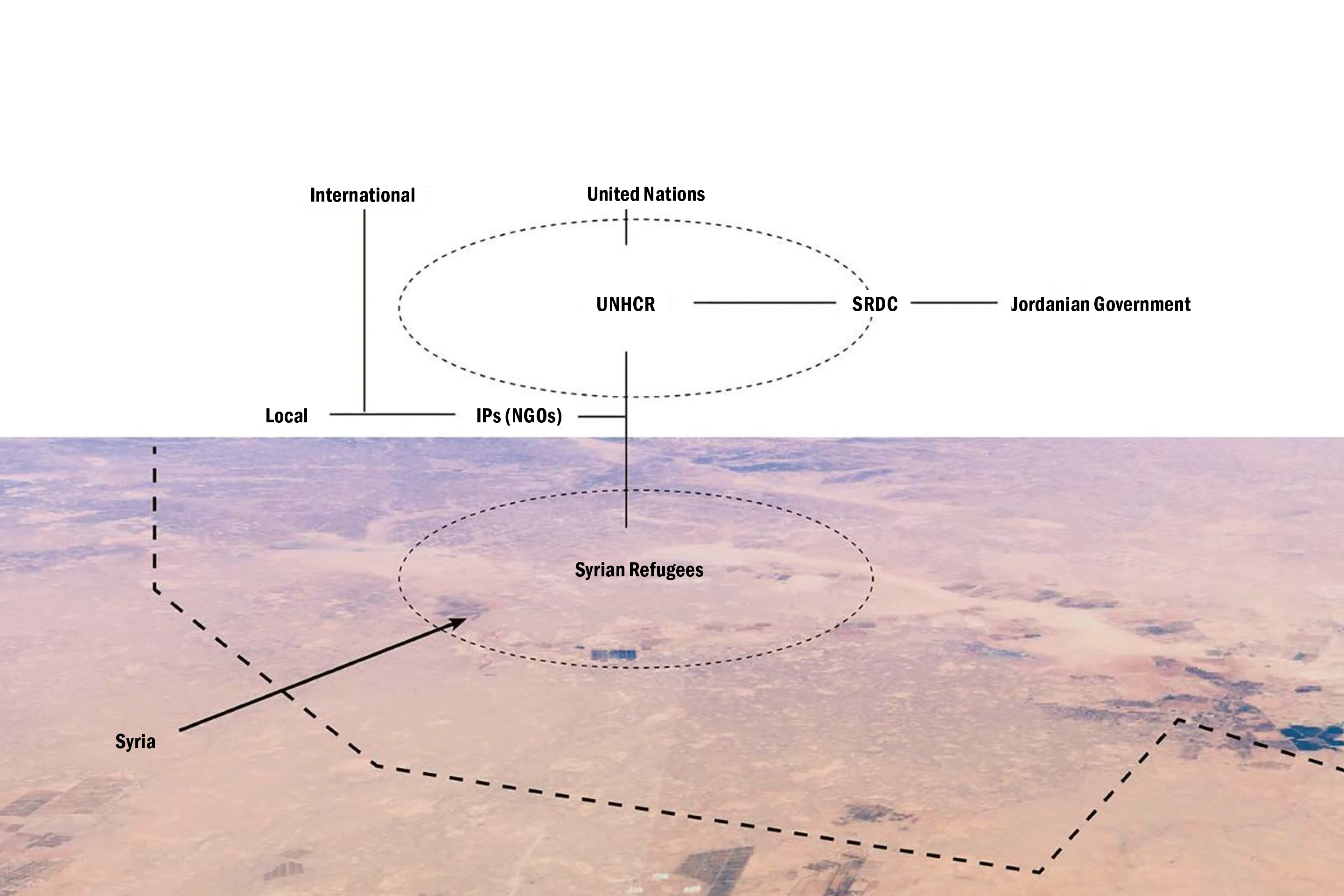
In 2012, and as numbers of Syrian refugees started to increase in Jordan, the government in collaboration with the United Nations Higher Commissioner for Refugees (UNHCR) decided to open an official refugee camp on their ground. Not far from the Syrian Jordanian borders, the camp was meant to contain refugees arriving to the country. It represented a humanitarian space where the UNHCR and the Jordanian government take care of its management and where different programs related to health, shelter, food, activities, etc., are managed by different NGOs. The camp represented an extra-territorial space: it was located in Jordan, but was governed through an exceptional humanitarian-administrative regime, where shelter, service provision, and spatial regulation were managed through the Jordanian state, UNHCR, and NGOs rather than ordinary municipal planning procedures (fig. 2).
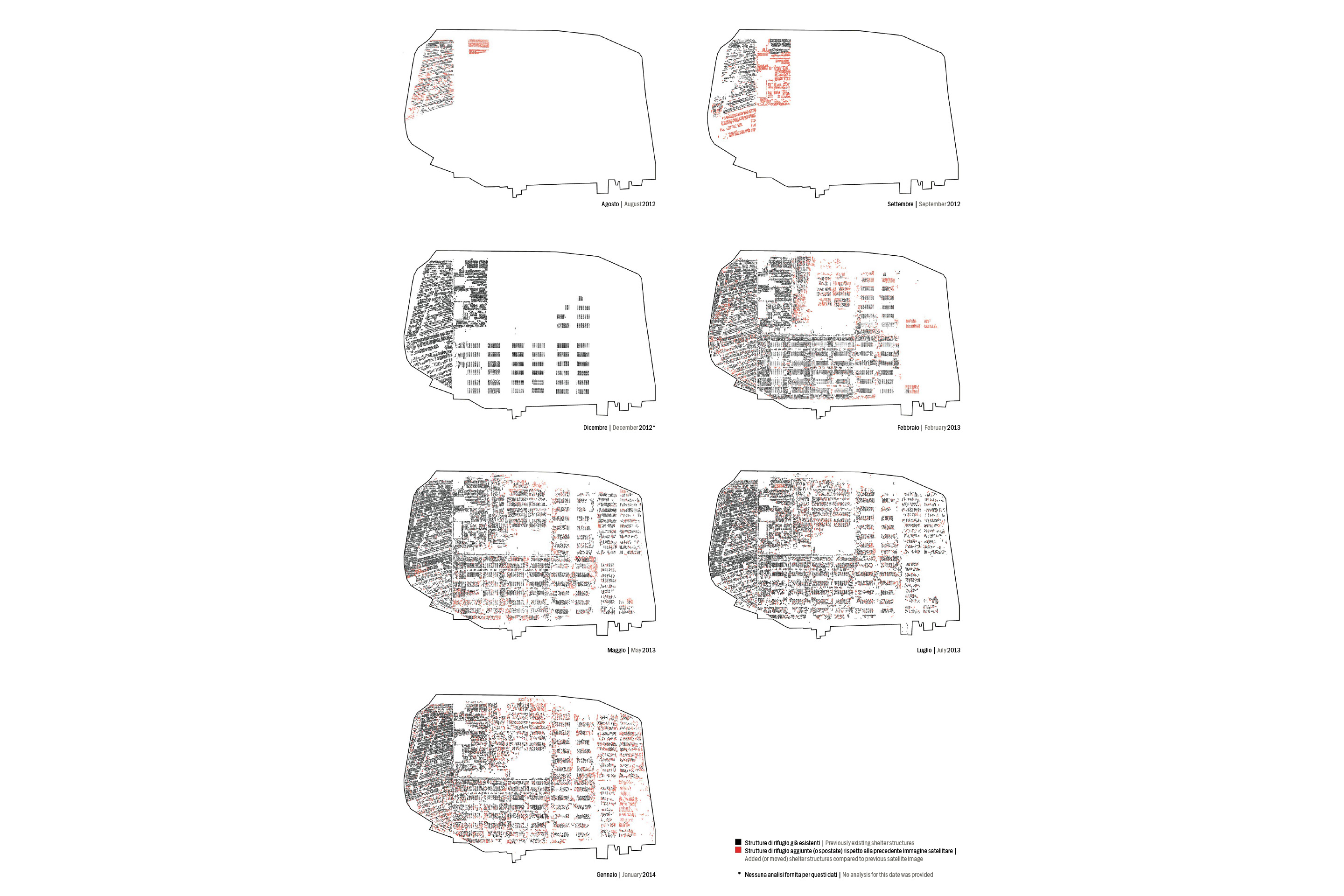
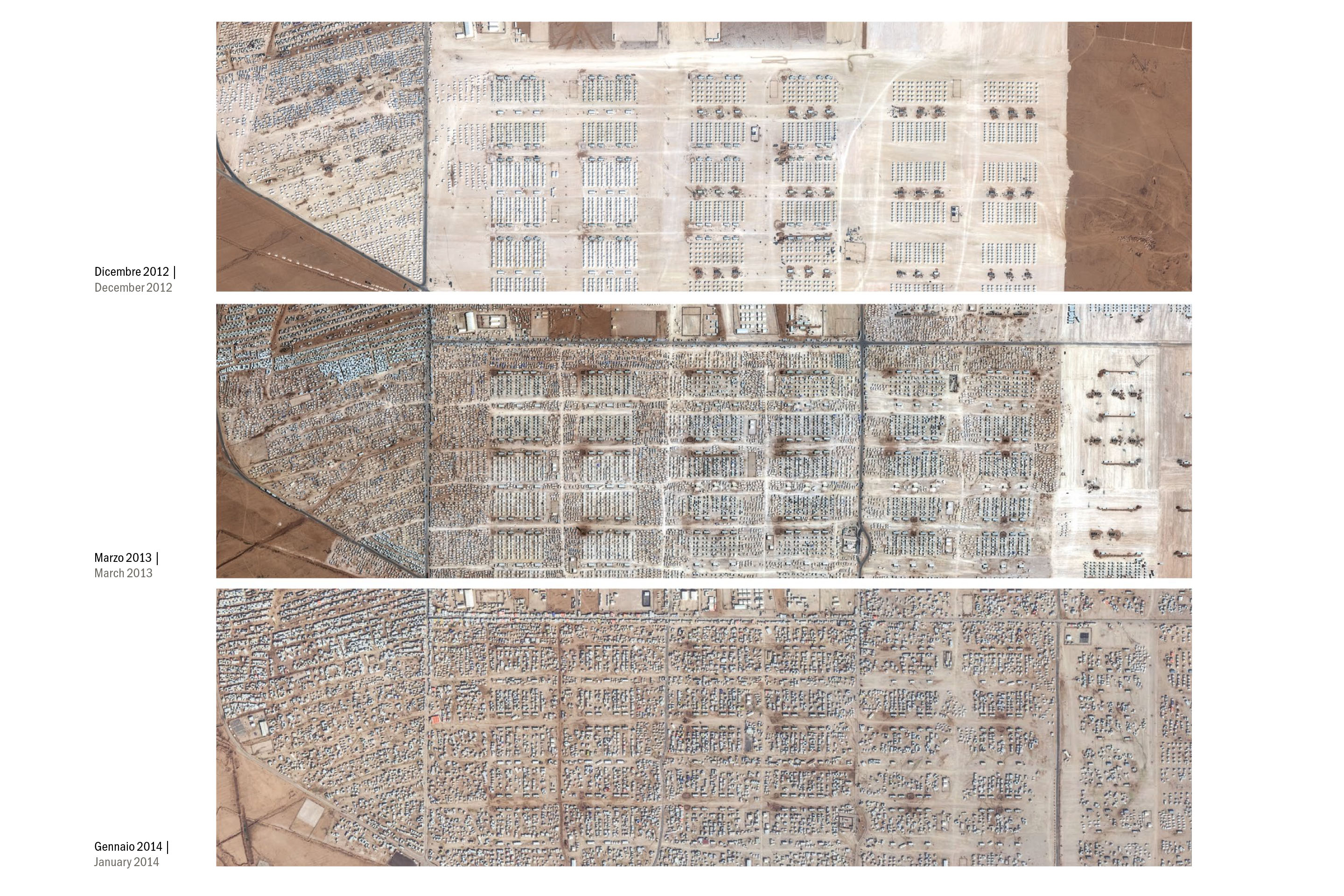
Initially, the camp was built to be an ideal UNHCR camp – 10 000 persons only, where shelter, Water, Sanitation and Hygiene (WASH) facilities and aid can be easily distributed and managed. Nonetheless, the camp expanded in size in no time. It stretched rapidly between 2012 and 2013, turning in size from a small village to a small city. Numbers of arrivals, those who left, and those who managed to leave fluctuated in time. However, by mid-2013, the camp had reached around 150 000 residents, while cumulative movements and active registrations were significantly higher according to UNHCR data (fig. 1). This was a process of accumulation, and consequently, urbanization. Refugees arriving to the «temporary» space of the camp brought with them their knowledge, cultures, networks, crafts, lifestyles, aspirations and of course, devastation. As one of them explained: «when we arrived here there was nothing, just sand and stone. My hair was falling off, and I was very depressed». Yet, the interesting thing about this camp is how urbanization was driven by bottom-up forces: It was co-produced by people, following their everyday needs, shaped by culture, and not by top-down aspirations and plans.
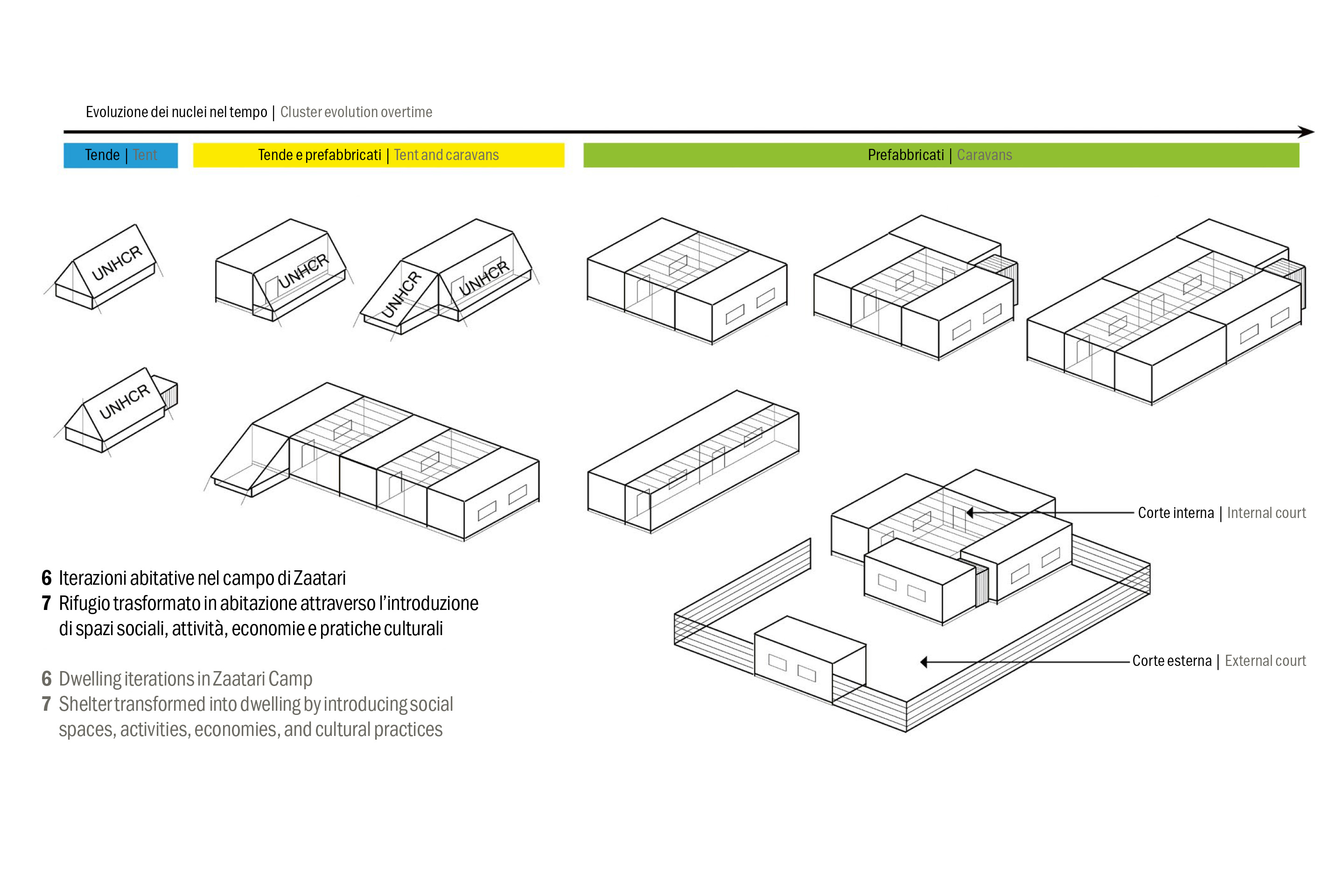
At the beginning, refugees were provided with tents. In the winter of 2012, a snowstorm hit Jordan, and many tents collapsed. Eventually, tents were replaced with caravans instead. These were donated by different countries – with the majority being from the Gulf: Saudi Arabia, Qatar, Kuwait, Oman, etc. As the camp was expanding quickly, and the need for additional space was evident with the new arrivals each day, the management of the camp decided that it should be planned. The planning of camps often follows the UNHCR Handbook for Emergencies – a book that has been developed in the early 2000s based on experiences from different contexts.4 Its objective is to give the planner simple steps and precarious measures in order to keep the environment of the camp clean, safe and manageable. This means advising on how shelters can be arranged, how areas can be divided, and where infrastructure could be provided. In context of emergency, such guidelines can save lives. However, this type of planning makes several mistakes, and from my experience, these mistakes seem to be constantly repeated in cities, and even in reconstruction plans.
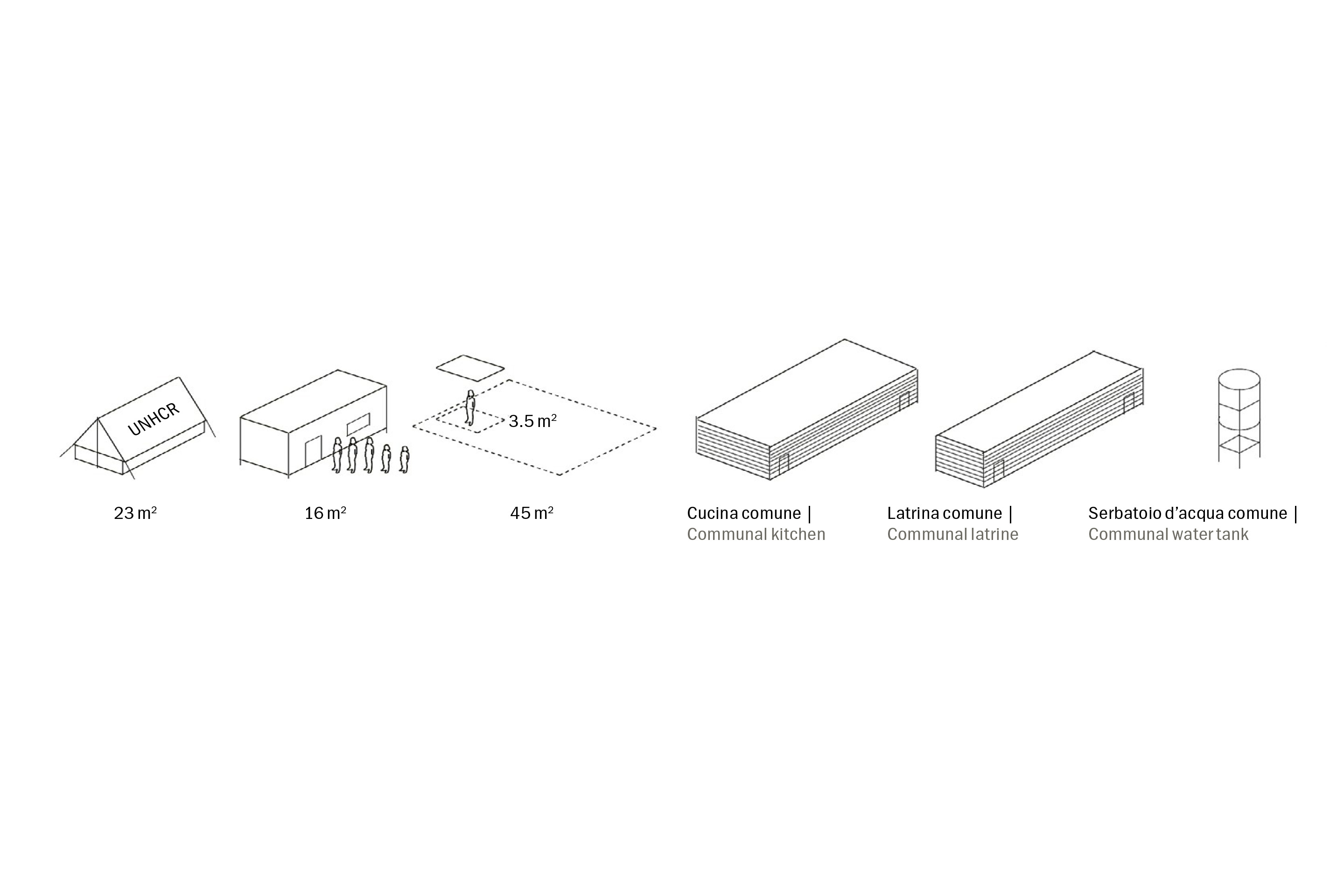
First of all, space is perceived and dealt with as an abstract space. This means that when planning happens, space is divided into parcels, according to metrics and standards, but not considered for its social value and dynamics. This mistake is more common in cities than we think.5 For instance, the planning standards of the Handbook suggest that each person has a quota of covered space, versus open space. This way the planner is able to calculate quickly how much space each person needs to have in a specific area. Indeed, such calculations are important to give a general census of how much space and facilities needed per person, however, the issue here is that these numbers are used to divide space. Eventually, the social nature of space is completely erased, and instead a technical one is placed (fig. 3). Open versus covered, instead of private, semi-private, semi-public, public, etc., not to mention the impact of economy, environment, and politics on space as well.
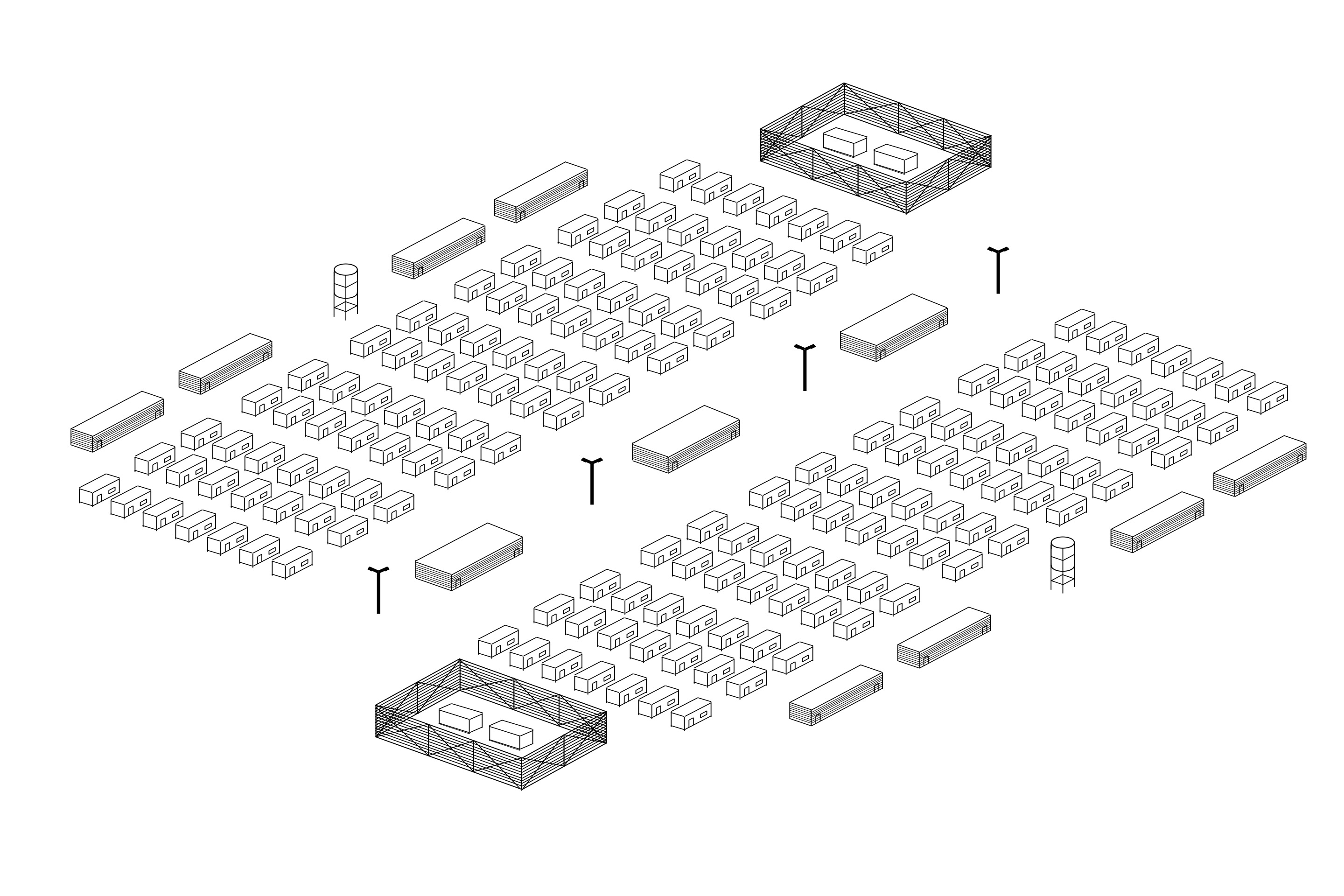
The second issue, which seems to be inherited from modernist planning, is the separation of functions. While this could be – perhaps – the easiest and most straightforward way to deal with designing a city, the quickest way possible, it is perhaps – or even very confidently, the way in which no one wants or can live. Cities and urban areas look the way they are for a reason: they are the results of relations – relations of people to their dwelling spaces, to their work, to their neighbors, to the government, to economy, to environment, and the state. These relations are often complex and interwoven. What modernist planning – and here adopted by camps’ planning, does, is that it situates elements apart from each other: here is a sleeping area, here are the bathrooms and toilets, here are the markets, here are the playgrounds, etc. It is understandable why this, in context of camps, is perhaps still applied today, as many of the camp’s planners are not necessarily trained in urban planning and management but are rather technicians and engineers. The result is a fragmented dwelling, and a deconstructed city (fig. 4). To live in such places is to experience inhumane urban life, and a sort of alienation from the city itself, in its complex, messy, and often impractical reality, but almost always enjoyable and humane. Therefore, the «urbanization» of camps,6 represents a clear shift from zoning and functionalism – those induced by emergency and influenced by modernist planning, towards mixed, messy, multi-functional, sometimes irrational, and often conflictual urban life: thresholds, mixed uses, alleys, social spaces, shops, and spaces of encounter.
Humanizing the Camp: Bottom-Up Urbanism
This essay, and most of my work, does not seek to celebrate informality in a romantic way, but to highlight what it offers as a «way of life»,7 and why it is the way to navigate cities in the Global South – those that were destroyed by wars and battlefields. One way to understand the importance of this model to us starts from acknowledging the limits of official planning. Top-down planning – although being replaced with neo-liberal planning today led by the real-estate sector and private investors, often lacks capacity between implementation and current needs. Plans take years to be realized; people are often faster and act quicker to fulfil their needs. Many countries also suffer from weak urban laws and regulations which makes proper planning difficult to implement and maintain. Not to mention that institutional planning requires years of coordination, commitments, and capacities – like having updated plans of cities and villages, skilled urban planners, computers and necessary programs to implement projects. In the Global South, and in the context of Arab cities that have been destroyed, these things are severely lacking. What happens is: people do not wait. They produce cities they need, right now, to make their life work.
In Zaatari camp, the main and first concern was accommodation. How can we dwell as a family in one tent or caravan – I was told constantly. «It’s a shame that my daughter has to get changed in front of her brother», or «I can’t carry my mother at night each time to the toilets at night, she is old and sick», many excuses refugees have said in order to justify what they did: informalising the camp.8 Between 2012 and 2014, the top-down layout of the camp was completely changing (fig. 5). The main structure eventually dissolved and some of the main infrastructure as well. «We had a share toilet here, but we woke up the other day and we did not find it. The donors asked us where is the toilet? Thank god, we had a satellite image of the area to show them that we built it, but refugees took it away...» – told me the manager of the camp Kilian Kleinschmidt as we sat on one of the roof bars in Amman. A lot happened during that time, that humanitarian workers were unsure what to do. «We followed the people» he said as if he surrendered.
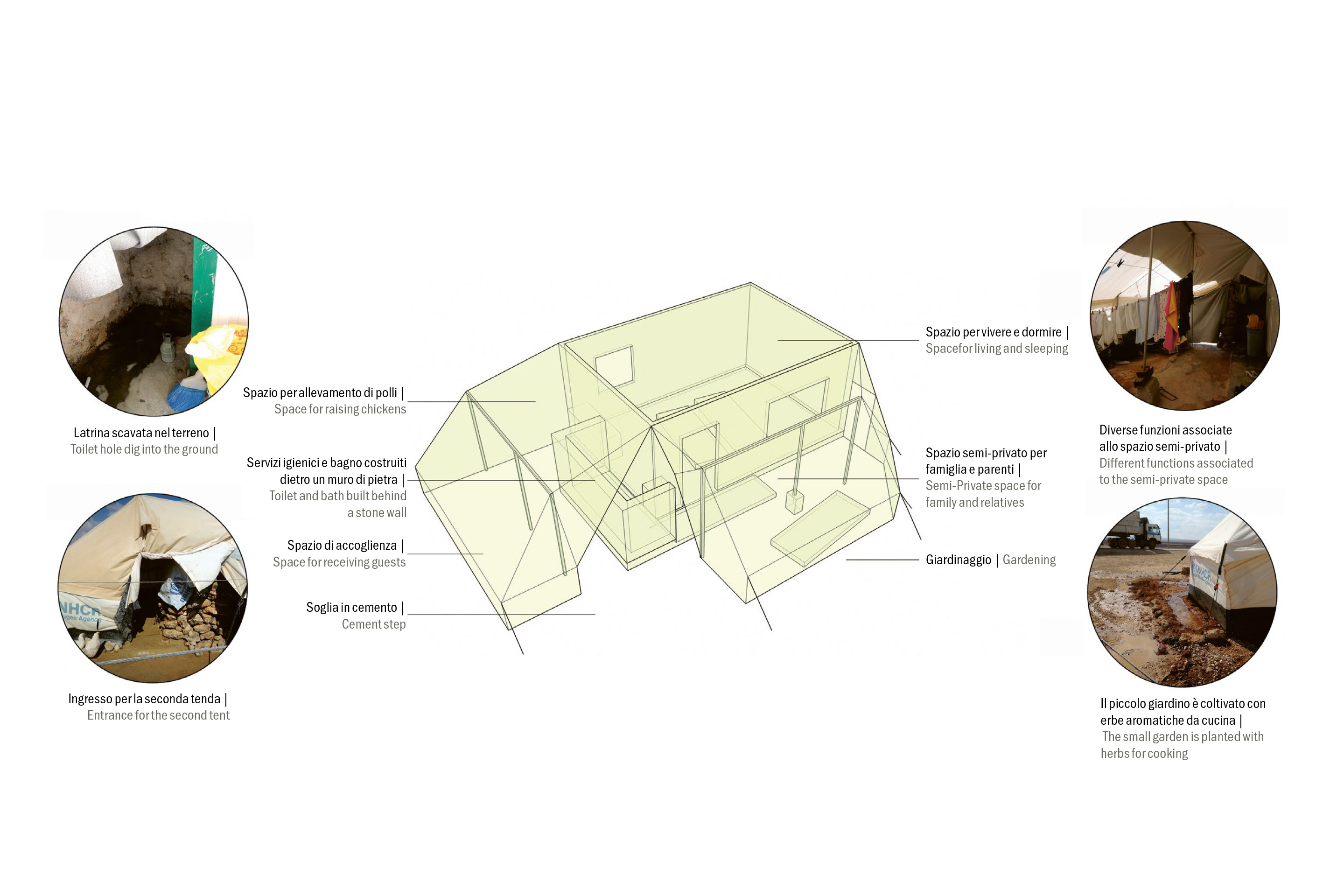
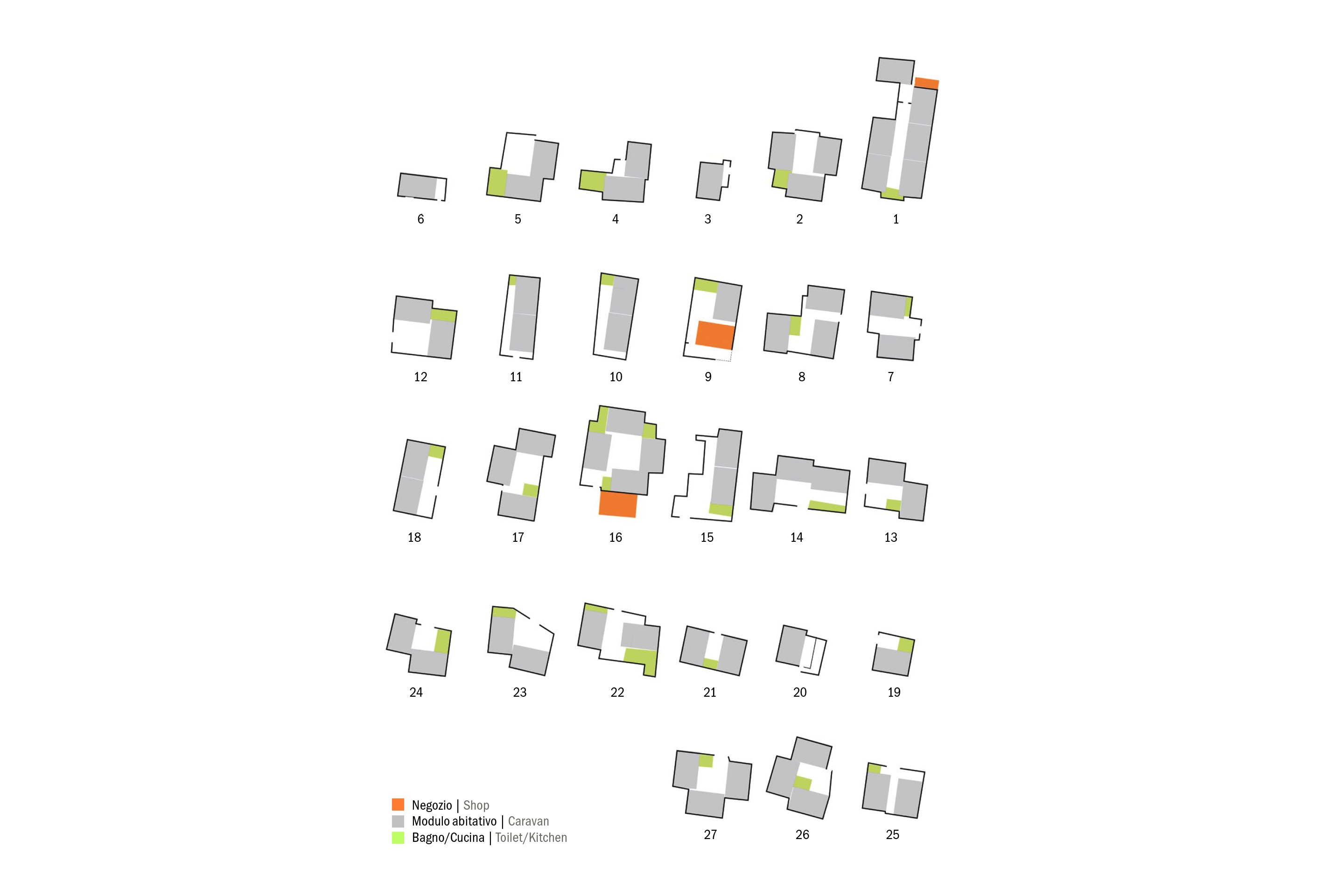
The transformation of the camp was multilayered, fast, and perhaps facilitated by the caravan module: fast, efficient, and practical unit to be adapted to create different forms of inhabitations. In my previous work, I have studied in-depth, the different iterations of these housing layouts, and proposed that they are centred around three aspects: visual privacy – that stems from Islamic and Arab culture that prioritizes this as a concept and cursor for creating urbanity and housing; social relations – as a dynamic and visible way to structure social life, relations with the family, neighbours, extended family etc.; and spatial knowledge – people’s understandings, aspirations, knowledge about how to design a house and live in it (figg. 6-7). In my book From Shelters to Dwellings, and building on Heidegger’s definition of «dwelling»,9 and Lefebvre’s distinction between «habitat» and «inhabiting»;10 I argued that dwelling was the force that orchestrated lives, materials, knowledge, and relationships in the camp to shape it in the way it is today.11 Dwelling here is understood and theorized: not as a philosophical and phenomenological concept, but as a practice that confronts and questions the machine-made and mass-produced understanding and practice of dwelling, generally described as «housing».12 In that sense, dwelling is constituted through everyday practice of inhabitation, including rearranging shelter units, constructing thresholds, creating privacy, hosting guests, and opening shops, and personalizing the space.13 Of course, economy, politics, materials, ecologies all contribute to its making, but in the controlled environment of the camp, dwelling was perhaps the first priority, and something that everyone in the camp participate in. In that sense, by inhabiting the space, they have co-produced the space.
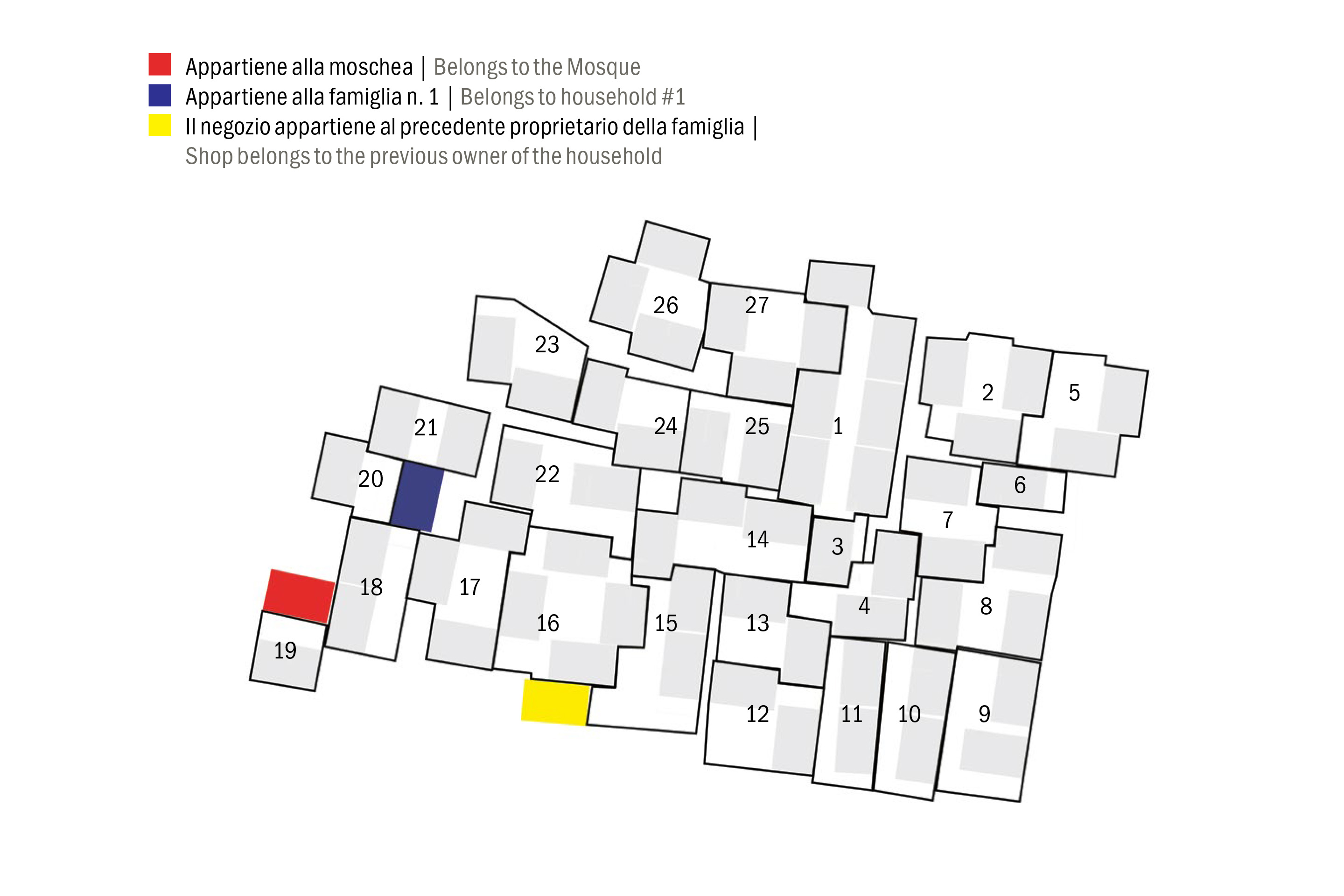
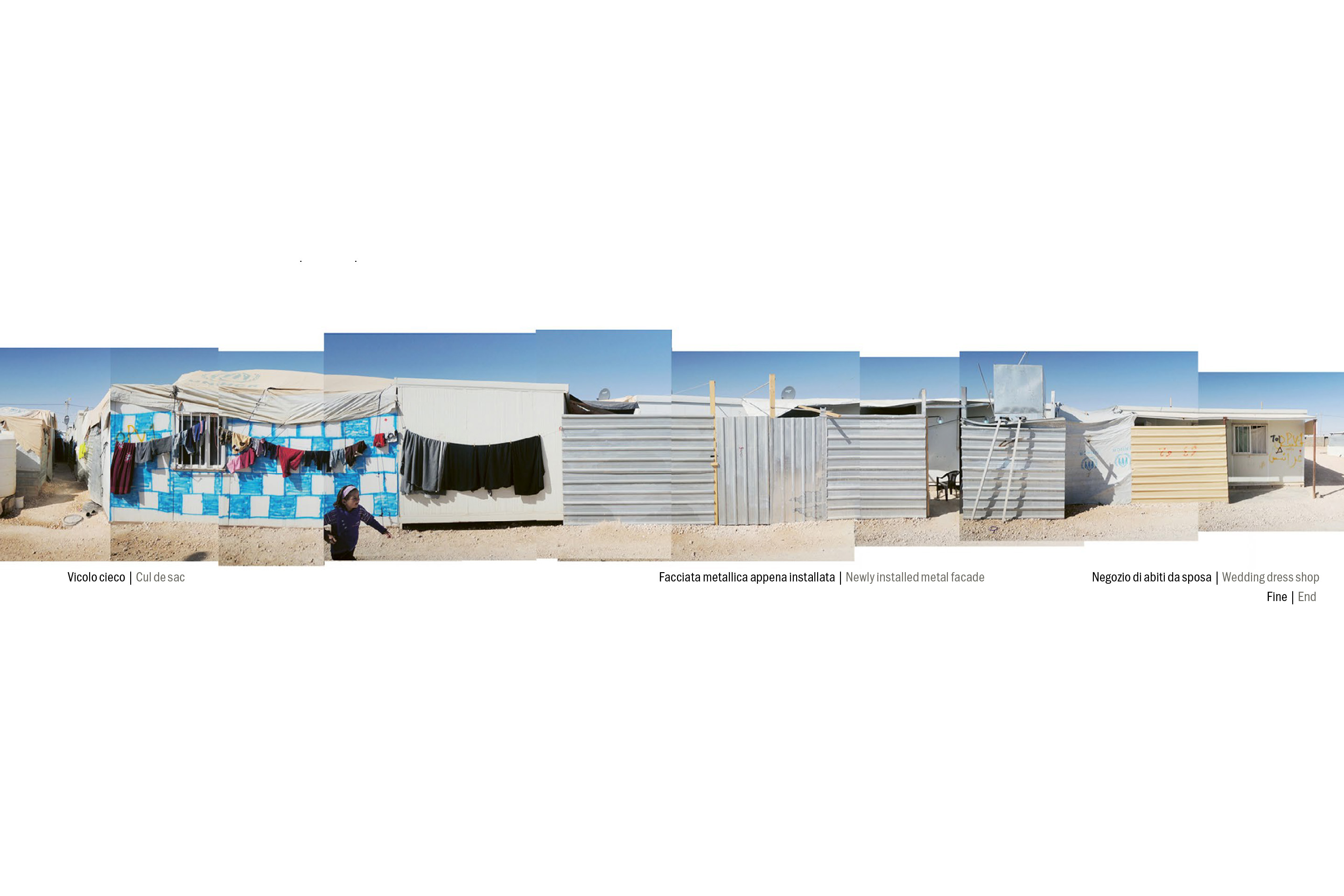
In contrast to what has been offered in the top-down plan, refugees co-produce complex, interwoven residential areas where the open versus covered space were replaced with a gradient of social space. Moreover, spaces of socialization that were missing such as Madafa, thresholds, squares, and commercial streets were reproduced. «These narrow alleyways remind me with Old Damascus or a Palestinian refugee camp» – said one of the ladies as she stood at her doorstep. With time, the rigid layout of the camp was replaced by complex, dynamic and lively composition (figg. 8-10). One that is centred around the human and its daily activity, instead of standards and technical divisions of space. These appropriations were considered to be «flaws» or even «spatial violations» on the initial layout of the camp and its provided infrastructure. This has troubled the initial proposed way to manage the camp, and to deal with its resources such as electricity, water, and aid. Informal street leaders emerged, and things got stolen and appropriated leading to the emergence of informal economies, some of which is related to dwelling constructions explicitly. This is not to say that the situation in Zaatari camp is ideal, but some of things there are worthy to reflect on and learn from when thinking about reconstruction of destroyed cities.
What can Zaatari Camp teach us about Reconstruction?
Although a camp is often considered to be an «anti-city» and the comparison between both could trigger frustrations as I experienced in some classrooms and public lectures, I still think that there are few things to be learnt from the camp and the way it was urbanized. Of course, with considering the different between a camp and a destroyed city, is that the former is usually built on an empty land often leased for a long period of time for the purpose of being a camp, whereas the latter is on a land that often has certain ownerships.
- Reconstruction is people: The force that led the construction of Zaatari camp was in fact the people. Although it was co-produced with humanitarian workers and with the materials available, people were the main force behind its urbanization: not UNHCR, not the Jordanian government, and not a private investor. This means that reconstruction strategies need to be centred on people and on their willingness to restore urban life: not for an aesthetic or beautification purpose, but for bringing back dignity to their lives, similar to what happened in Zaatari camp.
- Reconstruction is a «housing question»: in a previous work I discussed how the housing question in the context of refugee camps produced different forms of camp formats, some of them looks like normal housing like those produced in Europe.14 But this should not be mistaken with free, dignified housing. From what appears in Zaatari camp, the need to dwell is a priority, and is therefore, the first need when thinking about reconstruction. Dwelling is a human practice (inhabiting) and housing often comes as a practical solution provided by the state, and more frequently now, by private investors (habitat). Perhaps it is the architects’ task to bridge the two and mediate between needs and available capacities and frameworks: How can these returnees produce safe and dignified houses to which they can return? Practices of inhabitation, as the case of Zaatari camp have shown, bring with it a lot of other questions: craftsmanship, economies, materials, visual privacy, social relations, and spatial knowledge. Also the «need to dwell»,15 pushes us to rethink about reconstruction: not as providing emergency units or shelters, but about enabling people to rebuild spatial relations, privacy, family life, livelihoods, and social infrastructures. These can be taken into consideration while thinking about reconstruction and how it can be developed as a strategy which is centered around housing as a main priority.
- Reconstruction as co-production: One important learning about Zaatari camp is that it was produced by the UNHCR or the Jordanian government only, but by the inhabitants of the camp. This changes the thinking of how urban planners and architects could perceive their role in the process. In Zaatari camp, the urban planner – with good intentions, failed to produce plans that satisfy peoples’ needs. The top-down approach places the architect and urban planner as a «knower» whereas in context of war and reconstruction, knowledge is most likely to be found among the inhabitants. This means that participatory planning is crucial for reconstruction, and other cases like Nahr Al-Bared refugee camp in Lebanon stand as a solid example of how inhabitants can, and should, be involved in the planning process.16
- Reconstruction is urban management: One big mistake architects in particular make is believing that they have the «final say» about how things should work. In context of war, and in places where urban life has been disrupted by violence, cities and urban areas operate under certain urban logics. In the context of Zaatari camp, informality has led to the emergence of not only street leaders, but also realtors, and all sorts of businesses that gave «new» powers to certain individuals and made areas operate in certain ways. A successful model for reconstruction needs to find sophisticated, and perhaps tailored, models of urban governance that make these processes of recovery work. In that sense, relying solely on institutional and formal governance structures might not work, and perhaps be unproductive, and even problematic.
- Economy and social spaces: A lot of the urban life that was brought into Zaatari camp, transforming it into a «safe» space for many, is the economy. Economic activities bring a sense of safety to urban spaces, as Jane Jacobs argued,17 but also help to shape cities creating an infrastructure of safety and direct urban recovery. Understanding how these
«new» economies emerge and what spaces they need helps direct activities and support recovery in destroyed cities.
Conclusion
«We follow people» the site planner of Zaatari camp admitted after the site had been completely transformed and the initial plan following the handbook suggestions is no more visible.18 What happens when we are forced to re-create urban life after catastrophe happens? In Zaatari camp, international and local actors had to act in response to emergency: to provide a safe shelter for hundreds and even thousands of people overnight. The same is happening today in many parts of the Arab region: Gaza/Palestine, Syria, Lebanon, Yemen, and Sudan. What Zaatari teaches us is that the urban life does not wait. That’s because it comes by people, it is co-produced by them. Within the available context, people navigate the existing conditions and dwell: create domestic spaces, shops, streets for kids to play, and areas for elderly to gather. The Middle Eastern
region is filled with rich urban histories. To recreate urban life after wars and destruction is not to impose and parachute big ideas on cities and urban areas, but perhaps to enable these rich urban histories and knowledge(s) to co-produce urban life. Perhaps even, one that is better from what was built before.
Notes
1 Coward, Urbicide.
2 Dalal, City and the City and the City.
3 Heidegger, Building Dwelling Thinking.
4 UNHCR, Handbook for Emergencies.
5 Perhaps the most established critique in this regard is by Henri Lefebvre in The production of space who argued that through design and planning process, space is often perceived as «abstract» or «empty».
6 Agier, «Between War and City», 317-341.
7 AlSayyad, Urbanism as a ‹New› Way of Life.
8 These quotes were obtained during fieldwork in Zaatari camp in February 2014, two years after the camp was built. The research in the camp took place in different phases between 2014 and 2017 and included semi-structured interviews, informal discussions, and participatory observations. All interviews are anonymized. Most of the work is used in my book and master thesis Dalal, From Shelters to Dwellings; Dalal, «Camp Cities between Planning and Practice».
9 Heidegger, Building Dwelling Thinking, 143-162.
10 Lefebvre, The Urban Revolution.
11 Dalal, From Shelters to Dwellings.
12 Bembnista & Dalal, «13 Square Meters».
13 This also resonates with Heidegger’s suggestion, in ...Poetically man dwells..., 211-229, that dwelling is a poetical act of personalised manifestation of humans on Earth.
14 Dalal, «Refugee Camp as Urban Housing», 189-211.
15 A term I introduced in my book arguing that each displaced person should be granted the right to dwell, which is often faster, more direct response to displacement. Dalal, From Shelters to Dwellings.
16 AKDN, «Reconstruction of Nahr el-Bared Refugee Camp».
17 Jacobs, Vita e morte delle grandi città | The death and life of great American cities.
18 Interview during 2014 when reflecting on the Handbook of emergencies and its implication on Zaatari camp after it has been urbanised.