

Can AI Make the Past Productive?

Testo in italiano al seguente link
Can architects leverage image-generating Artificial Intelligence (AI) models to produce work rooted in the cultural depth of their discipline? We explored this question in a one-day workshop as part of the Future of Construction symposium 2024, investigating the event’s central theme, Making the Past Productive, through a hands-on approach. Using the Palazzo Turconi in Mendrisio as our case study, we visualized its pasts and possible futures to discuss how generative AI can serve as a «visual time machine» for architectural inquiry.
Context
With the advent of generative AI, digital computing has entered a new era. In recent years, powerful new software has emerged that promises to radically transform the field of architecture, much like in many other intellectual professions. Indeed, though still in their infancy, these tools are evolving rapidly and already have a tangible effect on the daily practice of architects. In a profession defined by its visual nature, image-generating AI systems may prove to be at least as impactful as text-based large language models.
However, AI is often met with a critical stance among architects, who view it as a threat to their expressive freedom, authorship or intellectual property. Many argue that the results it produces are necessarily shallow – merely a patchwork of recycled ideas. It is true that AI models are trained on vast collections of cultural artefacts gathered online. If not used thoughtfully, they may tend to produce a homogenized imaginary space in which Renaissance masterpieces, marketing collateral, scientific imagery, and amateur snapshots are merged without distinction.
Scholars of technology in architecture have engaged with this issue in recent years. Both Neil Leach and Stanislas Chaillou have mapped out the applications of AI in architecture, providing a brief history of artificial intelligence as a field of research and outlining its potential future impacts on the discipline of architecture.1
More specifically, Mario Carpo views generative AI as a machine of creative imitation, capable of challenging the modernist taboo against building upon precedent. He argues that while computers may not «create» in the Romantic sense, they «automate imitation»2 in a way that generates novelty. As Carpo puts it: «Imitation is not a copy, it is inspiration; it is not identical replication; it is assimilation and transfiguration».3 This perspective resonates with the view defended by AI researchers such as Blaise Agüera y Arcas that computers can, in fact, learn to be creative.4
Research question and approach
As a practical extension of the emerging academic
discourse on AI in architecture, our workshop aimed to examine if architects can produce contextually anchored, culturally relevant and imaginative work using generative AI.
The workshop was an invitation to think in images using AI – an approach inspired by converging insights from computer science and architectural design. As early as 1950, British mathematician Alan Turing asked if machines can think.5 Decades later, architect Peter Zumthor stated that «producing inner images is a […] part of thinking. Associative, wild, free, ordered, and systematic thinking
in images, in architectural, spatial, colorful yet grainy, and sensuous pictures», calling this process his «favorite definition of design».6
We postulate that the implications of generative AI for the design process can be best understood by experimenting directly with state-of-the-art tools. As practicing architects – rather than historians or computer scientists – we proposed a case study that directly leverages the most recent techniques, in order to investigate a specific site.
Case Study Palazzo Turconi
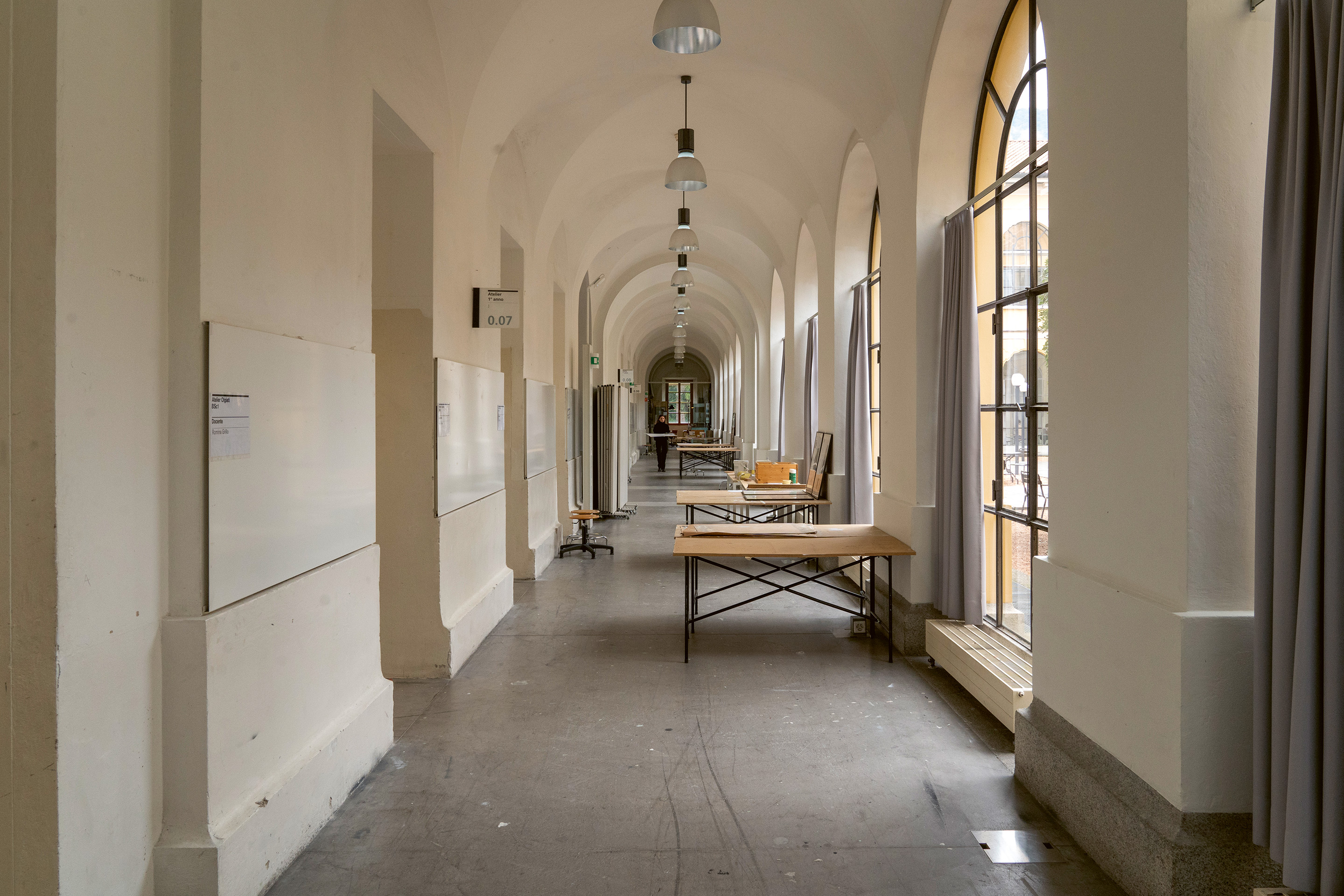
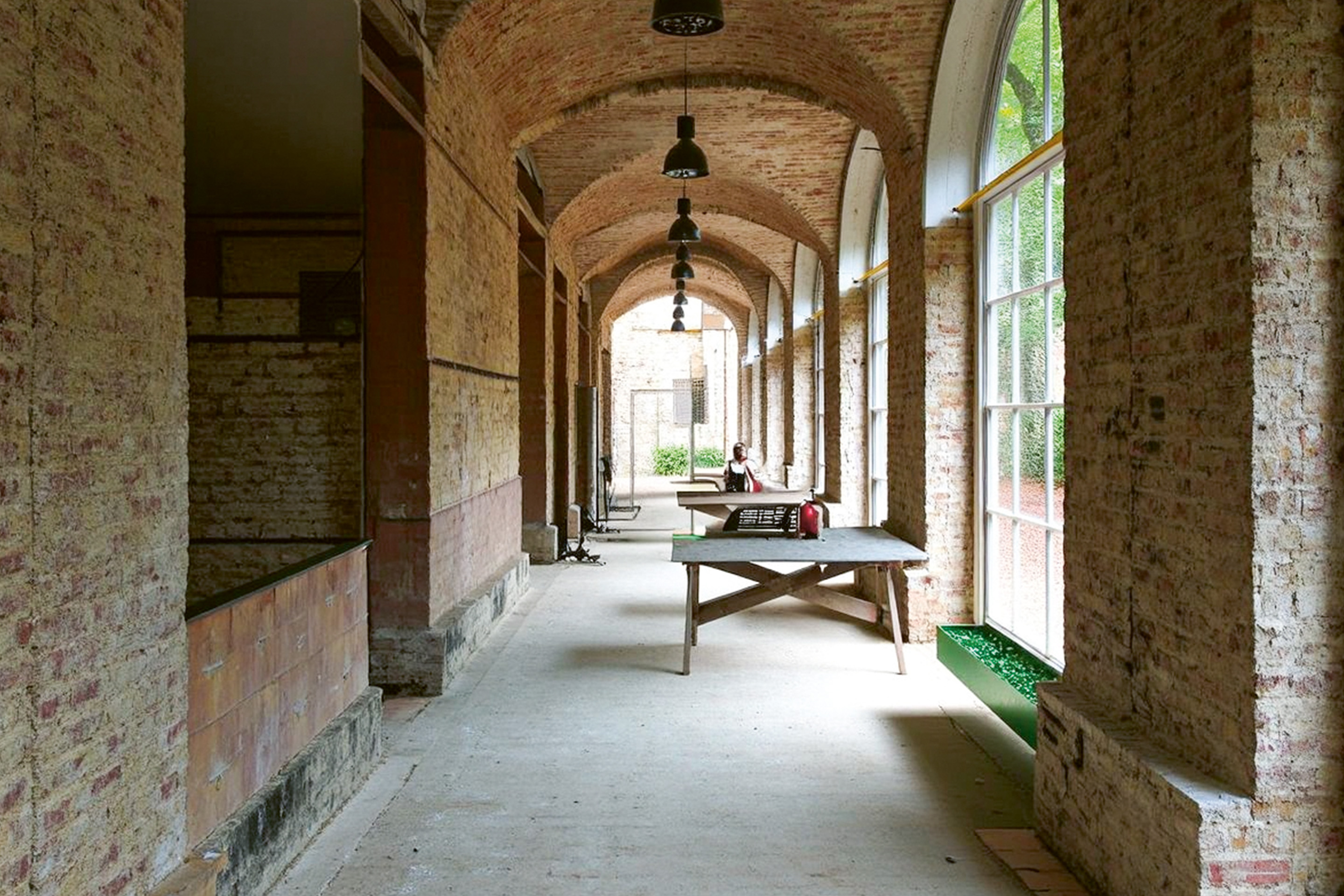
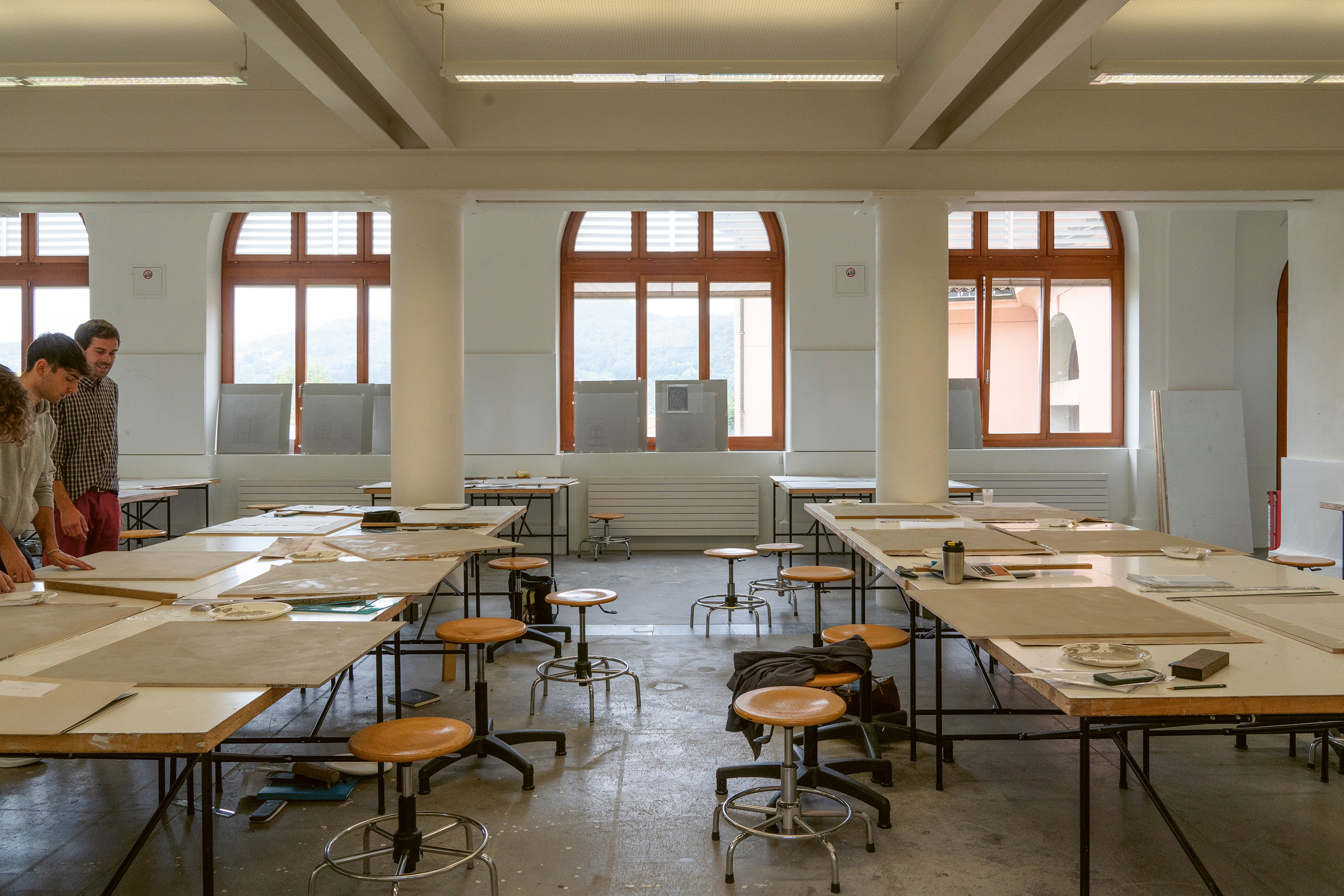
We aimed to demonstrate that new technology, though developed globally, does not necessarily impose a non-contextual approach. This led us to choose a local site: the Palazzo Turconi. While immediately accessible from the workshop venue, this building embodies an easily recognizable architectural archetype, allowing our exercise to remain relevant beyond the specific conditions of the place. Inaugurated in 1860, the Palazzo was originally conceived as a hospice for the poor, later serving for roughly a century as Mendrisio’s cantonal hospital. It became part of the newly founded Accademia di architettura, Università della Svizzera italiana (AAM) in 1996 and, after an extensive restoration, now accommodates design ateliers, office spaces, and the Accademia’s library. As such, it can be viewed as an architectural palimpsest, where layers of history have sedimented over time – available today either for re-enactment or as a foundation to imagine new chapters in the life of the place.
Preparatory work: assembling memories
Following Mario Carpo’s assessment of the crucial role played by the datasets underlying AI models – which act as canons shaping the outputs these models produce – we collected relevant historical materials prior to the workshop. Our preliminary research functioned as a site analysis of the type that typically precedes the design of a building, albeit in a more extensive format. This process aimed to establish a robust, shared historical foundation for the generative phase of the experiment.
We gathered graphic and textual material from different sources, such as the publication Da Ospedale a Biblioteca, La Storia del Legato Turconi 7 by art historian Angela Windholz, Head Librarian at the Biblioteca dell’Accademia di architettura, and the collection of local views held at the Archivio storico della Città di Mendrisio.
Our corpus documented the successive eras of the building’s history through a wide range of media: from engravings and black-and-white photographs of the Palazzo in its original function and street views of Mendrisio at the turn of the 20th century, to color photographs of the architectural ateliers around the year 2000.
In addition, we produced original material depicting the Palazzo’s present state, including eye-level and drone photography, as well as computer renderings providing a reference for the geometry of the building’s main spaces as they exist today. From this corpus, we selected approximately 200 images and text fragments to serve as a base for the participants’ experiments.
One-day workshop: Image-generating AI models as a visual time machine
The workshop exercise consisted of leveraging this layered and multi-modal curated dataset to reenact Palazzo Turconi’s past and imagine its future. To infuse the exercise with architectural understanding, we first visited the site together and benefited from Angela’s Windholz presentation of her research. Half of the participants were assigned the task of envisioning multiple possible futures for the place, consciously extending its past and present; the other half aimed to reconstruct different fragments of its past scattered throughout its history, drawing from the memory traces we had gathered.
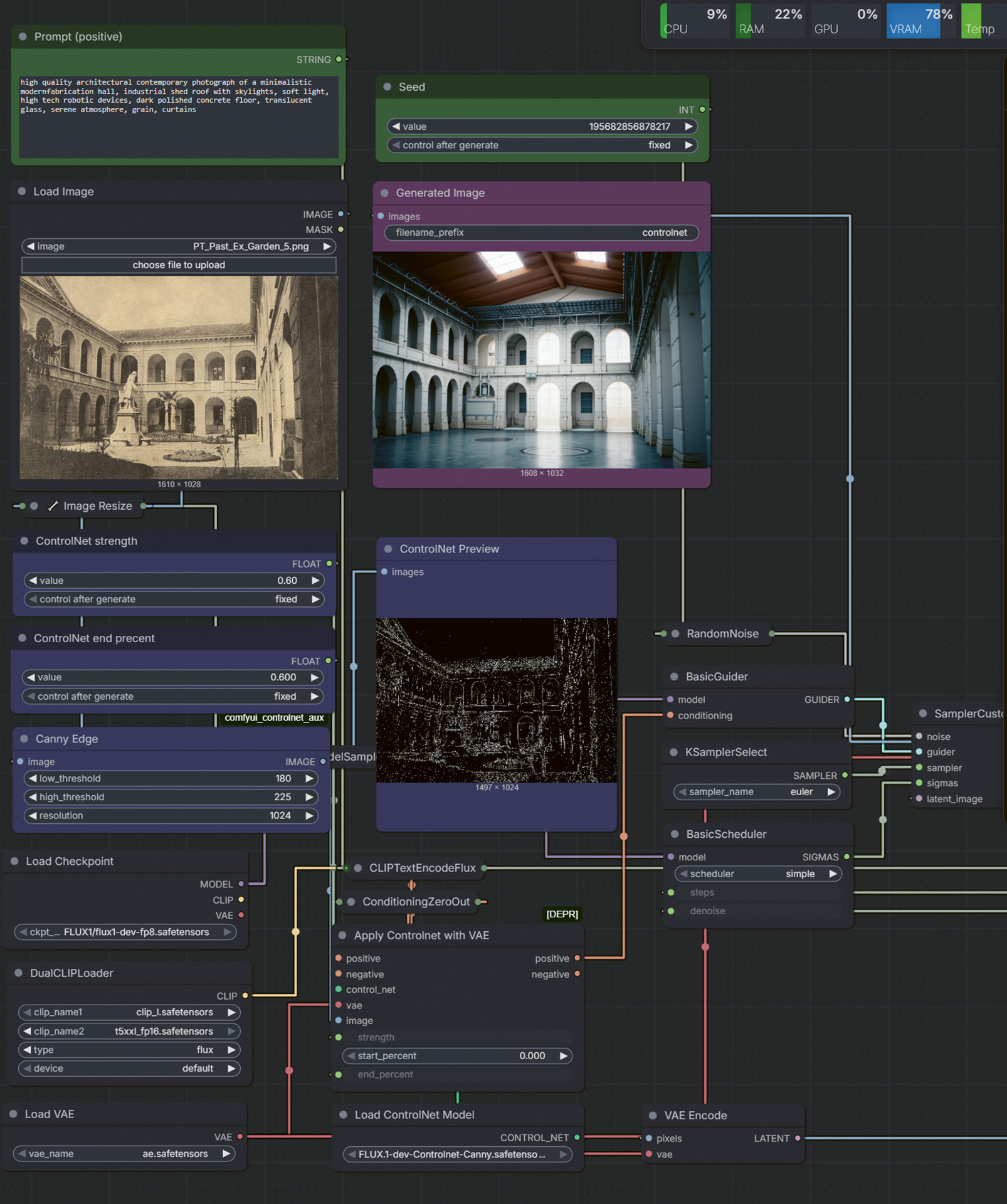
To produce these visions, we chose to use Flux.1[dev]8 and Stable Diffusion XL9 – representing the state of the art in open-source models at the time – leveraged as visual time machines, a term also employed by Mario Carpo.10 We operated these models through the interface ComfyUI.11 This software represents the operations carried out as a visual graph, where each step is symbolized by a box (or ‘node’) connected to the next. This paradigm is already well known to architects familiar with Grasshopper for Rhino. It allows for ‘opening the black box’ by displaying the inner workings of the image-generating AI systems.
As building such algorithms from scratch would go beyond what can be achieved in one day, we offered a series of pre-programmed, bespoke workflows:
- The first workflow enabled the simultaneous use of text prompts and several reference images as inputs. Crucially, it embedded a mechanism called ControlNet, which is key for the level of precision architects need. It fixes the geometry of the generated image – based on an arbitrary preexisting image of any type, for example a photograph, a sketch or a line drawing projected from a 3D-model – up to a degree of flexibility set by the user.
- The second workflow enabled the reworking of an existing image using text as an input.
- The final workflow allowed for a virtual Umbau (conversion) process: physical elements of an existing space could be selected automatically and altered one by one.
Crucially, these workflows enabled the use of our curated
data as an explicit input for synthesizing new visions, thus allowing cultural memory to directly inform the speculative design process.
Results
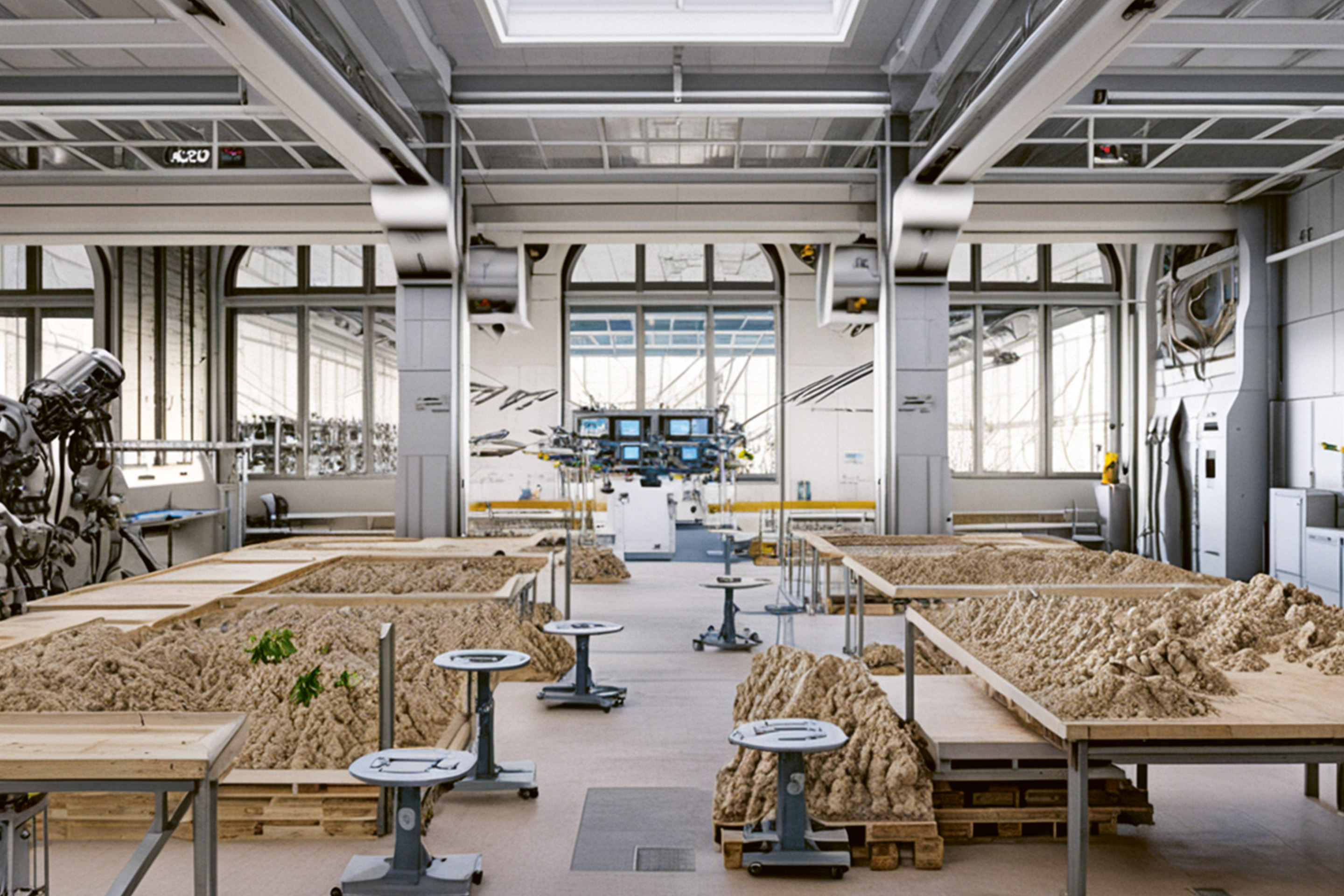
In less than two hours, this experiment produced a wide array of unexpected results. Images emerged that would have been unachievable – in both quantity and quality – under the same time constraint using traditional techniques. The first group visualized a range of plausible future scenarios, from reusing the Palazzo’s spaces as co-living accommodation for students to transforming its main courtyard into a large robotic fabrication hall. Each imagined scene was visualized with a surprising level of precision regarding spatial arrangement, materialization and lighting. This endowed the corresponding scenario with immediate plausibility, no matter how speculative.
The second group synthesized visions of the past to complement the historical record. They delivered perceptually vivid snapshots of scenes that might have existed but were never documented – ranging from synthetic archival photographs or colorful to sharp, contemporary-style digital images. The latter effectively collapsed the temporal distance usually created by historical representation.
Some images captured what may have been the daily lives of busy medical personnel enjoying a moment of respite in the courtyard, while others focused on the building’s original architectonic characteristics – for instance, virtually restoring open arcades (a strong typological feature that had been lost after transformations) by carefully removing glazing from contemporary photographs. Occasionally, historic, contemporary, and futuristic elements were blended into a single image, illustrating the continuum of the building’s life.
Discussion: the cultural relevance of AI for architectural design the text
The workshop demonstrated that today’s AI models allow architects to represent buildings with unprecedented fluency and at different levels of abstraction, from their immediate physical features to the Zeitgeist they embody. Text-to-image workflows, specifically, proved capable of establishing direct connections between words and architectural spaces, thus prolonging a long tradition of storytelling embodied in architecture – from the visual narratives of Gothic glazing to the architecture parlante of the Enlightenment.
While only large, often global, companies can train substantial AI models from scratch, our experiment showed that providing them with carefully collected and curated material steers them away from generic results. Instead, this method is potent enough to lead to culturally informed work co-generated by human and machine that captures the specificity of the place and of the designer’s intention.
Limitations
Simultaneously, contemporary AI sharply raises the risks of manipulation inherent in fictional reconstruction by lowering the barriers to creating convincing but fake alternative archives. Therefore, involving people who experienced the building’s past first-hand in our work would be highly valuable. As prominent AI researcher and Nobel Prize winner Geoffrey Hinton puts it, current AI models, though very powerful and almost universally applicable, are «not very good experts at everything». To improve the results, it makes sense to rely on real experts.
Future extensions: beyond images
Since the workshop, global progress in visual generative AI has been tremendous.12 Current leading models can operate beyond static images13 and offer architects a way to broaden their horizon of references – much like Bernard Tschumi, who as early as the 1970s and 1980s sought inspiration in cinema, dance, radical art, and urban events.14
Furthermore, a real building is not a mere image but a controlled construction in physical space. Emerging technologies15 now directly connect large language models to computer-aided design programs, making it possible to leverage their generative power to produce precise 3D architectural geometry. More generally speaking, Spatial intelligence16 is among the most important AI frontiers today.
This opens up clear avenues for exploration in subsequent workshops. How will this ultimately affect our built environment? Quoting Alan Turing once more: «We can only see a short distance ahead, but we can see plenty there that needs to be done».17 By synthesizing memories of place, historical sediment, and symbolic meaning, AI becomes a contemporary catalyst for imagination: a means to reconnect architecture with society, to understand its complexities, and to project richer futures. If architecture is fundamentally a cultural act, then AI helps expand the cultural landscape from which it draws, enabling us to make the past productive once again.
Notes
- Leach, Neil. Architecture in the Age of Artificial Intelligence. Bloomsbury Academic, 2021, 2 ed. 2025;
Chaillou, Stanislas, Artificial Intelligence and Architecture, From Research to Practice. Birkhäuser, 2022, 2 ed. 2025.- Carpo, Mario. «AI Tectonics, or the culture wars of building technology». Architectural Intelligence (2025) 4:2 and lecture at Future of Construction symposium 2024, Accademia di architettura – USI Mendrisio.
- Carpo, Mario. «AI Tectonics, or the culture wars of building technology». Architectural Intelligence (2025) 4:2 and lecture at Future of Construction symposium 2024, Accademia di architettura – USI Mendrisio.
- Agüera y Arcas, Blaise. «How computers are learning to be creative». Google, TED, 2016.
- Una lettura cosigliata, poiché l’argomento trattato è ancora oggi di grande attualità: Turing, Alan. Computing Machinery and Intelligence, Mind, Volume LIX, 236, 1950.
- Zumthor, Peter. Thinking Architecture. Lars Müller Publishers, 1998.
- Windholz, Angela. Da Ospedale a Biblioteca, La Storia del Legato Turconi. Mendrisio Academy Press, 2021.
- «Announcing Black Forest Labs». Flux.1 Model Family, https://bfl.ai/blog/24-08-01-bfl.
- Podell, Dustin, Zion English, Kyle Lacey, Andreas Blattmann, Tim Dockhorn, Jonas Müller, Joe Penna, & Robin Rombach. «SDXL: Improving Latent Diffusion Models for High-Resolution Image Synthesis» Cornell University (2023)
https://doi.org/10.48550/arXiv.2307.01952.- Carpo, «AI Tectonics, or the culture wars of building».
- «ComfyUI», https://www.comfy.org/.
- Si vedano, ad esempio, Flux.2[dev] e Google Gemini 3 Pro Image, noto anche come Nano Banana Pro | See for example Flux.2[dev] and Google Gemini 3 Pro Image, a.k.a. Nano Banana Pro.
- Sfruttando la multimodalità degli attuali modelli di IA di grandi dimensioni, che operano senza soluzione di continuità su molteplici tipi di dati – tra cui testo, immagini, video e audio – essi sono in grado di passare agevolmente da una modalità all’altra.
- See Tschumi, Advertisements for Architecture; «The Manhattan Transcripts. Bernard Tschumi Architects, 1976-1981», https://www.tschumi.com/projects/18/.
- Come il Modell Context Protocol introdotto dalla società Anthropic, o i framework per agenti di intelligenza artificiale| Such as the Modell Context Protocol introduced by the company Anthropic, or AI agent frameworks.
- Li, Fei-Fei. «From Words to Worlds: Spatial Intelligence is AI’s Next Frontier», (2025) https://drfeifei.substack.com/p/from-words-to-worlds-spatial-intelligence.
- Turing, Alan. Computing Machinery and Intelligence, Mind, Volume LIX, 236, 1950.