

Paper Formwork for Concrete Elements
Foldcast reinterprets the tradition of structural experimentation in concrete through digitally fabricated recyclable paper formwork. The technology makes it possible to reduce concrete use by up to 50% and significantly lower environmental impacts while maintaining high structural performance.
Testo in italiano al seguente link
Concrete is the most widely used construction material worldwide, with the cement industry accounting for approximately 8 % of global CO2 emissions.1 As the global population is projected to approach 10 billion by 2050,2 demand for new buildings is expected to rise significantly in the coming decades. Given concrete’s durability and structural role, its continued large-scale use appears unavoidable. This situation underscores the urgent need to reduce material consumption and associated environmental impacts through more efficient structural design.
In Italy, the 1940s and 1950s were characterized by intense structural experimentation led by engineers such as Pier Luigi Nervi, Aldo Favini, Riccardo Morandi, and Sergio Musmeci. Their work emphasized structural optimization in reinforced concrete, often resulting in highly expressive and material-efficient structures. Exemplary projects, such as Morandi’s folded concrete roof for the Church of San Luca Evangelista in Via Gattamelata, Rome (1956), demonstrate how complex folded geometries enabled significant reductions in material use. Despite their technical and architectural advantages, such systems gradually fell out of favour due to the high labour demands associated with complex formwork, rising labour costs, and the increasing affordability of construction materials. In the context of the current climate crisis, however, these approaches regain renewed relevance, highlighting the need to rethink construction processes and resource use to mitigate the environmental impact of concrete structures.
Foldcast is a research project initiated in 2022 at the Accademia di architettura di Mendrisio, Università della
Svizzera italiana (AAM) that addresses this challenge through the development of digitally fabricated paper formwork for concrete construction. By combining computational design methods with digital machines, Foldcast enables the production of non-standard, structurally optimized concrete elements using lightweight reusable and easy recyclable paper formwork. This approach demonstrates that substantial reductions in concrete volume and carbon footprint can be achieved while remaining compatible with established construction workflows.
Digital Technologies for Recyclable Formwork
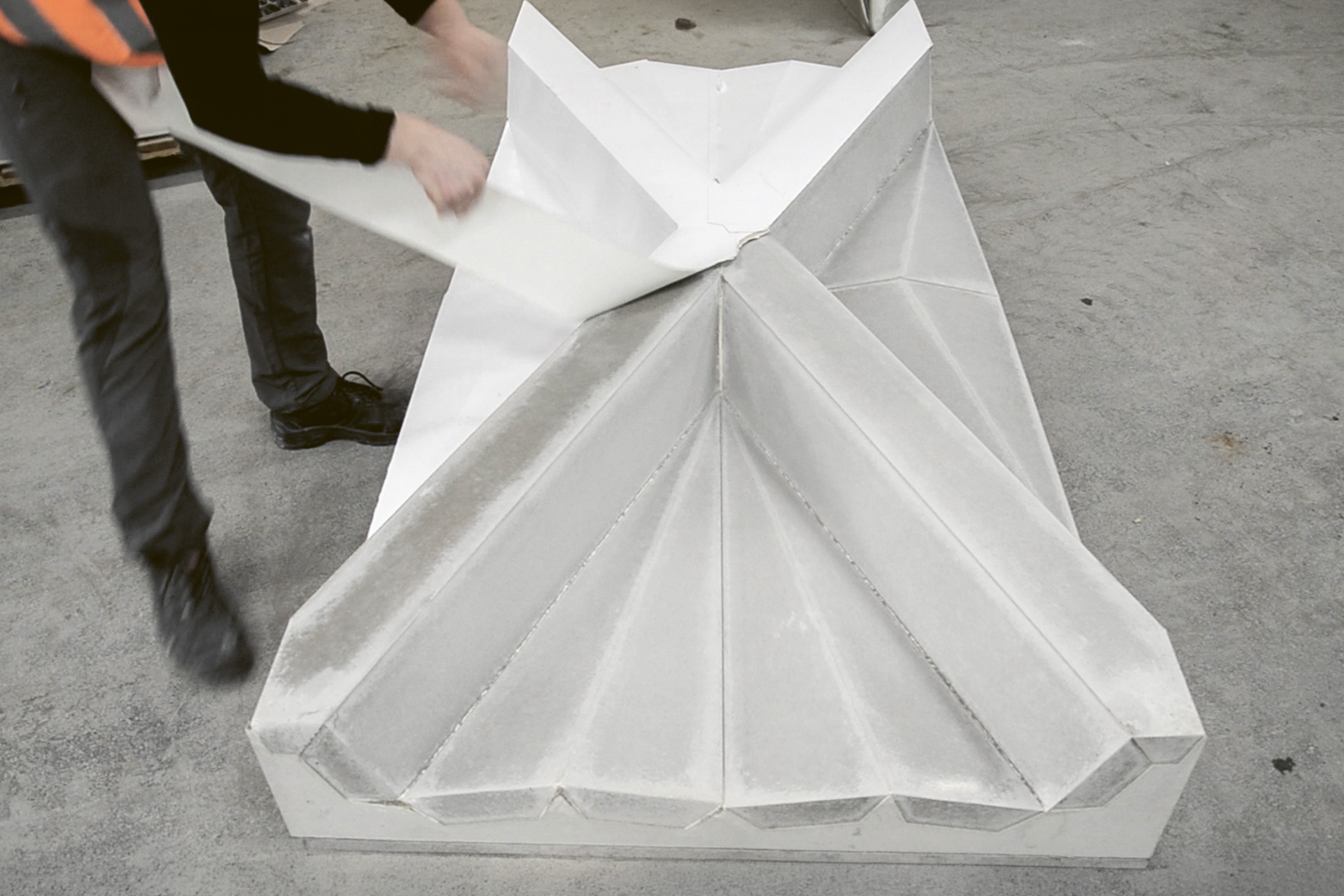
Foldcast employs paper and cardboard as the primary formwork material due to its affordability, wide availability, ductility, and recyclability. Custom computational tools are used to derive folding patterns directly from structurally optimized geometries. These patterns are digitally pre-cut from flat paper and cardboard sheets, which are subsequently folded manually to form three-dimensional formwork inlays. The folded formwork components are then placed within reusable wooden frames and used for concrete casting.
The assembled formwork integrates a hydrophobic, silicone-coated paper skin with a cardboard substructure that accommodates standard reinforcement and conventional self-compacting concrete. After curing, only the paper skin is removed and recycled, while the cardboard substructure can be reused multiple times.3 The proposed formwork system integrates with conventional prefabrication processes in construction, with on-site casting applications currently under development.
Structural elements produced using this method achieve load-bearing performance equivalent to conventional concrete elements, while requiring approximately
30-50 % less concrete. All designed elements fully comply with the Swiss building standards (SIA).
Optimized Structural Design
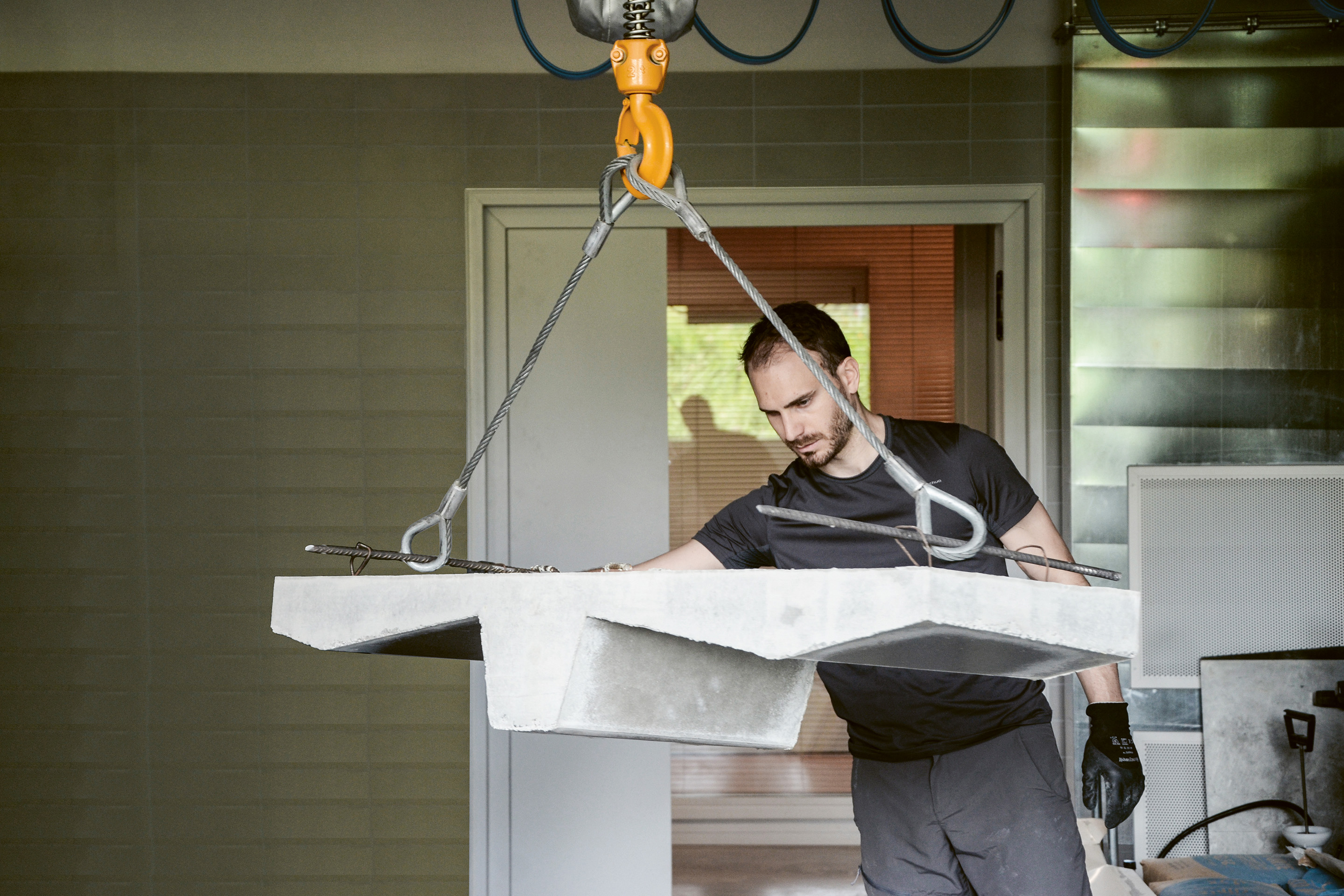
The technology was validated through two prefabricated case studies: a ribbed concrete slab system, referred to as SlabX, and an optimized concrete staircase, referred to as Vertebra. The SlabX employs an X-shaped rib configuration that combines characteristics of conventional ribbed and waffle slabs, while ensuring efficient load transfer through an in-situ concrete topping layer. Designed in accordance with SIA 262 using C30/37 concrete and B500B reinforcement, the system was tested in collaboration with academic and industrial partners, using self-compacting concrete with recycled aggregates (fig. 1). Life cycle assessment indicated a reduction of approximately 25 % in environmental impact, together with a significant reduction in reinforcement demand compared to conventional solid slabs.4 Repeated casting tests confirmed the geometric accuracy of the folded paper formwork and its reusability within standard construction tolerances.
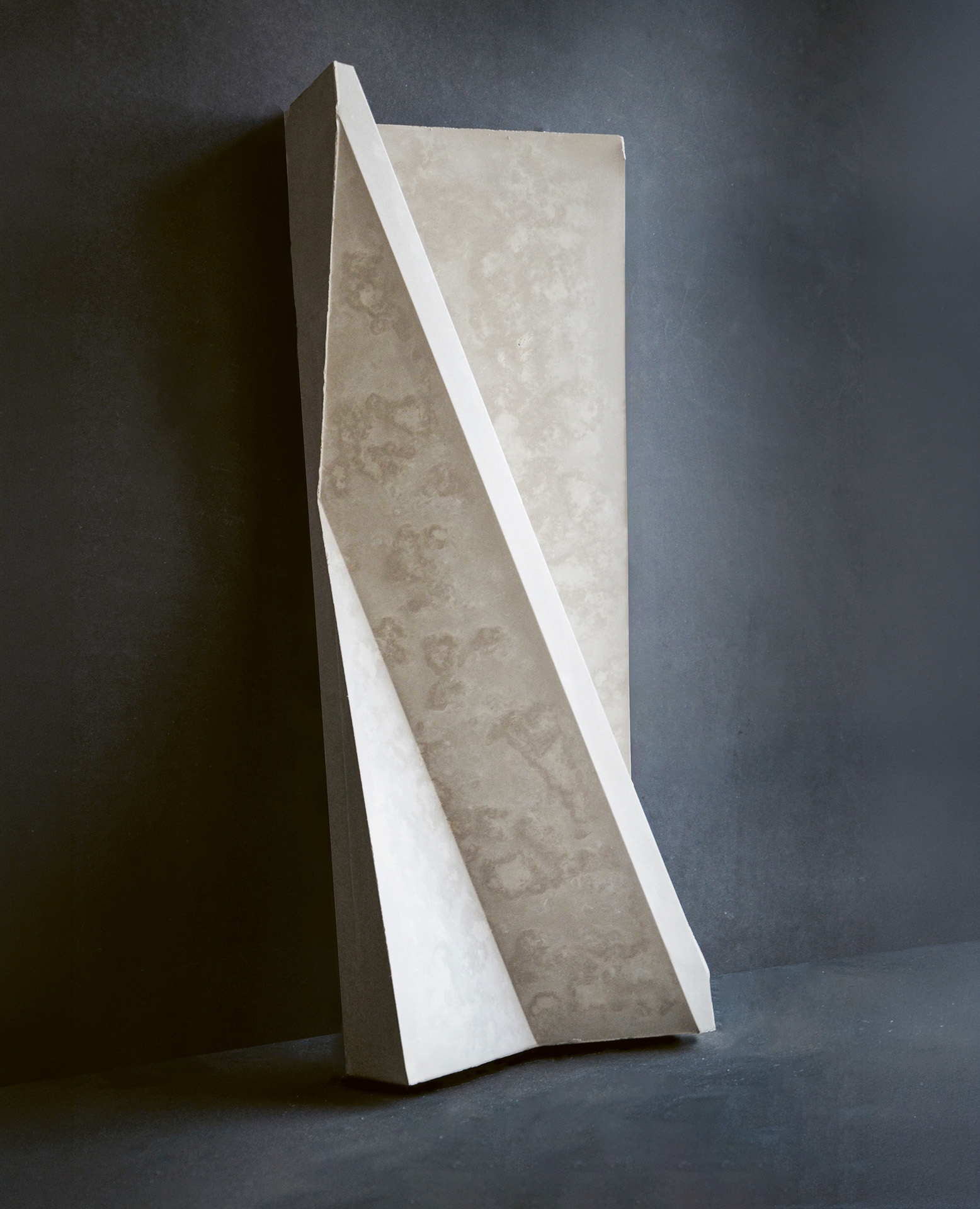
The second application involved the design and fabrication of Vertebra, a prefabricated staircase system composed of discrete steps with wing-shaped extensions (fig. 2). These elements are assembled on site into a monolithic structure using a concrete infill. Structural testing conducted in accordance with European standards (EN 12390-5) demonstrated adequate load-bearing performance. Life cycle assessment results showed a 35 % reduction in environmental impact compared to conventional precast staircases, alongside substantial savings in concrete volume and formwork material.5
Toward Low-Carbon Concrete Construction
By integrating digital technologies into conventional prefabrication workflows, Foldcast adopts an incremental approach to innovation that lowers barriers to industrial adoption. Enabled by custom computational tools, architects and engineers can explore a broad range of efficient geometries that have historically been difficult to design and fabricate.
Initially conceived as an academic research project, the technology is currently being transferred toward industrial implementation through a dedicated startup6 focused on the development of optimized precast concrete elements, including slabs, façades, staircases, exterior furniture, and on-site casting applications.7
As the construction sector faces increasing pressure to reduce its environmental footprint, scalable solutions that combine material efficiency, design flexibility, and industrial feasibility are essential. The Foldcast approach demonstrates how recyclable paper formwork, supported by emerging digital technologies, can enable high structural performance, low-carbon concrete construction while expanding architectural design possibilities.
Notes
- Flatt, Robert J.,Nicolas Roussel, & Christopher R. Cheeseman. «Concrete: An eco material that needs to be improved», Journal of the European Ceramic Society, (2012) doi: 10.1016/j.jeurceramsoc.2011.11.012.
- UN Department of Economic and Social Affairs. World Population Prospects: The 2017 Revision. United Nations, New York, 2017.
- Amicarelli, Fabio, & al. Build with Less: Precast Ribbed Concrete Slab Made with Paper Formwork. Currently being reviewed for publication (2026).
- Amicarelli, Fabio, & al. Build with Less: Precast Ribbed Concrete Slab Made with Paper Formwork. Currently being reviewed for publication (2026).
- Amicarelli, Fabio, Elia Quadranti, Christian Paglia, Eleni Vasiliki Alexi, Inés Ariza, Megi Sinani, Fabio Gramazio, Matthias Kohler, & Ena Lloret-Fritschi. «Advancing Precision: Less Concrete, More Innovation in Staircase Design». In Dagmar, Reinhardt, & al. ARCHITECTURAL INFORMATICS. Proceedings of the 30th CAADRIA Conference, Tokyo, 22–29 March 2025, Volume 2, CUMINCAD (2025), 357–366.
- «Foldcast. Less Concrete, More Design», https://foldcast.com/.
- Amicarelli, Fabio, Elia Quadranti, & Ena Lloret-Fritschi. «Meno cemento, più innovazione». Archi, no. 6, 2024,10–14