

Stepping up:
Stepping up means imagining tomorrow with care: a practice rooted in memory yet open to change, weaving voices, media and histories into a living archive that turns fragility into strength and builds a culture of responsibility.
mettersi in gioco, testo in italiano
envisioning tomorrow
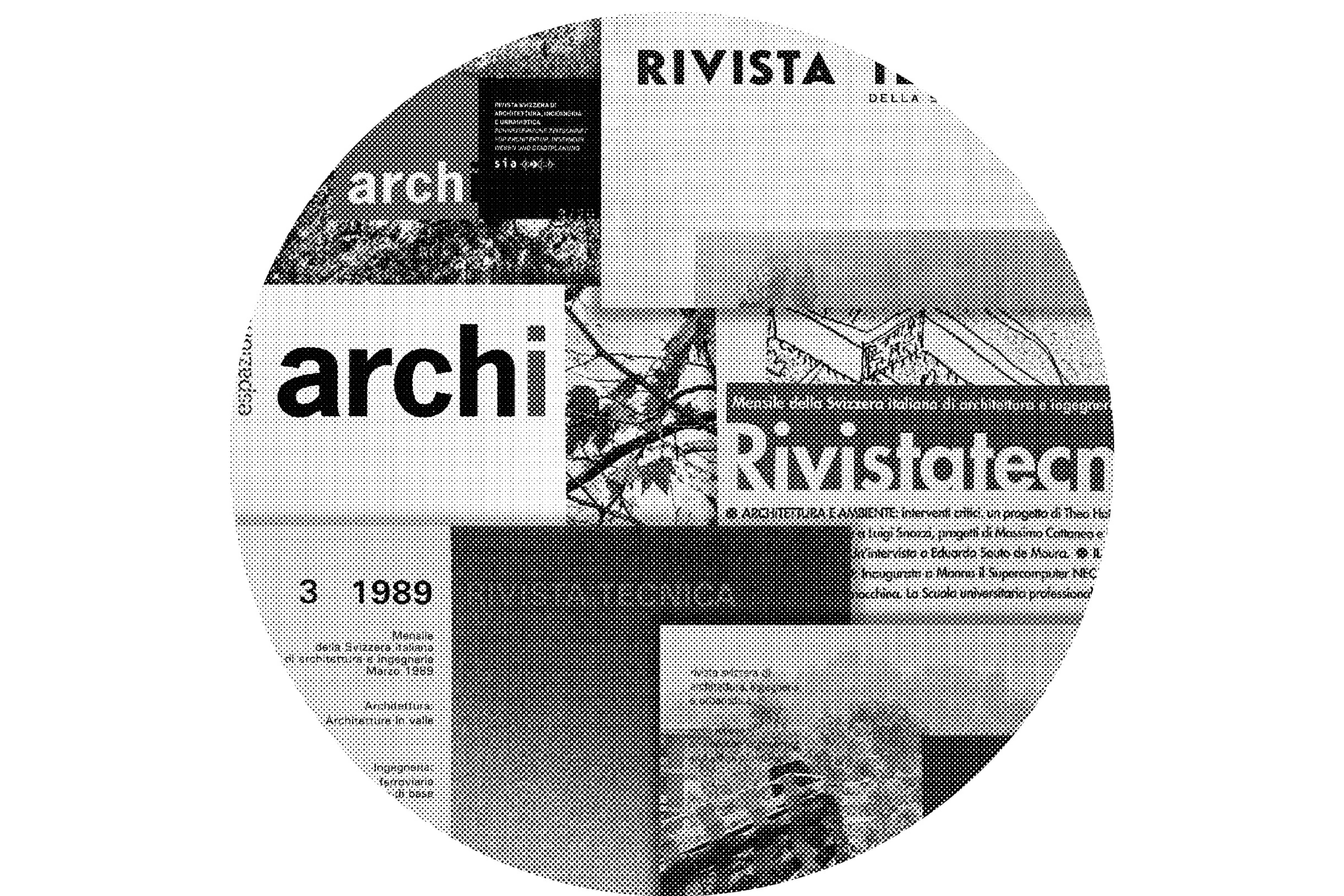
Caring is a form of responsibility that permeates everyday life and the spaces we inhabit, guiding us to consider them not only physically but also culturally. A magazine, like a project, is a «constructed» place, where memories, perspectives, and voices reside – tracing cultural and professional geographies. Reordering the pages of the past reconnects fragments of a history spanning more than a century – from Rivista Tecnica to Archi – rediscovering the thread linking us to territory and community. Care and critical thinking form the foundations of an editorial practice handed down with engagement.
Today, the media landscape confronts us with one certainty: communication is no longer only print, but a weave of media and languages. Writing dialogues with video, podcasts, and digital platforms, generating transmedia reading experiences, reflecting a reader who can no longer be categorised. Archi’s task is to weave these formats into a coherent fabric, alternating between speed and reflection, immediacy and memory. Within the espazium media network – Archi, Tec21, and Tracés, with their respective trilingual websites – each element engages with the others, like stars shining only when joined in a constellation. Espazium, like any project, is strengthened by plurality and openness to the culture of building.
Since the beginning of the year, the editorial team has shown remarkable dynamism, with articles, video interviews, and posts documenting the Venice Biennale, competitions in Ticino and beyond, while following current events attentively in the local context and Swiss professional scene. We have expanded our social media – look for espazium.ch on Instagram, Facebook, and LinkedIn – and continue to enrich the website with contributions in English, French, and German. We aim to shape the culture of Italian Switzerland, making each content piece an act of care for the present and future.
The change ahead is not a matter of style, but an act of responsibility towards the heritage entrusted to us: a living archive of resources, people, and stories. With the new online dossier Fondamenta, we will reconnect with the past, bringing to light the most emblematic articles that marked the trajectory of the SIA Ticino publications. It is our way of looking forward without forgetting what shaped us. 2026 will be a year of transition, expectations, and innovation. Not «changing everything so nothing changes», but a conscious journey – a navigation accepting the storm without fear. Together with our readers, we will raise the curtain on a renewed, attentive, and critical magazine, continuing to care for the culture of design and construction.
engaging with commitment
Care is revealed in the choices that shape the way we «inhabit»: it is precisely fragilities – of age, health, social conditions, or cultural belonging – that emerge not as exceptions, but as shared conditions that define us. In this horizon, architecture reveals itself as an ethical act: every project becomes a device capable of including or excluding, of protecting or marginalising. The geography we construct is never neutral. To borrow Liz Ogbu’s words, it is «a geography of justice»: not an aspiration, but a concrete responsibility recognising equitable access to resources as a fundamental right rather than a privilege.
Yona Friedman, architect and visionary, born in Budapest in 1923, personally experienced the precariousness of being displaced – the vulnerability of those who must reinvent a place in which to survive. His experiences of war, imprisonment, and migration deeply shaped his idea of architecture. Not as a monumental gesture or an exercise in style, but as a powerful tool to act against apathy: to invent, to hybridise, to bring utopia into reality. With his «mobile architecture», he showed that space must remain open to interpretation, ready to accommodate life’s changes and the needs of ever-evolving communities. A warning and an invitation to recognise that the precariousness and violence he endured repeat today, as if memory were absent: we are called, therefore, to weave that light, airy, and dreamlike thread to mend the unforeseen.
If Friedman demonstrates how precarity and vulnerability can guide architectural invention, other practices, in different contexts, have sought to translate similar principles into concrete projects, showing that attention to fragility and community runs throughout architectural history. Carla Tagliaferri, an Italian architect active since the 1960s, directed her research towards architecture attentive to social and environmental dimensions: from public housing projects to the design of public spaces and urban landscapes, care is not reduced to service, but becomes a horizon of inclusion and shared quality of space.
In the paths we follow, the thresholds we cross, and the services we use, the capacity of space to welcome and sustain its inhabitants is measured. The traces left by good design become scaffolding upon which a broader ethical geography takes shape, where fragility is not concealed but supported. What begins as concrete care in projects thus translates into an extended responsibility, capable of orienting space towards equity and inclusion.
From this perspective, caring for the common good resembles the practice of kintsugi: a repair that does not hide fractures but reconnects them, transforming them into marks of strength and beauty. Our spaces, too, when embracing fragility and diversity, become golden scars that tell a renewed, completed form – more resilient, fuller, and alive.