

Subtract to Enhance
Oxid Architektur + Scheitlin Syfrig Architekten | blesshess Brücker + Ernst | Appert Zwahlen Partner
Testo in italiano al seguente link
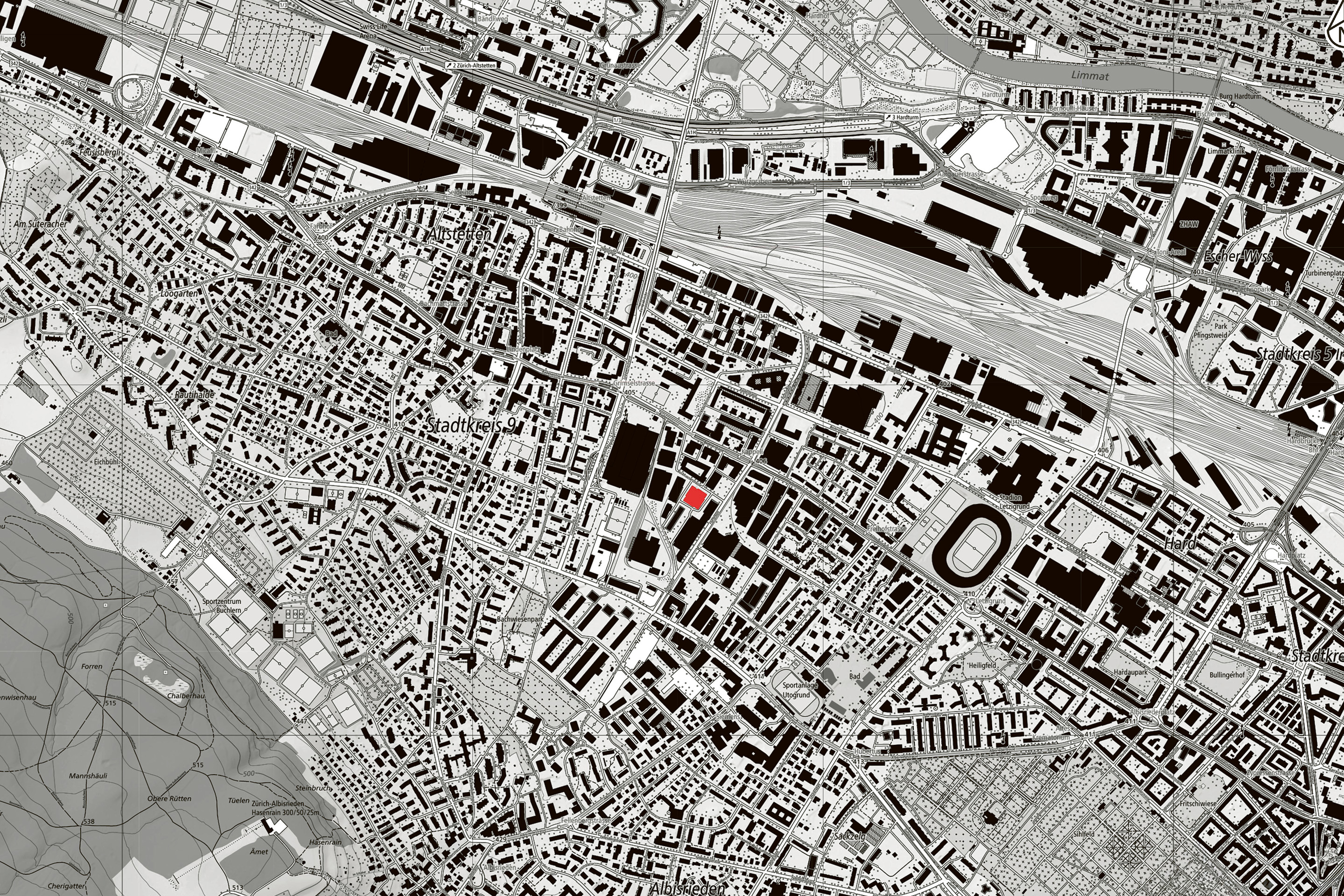
Gewerbe- und Bürohaus Buck 40, Zürich ZH
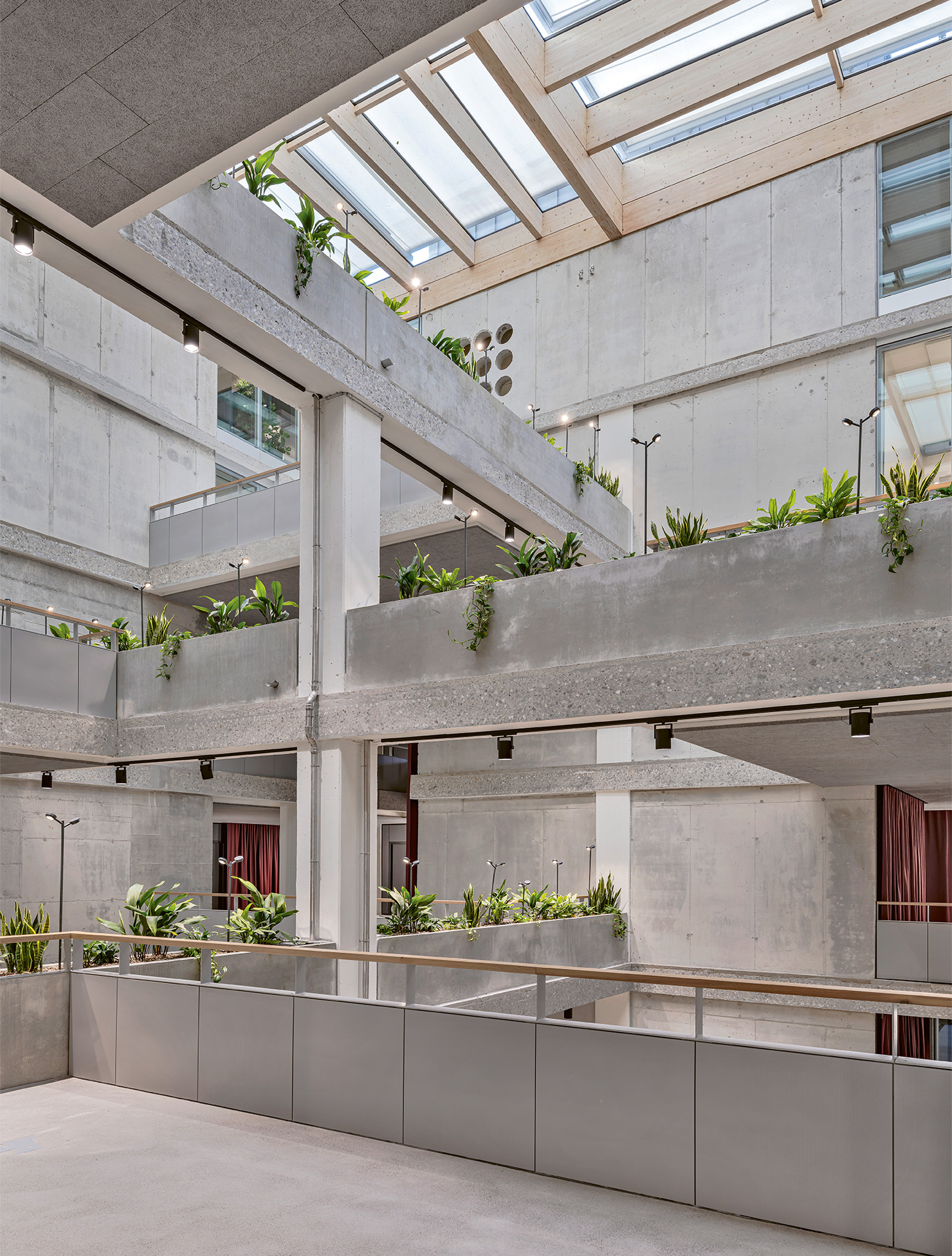
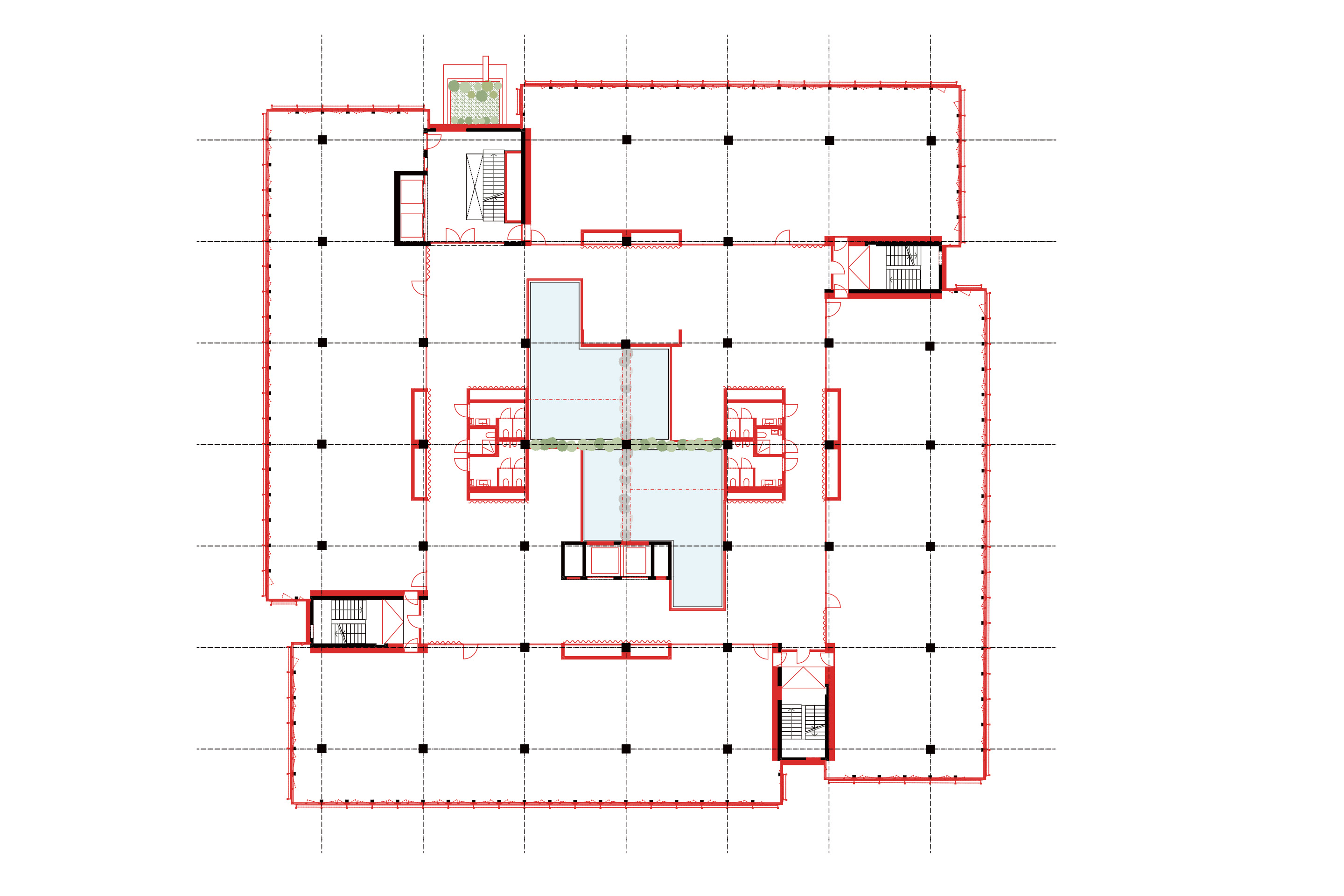
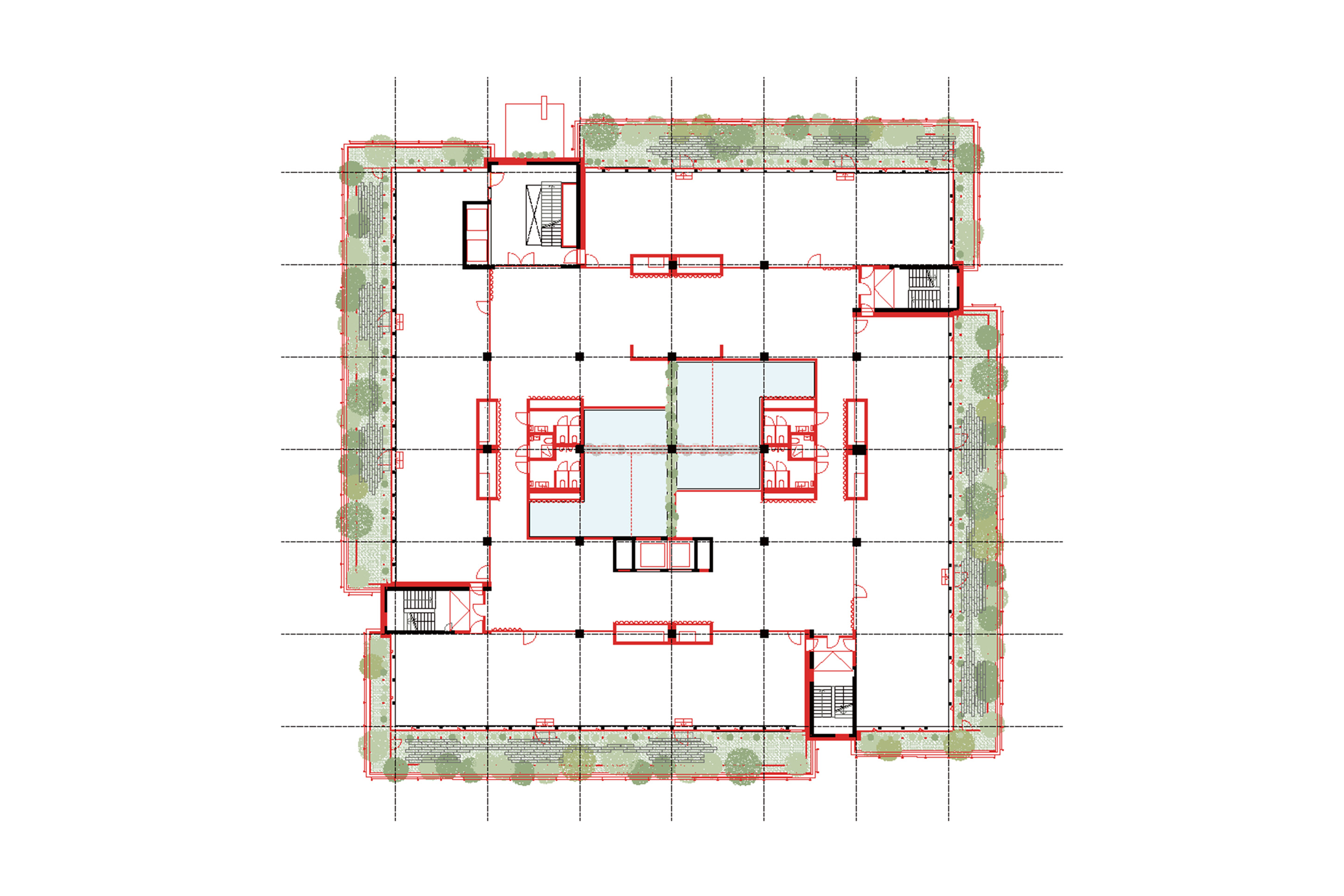
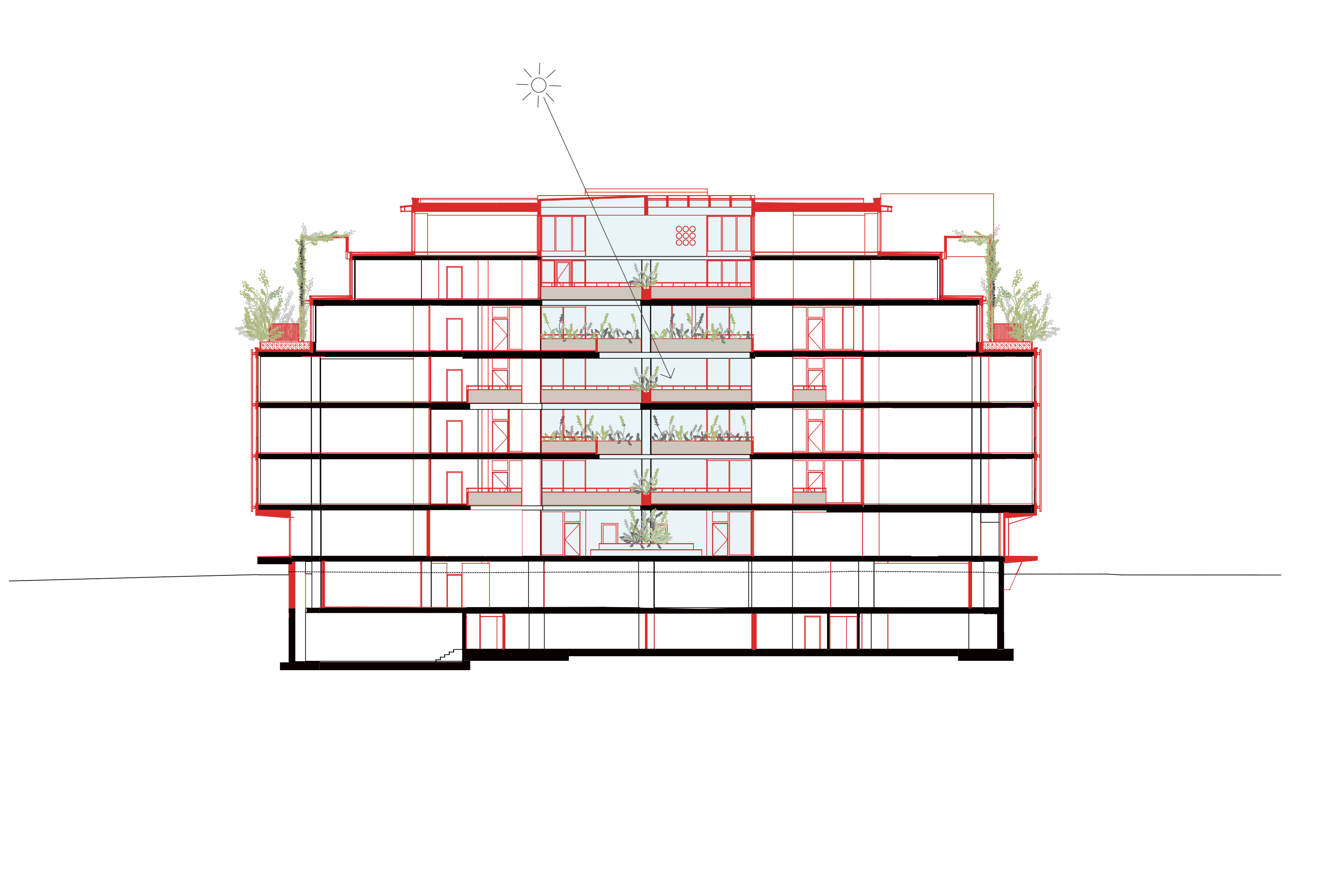
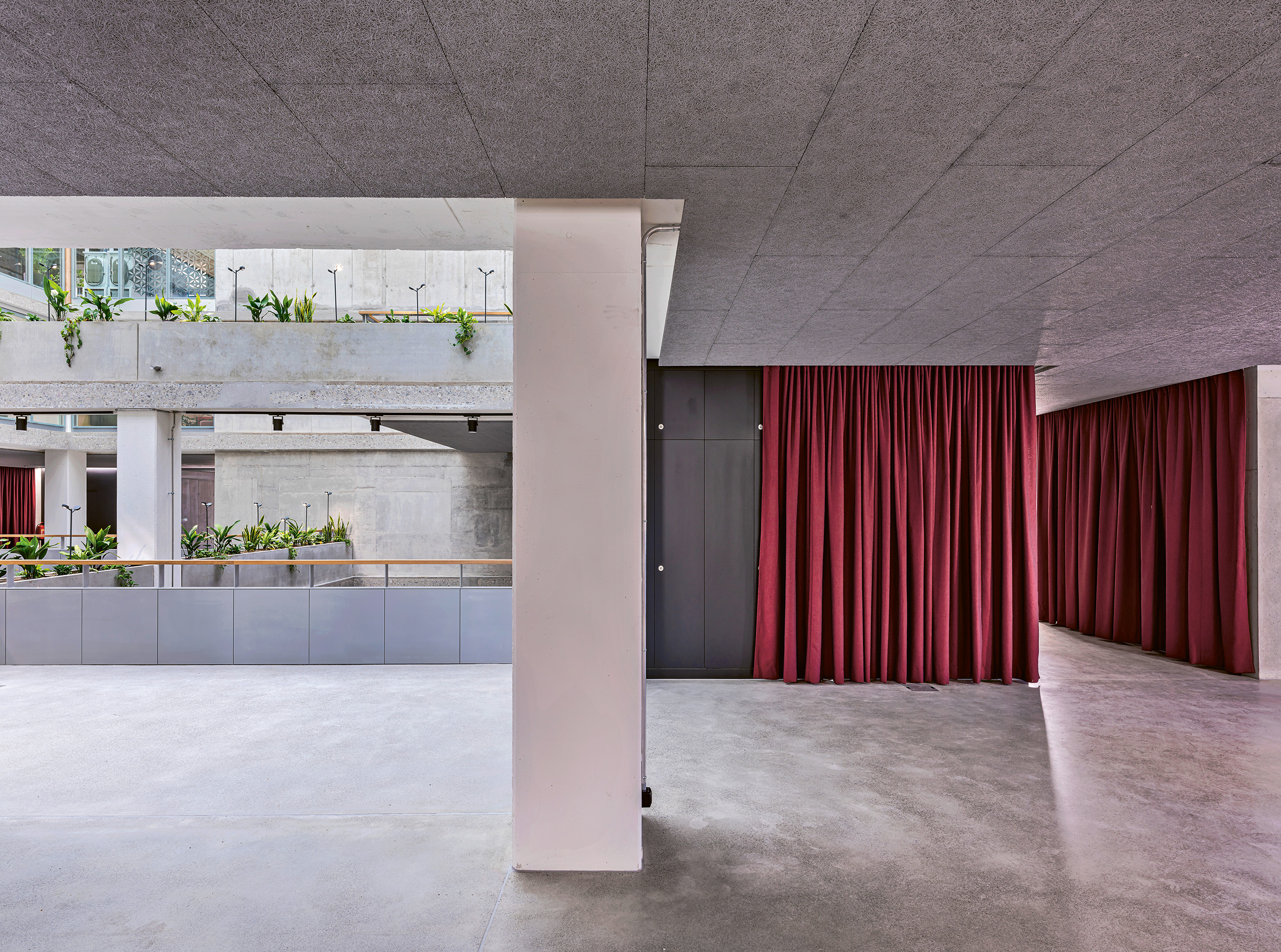
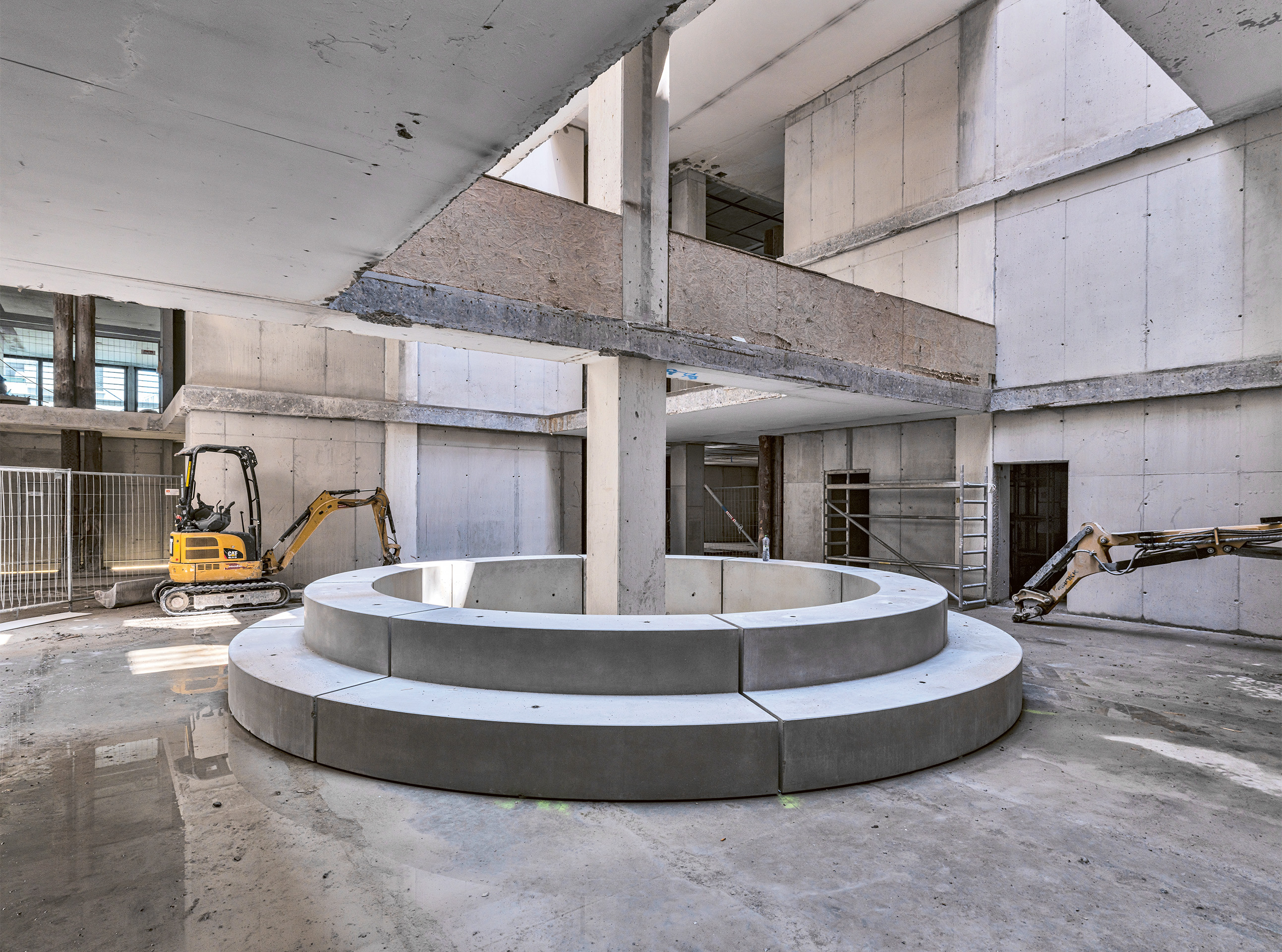
Marked by the «Reuse, Reduce, Revaluate» approach (cf. pp. 38–39), which establishes its design parameters, the 1960s building has been thoroughly reconsidered and reinterpreted, achieving DGNB Gold certification. Through targeted architectural interventions, access points, expression and internal organisation are redefined with the aim of producing a contemporary building that enhances the value of the existing structure. During the construction phase, the building is stripped back to its original load-bearing structure and, within the exposed skeleton, a seven-storey atrium is carved out, introducing zenithal natural light into the interior of the building, whose square plan, measuring 50 m per side, has considerable depth. Conceived as an open environment for work and encounter, with internal terraces projecting into the void, the atrium forms the heart of the ensemble, establishing a shared identity across all levels and fostering visual and functional connections between workspaces, communal areas and vertical circulation. The central column becomes the pivot of the structural system, marking the intersection of the primary beams – arranged in alternation every two floors and reinforced by prefabricated elements that integrate structural planters with abundant interior vegetation (cf. p. 43) – introducing a natural microclimate and a visual filter towards the surrounding work areas.
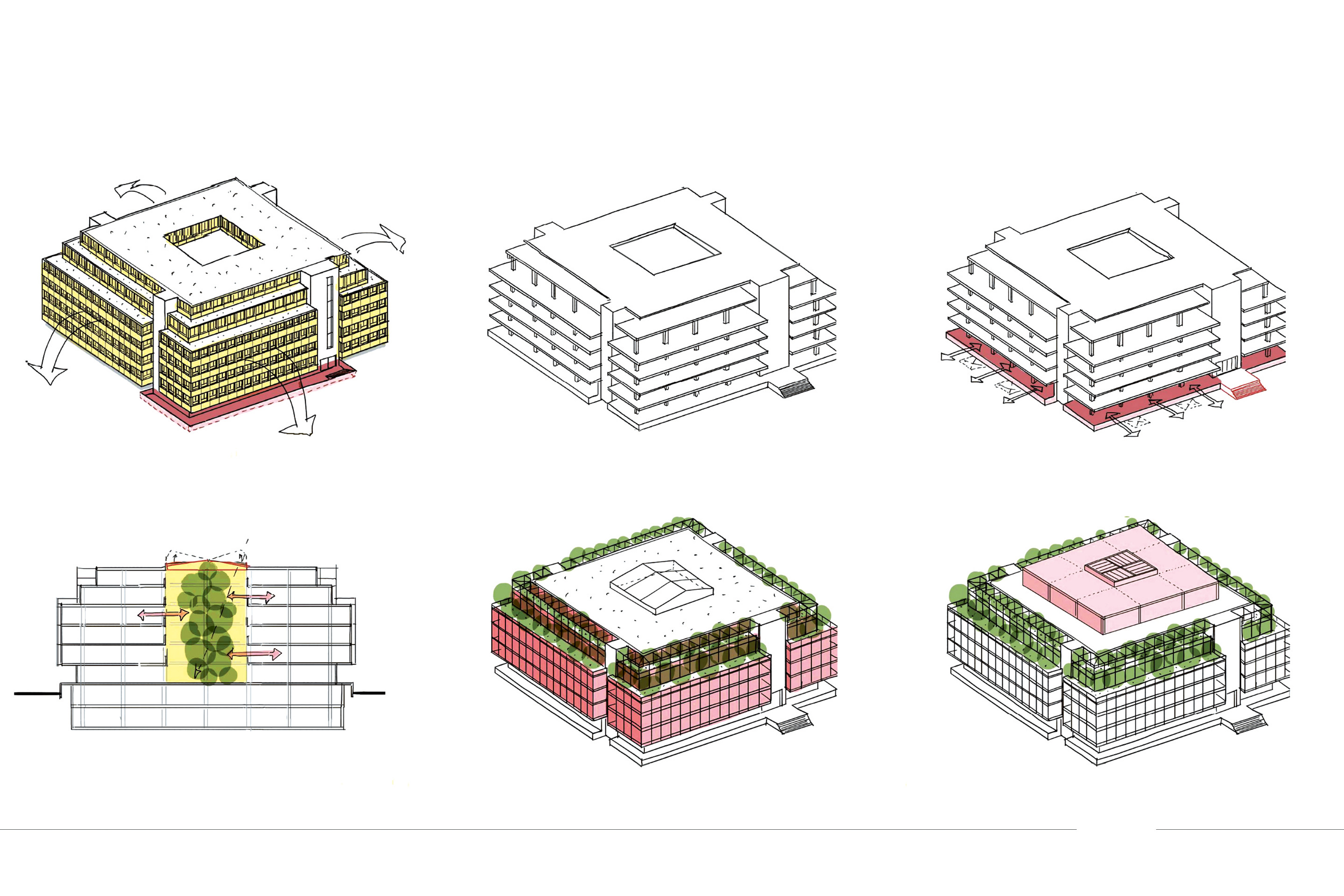
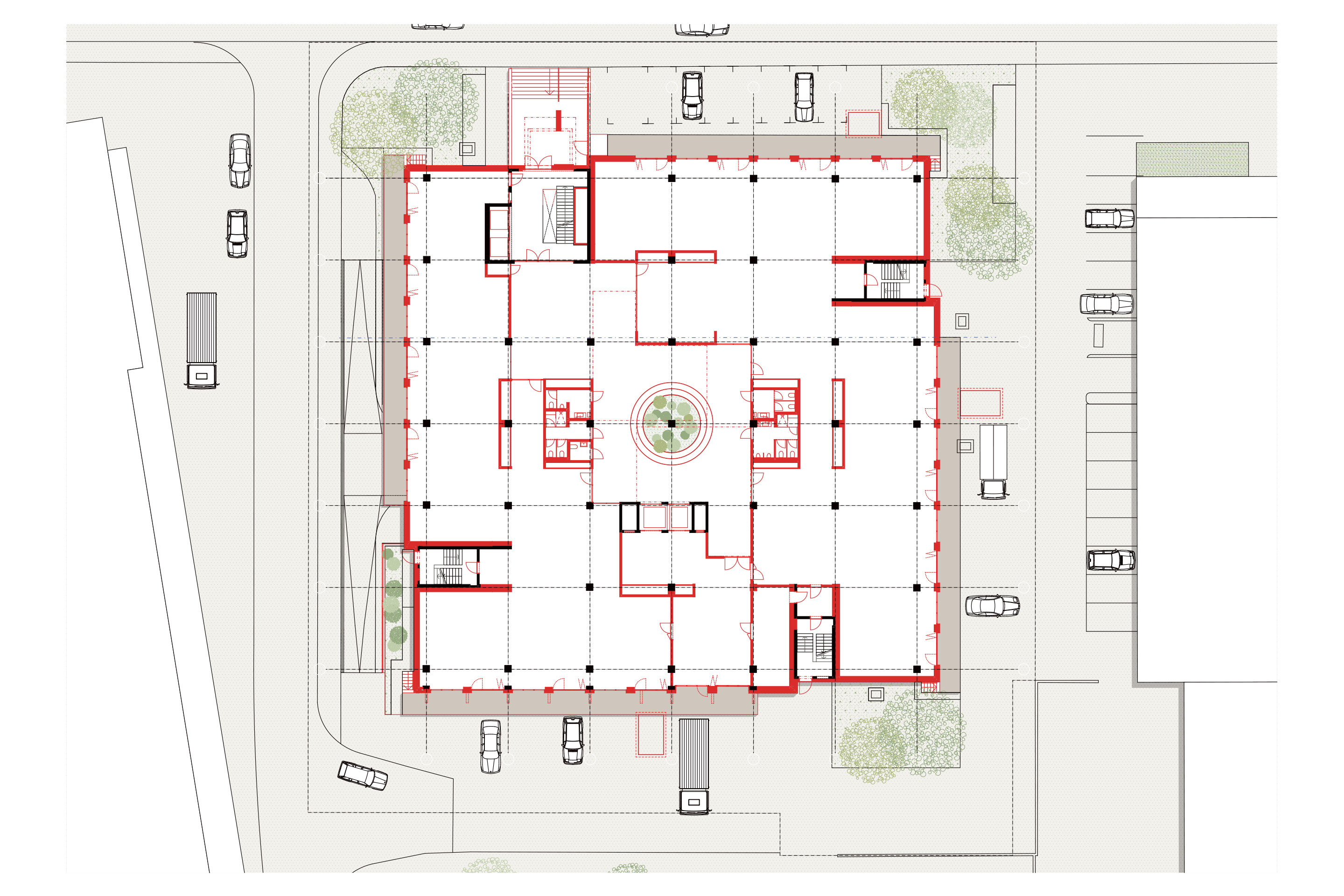
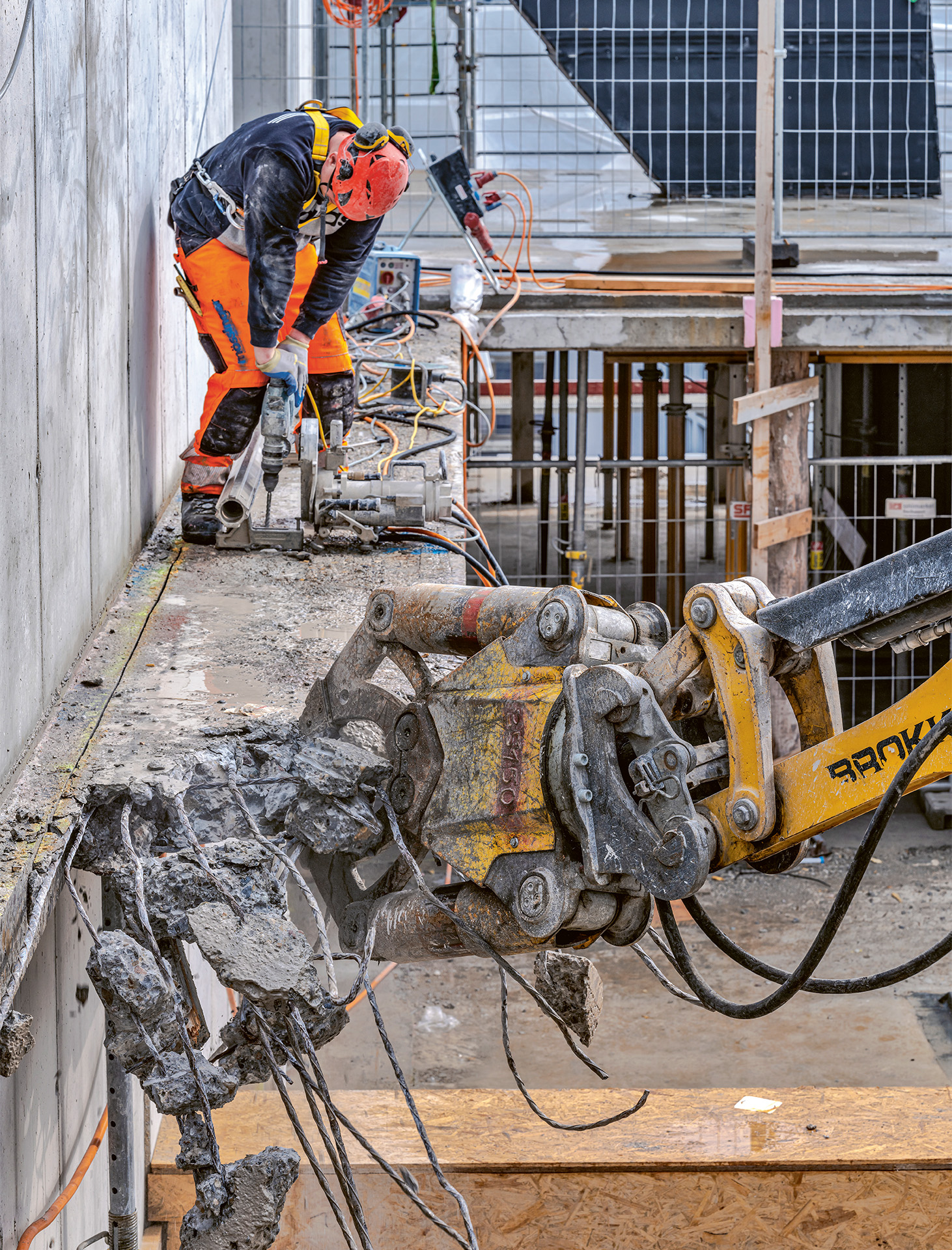
The suspended prefabricated façade elements with opaque concrete parapets are dismantled; the poorly insulated windows are removed and the building is brought back to its 1965 reinforced concrete structure, organised on a systematic square grid (7.20 × 7.20 m) with long-span flat slabs. The main stair and the three fire-escape staircases, optimally arranged in a windmill configuration, ensure – through minimal intervention – both evacuation efficiency and seismic safety. The car park on the first basement level is retained, while the second basement accommodates storage and technical plant. No excavation or additional underground volumes are introduced. The grey energy already embodied in the raw structure can thus be largely reused (17 200 tonnes of reinforced concrete preserved), demonstrating a significant reduction in overall environmental impact and a sustainable approach to urban regeneration.
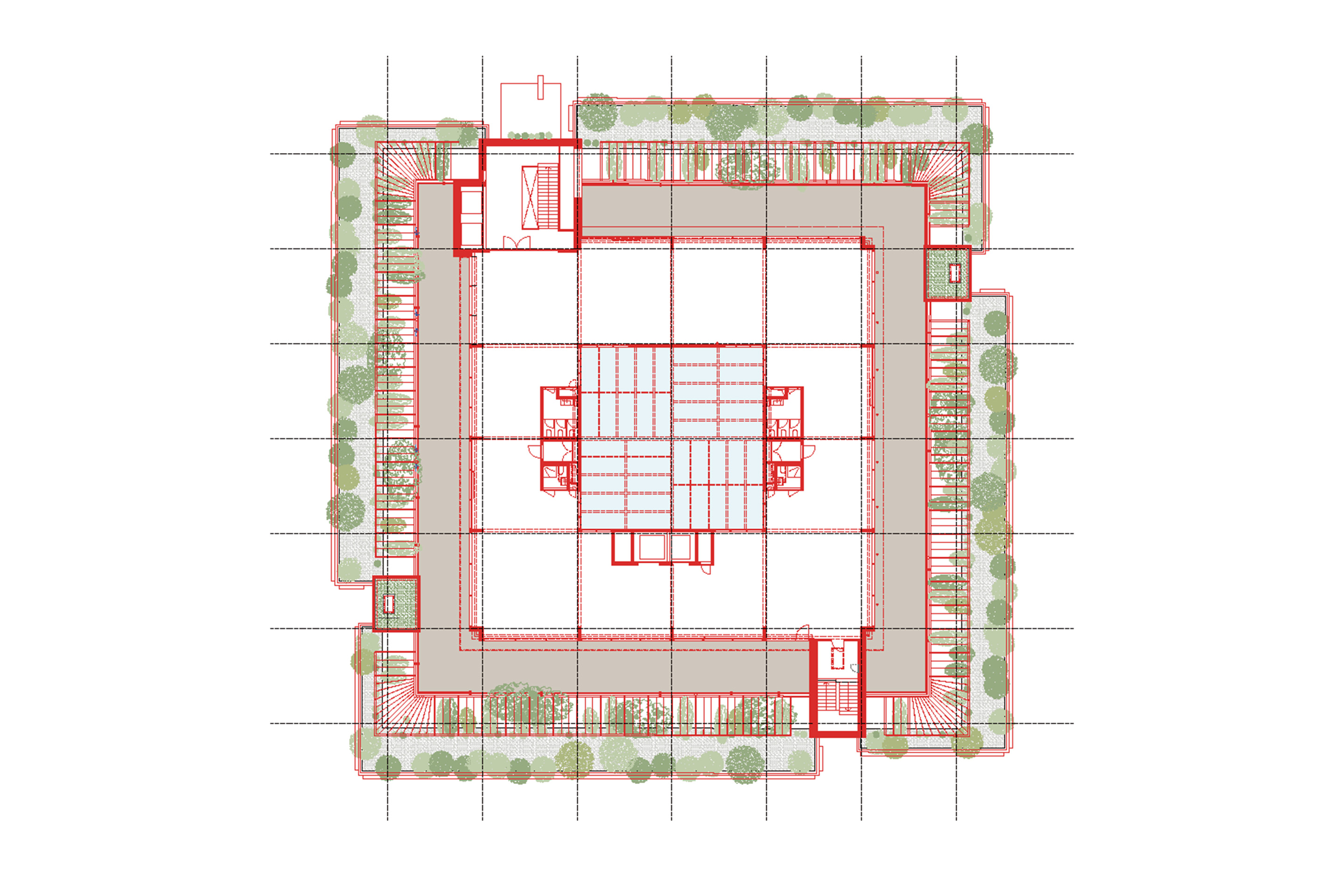
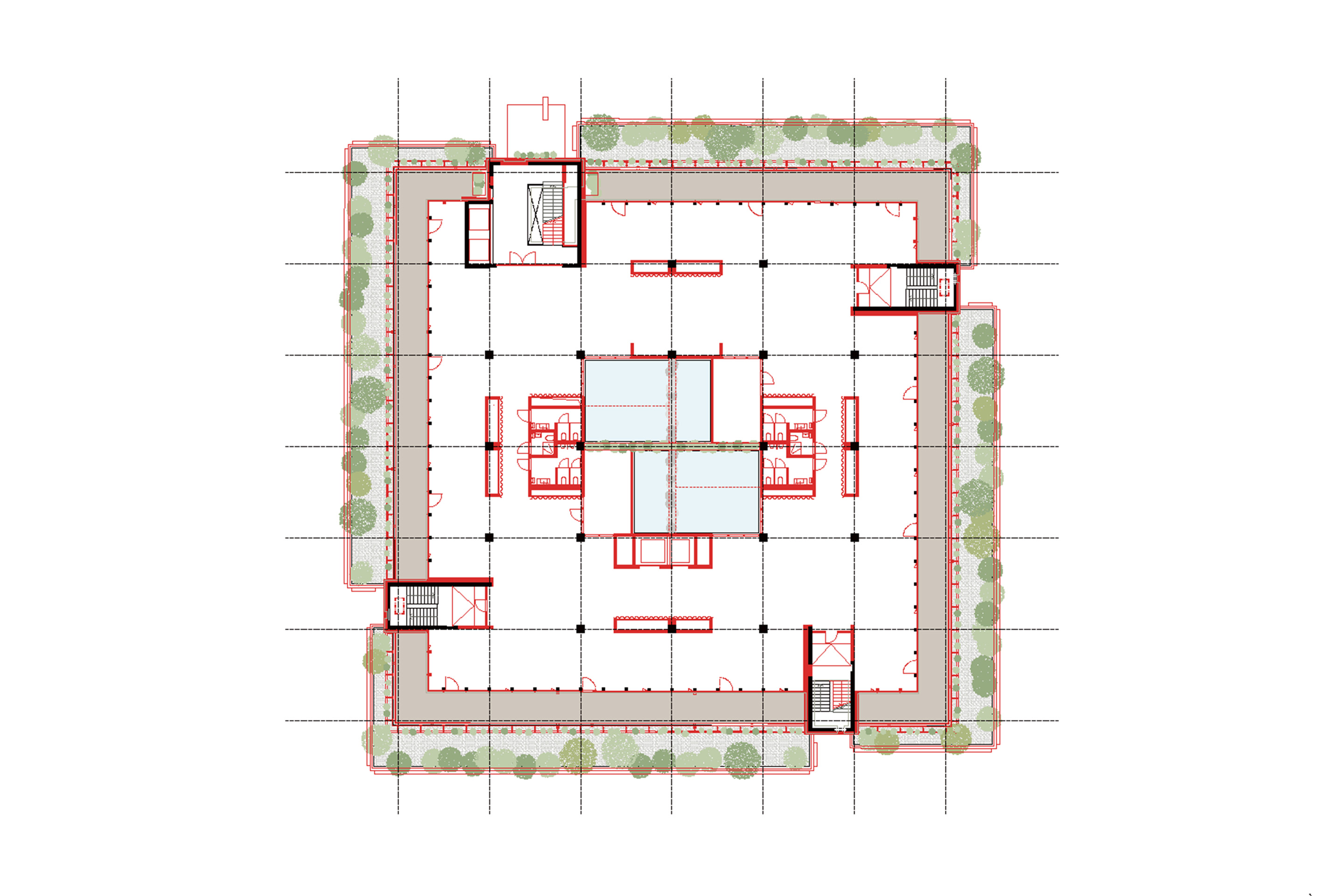
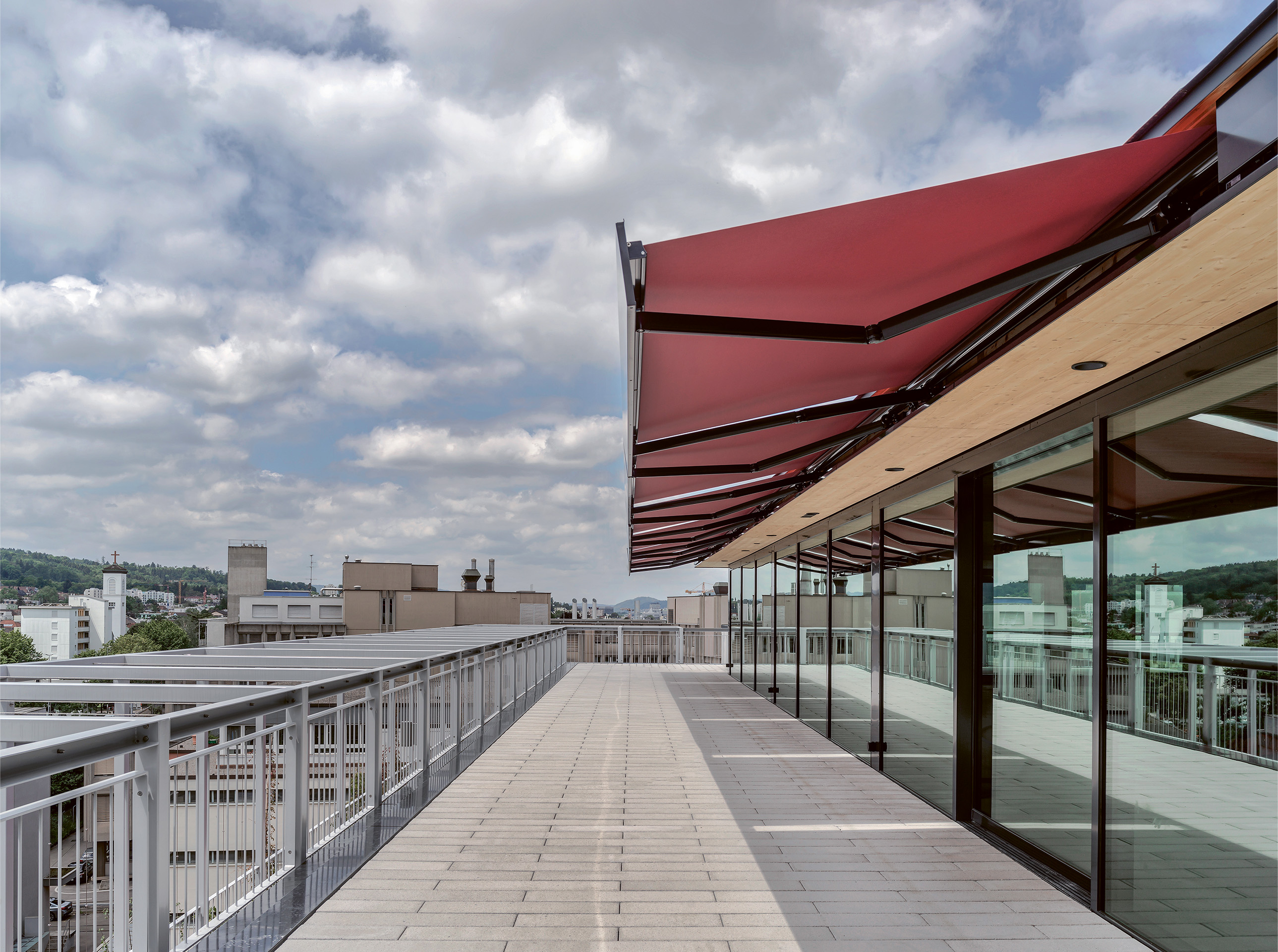
The poorly lit and difficult-to-let central area is reduced to make space for the atrium and compensated by the addition of a new sixth-floor extension, set back on all four sides and realised as a lightweight timber construction in a privileged position with 360° views over the city. This added value is made possible solely by the characteristics of the existing volume, as compliance with the 45° setback profile of the attic levels, combined with the generous depth of the floor plan, makes it possible to obtain highly usable space around the central atrium, complemented by a spacious perimeter terrace. The extension is aligned with the structural grid of the existing columns and requires no additional reinforcement of the load-bearing system, owing to the reduced mass of the timber construction and to the original dimensioning for industrial loads. Prefabricated Lignatur slabs spanning 7.20 m make the timber structure legible internally, establishing a material dialogue between wood and concrete and accentuating the overall lightness of the upper volume.
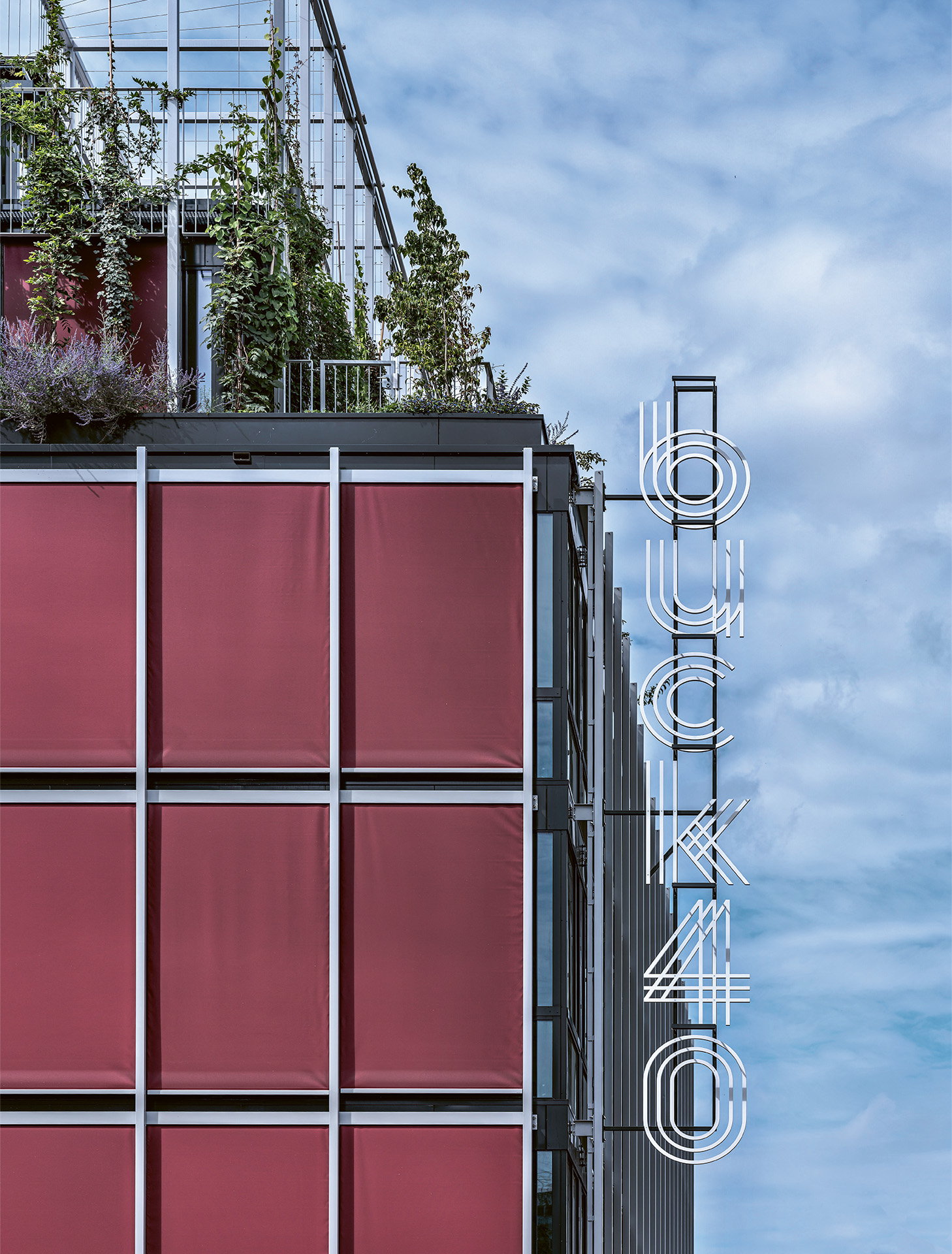
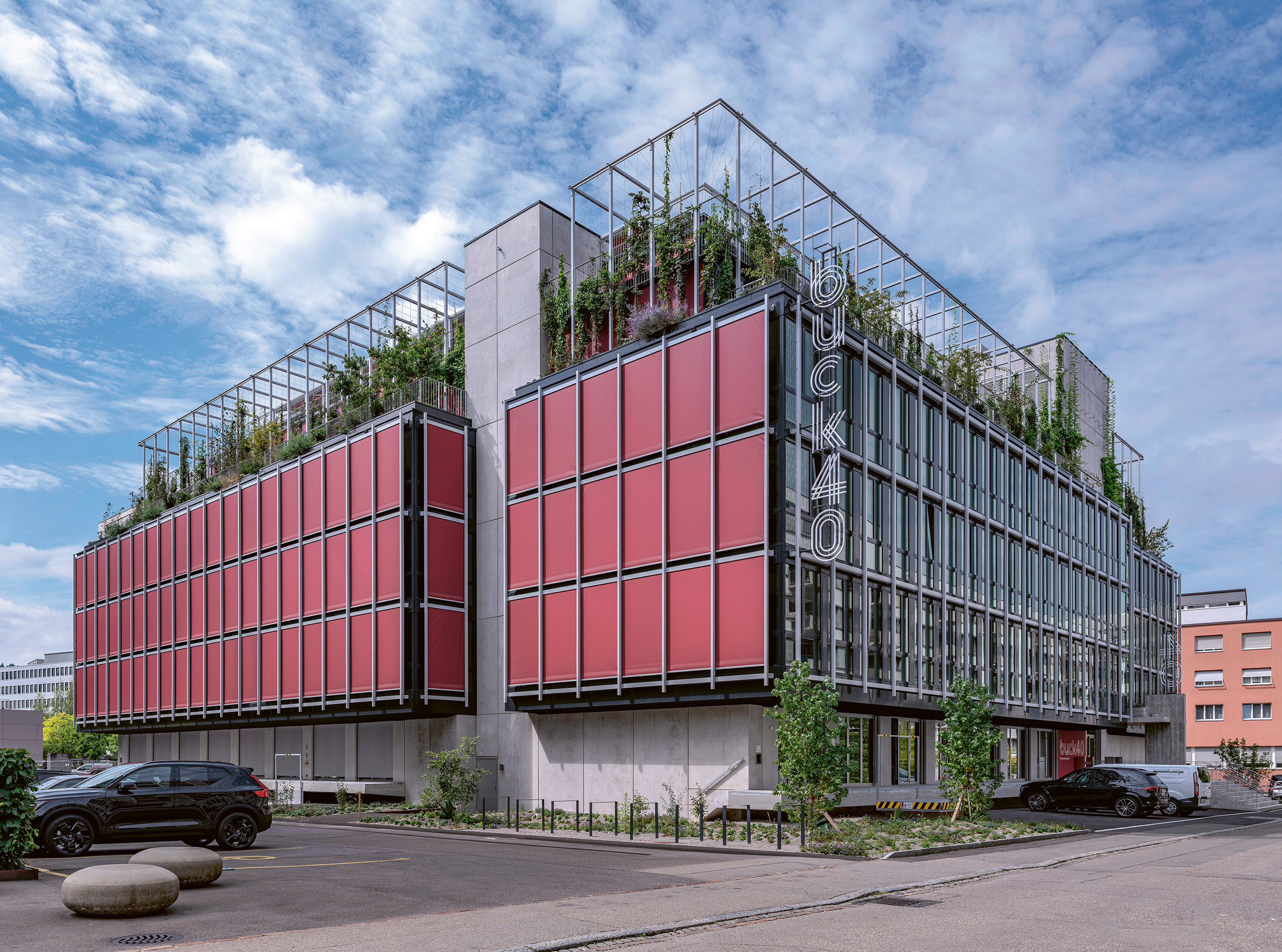
The existing projections at raised-ground level are transformed into loading platforms for productive spaces through the introduction of new recessed façades. Access is likewise shifted from the semi-basement to the raised ground floor and, together with the new canopy, the totem bearing the civic number and the green façade, assumes a representative and identity-defining character. Distribution is meaningfully organised around the existing main stair, now illuminated from above. The finely crafted stringer stair, the artificial stone slabs and the subtly adapted balustrade with solid timber handrail are retained and reused. The building’s specific branding, with the linear inscription «buck40» applied to the façade, runs throughout the entire building as a wayfinding system and, together with the new external expression and the atrium, gives the building a distinctive character, simultaneously enhancing its visibility in the urban context and enriching the quality of the interior spaces.
The building is vertically articulated into three parts: above the recessed ground floor, a three-storey volume now projects. Above this, the attic levels step back progressively, accommodating lush roof gardens. The existing prefabricated concrete façade is replaced with a dark curtain wall with full-height glazing, ensuring generous daylight penetration. In front of it, a light and distinctive metal frame provides solar protection through red vertical blinds while establishing visual continuity with the two-storey pergola of the stepped terraces, introducing layers of transparency and depth that enhance the three-dimensional perception of the envelope.
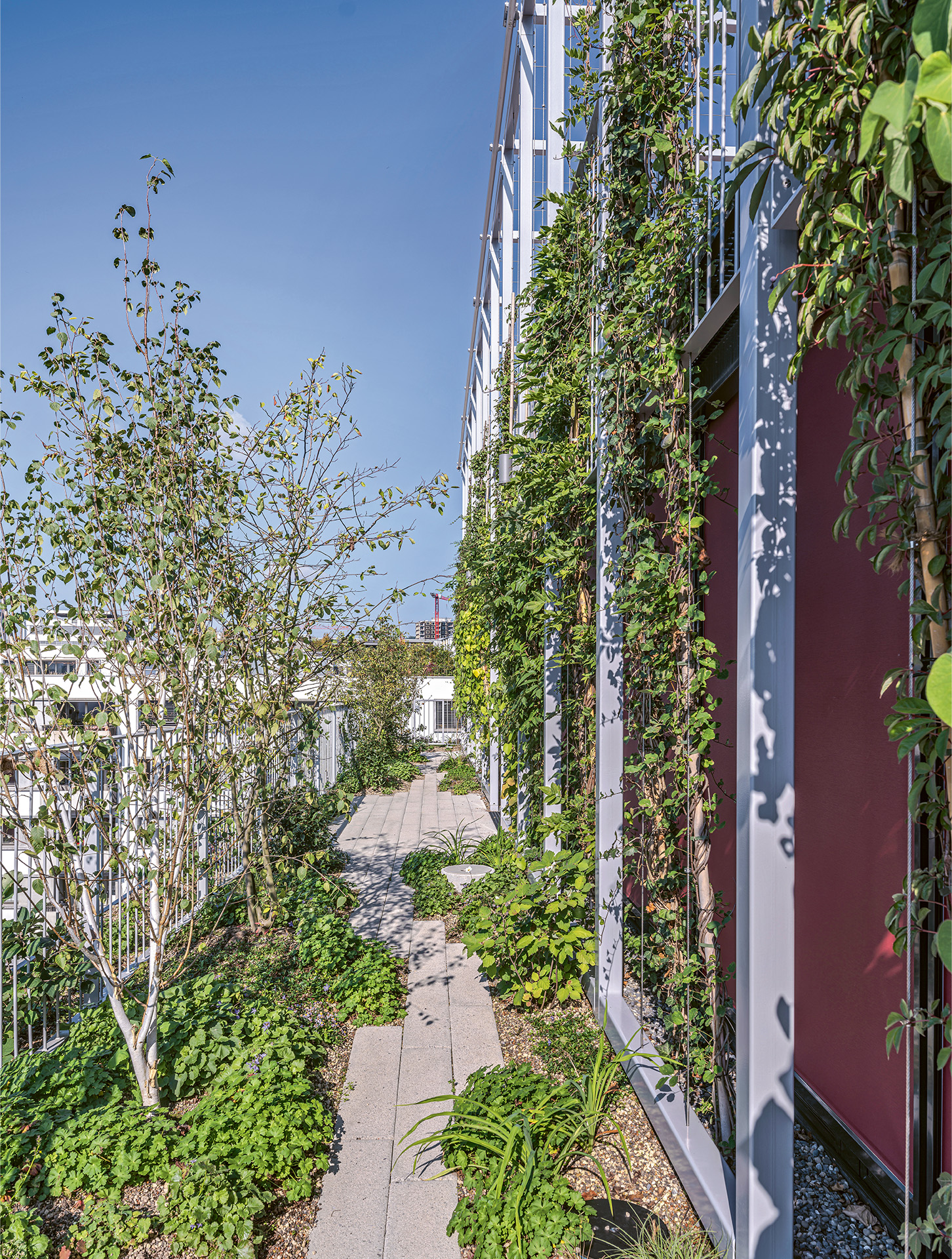
The roof gardens create unique outdoor spaces for the offices: verdant green areas on the fourth floor, an external space with pergola and climbing plants on the fifth, and a rooftop terrace on the sixth. They extend the workspace outdoors, provide shade, enhance biodiversity, filter the air and improve the micro-climate through vegetation, fostering environments conducive to well-being, sociability and concentration.
The project addresses one of the central challenges of contemporary construction: building sustainably by shifting the production logic of recent decades. With a contemporary constructive and environmental approach, the decision was made to retain the building, considered at its «end-of-life», which avoids complete demolition and major excavation. Through the reuse of the existing structural framework, contemporary environments have been created that enhance working spaces through calibrated natural lighting, social gathering areas and the presence of vegetation. These qualities are articulated through decisive interventions in both interior and façade, legible across the various levels and in photographic documentation alike, establishing continuity between function, structure and landscape.
- Place Zürich
- Client Turintra AG, Zürich
- Architecture ARGE Oxid Architektur, Zürich + Scheitlin Syfrig Architekten AG, Luzern
- team work Team Oxid Architektur: Y. Schihin, U. Rinklef, S. Biaggi, P. M. Romagnoli, I. Schulz Team Scheitlin Syfrig Architekten: M. Carlen, V. Eicher, M. Meier
- Landscape architecture Appert Zwahlen Partner AG, Cham
- Civil engineering blesshess AG, Luzern
- HVAC system project Eicher + Pauli AG, Luzern
- Electric systems project, acoustics, photovoltaics and lighting design HHM AG, Aarau
- physics Brücker + Ernst, Luzern
- Facade design Sutterweidner GmbH, Biel
- Contractor Frutiger AG, Zürich
- Photography René + Dimitri Dürr, Zürich
- Timeline project 2020-2024 realisation 2022–2024
- Energy planning Brücker + Ernst, Luzern
- Energy certificate DGNB Gold
- Intervention and building type Reuse and elevation
- Building category (Ae) industriale/artigianale Ae 13 015 m2 | Industry Ae 13 015 m2
- orm factor (Ath/Ae) 0.73
- Heating and hot water District heating, radiators
- Electricity Photovoltaic system, 172 modules 435 Wp, 75 kWp
- Primary building envelope requirement Project value 23.4 kWh/m2y, SIA 380/1 limit 30.1 kWh/m2y
- Special features Rainwater recovery for irrigation, low-consumption LED lighting, remote cooling system available to tenants, office ventilation with two-stage filtration, heat recovery from bathroom ventilation outlets